Artwork
Engine Trouble
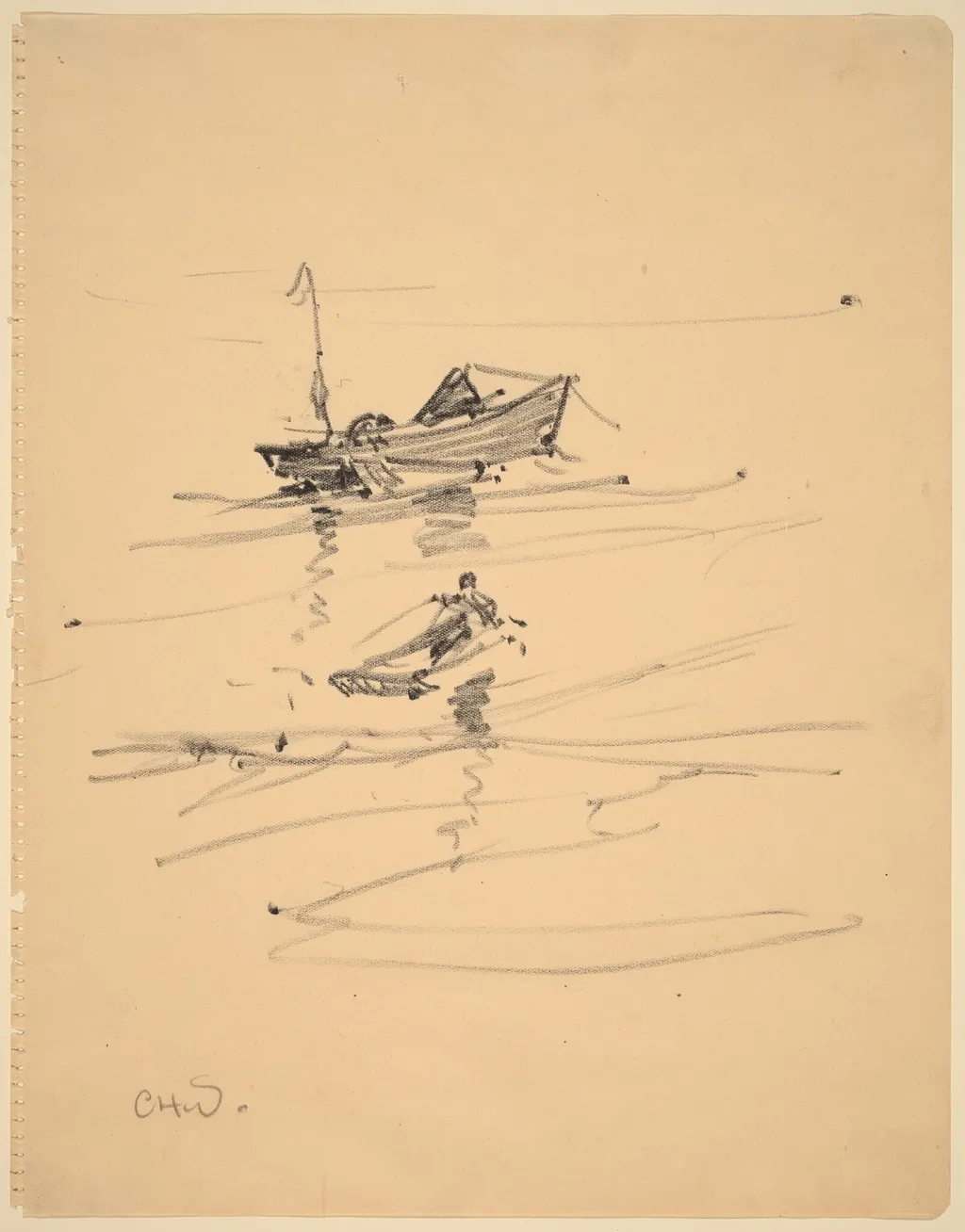
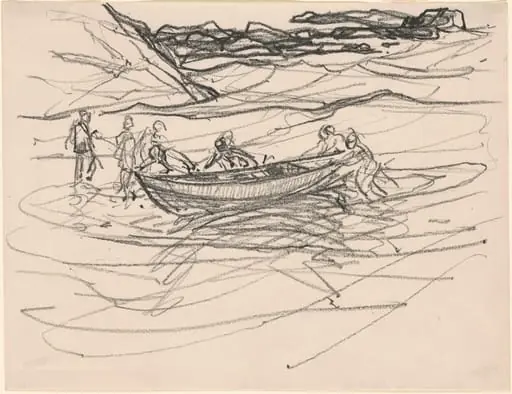
Engine Trouble is a crayon drawing by the Impressionist artist Charles H. Woodbury. It dates from 1902 and is held in the collection of the National Gallery of Art.
- Inscription
- Inscribed:lower left in graphite: CHW.
About this work
Overview
Engine Trouble is a drawing executed in 1902 by American artist Charles H. Woodbury. Rendered with black crayon on a sheet of wove paper that has been spiral-bound, the work presents a compact, monochromatic study. Its modest dimensions and straightforward material choices reflect the artist’s interest in quick, gestural observation.
Technique & Style
The piece relies on the stark contrast achievable with black crayon, allowing Woodbury to suggest form and movement through line and shading rather than color. The wove paper’s smooth surface supports fine, controlled strokes, while the spiral binding suggests the work may have been part of a sketchbook or series of studies.
History & Provenance
Created early in Woodbury’s career, Engine Trouble dates from a period when the artist was exploring marine and mechanical subjects. The drawing’s current location and ownership are not documented in the provided information, indicating it may remain within a private collection or institutional archive pending further research.
Artist & collection


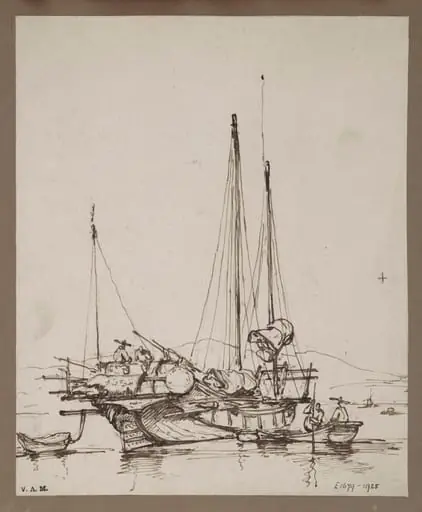
- A drawing by George Chinnery of aA Chinese junk, with figures aboard and small craft alongside
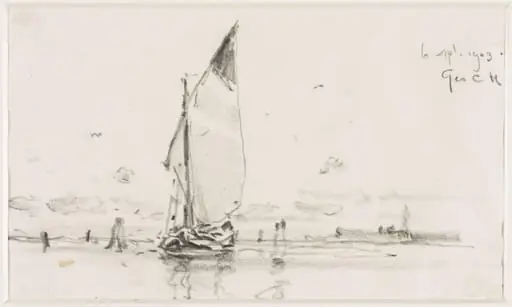 On the Lagoons, Venice.
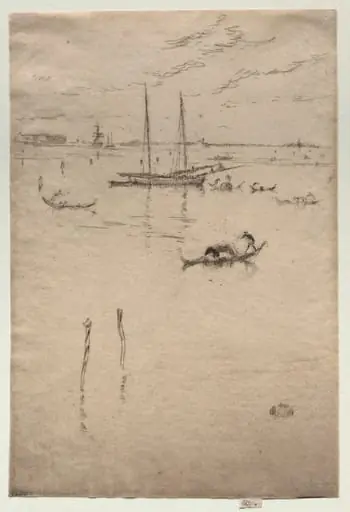 Little Lagoon
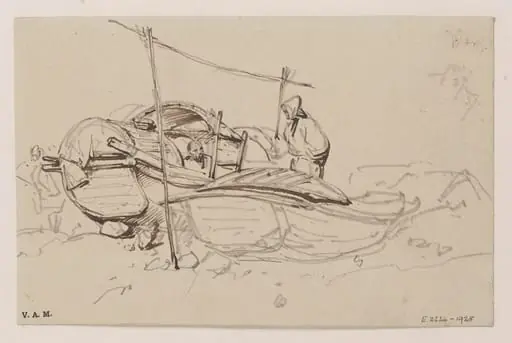 Untitled
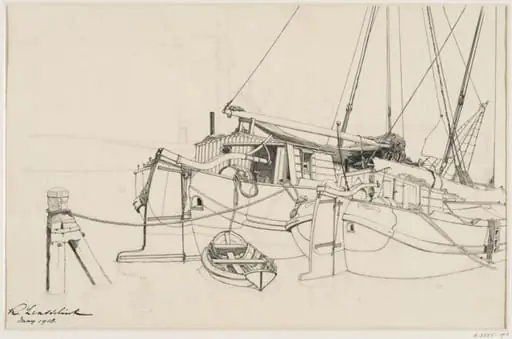 Dutch Praam and Tjalk
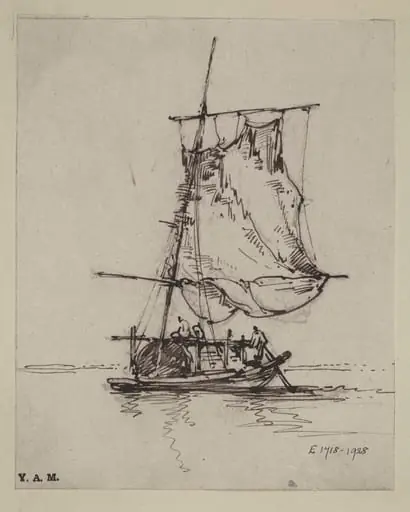 A drawing by George Chinnery of a Tanka boat with a large sail or net raised
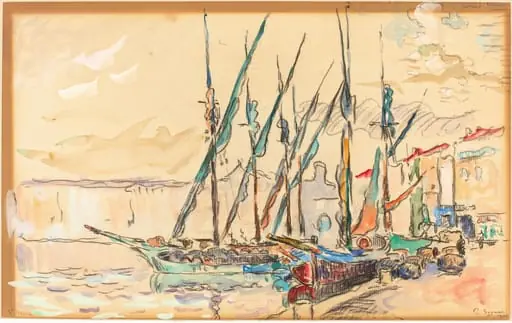 St Tropez
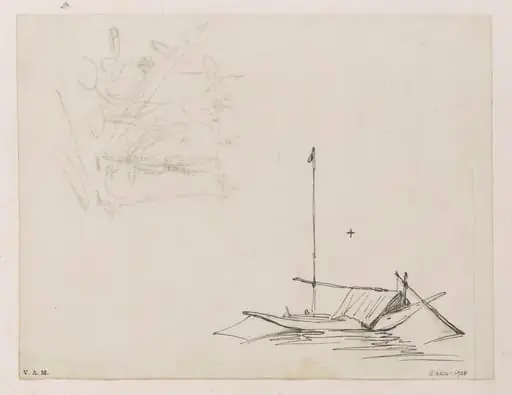 Two drawings: a small tethered boat, and a sketch of figures with utensils
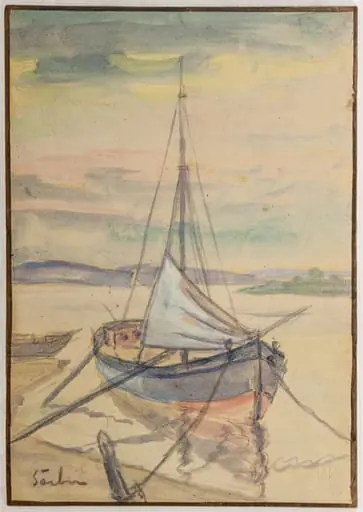 Barcaz la mal
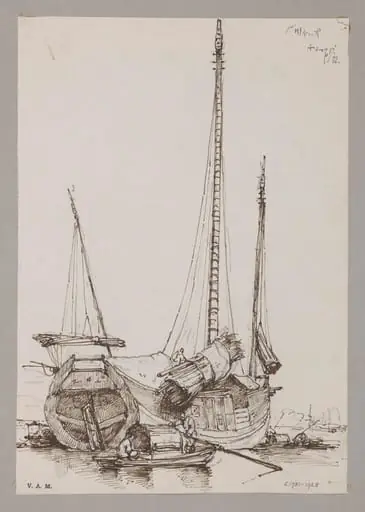 A Chinese junk with timbers being hauled aboard
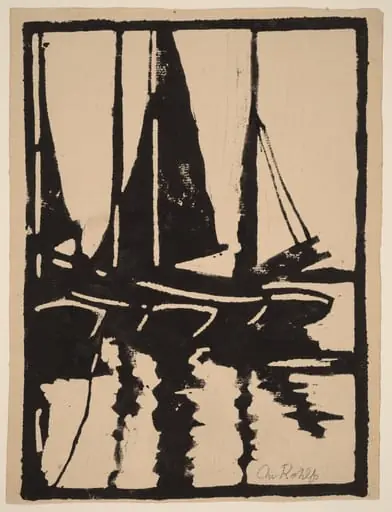 Sailboats in the Harbor