Artwork
Madonna and Child with the Infant Saint John
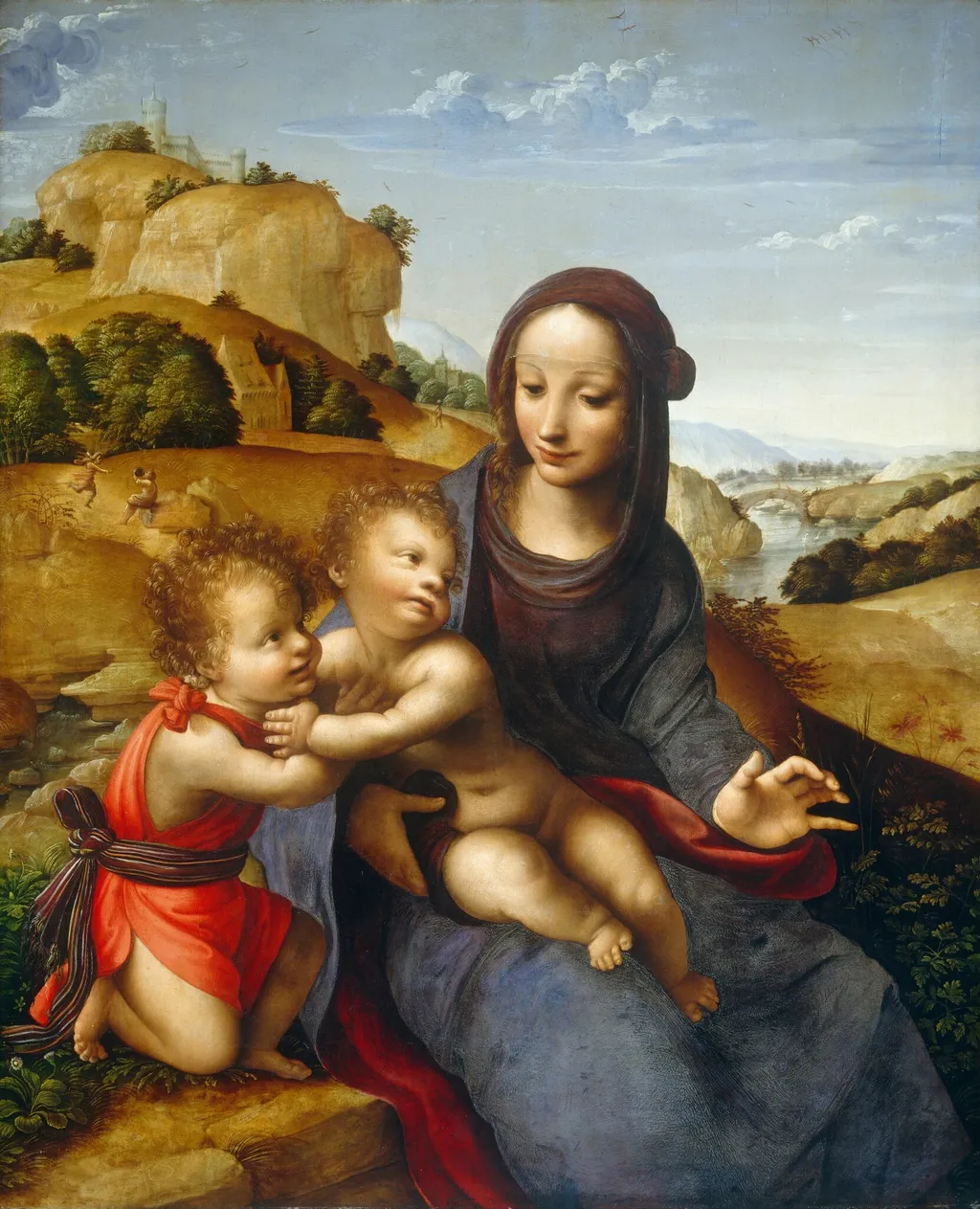
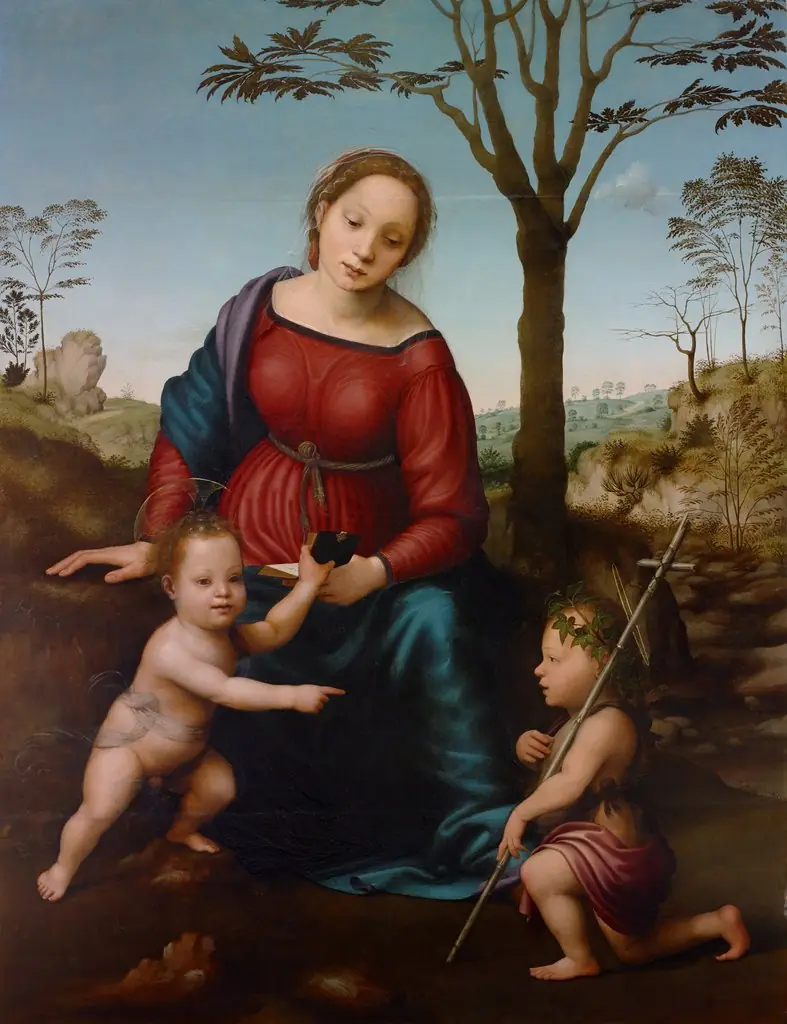
Madonna and Child with the Infant Saint John is an oil painting by the Early Renaissance artist Fernando Yáñez de la Almedina. It dates from 1505 and is held in the collection of the National Gallery of Art.
About this work
Subject & Meaning
Executed in 1505 by Fernando Yáñez de la Almedina, the piece functions as a visual sermon on the Incarnation and the salvific mission of Christ.
The painting shows the Virgin Mary cradling the infant Jesus, accompanied by the infant John the Baptist, a conventional composition in early sixteenth‑century Italian devotional art. The presence of John, identifiable by his lamb, underscores his role as the foreteller of Christ and reinforces the theological link between the Old and New Testaments. Mary’s gentle gesture and the tender interaction convey ideals of maternal compassion and divine protection, while the work’s formal qualities, oil and tempera on panel, measured at 78.4 × 64.1 cm, reflect the technical standards of the period.
Executed in 1505 by Fernando Yáñez de la Almedina, the piece functions as a visual sermon on the Incarnation and the salvific mission of Christ.
Technique & Style
Fernando Yáñez de la Almedina’s Madonna and Child with the Infant Saint John (1505) employs a mixed-medium technique, combining oil and tempera on a wooden panel support. The dimensions of the panel measure 78.4 by 64.1 centimeters. Stylistically, the work reflects the influence of Leonardo da Vinci, evident in the delicate sfumato handling of the figures’ contours and the subtle gradations of light and shadow.
The composition features a tender, intimate grouping of the Virgin Mary, Christ Child, and infant Saint John, with meticulous attention to anatomical detail and drapery folds. The condition of the painting, while not exhaustively detailed in available sources, remains part of the Samuel H. Kress Collection at the National Gallery of Art, suggesting preservation through institutional care.
History & Provenance
The painting titled 'Madonna and Child with the Infant Saint John' was executed in 1505 by Fernando Yáñez de la Almedina using oil and tempera on panel. Its early ownership is traced to Sir Giles Sebright of Beechwood, Boxmoor and London, who held it until its sale at Christie, Manson & Woods in London on 2 July 1937 (lot 110, attributed to Leonardo da Vinci). The work then passed to dealer Giuseppe Bellesi in London, who sold it to Count Alessandro Contini Bonacossi in Florence.
The Samuel H. Kress Foundation acquired the piece in 1938 and gifted it to the National Gallery of Art in 1939. The dating rests on the documented inception year of 1505; no contemporary record of the original commission survives.
Overview
This painting, titled Madonna and Child with the Infant Saint John, depicts the Virgin Mary cradling the Christ Child, accompanied by the young Saint John the Baptist. Executed in oil and tempera on a wooden panel, the work exemplifies a common devotional subject. The artist employed a mixed-media approach to achieve visual richness and a notable sense of spatial recession within the composition.
Context
The application of both oil and tempera paints on a panel support reflects a prevalent artistic practice during the era in which this work was created. This mixed-media technique offered artists considerable versatility, enabling them to build up luminous colors and intricate textures. Such methods were fundamental to the development of painting, allowing for greater realism and expressive potential in devotional and narrative works alike.
Own this work as a print
Artist & collection

Artist
Fernando (or Hernando) Yáñez de la Almedina, born in Almedina, Spain in c. 1475 and died in Valencia, Kingdom of Spain in 1536, was a Spanish painter. He was one of the most important early Renaissance painters in…

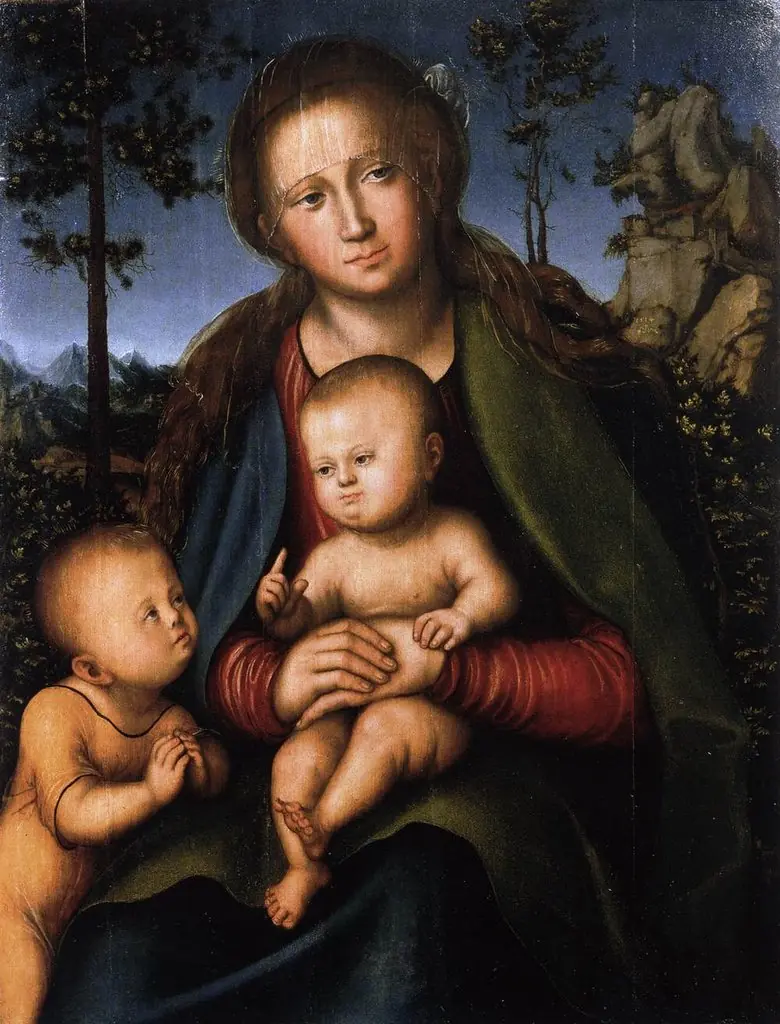 Madonna with Child with Young John the Baptist
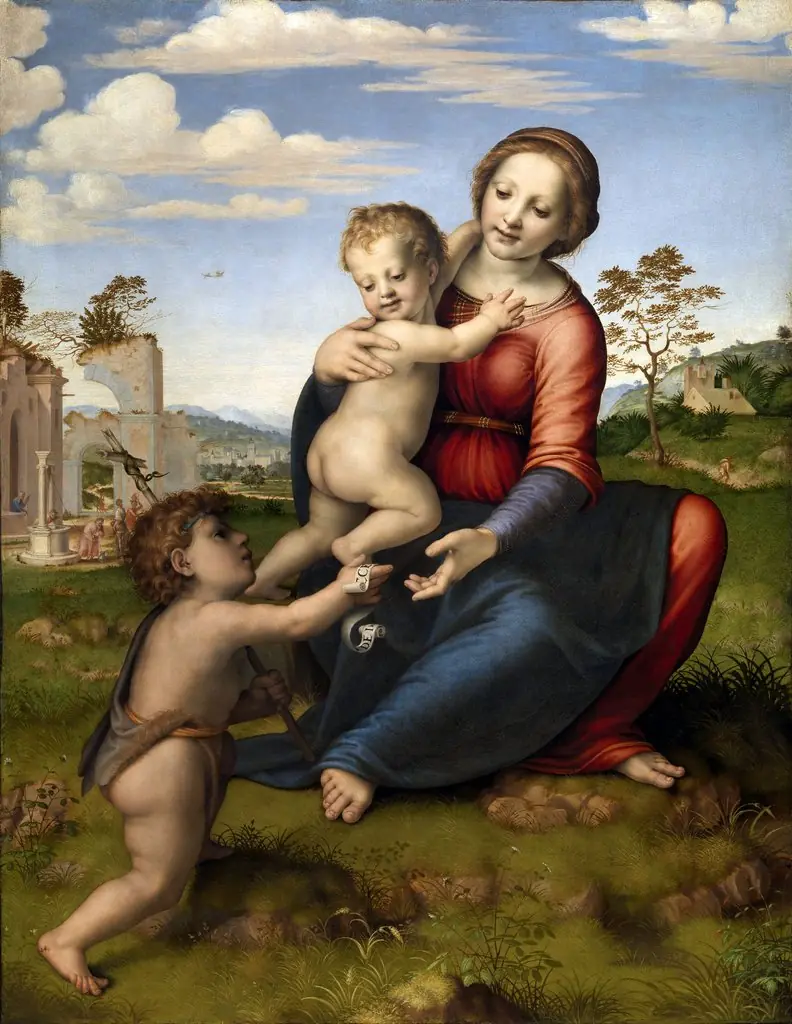 Madonna of the Well or Madonna and Child with the young St. John the Baptist
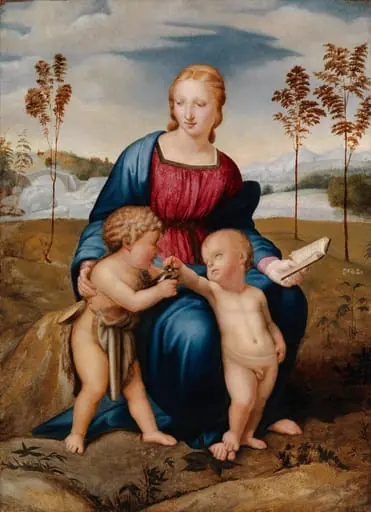 Madonna del Cardellino, kopio Rafaelin (Raffaello Sanzio) mukaan
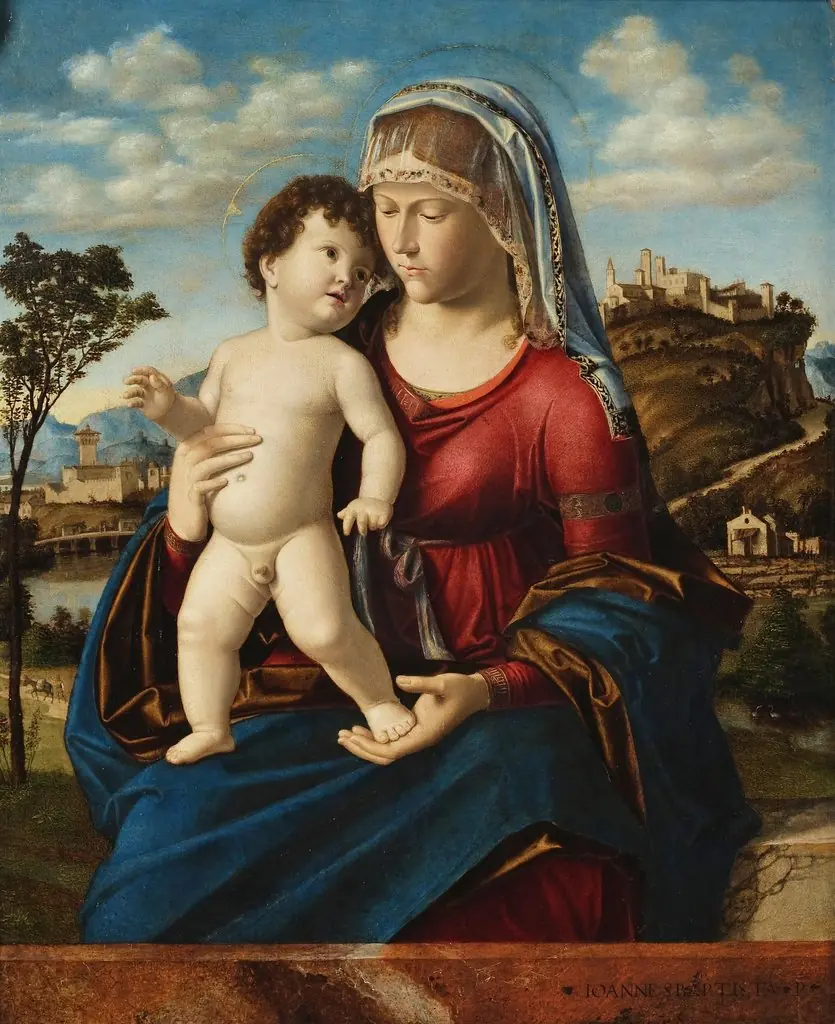 Madonna and Child in a Landscape
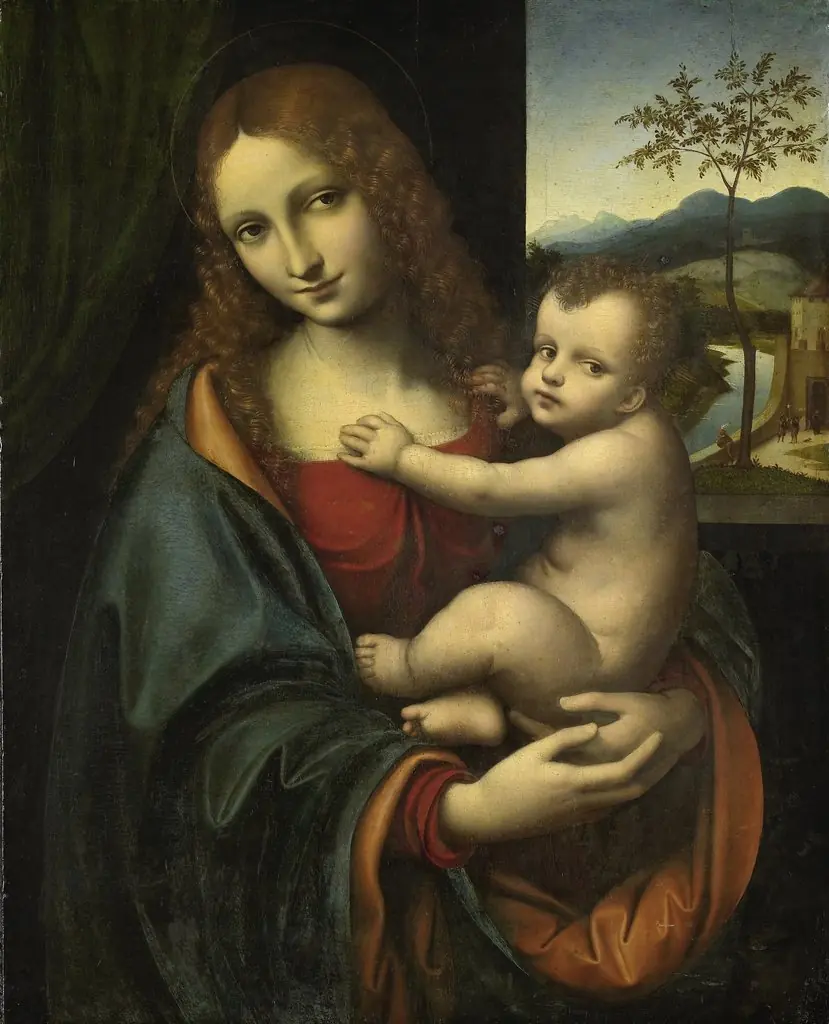 Virgin and Child
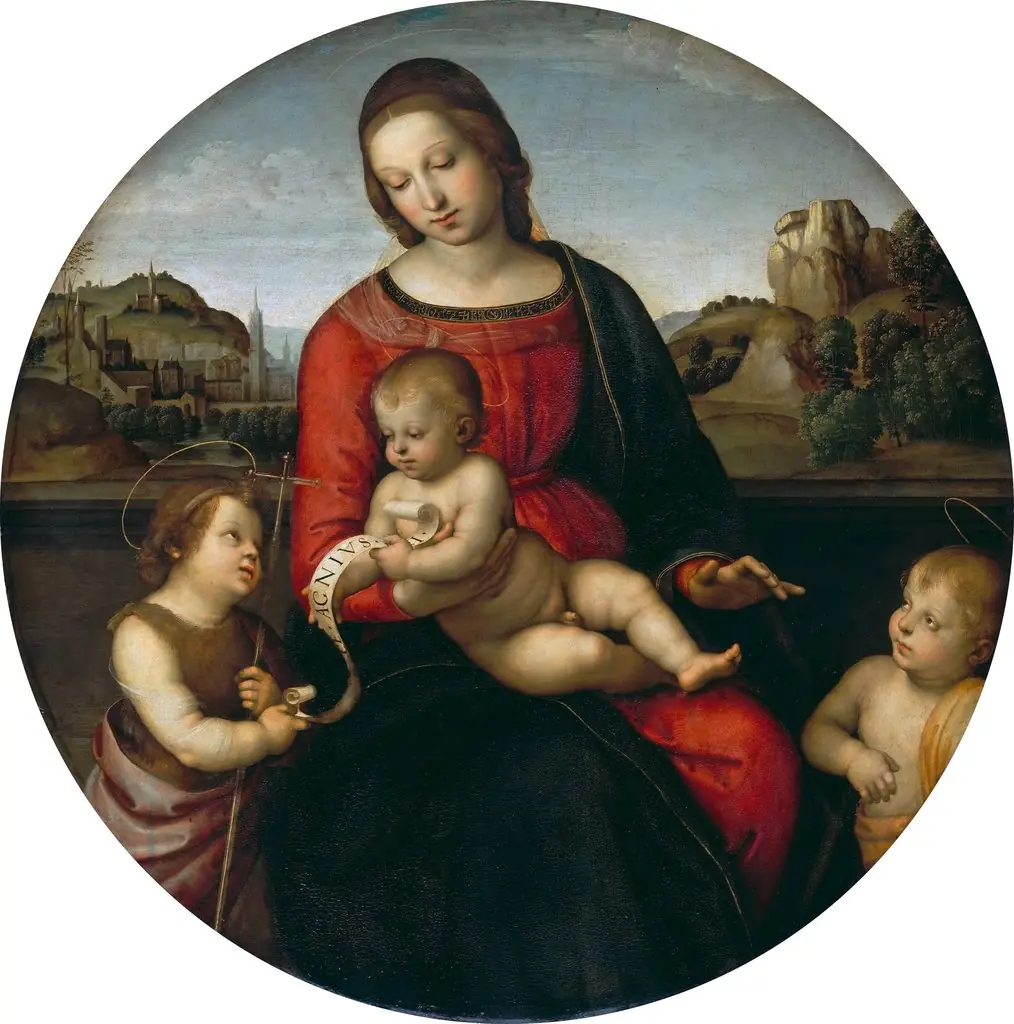 Terranuova Madonna
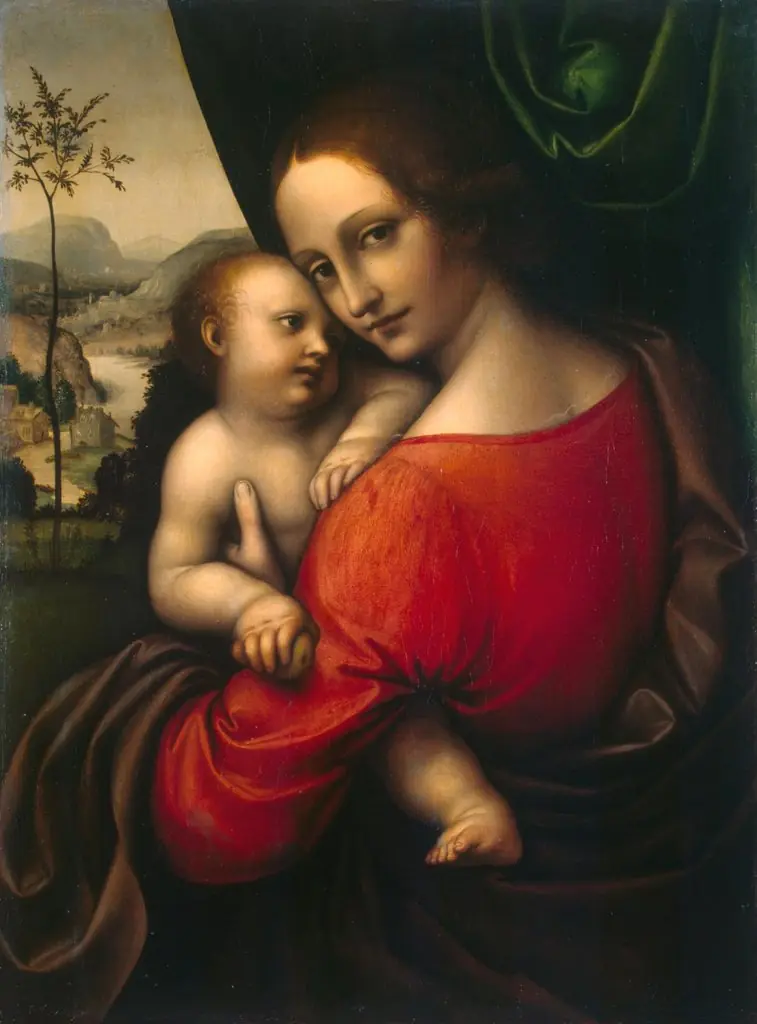 Madonna with Child
 Madonna and Child Seated in a Landscape with Saint John the Baptist