Artwork
Terranuova Madonna
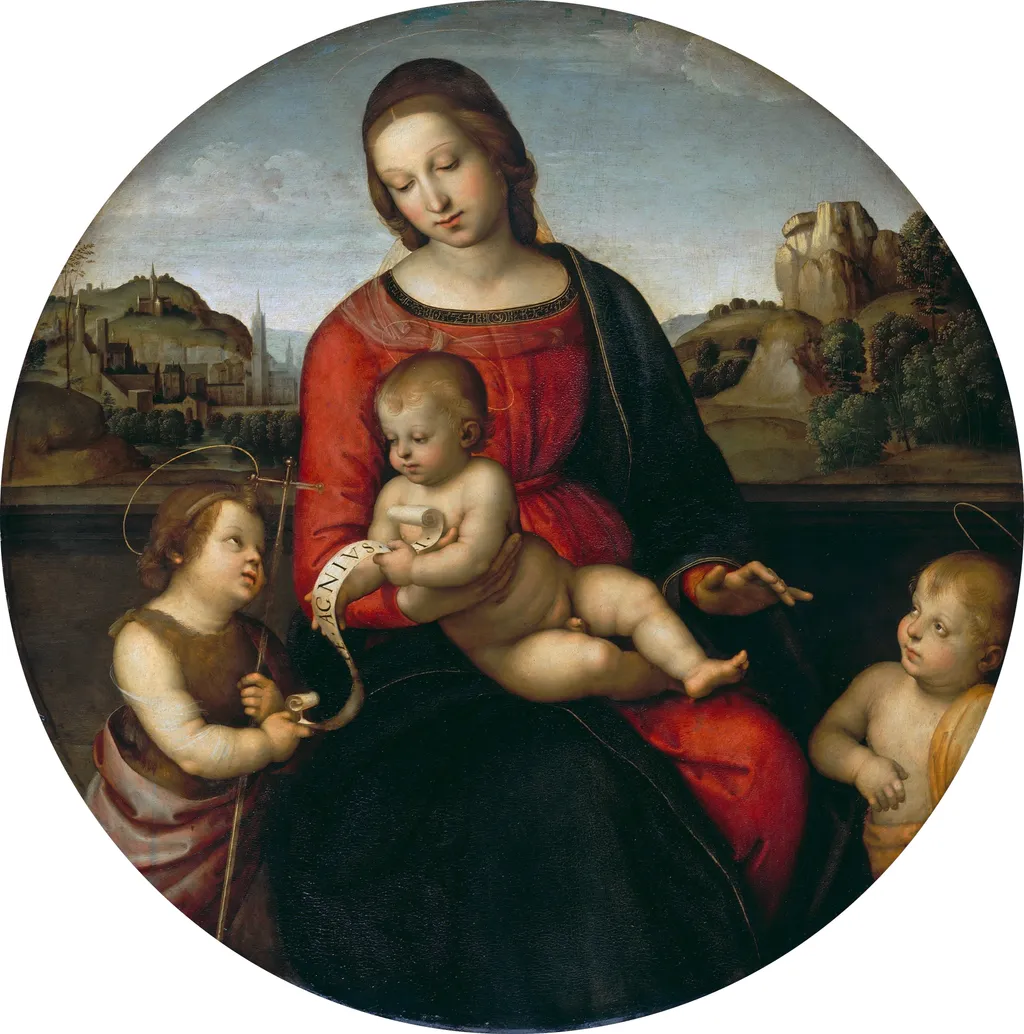
Terranuova Madonna is an oil painting by the High Renaissance artist Raphael. It dates from 1505 and is held in the collection of the Gemäldegalerie Berlin.
About this work
Subject & Meaning
The arrangement of the figures creates a triangular or pyramidal structure, balanced by the presence of the unknown saint on the right.
The Terranuova Madonna depicts a Holy Family grouping featuring the Virgin Mary seated centrally with the Christ Child on her lap. The composition includes the young John the Baptist on the left and a fourth unidentified child saint on the right, all distinguished by fine, elliptical golden halos. Iconographically, the work focuses on the interaction between the figures: the Christ Child holds a scroll inscribed with "AGNVS," which he passes to John the Baptist, who simultaneously grasps his traditional attribute, a cross-topped reed.
The arrangement of the figures creates a triangular or pyramidal structure, balanced by the presence of the unknown saint on the right. This complex interplay of naturalistic gestures and glances, set against a detailed landscape of rocky outcrops and distant fortifications, reflects the influence of Leonardo da Vinci on Raphael during his early Florentine period. The painting serves as a religious meditation on the connection between Christ and John the Baptist, framed within the popular circular tondo format of the time.
Technique & Style
The Terranuova Madonna is an oil painting on wood panel created by Raphael circa 1504–1505. Executed in the High Renaissance style, it employs oil paint to achieve layered chiaroscuro and delicate modeling of figures. The work is executed on a circular wooden support (tondo), measuring 87 cm in diameter, and depicts the Virgin Mary seated with the Christ Child, a youthful John the Baptist, and an unidentified boy saint arranged in a pyramidal composition.
Figures are rendered with elliptical halos and golden auras, their gestures and gazes interlocking in a dynamic spatial interaction influenced by Leonardo da Vinci’s compositional strategies. The background landscape features rugged rocks and distant architecture, rendered with greater topographic detail than in Raphael’s earlier devotional works. The painting’s condition remains stable, preserved under climate-controlled display at the Gemäldegalerie Berlin since its acquisition in 1854.
It was transferred from a private collection in Genoa or Naples to Berlin through a complex 19th-century transaction initiated by Gustav Friedrich Waagen and executed by Carl Wilhelm Götzloff, with final purchase facilitated by Bernstorff in 1854 for 37,500 talers.
History & Provenance
The Terranuova Madonna was painted by Raphael around 1505. Its provenance begins with ownership by the Dukes of Terranuova, from whom it entered the Berlin art market. The Prussian State Museums acquired it in 1854 after a complex negotiation involving several intermediaries, including Carl Wilhelm Götzloff and Eugen Eduard Schäfer, with Prussian envoy Bernstorff overseeing the purchase.
The painting remained in the Berlin museum system, was evacuated to a salt mine during World War II, held in Wiesbaden, and returned to Berlin in 1956. It was displayed at the Museum Dahlem until 1997 and has been exhibited in the new Gemäldegalerie at the Kulturforum since 1998. The work is an oil on wood panel, measuring 87 cm in diameter, and is classified as a religious painting in the High Renaissance style.
The painting is held by the Gemäldegalerie in Berlin, where it is part of the permanent collection under inventory number 247 A. It entered the Prussian state museums in 1854 after being acquired from the Dukes of Terranuova, for whom it had been named; the purchase was arranged through the Prussian envoy Bernstorff at a cost of 37,500 Taler, the highest price paid for a painting during that era.
Following its acquisition, the work was on continuous view at the Königliches Museum until 1939, when it was evacuated to the Flakturm Friedrichshain. In spring 1945 it was relocated to the Kaiseroda-Merkers potash mine in Thuringia, where it was recovered by American forces and sent to the Central Art Collecting Point in Wiesbaden. The painting returned to Berlin in 1956 and was displayed at the Museum Dahlem until 1997. Since 1998 it has been exhibited in the new Gemäldegalerie at the Kulturforum.
Context
Scholars consistently identify the Terranuova Madonna as an early Florentine work by Raphael, dated to 1504–1505, and note its transitional character within his oeuvre.
The painting’s composition and sfumato landscape reflect Leonardo da Vinci’s influence during Raphael’s Florentine period. Its tondo format, balanced pyramidal arrangement, and naturalistic handling of gesture and light are repeatedly cited as hallmarks of Raphael’s assimilation of Leonardo’s innovations while retaining elements of his Umbrian training. Critical literature emphasizes the work’s status among Raphael’s first Madonnas in Florence and its importance for understanding the evolution of his mature style.
The Terranuova Madonna entered the Gemäldegalerie, Berlin, in 1854 after purchase for 37,500 talers, a landmark acquisition under Gustav Friedrich Waagen. Its exhibition history includes wartime evacuation and postwar restitution, after which it was displayed in Dahlem before joining the new Gemäldegalerie in 1998.
Legacy
The Terranuova Madonna is recognized as one of Raphael's earliest known works in the tondo format, alongside the Madonna Conestabile. Its composition demonstrates a decisive synthesis of Leonardo da Vinci's artistic concepts with Raphael's native Peruginesque style, marking a pivotal moment in the artist's Florentine period. The painting's complex landscape and the naturalistic interplay of gestures and gazes among the figures reflect Leonardo's profound influence on the young master.
While the attribution to Raphael is unanimous, the work's legacy is also defined by its remarkable provenance; it remained in the collection of the Dukes of Terranuova until its acquisition by the Prussian state in 1854. This purchase, facilitated by Gustav Friedrich Waagen, set a record price of 37,500 thalers for the era, underscoring the high esteem in which the work was held by 19th-century collectors.
Overview
Created by Raphael around 1504–1505, this oil painting on wood presents a serene grouping of the Virgin Mary with the infant Christ, accompanied by two young male figures. The composition is set against a landscape featuring a town, a church spire, and a rocky outcrop, lending depth to the intimate scene.
Own this work as a print
Artist & collection
Artist
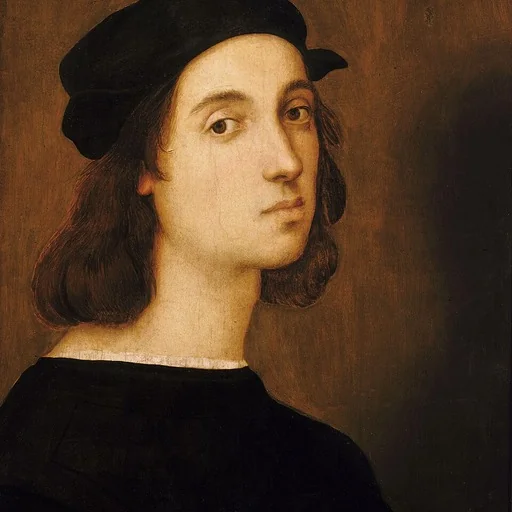
Raphael was born Raffaello Sanzio in Urbino on April 6, 1483, the son of Giovanni Santi, a painter and poet attached to the ducal court.

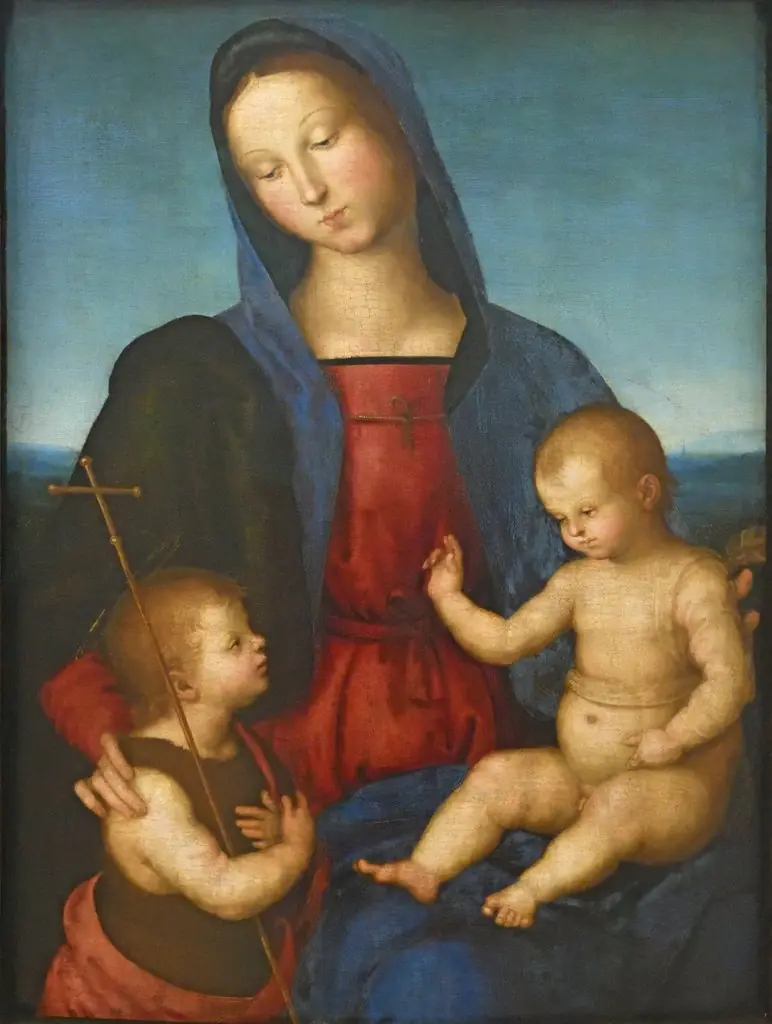 Madonna Diotallevi
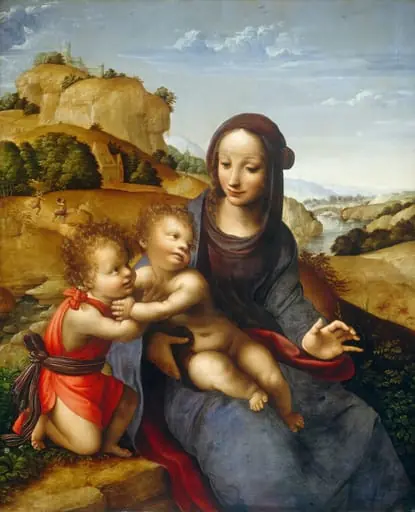 Madonna and Child with the Infant Saint John
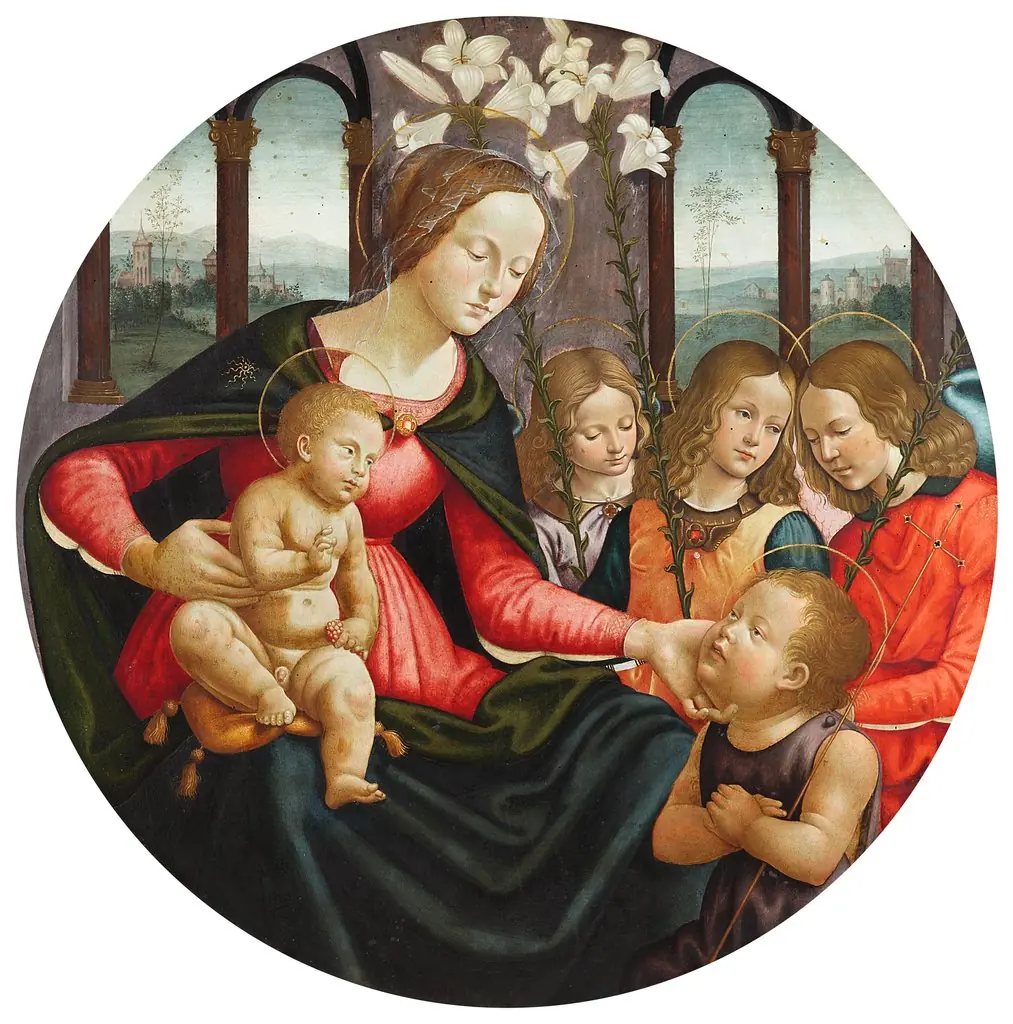 The Virgin and Blessing Child, Young St. John and three Angels
 Adoration of the Child with Young St John the Baptist – Tondo
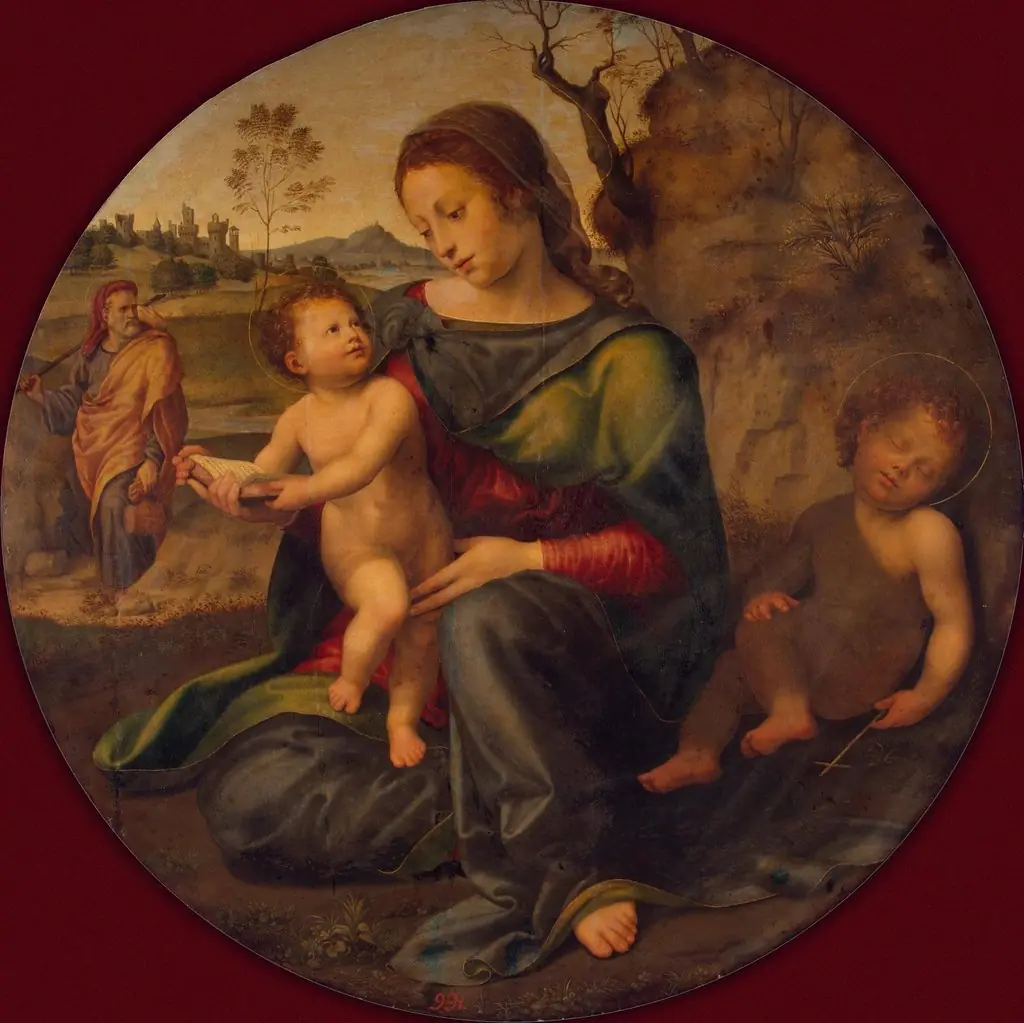 Holy Family with St John the Baptist
 Maria mit dem Kind und dem Johannesknaben
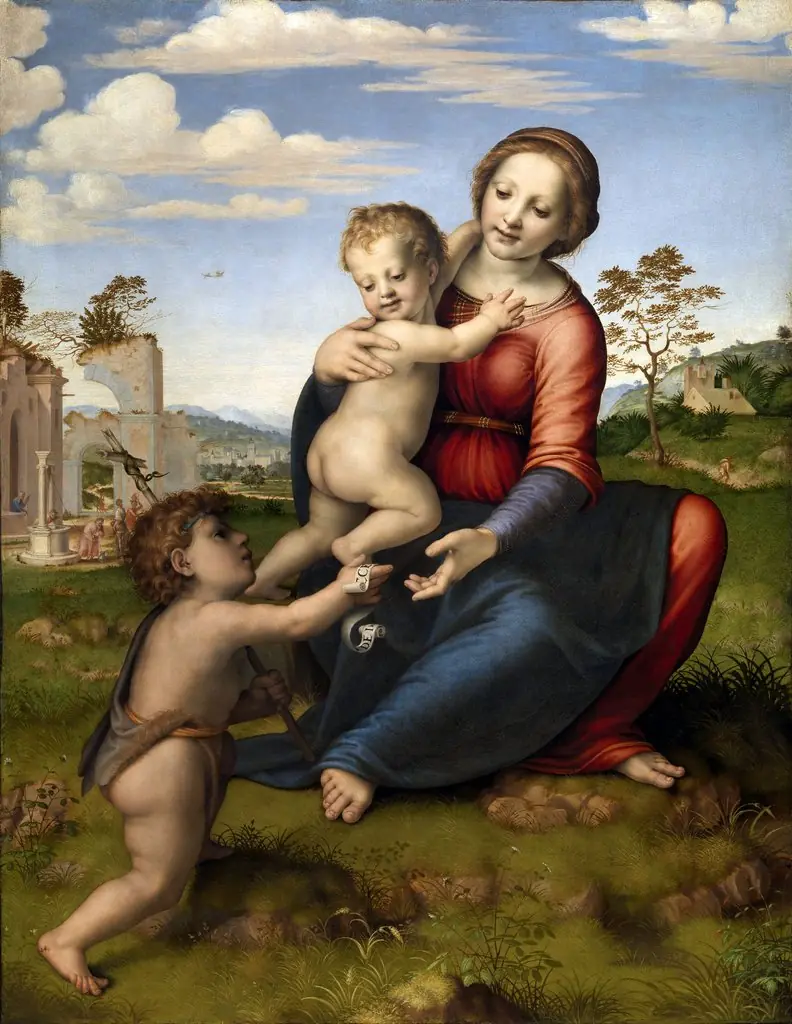 Madonna of the Well or Madonna and Child with the young St. John the Baptist
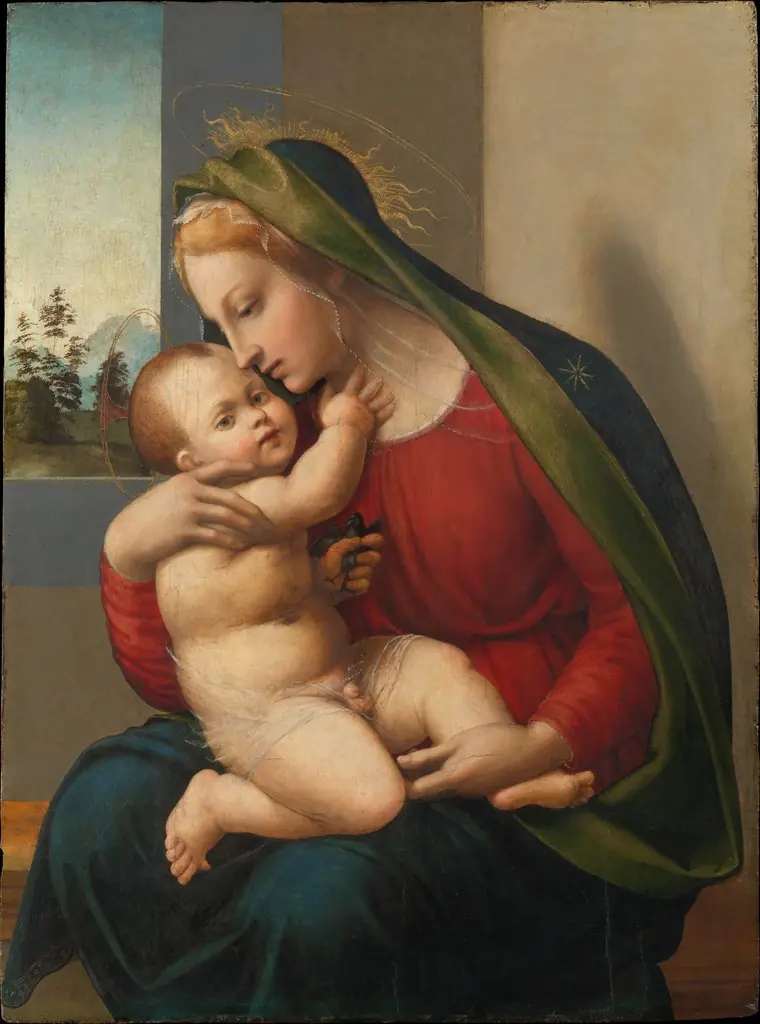 Madonna and Child
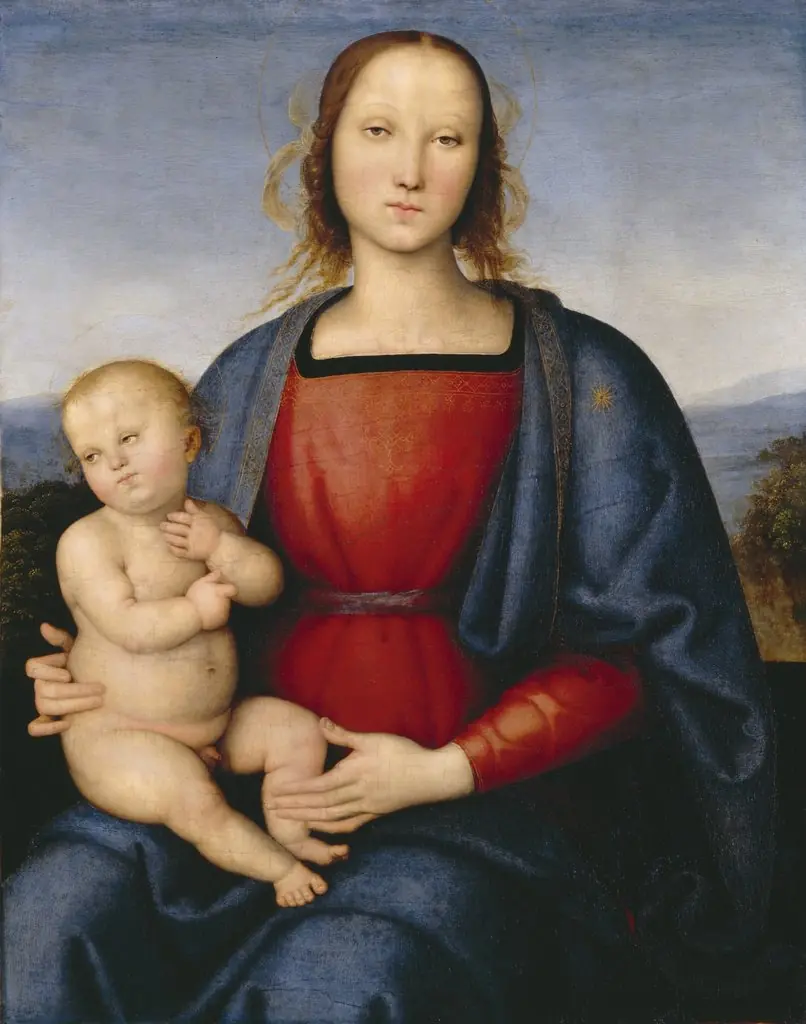 Madonna and Child