Artwork
西国鎮静撫諸将天杯賜之図|Illustration of the Commanders who Pacified Western Japan, Receiving the Emperor's Gift Cups (Saigoku chinbu shoshō tenpai o tamau no zu)
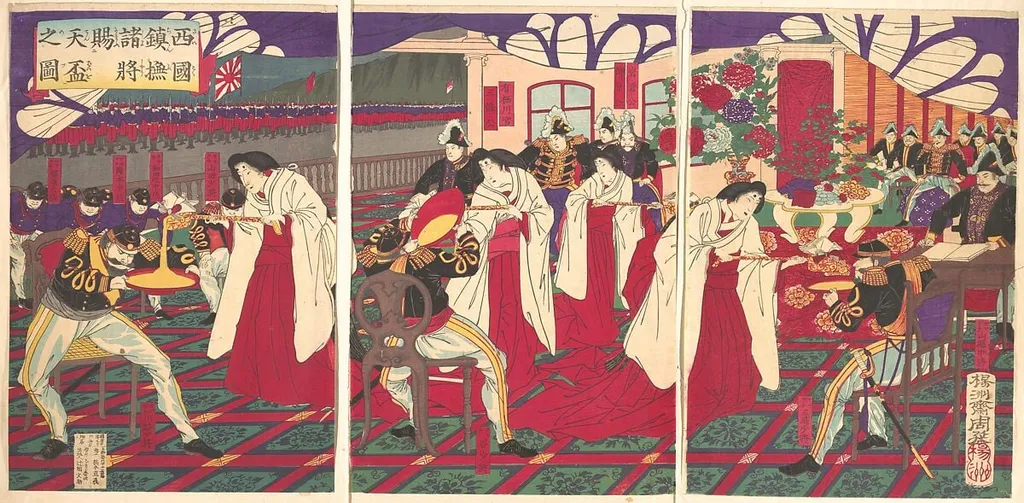
西国鎮静撫諸将天杯賜之図|Illustration of the Commanders who Pacified Western Japan, Receiving the Emperor's Gift Cups (Saigoku chinbu shoshō tenpai o tamau no zu) is an ink print by the Impressionist artist Yōshū (Hashimoto) Chikanobu. It dates from 1877 and is held in the collection of the Metropolitan Museum of Art.
- Accession no.
- JP3263
- Credit line
- Gift of Lincoln Kirstein, 1959
About this work
Overview
Illustrated by Yōshū Chikanobu in 1877, this multicolored woodblock print measures a single sheet of paper and depicts three simultaneous scenes related to the imperial bestowal of ceremonial cups. The work is part of the Metropolitan Museum of Art’s collection and exemplifies the late‑Edo/early‑Meiji period’s interest in historicized narrative prints.
Subject & Meaning
The rightmost image presents a banquet table laden with food and flowers, emphasizing the celebratory nature of the event.
The composition records the presentation of imperial cups to commanders credited with pacifying western Japan. In the left panel a kneeling figure in a vivid red robe receives a golden cup, while the central scene shows a gathering before a red‑tiled, white‑washed structure, suggesting an official ceremony. The rightmost image presents a banquet table laden with food and flowers, emphasizing the celebratory nature of the event.
Technique & Style
Executed with traditional ukiyo‑e woodblock methods, the print combines black outlines with bright pigments applied in flat, saturated areas. The use of patterned kimono fabrics and stylized architecture reflects Chikanobu’s characteristic blend of realism and decorative flourish, while the clear division into three narrative zones demonstrates a compositional strategy common to Meiji‑era illustrated histories.
History & Provenance
Created during a period of rapid modernization, the print was likely produced for a popular audience interested in recent military achievements. It entered the Metropolitan Museum of Art’s collection through a 20th‑century acquisition of Japanese prints, where it remains catalogued under the artist’s name, Yōshū (Hashimoto) Chikanobu, and the title illustrating the imperial gift ceremony.
Artist & collection


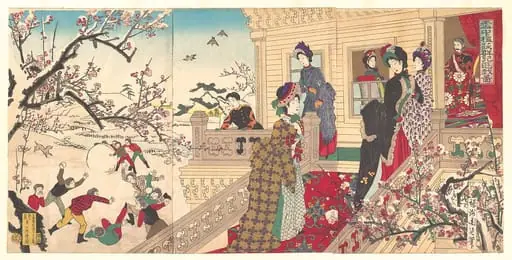 『雪中梅荘群児遊戯 図』|Children Playing in the Snow under Plum Trees in Bloom (Secchū baisō gunji yūgi zu)
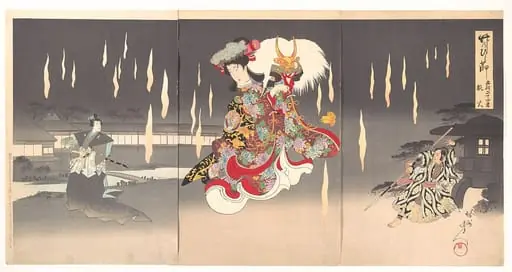 Untitled
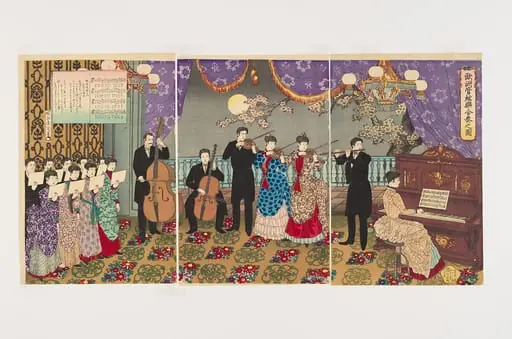 『欧州管絃楽合奏之図』|Concert of European Music (Ōshū kangengaku gassō no zu)
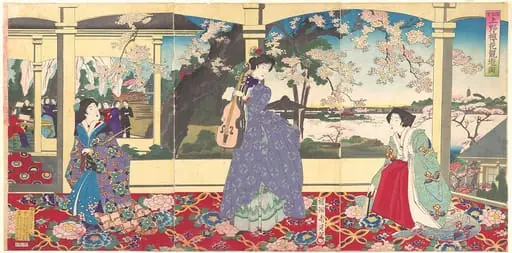 『踏舞会 上野桜花観 遊ノ図』|A Dance Party: Enjoying Cherry Blossom Viewing at Ueno (Tōbukai Ueno ōka yūran no zu)
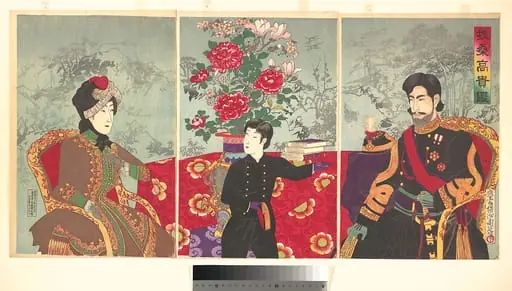 『扶桑高貴鑑』|A Mirror of Japan’s Nobility: The Emperor Meiji, His Wife, and Prince Haru (Fūsō kōki kagami)
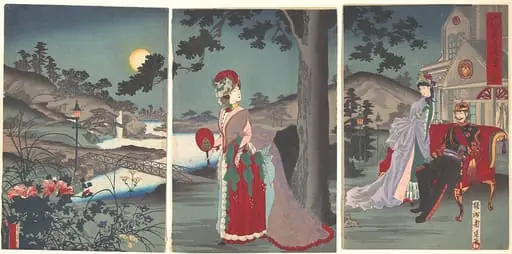 『高貴納涼ノ図』|Nobility in the Evening Cool (Koki nōryō no zu)
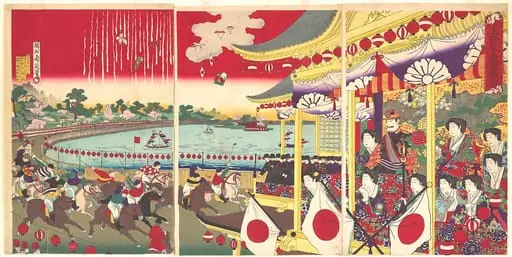 『上野不忍競馬図』|View of the Horse Track at Shinobazu in Ueno Park (Ueno shinobazu keiba zu)
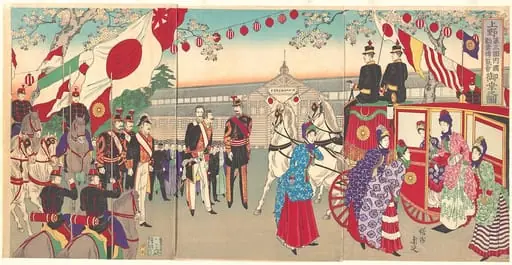 『上野第三回内国勧業 博覧会御幸之図』|Visit of the Empress to the Third National Industrial Promotional Exhibition at Ueno Park (Ueno dai sankai naikoku kangyō hakuran kai gyokō no zu)
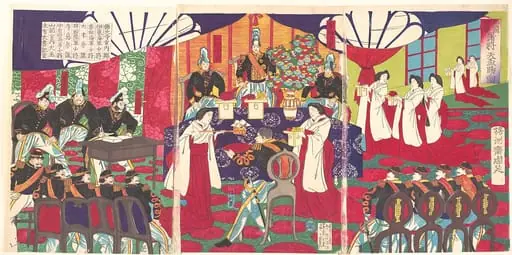
- 西国諸将鎮静天杯賜ル之図|Illustration of the Commanders who Pacified Western Japan, Receiving the Emperor's Gift Cups (Saigoku chinsei shoshō tenpai o tamawaru no zu)
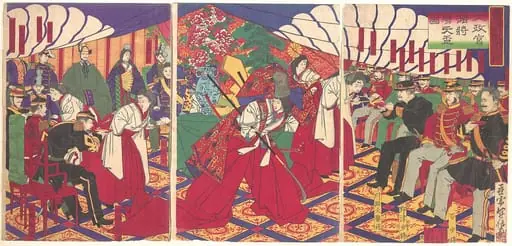 Taiseikan Shosho Shiten|Commanders Receiving the Emperor's Drinking Cups
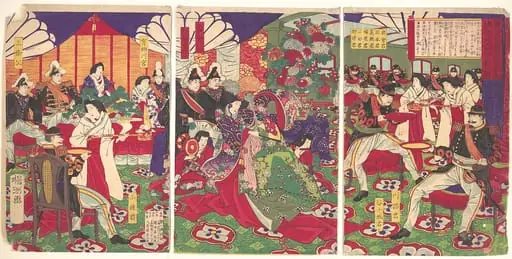 『鹿児島賊徒鎮静依諸将 天杯頂戴之図』|Leaders of the Pacification of the Kagoshima Rebels Celebrating with Cups of Wine from the Emperor (Kagoshima zokuto chinsei ni yotte shoshō tenhai chōdai no zu)
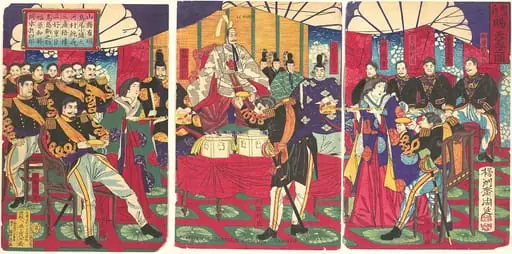 勲功之将天杯賜之図|Illustration of the Honored Commanders, Receiving the Emperor's Gift Cup (Kunkō no shō tenpai o tamau no zu)
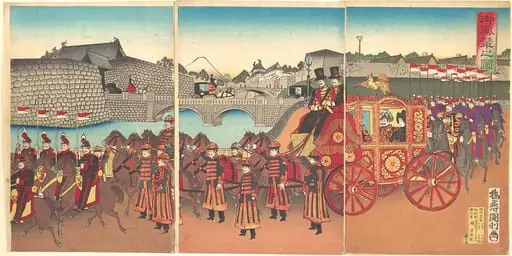 御鳳輦之図|Illustration of the Imperial Carriage (Gohōren no zu)
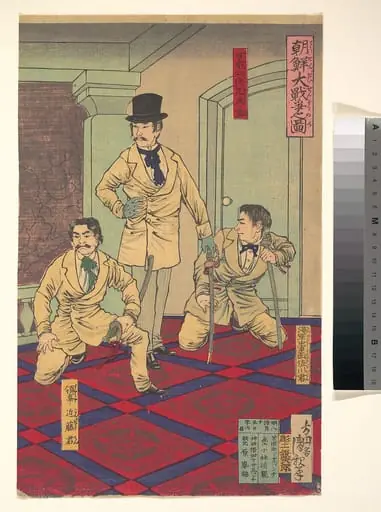 朝鮮大戦争之図|Illustration of the Great Korean War (Chōsen dai sensō no zu)