Artwork
Lions and Tigers in Peony and Bamboo
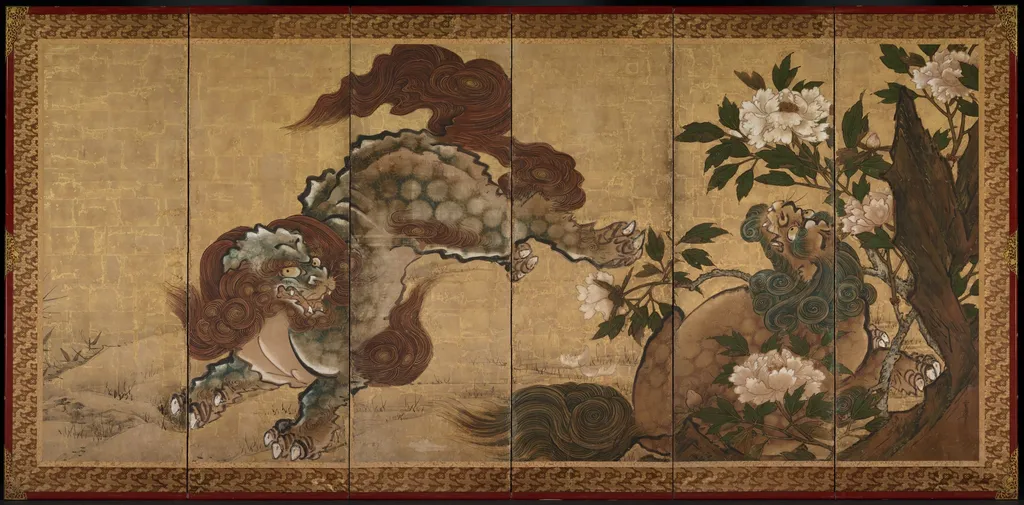
Lions and Tigers in Peony and Bamboo is an unspecified painting by the Yōga artist Yamaguchi Sekkei. It dates from 1668 and is held in the collection of the Cleveland Museum of Art.
About this work
Subject & Meaning
The pairing of powerful beasts with auspicious flora aligns with seventeenth-century programs that used natural imagery to project virtuous order and harmony.
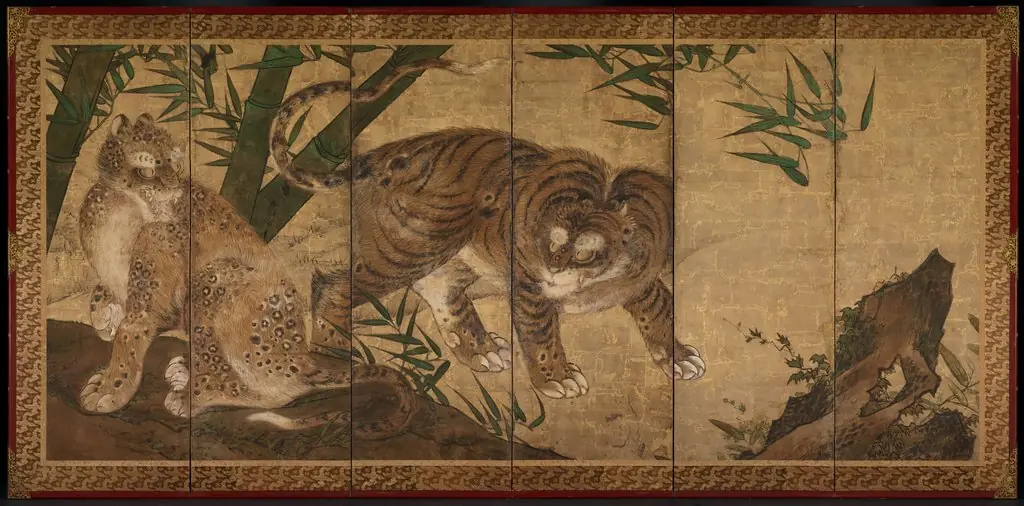
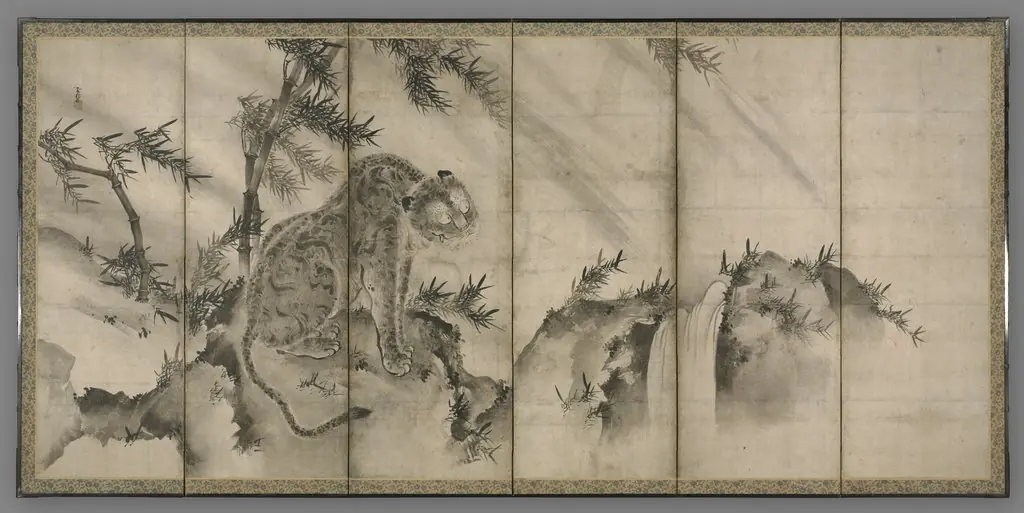
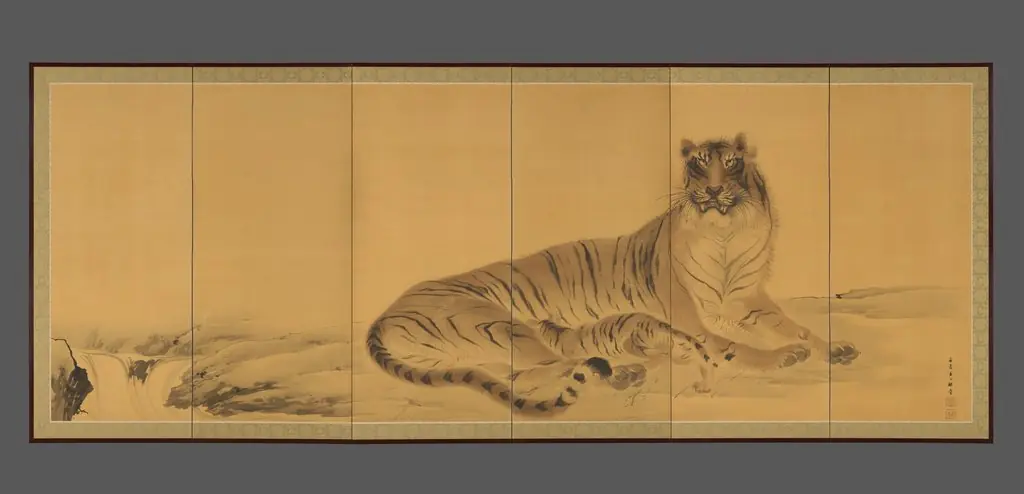
The painting depicts three felines, two lions and a tiger, amid peonies and bamboo, a composition steeped in East Asian symbolic language. Lions and tigers carried layered meanings: lions signified protection and power, while tigers represented courage and the warding off of evil. Peonies denoted wealth and honor, and bamboo conveyed resilience and scholarly integrity.
Together, these motifs likely conveyed a wish for prosperity, protection, and moral steadfastness in the patron's household. The pairing of powerful beasts with auspicious flora aligns with seventeenth-century programs that used natural imagery to project virtuous order and harmony.
History & Provenance
Created in 1668 in Japan, Lions and Tigers in Peony and Bamboo is a painting by Yamaguchi Sekkei (1644–1732). It is held in the collection of the Cleveland Museum of Art, where it is recorded with the accession number 1972.10. While the circumstances of its original commission and its earlier ownership are not detailed in the available records, the work is attributed to Sekkei with an inception date of 1668. The sources do not identify any documented public exhibitions of the piece.
Overview
Yamaguchi Sekkei, a Japanese painter active during the middle Edo period, completed Lions and Tigers in Peony and Bamboo in 1668. This work, also known by Sekkei's art names Baian or Hakuin, is held in the collection of The Cleveland Museum of Art. It exemplifies the yoga style, a Japanese approach to painting influenced by Western artistic conventions, depicting powerful felines amidst a vibrant natural setting.
Technique & Style
Sekkei's painting showcases distinctive stylistic choices. The tiger's fur is rendered with tight, swirling brushstrokes, imparting a tangible texture to the animal's coat. The artist employs a palette of earthy browns and greens for the natural elements, contrasted with bold reds and golds that define the background. This interplay of color and varied brushwork contributes to the dynamic and expressive quality of the artwork.
Artist & collection
Artist
Yamaguchi Sekkei (Japanese: 山口雪渓) also known as Yamaguchi Sōsetsu (山口宗雪) (1644/48, Kyoto - 22 October 1732, Kyoto) was a Japanese artist of the middle Edo period. He sometimes went under the names Baian (梅庵) or Hakuin (白隠).