Artwork
Weizheng Riding on an Ox
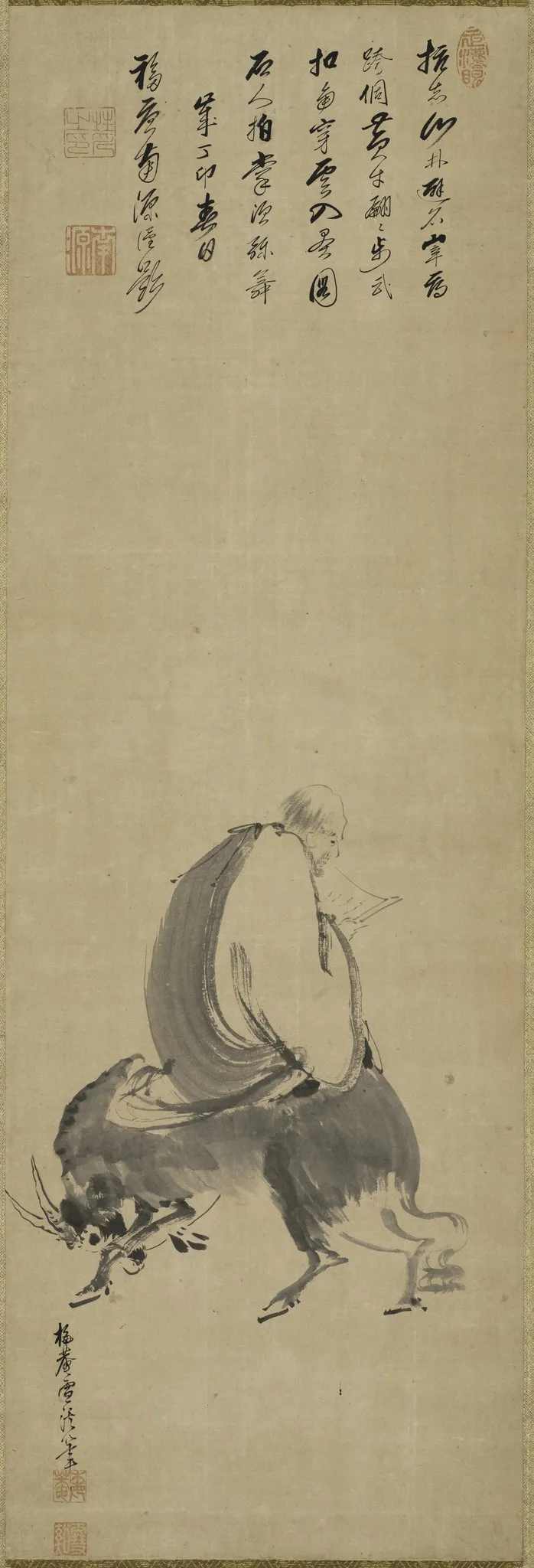
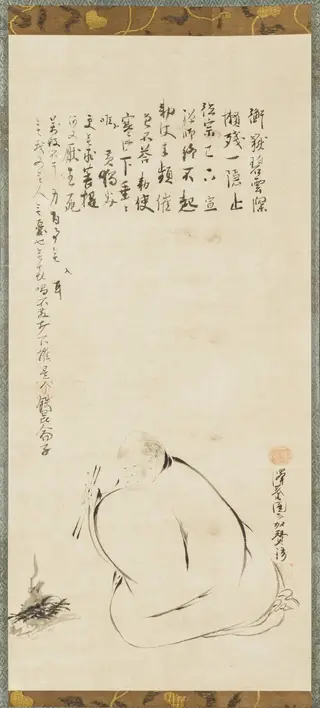
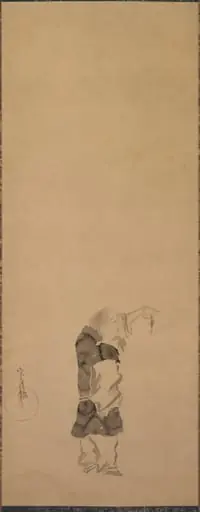
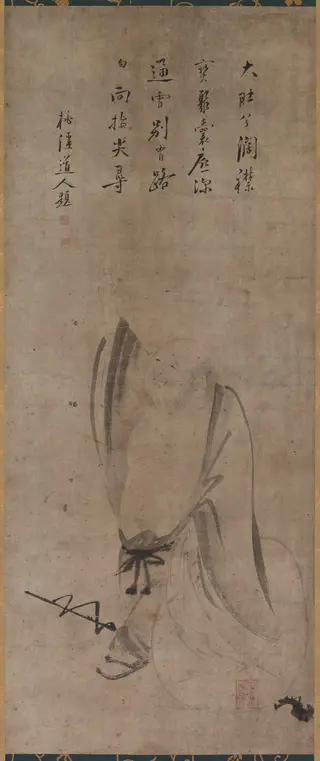
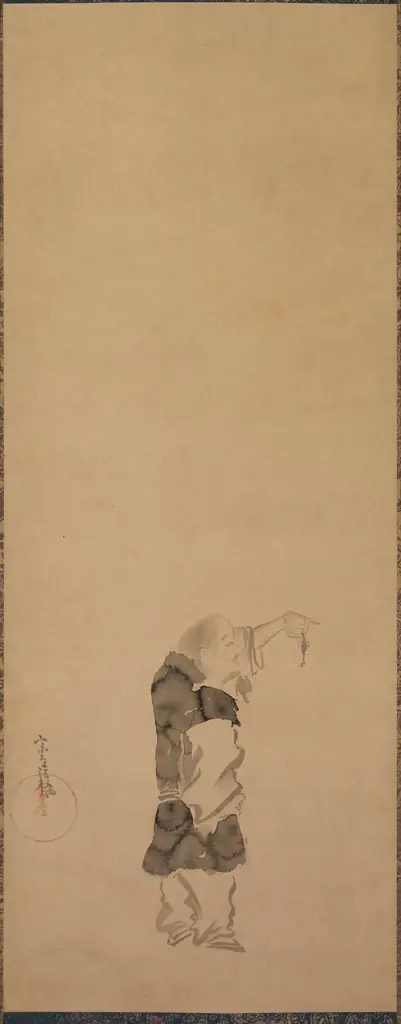
Weizheng Riding on an Ox is an unspecified painting by the Nanga artist Yamaguchi Sekkei. It dates from 1694 and is held in the collection of the Cleveland Museum of Art.
About this work
Overview
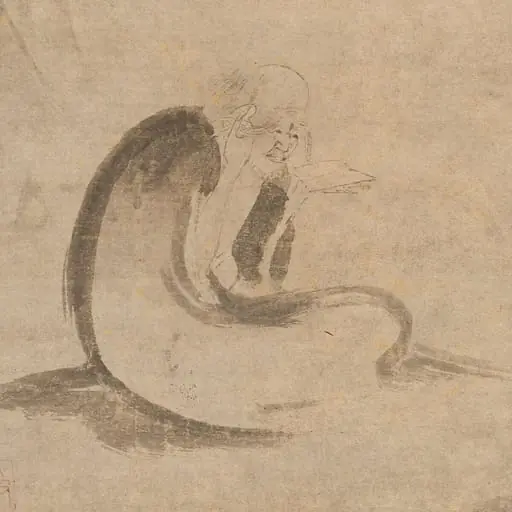
Created in 1694, Weizheng Riding on an Ox is a monochrome ink painting by Japanese artist Yamaguchi Sekkei, who was active during the middle Edo period. The work belongs to the nanga, or bunjinga, tradition that emulated Chinese scholar‑artist aesthetics. It portrays a solitary, elderly figure astride a large ox, set against a plain, lightly washed background.
Subject & Meaning
The central figure is identified as Weizheng, a historical scholar often invoked in East Asian visual culture as a symbol of reclusion and intellectual contemplation. By placing him on an ox, a creature linked to humble travel and rural life, the composition suggests a deliberate withdrawal from courtly affairs in favor of solitary study and moral reflection.
Technique & Style
Sekkei employs a restrained black ink palette, allowing the paper’s pale tone to serve as the visual field. Brushwork is loose and expressive, especially in rendering the ox’s shaggy coat and curved horns, while the figure is suggested with minimal, gestural strokes. A small, elegant signature appears at the lower edge, and a brief poem above the scene adds a lyrical dimension.
History & Provenance
The painting is attributed to Yamaguchi Sekkei, also known by the art names Baian and Hakuin, who worked within the literati-inspired bunjinga movement. After remaining in private collections for centuries, the work entered the holdings of the Cleveland Museum of Art, where it is displayed as part of the museum’s East Asian painting collection.
Artist & collection
Artist
Yamaguchi Sekkei (Japanese: 山口雪渓) also known as Yamaguchi Sōsetsu (山口宗雪) (1644/48, Kyoto - 22 October 1732, Kyoto) was a Japanese artist of the middle Edo period. He sometimes went under the names Baian (梅庵) or Hakuin (白隠).