Artwork
Miniature Album with Figures and Landscape (Landscape with Two Buildings)
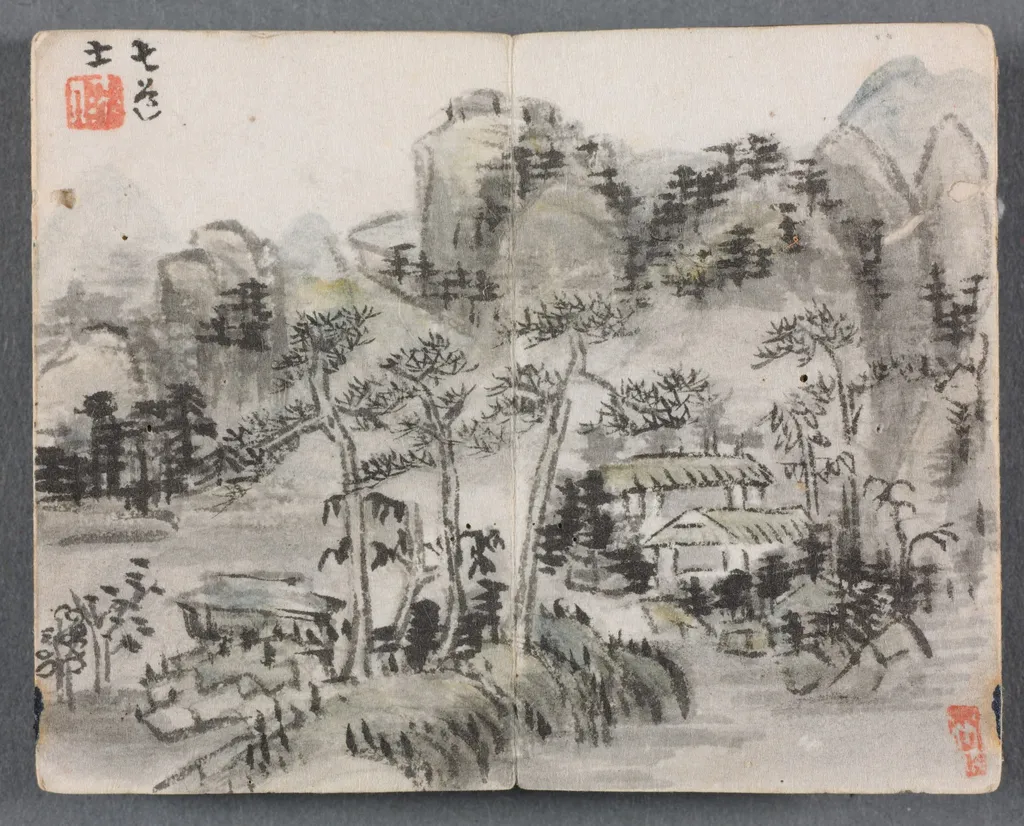
Miniature Album with Figures and Landscape (Landscape with Two Buildings) is an unspecified painting by the Chinese Orthodox School artist Zeng Yangdong. It dates from 1822 and is held in the collection of the Cleveland Museum of Art.
About this work
History & Provenance
Its provenance within public records begins at the museum, which acquired it in 1975 as part of an accession designated 1975.
The Miniature Album with Figures and Landscape (Landscape with Two Buildings) is dated 1822 and attributed to Zeng Yangdong, a Chinese artist active in the early nineteenth century. The work entered the collection of the Cleveland Museum of Art, where it is currently held. Its provenance within public records begins at the museum, which acquired it in 1975 as part of an accession designated 1975.11.c. No documented commission or earlier ownership history is recorded in available sources.
Context
Zeng Yangdong's 1822 painting Landscape with Two Buildings was created in China and is held by the Cleveland Museum of Art. The work exemplifies early 19th-century Chinese landscape traditions within the artist's oeuvre, reflecting contemporary practices of miniature album painting. Its precise date and provenance provide critical insight into regional artistic conventions during this period, situating it within broader scholarly discussions of Qing dynasty visual culture.
Overview
Miniature Album with Figures and Landscape, also known as Landscape with Two Buildings, is a small-scale ink painting executed in 1822 by the Chinese artist Zeng Yangdong. The work is part of the collection of the Cleveland Museum of Art, where it is displayed as an example of early‑nineteenth‑century literati landscape.
Subject & Meaning
The composition presents a tranquil countryside scene in which two modest structures are nestled among gently rolling hills and a sparse grove of trees. A narrow, winding path threads through the terrain, suggesting a quiet journey or retreat. The absence of human figures emphasizes the serenity of the natural setting and the contemplative mood typical of scholarly painting.
Technique & Style
Rendered primarily in monochrome ink with subtle washes of gray, the painting relies on delicate brushwork to convey form and atmosphere. Loose, rapid strokes create a sketch‑like quality, while occasional touches of green and yellow provide restrained highlights. The overall effect is that of a spontaneous study, reflecting the literati tradition of valuing expressive brush gestures over meticulous detail.
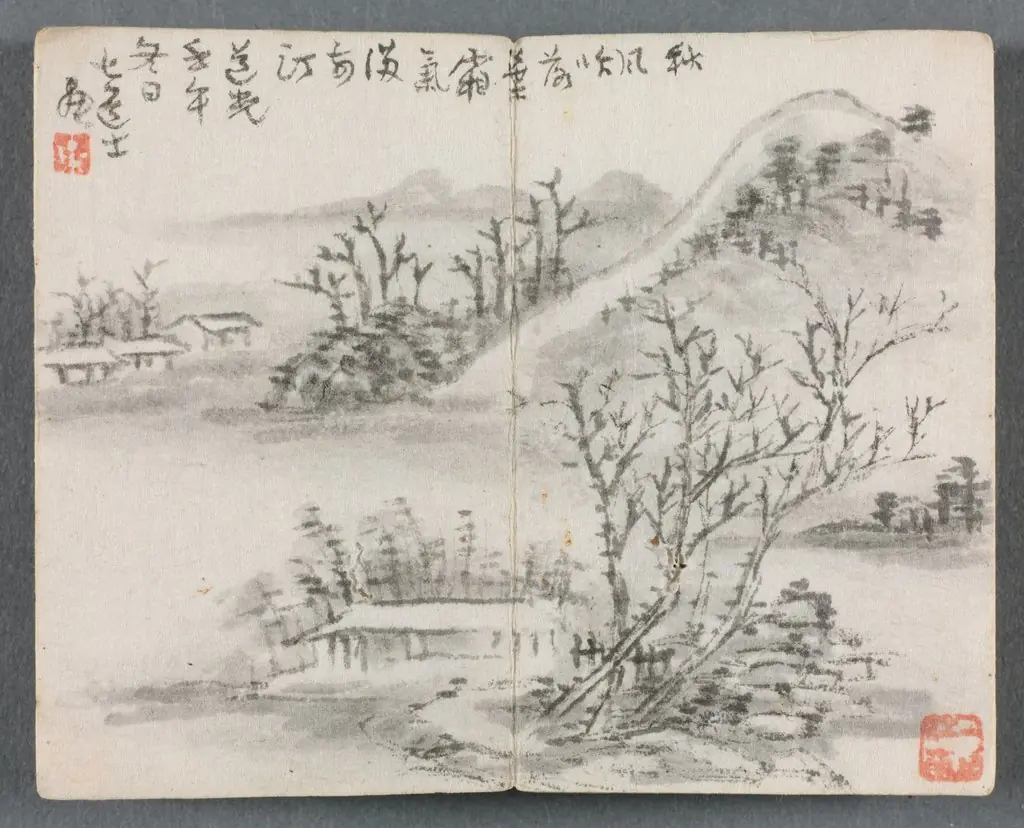
Own this work as a print
Artist & collection

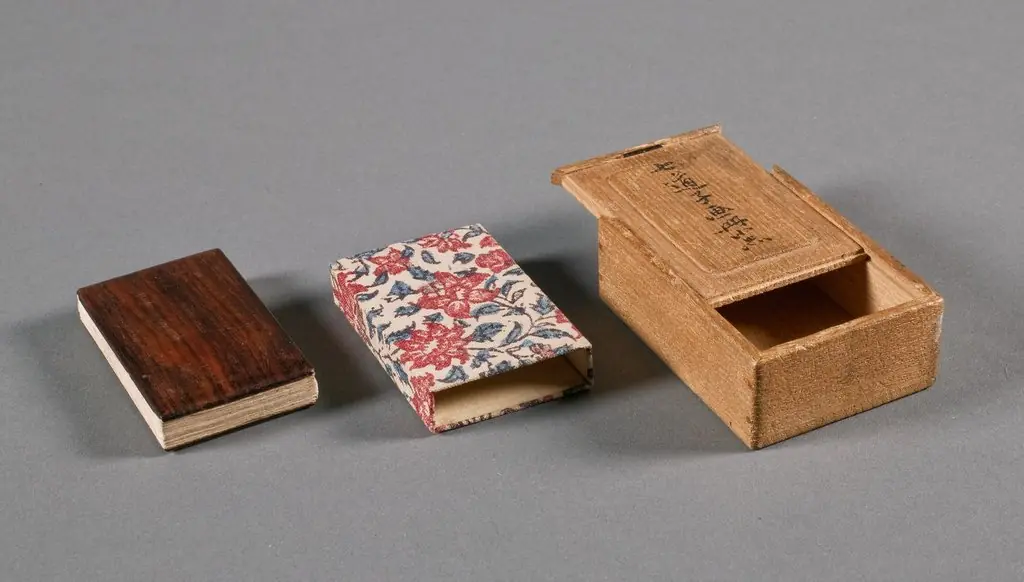 Miniature Album with Figures and Landscape
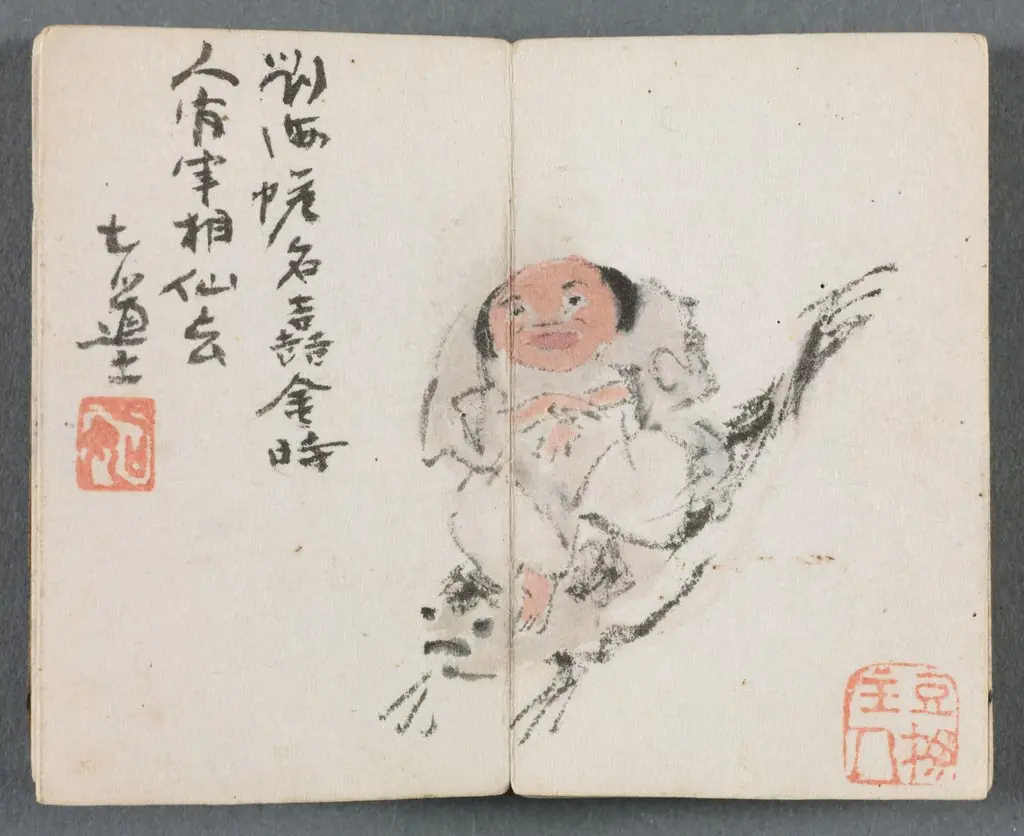 Miniature Album with Figures and Landscape (Man Riding Carp)
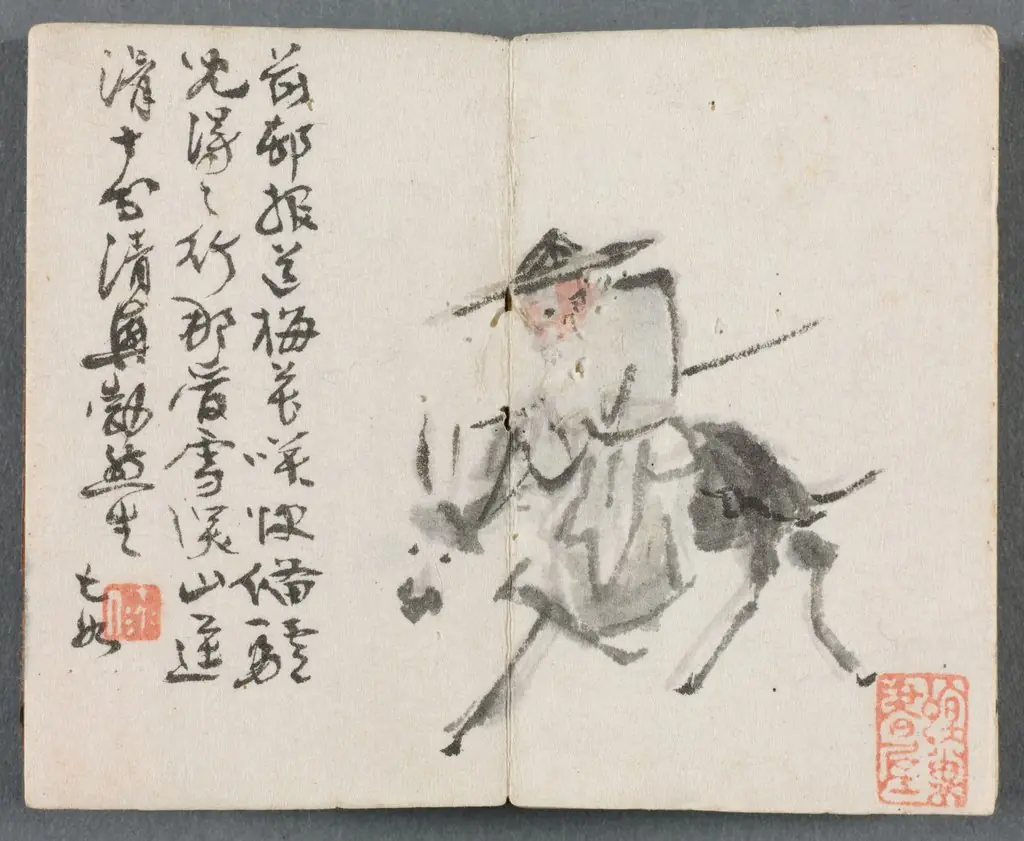 Miniature Album with Figures and Landscape (Old Man on Donkey)
- Miniature Album with Figures and Landscape (Landscape with Hill)
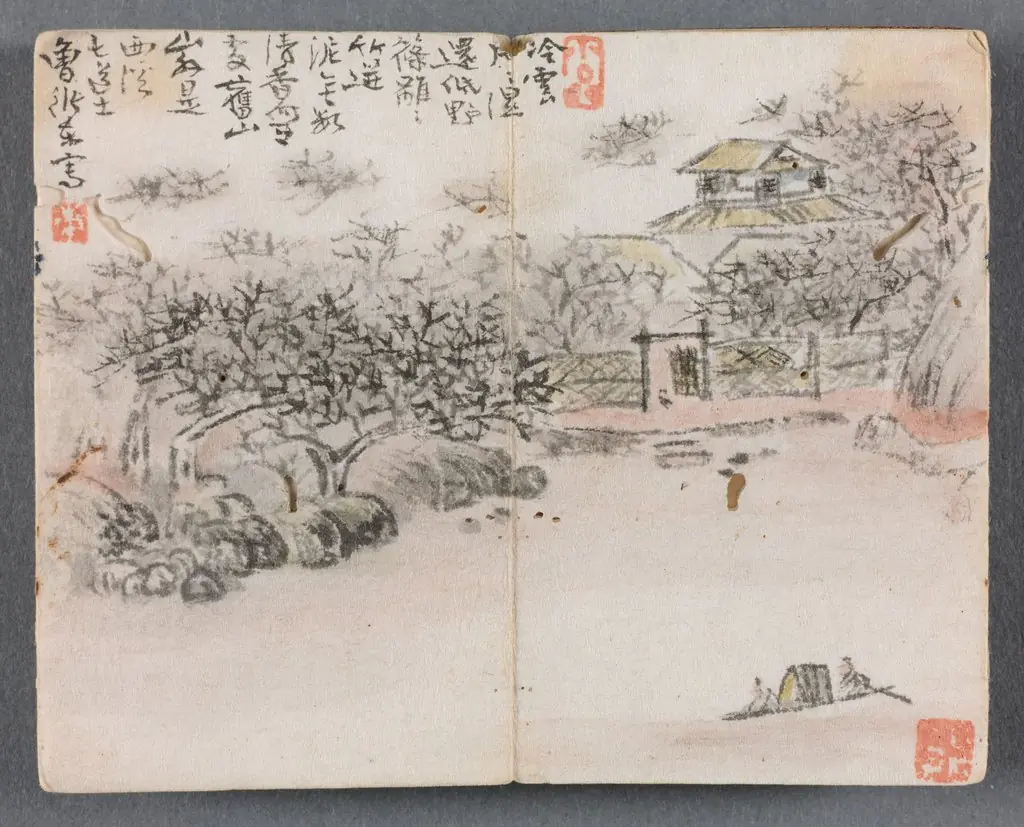 Miniature Album with Figures and Landscape (Landscape with Two Boatmen)
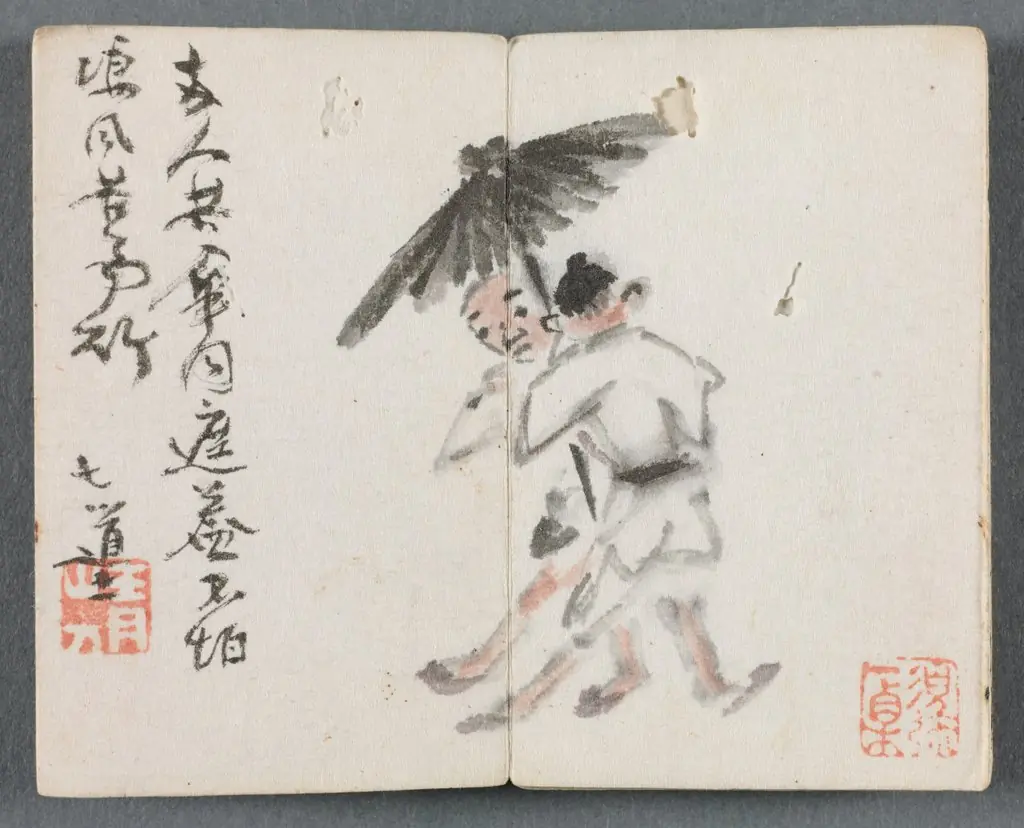 Miniature Album with Figures and Landscape (Two Men with Umbrella)
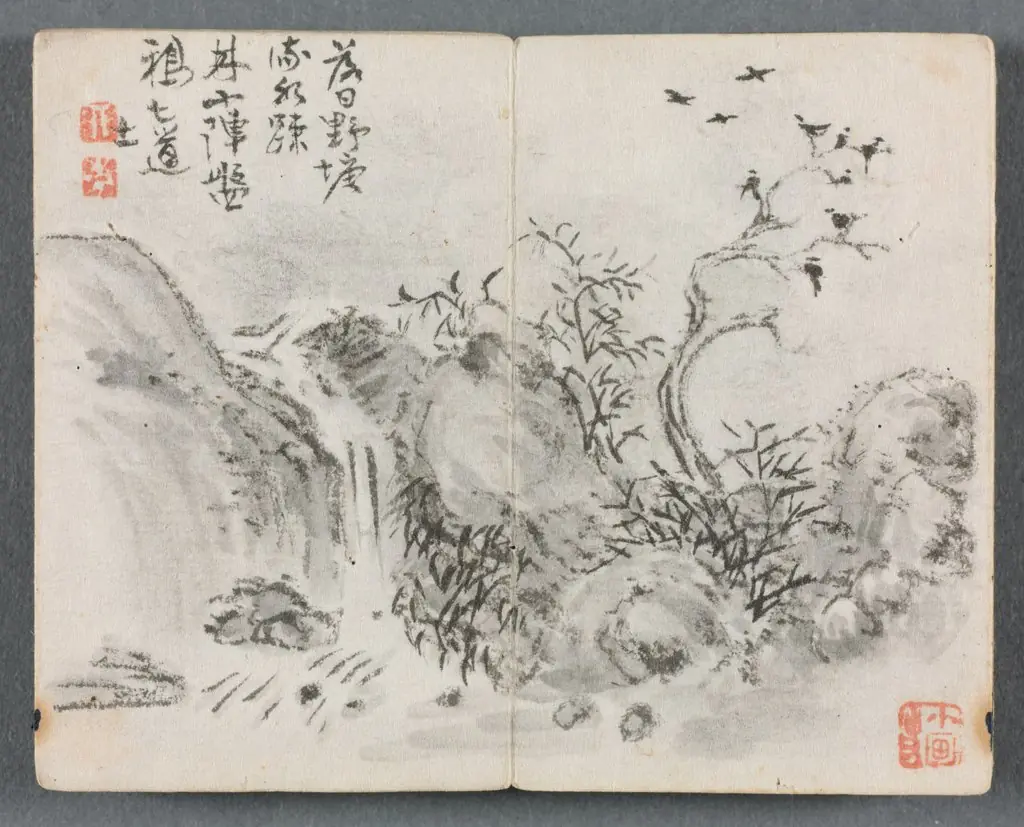 Miniature Album with Figures and Landscape (Waterfall Landscape)
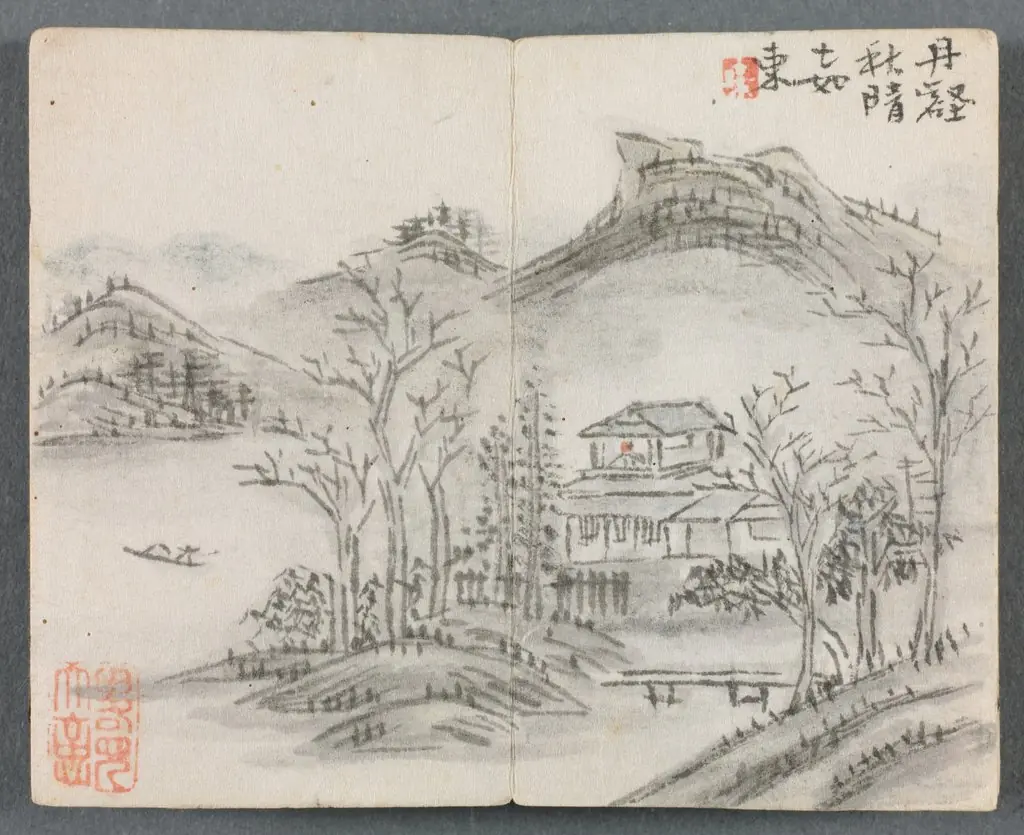 Miniature Album with Figures and Landscape (Landscape with Hill, House, Boat and Bridge)
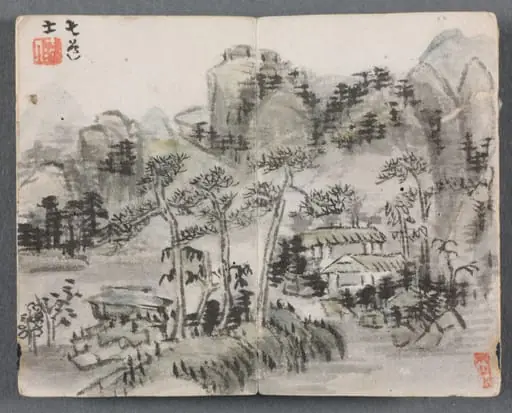 Miniature Album with Figures and Landscape (Landscape with Two Buildings)
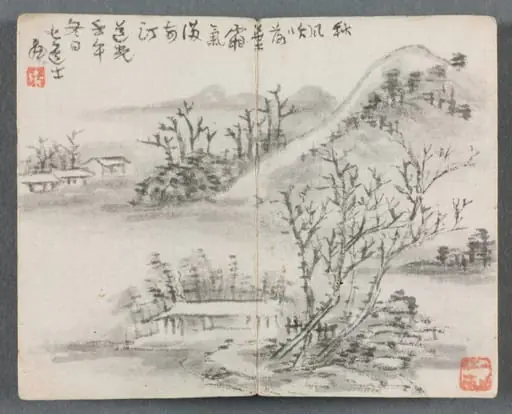 Miniature Album with Figures and Landscape (Landscape with Hill)
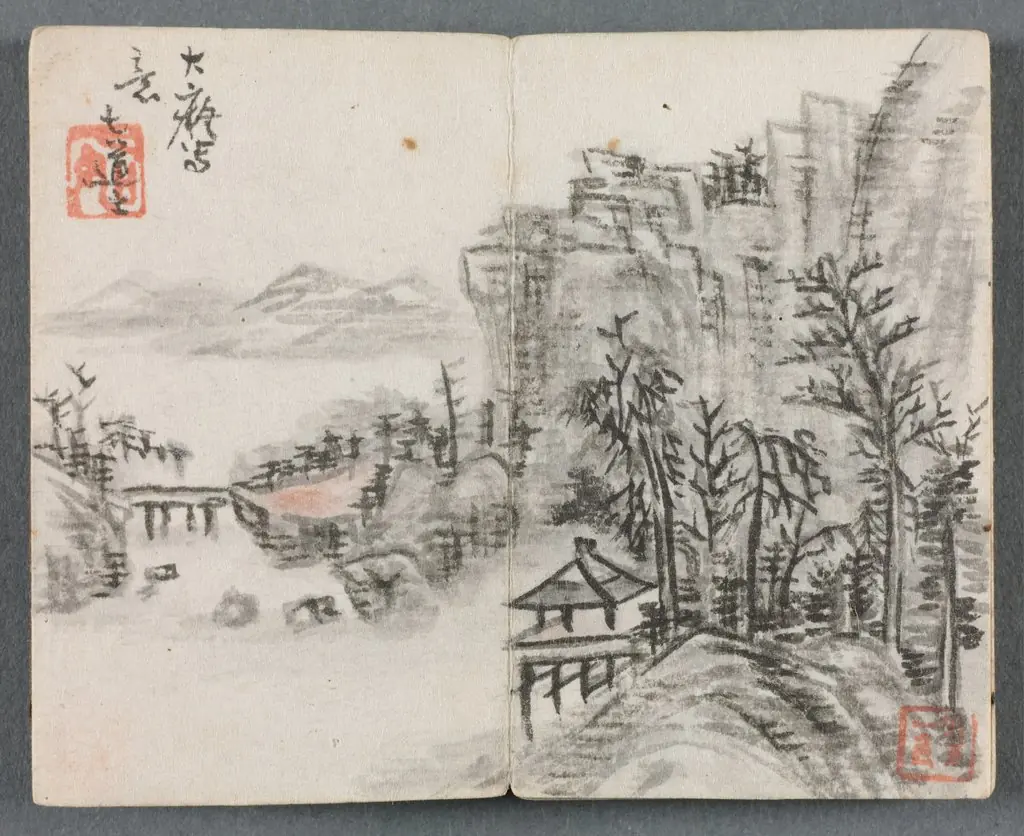 Miniature Album with Figures and Landscape (Cliff Landscape with Bridge)
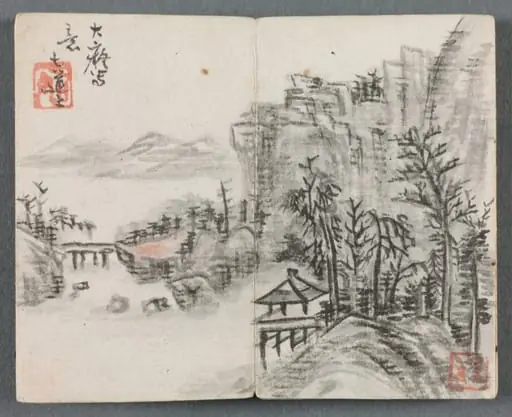 Miniature Album with Figures and Landscape (Cliff Landscape with Bridge)
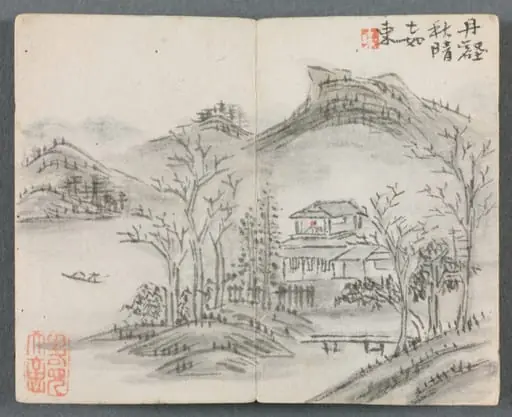 Miniature Album with Figures and Landscape (Landscape with Hill, House, Boat and Bridge)
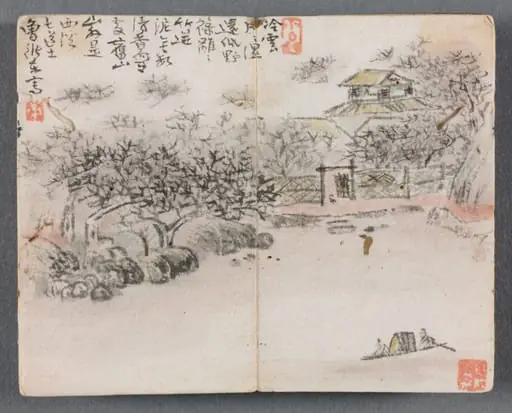 Miniature Album with Figures and Landscape (Landscape with Two Boatmen)
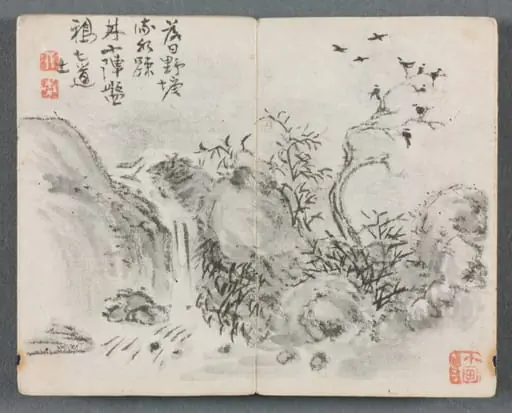 Miniature Album with Figures and Landscape (Waterfall Landscape)