Art Glossary
The Sublime
In art, the sublime is the quality of overwhelming greatness, vastness or power — often touched with terror — that inspires awe rather than simple pleasure.
The sublime is an aesthetic category that became central to European thought in the eighteenth century. Edmund Burke, in his 1757 Philosophical Enquiry, distinguished it sharply from beauty: where beauty is small, smooth and pleasing, the sublime is vast, rugged, obscure and powerful, and its characteristic emotion is a kind of delightful terror — the awe we feel before something that dwarfs us, experienced from a position of relative safety. Immanuel Kant later refined the idea, locating the sublime in the mind's response to magnitudes it cannot fully grasp.
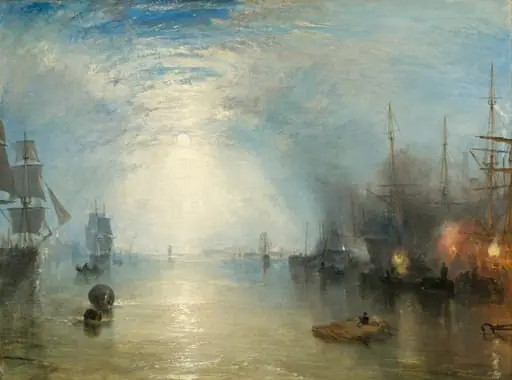
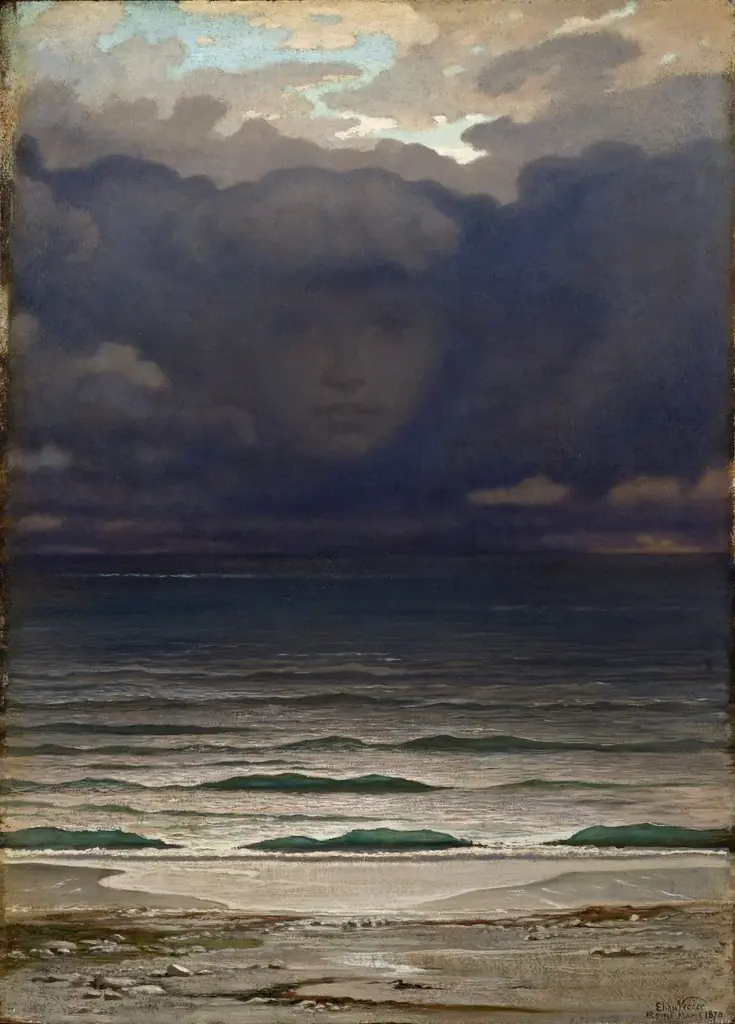
For painters, the sublime opened up subjects that classical taste had avoided: towering mountains, raging seas, storms, avalanches, vast and gloomy ruins, the infinite night sky. The Romantics seized on it. J. M. W. Turner dissolved ships in overwhelming weather; Caspar David Friedrich set tiny human figures before immense landscapes to stage the soul's confrontation with the infinite; American painters of the nineteenth century found a sublime of their own in the unmeasured scale of the New World.
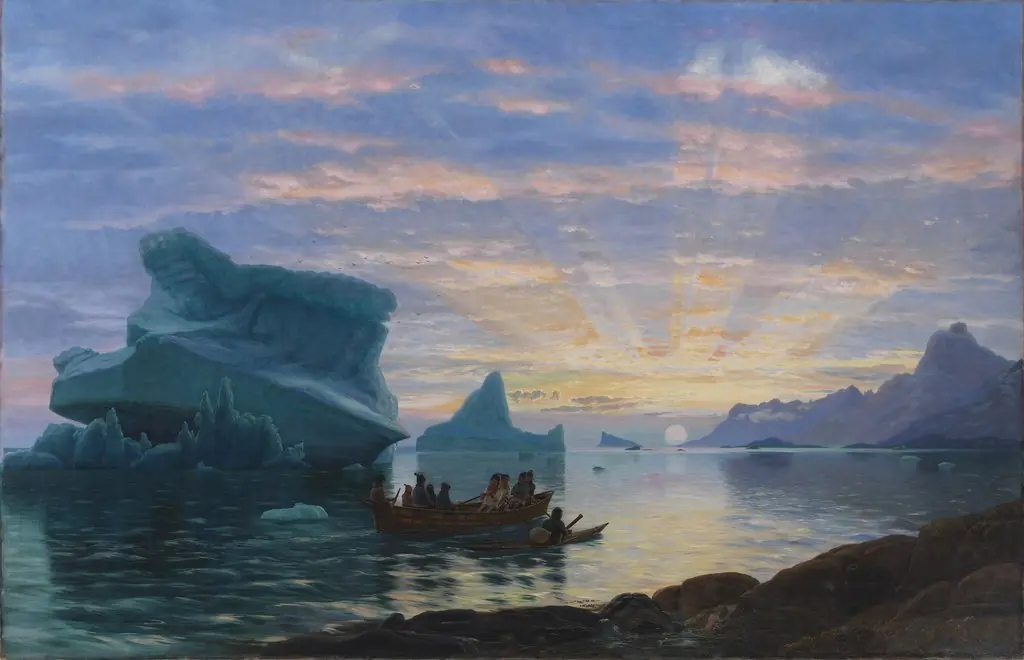
The technical hallmark of sublime painting is the contrast of scales. The vastness is made legible by something small and human placed within it — a figure on a cliff, a ship under a wave — which gives the eye a measure and the viewer a stand-in. The sublime is therefore not just about size but about relation: it is the feeling of our own smallness made visible.
To read for the sublime, find the human trace in the picture and notice how completely the surrounding force overwhelms it; that disproportion is the source of the awe.
In the collection



Frequently asked
What is the sublime in art?
The sublime is the quality of vastness, power or terror that inspires awe — a response distinct from the simple pleasure of beauty, central to Romantic painting.
How is the sublime different from beauty?
Edmund Burke argued that beauty is small, smooth and pleasing, while the sublime is vast, rugged and powerful, producing awe mixed with a kind of terror.