Art Glossary
The Picturesque
The picturesque is an eighteenth-century aesthetic category describing scenery that is pleasingly irregular, varied and textured — the kind of view that would make a good picture.
The picturesque emerged in late eighteenth-century Britain as a third aesthetic category sitting between the smooth, harmonious beauty of the classical tradition and the awesome terror of the sublime. Its theorists — William Gilpin, Uvedale Price and Richard Payne Knight — defined it as the quality of roughness, irregularity and variety that makes a scene resemble a painting, particularly the landscapes of Claude Lorrain and the Dutch masters.
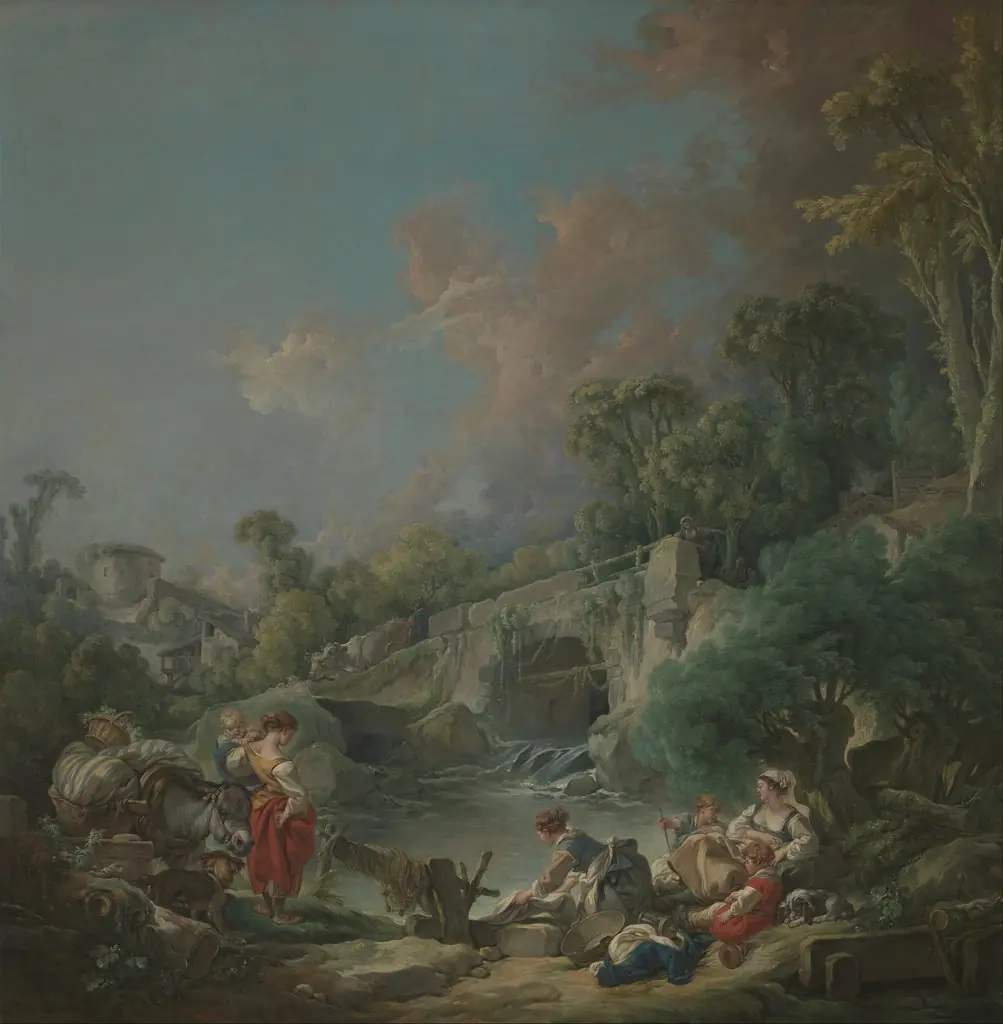
Where the beautiful is polished and the sublime is overwhelming, the picturesque is textured and intricate: a ruined abbey wreathed in ivy, a gnarled oak, a winding lane, a rustic mill, a craggy but not terrifying hillside. Gilpin toured Britain instructing genteel travellers how to look at scenery as a series of compositions, and the cult of the picturesque shaped tourism, landscape gardening and watercolour painting for decades. The Claude glass — a small tinted convex mirror — was carried so that a viewer could turn their back on a real view and admire its reflection arranged like a framed picture.
The picturesque had real consequences for art. It legitimised the rough, the ruined and the rustic as worthy subjects, encouraged painting directly from nature, and gave landscape watercolour its distinctive taste for broken textures and irregular framing. It was also gently satirised in its own day for teaching people to value the world only as raw material for pictures.
To recognise the picturesque, look for studied irregularity — the deliberately rough, varied, framed composition that prizes texture and incident over either grandeur or smooth harmony.
In the collection
Frequently asked
What does picturesque mean in art?
In art the picturesque describes pleasingly irregular, rough and varied scenery — the kind of textured view that resembles a landscape painting.
How does the picturesque relate to the sublime and the beautiful?
It sits between them: the beautiful is smooth and harmonious, the sublime is vast and terrifying, and the picturesque is rough, intricate and varied.