Artwork
The Glorification of the Barbaro Family
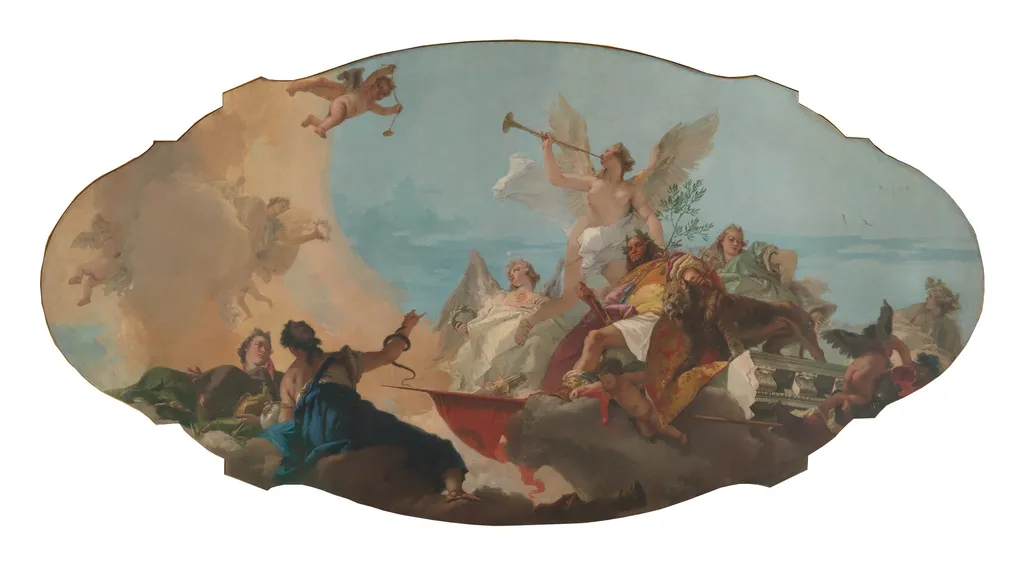
The Glorification of the Barbaro Family is an oil painting by the Rococo painting artist Giovanni Battista Tiepolo. It dates from 1750 and is held in the collection of the Metropolitan Museum of Art.
About this work
Subject & Meaning
The painting presents the Barbaro family in a celestial setting, depicting putti, a man, and a woman set against an open sky.
The painting presents the Barbaro family in a celestial setting, depicting putti, a man, and a woman set against an open sky. As a work of glorification, it elevates the sitters to a heavenly plane, using the upward-soaring composition and the presence of putti as conventional markers of apotheosis and divine favor. The Rococo movement's taste for luminous skies and weightless figures reinforces the allegorical intent, transforming a family portrait into a celebration of status, virtue, and lineage.
By merging portraiture with mythological and celestial imagery, Tiepolo frames the Barbaro family as participants in an idealized, almost divine realm, signifying prestige and immortality rather than presenting a literal likeness in domestic surroundings.
History & Provenance
Giovanni Battista Tiepolo created the oil-on-canvas painting titled The Glorification of the Barbaro Family in 1750. Executed in the Rococo style, the work measures 243.8 by 466.7 centimeters and depicts the Barbaro family alongside putti and figures of men and women against an open sky. The painting is currently held in the collection of the Metropolitan Museum of Art in Manhattan.
While the specific commission details and original ownership chain prior to its arrival at the museum are not detailed in the provided records, the work's inception is firmly dated to 1750. The available records do not specify a unique inventory or accession number for the piece, nor any details regarding past exhibitions or loan history.
Overview
Giovanni Battista Tiepolo's oil painting, The Glorification of the Barbaro Family, dates to approximately 1750. This large-scale work exemplifies the Rococo aesthetic through its dynamic composition and ethereal subject matter. It portrays members of the prominent Barbaro family ascending into a heavenly realm, surrounded by allegorical figures and putti.
The artwork is currently housed in The Metropolitan Museum of Art, where it represents a significant example of 18th-century Venetian art.
Technique & Style
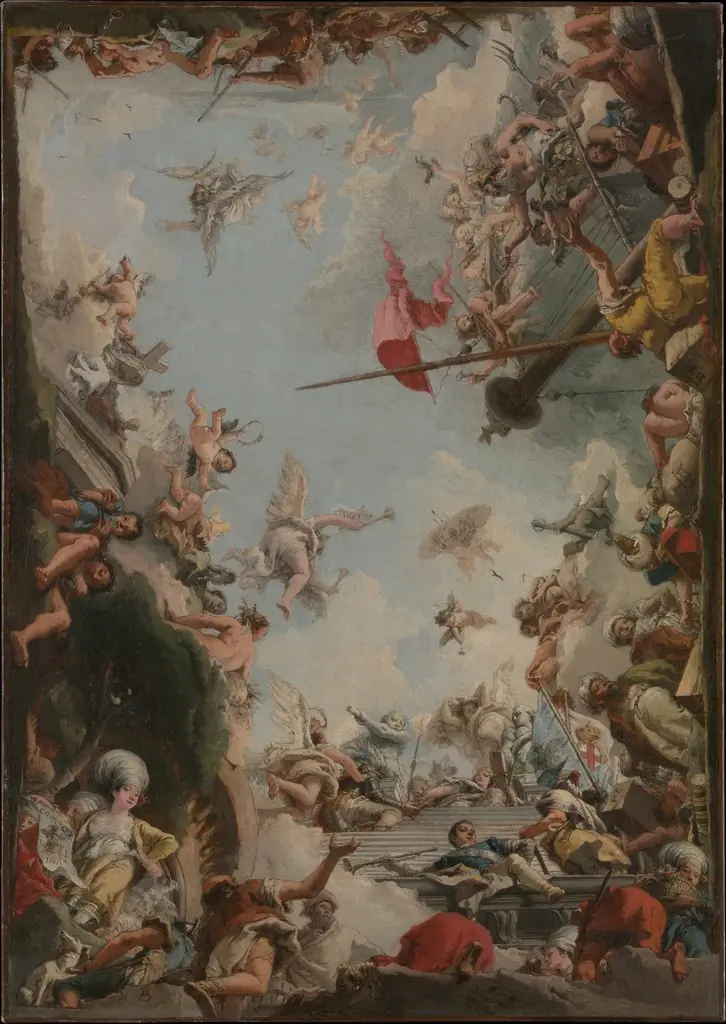
Tiepolo employed oil paint to achieve the characteristic lightness and fluidity of the Rococo movement. The artist rendered figures with a remarkable sense of weightlessness, appearing to float effortlessly through the air. Their expressive poses and the strategic application of light and shadow create a powerful illusion of motion and depth.
A soft blue sky, framed by billowy clouds, enhances the ethereal quality of the scene, contributing to its dramatic and celebratory atmosphere.
Artist & collection

Artist
Giovanni Battista Tiepolo, also known as Giambattista Tiepolo, was an Italian painter and printmaker from the Republic of Venice who painted in the Rococo style, considered an important member of the 18th-century Venetian school.

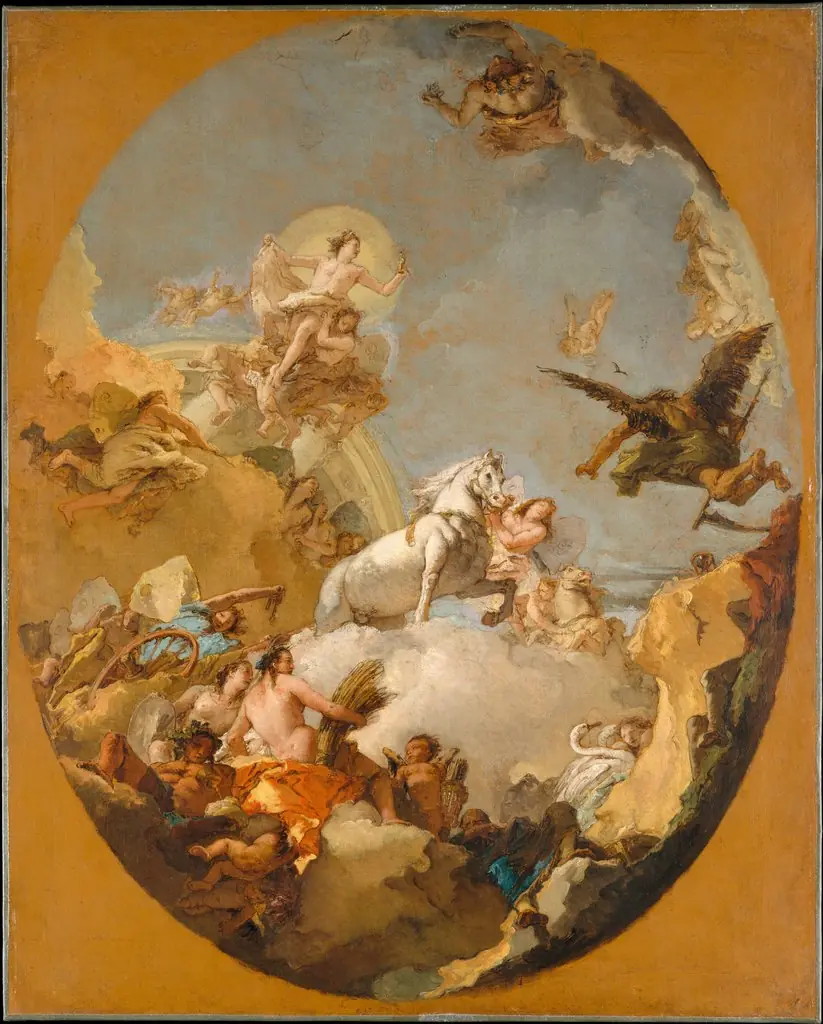

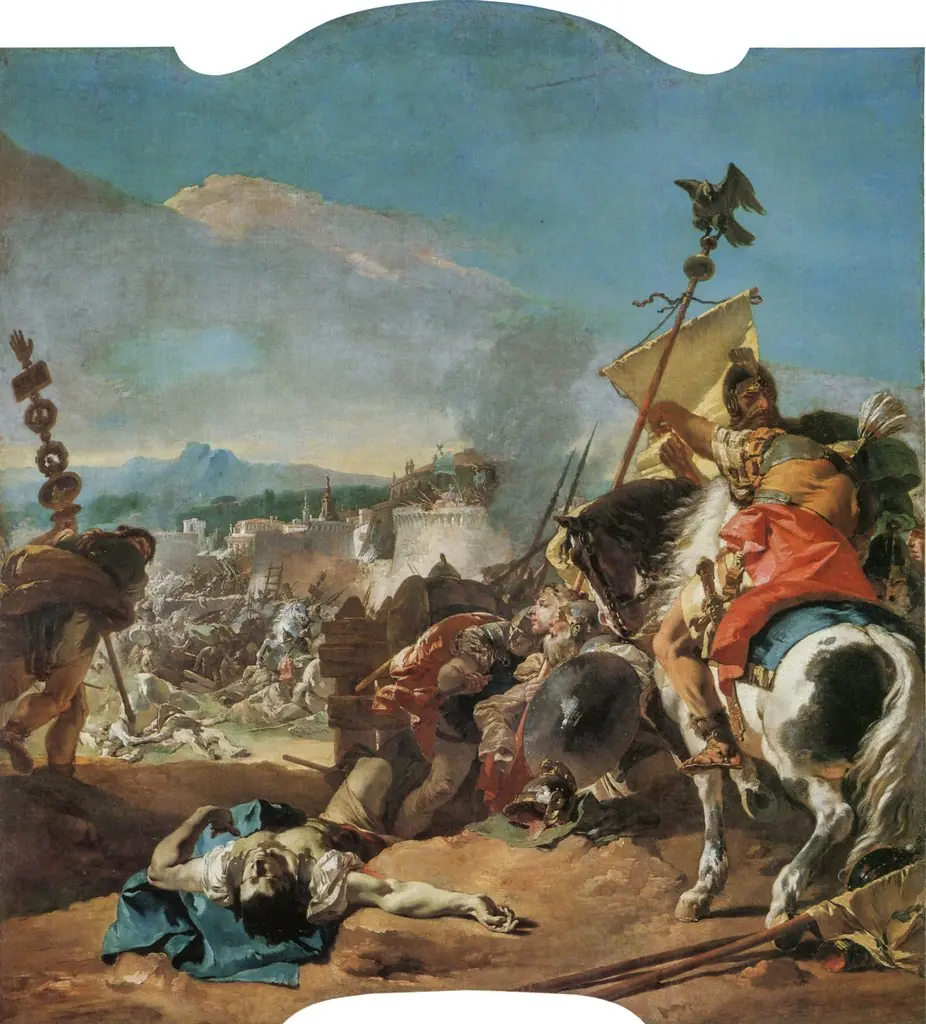
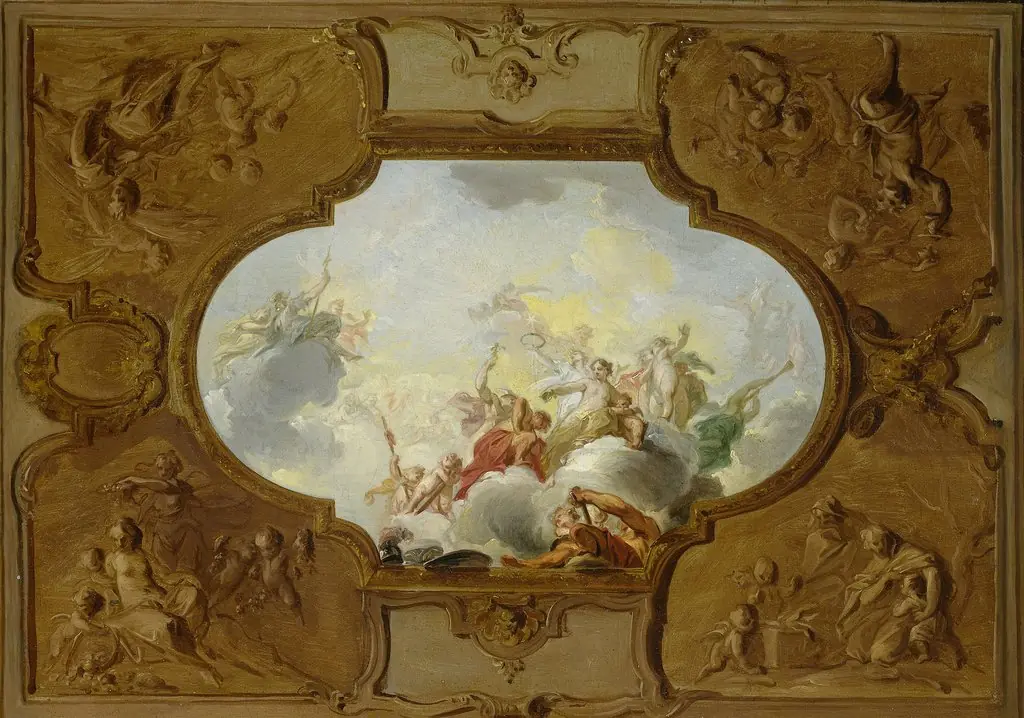 Design for a ceiling piece with Aeneas and the four seasons in the corners
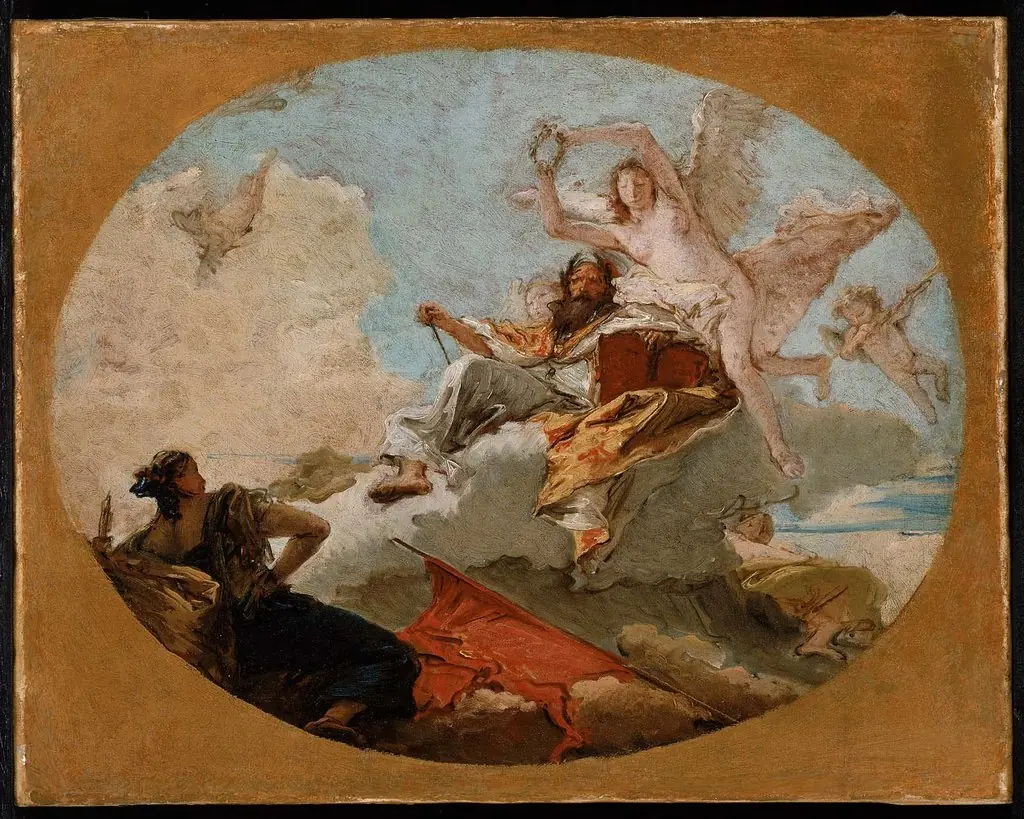 The Crowning of Merit
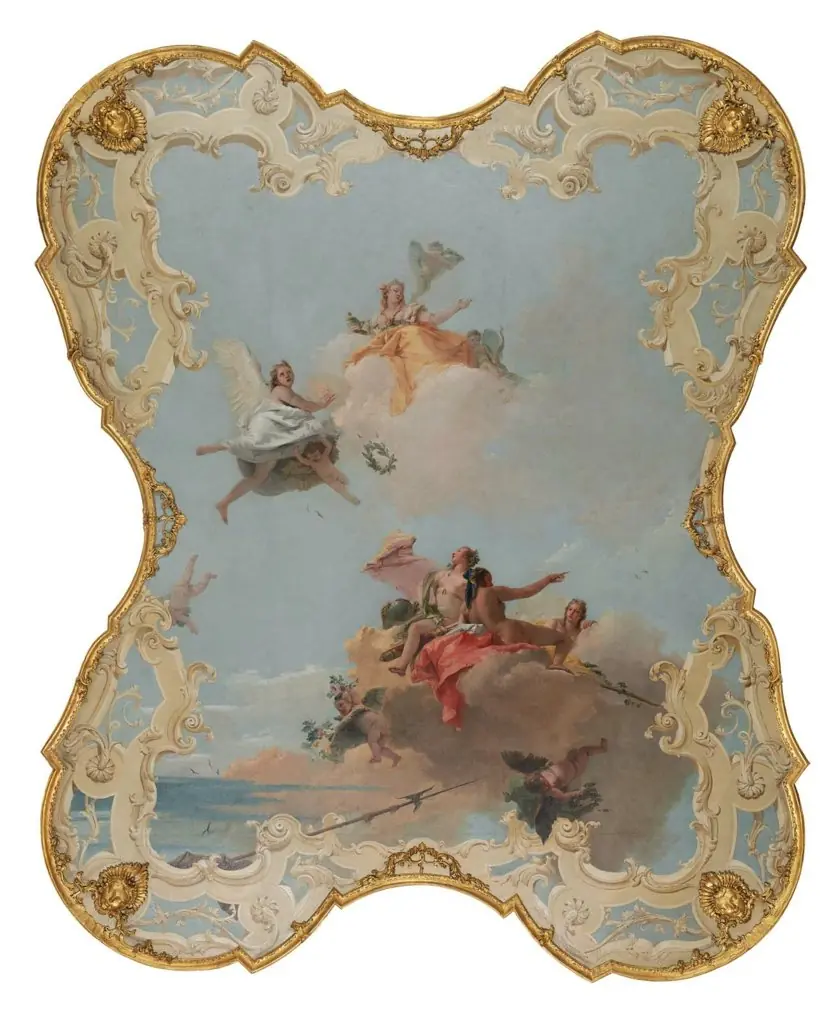 Virtue and Nobility Crowning Love
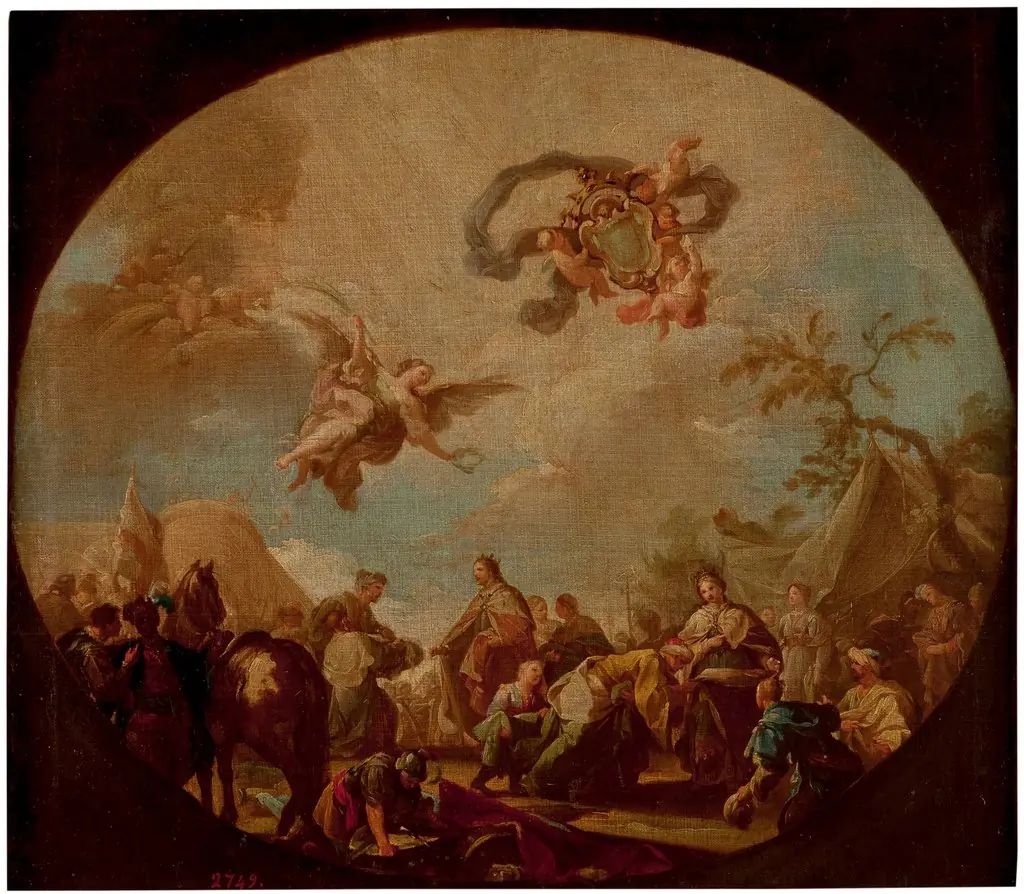 La Rendición de Granada
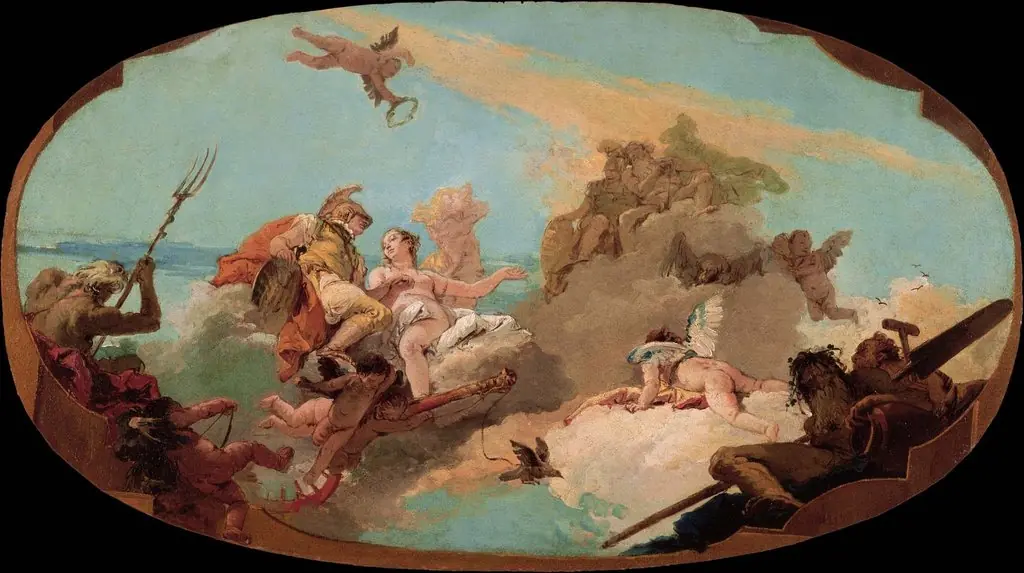 The Apotheosis of Admiral Vettor Pisani
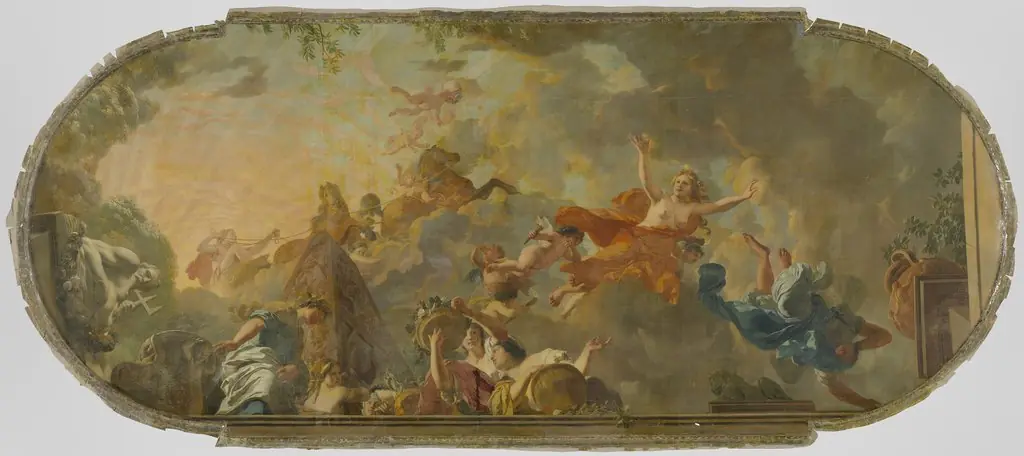 Allegory of dawn
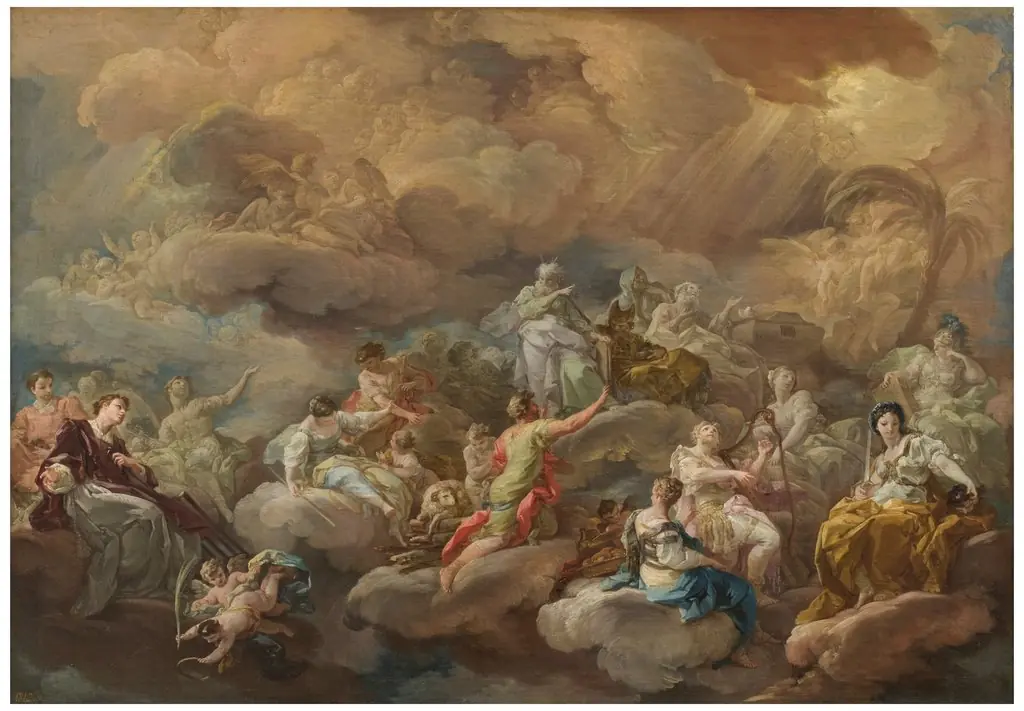 Gloria de santos
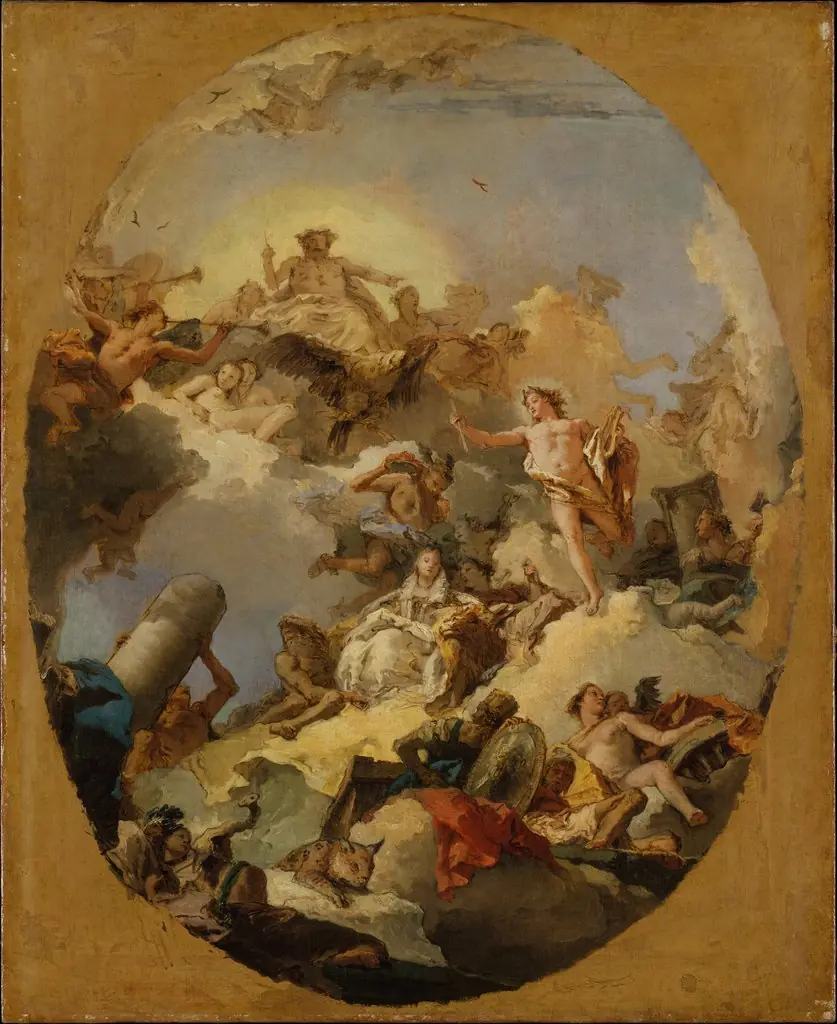 The Apotheosis of the Spanish Monarchy
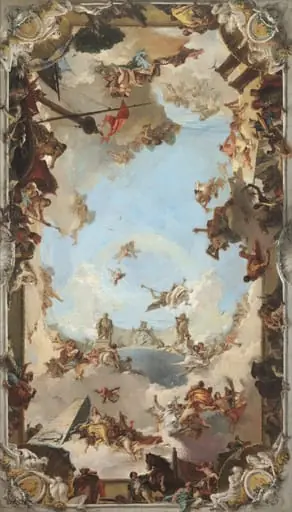 Wealth and Benefits of the Spanish Monarchy under Charles III
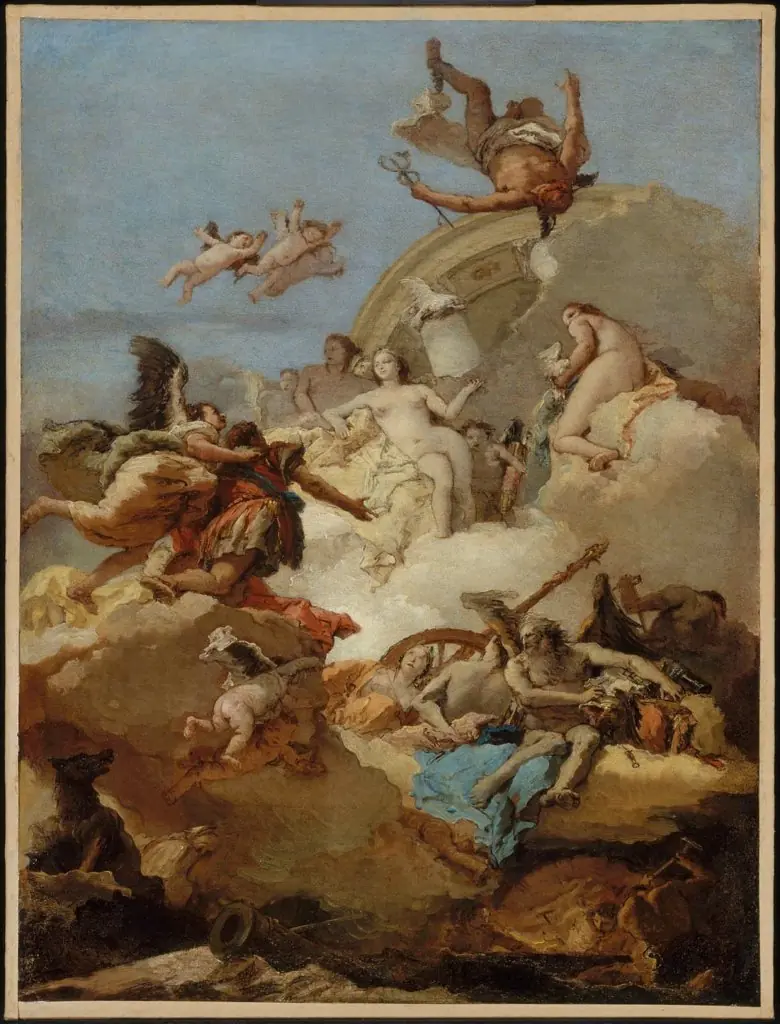 Apotheosis of Aeneas
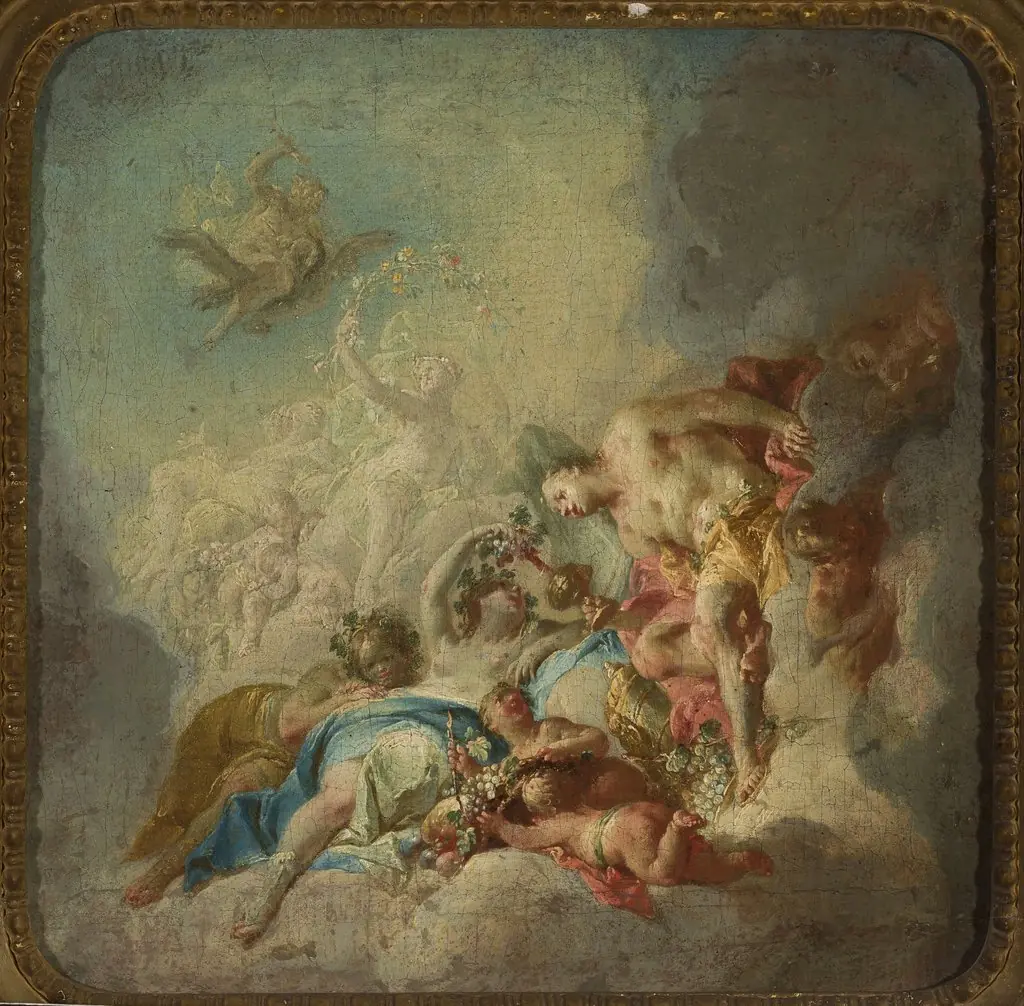 Bacchus and Ceres
- The Glorification of the Giustiniani Family