Art Glossary
Watercolour
Watercolour is a painting medium in which pigments are suspended in a water-soluble binder and applied in transparent washes, the white of the paper showing through to provide luminosity.
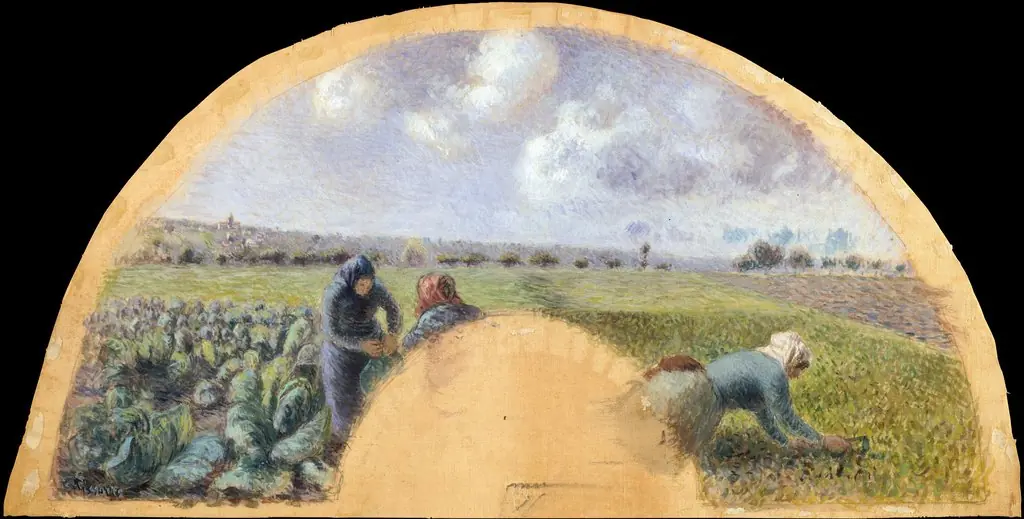
Watercolour is paint made of finely ground pigment bound in a water-soluble gum, usually gum arabic, and thinned with water for use. Its defining characteristic is transparency: the washes let light pass through to the paper beneath and reflect back, so the white of the support — rather than white paint — supplies the highlights and the overall luminosity. This is the reverse of opaque painting, where light is built up from the surface.
The medium rewards spontaneity and punishes hesitation. Because the washes are transparent, mistakes are hard to cover, and the freshness of a watercolour depends on confident, economical handling, with the painter often working from light to dark and leaving the paper bare where the brightest lights are wanted. Wet-in-wet techniques, in which colour is dropped into a still-damp wash, produce the soft, bleeding gradations the medium is loved for.
Watercolour has a long history in manuscript illumination and botanical illustration, but it came into its own as an expressive art in eighteenth- and nineteenth-century Britain, where it was bound up with the cult of the picturesque and the topographical view. J. M. W. Turner pushed it furthest, building atmospheric studies of extraordinary depth and light, and treating watercolour as seriously as oil. The portability of the medium also made it the natural companion of the traveller and the field sketcher.
A related variant, gouache or body colour, adds an opaque white to make the paint cover rather than glow. To recognise true transparent watercolour, look for the glow of the paper through the washes and the unrepainted whites that no opaque medium can match.
In the collection
Frequently asked
What is watercolour?
Watercolour is a medium of pigment in a water-soluble binder applied in transparent washes, with the white paper showing through to provide highlights and luminosity.
Why is the paper important in watercolour?
Because watercolour washes are transparent, the white of the paper supplies the highlights and overall glow rather than white paint, as in opaque media.