Artwork
An Alligator's Nest
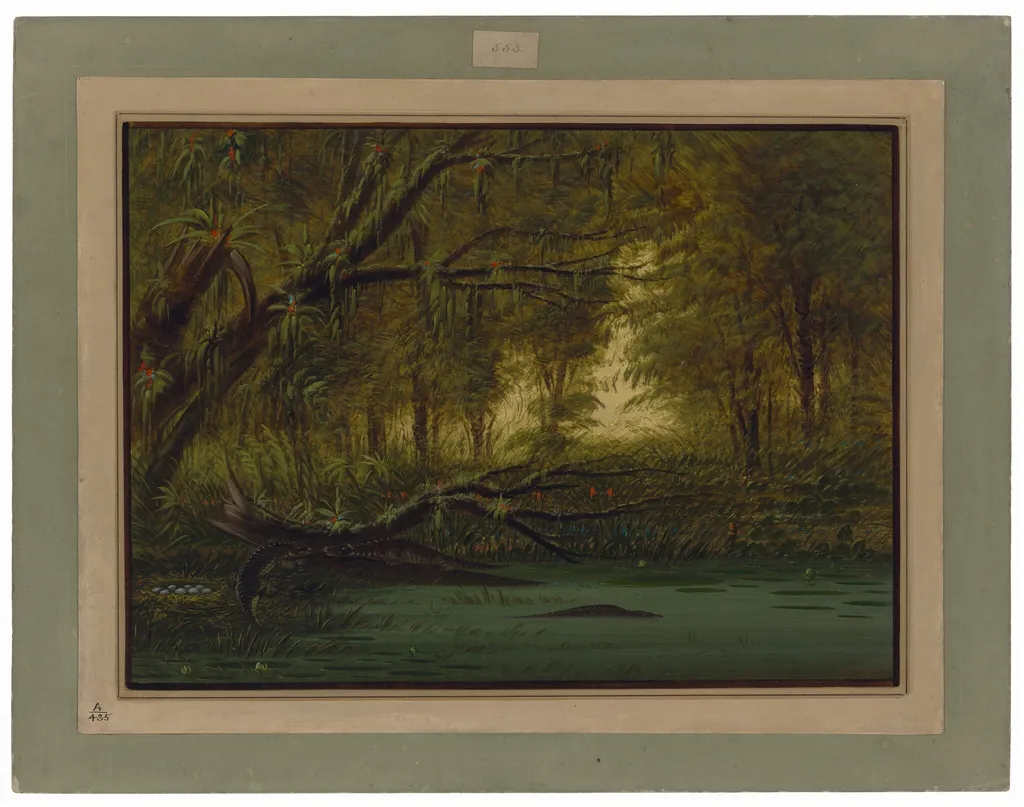
An Alligator's Nest is an oil painting by the Impressionist artist George Catlin. It dates from 1862 and is held in the collection of the National Gallery of Art.
About this work
Technique & Style
2 cm in width, as recorded in the cataloguing data of the National Gallery of Art.
An Alligator's Nest is an oil painting created on a rigid support of card that has been mounted onto paperboard; the canvas‑like surface is typical of mid‑19th‑century American works seeking durability. The composition is rendered in oil pigments applied with a brush, allowing layered glazing and fine detail to capture the reptile’s texture and the surrounding foliage. The work measures roughly 46.3 cm in height by 61.2 cm in width, as recorded in the cataloguing data of the National Gallery of Art.
Its formal qualities include a naturalistic rendering of the animal within a tight, compositional space, employing muted earth tones and precise linear contours that emphasize the animal’s stillness.
History & Provenance
The work titled An Alligator's Nest was painted in 1861 by George Catlin using oil on card mounted on paperboard (dimensions 46.3 × 61.2 cm) (1,2). Its early ownership passed from the artist to his daughters Clara Gregory Catlin, Louise Catlin Kinney and Elizabeth Wing Catlin, and then was acquired in 1912 by the American Museum of Natural History from Elizabeth Wing Catlin (1). In 1959 the painting was sold through Kennedy Galleries in New York to Paul Mellon, who later gifted it to the National Gallery of Art in 1965 (1). The piece has remained in the NGA collection ever since, documented in the museum’s records (2).
An Alligator's Nest is part of the National Gallery of Art's collection in Washington, D.C.. The painting entered the museum in 1965 as a gift from Paul Mellon, who had acquired it in 1959 from Kennedy Galleries after it was sold by the American Museum of Natural History, which had obtained it in 1912 from the artist's daughter Elizabeth Wing Catlin. Its accession is recorded within the Gallery's holdings, and it has been displayed in the museum's American art galleries as part of the permanent collection.
Legacy
After changing hands following Catlin’s death, the canvas entered the collection of Paul Mellon, who donated it to the National Gallery of Art in 1965. Its placement in the Gallery’s permanent holdings has made the work readily accessible to scholars and the public, establishing it as a reference point for studies of 19th‑century American wildlife painting and of Catlin’s broader fascination with frontier subjects. The painting’s inclusion in the National Gallery of Art’s catalogues and exhibitions reinforces its standing as a notable example of the artist’s natural‑history oeuvre, contributing to ongoing academic discussion of his role in early American art.
Overview
George Catlin's 1862 painting, An Alligator's Nest, captures a large alligator within its carefully constructed habitat. Executed in oil on card mounted on paperboard, this work showcases the artist's engagement with wildlife subjects. While Catlin is widely recognized for his ethnographic studies of Native American life, this piece demonstrates his broader observational practice, extending to the natural world.
Subject & Meaning
The painting presents a substantial alligator resting within a nest of sticks and mud, its form dominating the composition. A young alligator emerges from beneath the adult's tail, suggesting a scene of maternal protection and nascent life. The nest's structure, designed to safeguard eggs from water, highlights the animal's instinctual engineering.
The surrounding tree branches appear delicate in contrast to the powerful creature, contributing to the work's quiet yet vital atmosphere.
Context
George Catlin, initially trained in law, became known for his extensive documentation of Native American cultures following his travels to the American West in the 1830s. While his portraits of Plains Indians and landscapes along the Erie Canal are prominent, An Alligator's Nest reflects his concurrent interest in wildlife. Painted in 1862, likely during his travels near the Mississippi River, this work illustrates a facet of his artistic output beyond his well-known ethnographic series.
Own this work as a print
Artist & collection

Artist
George Catlin ( KAT-lin; July 26, 1796 – December 23, 1872) was an American lawyer, painter, author, and traveler, who specialized in portraits of Native Americans in the American frontier.

 Bulls Fighting
 Expedition Encamped on a Texas Prairie. April 1686
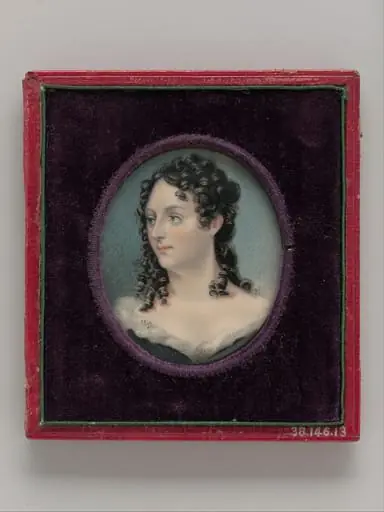 Mrs. George Catlin (Clara Bartlet Gregory)
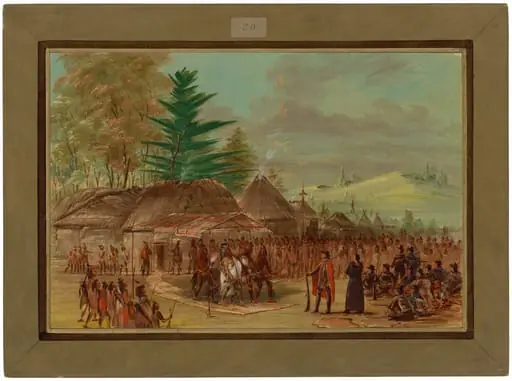 Chief of the Taensa Indians Receiving La Salle. March 20, 1682
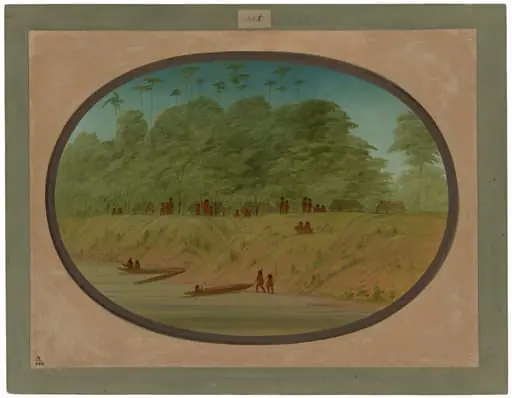 A Small Village - Payaguas Indians
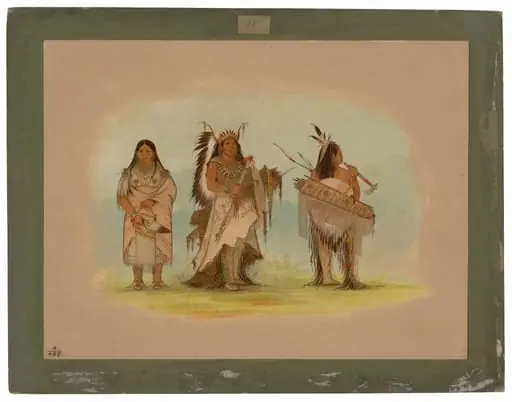 Omaha Chief, His Wife, and a Warrior
 Father Hennepin Leaving the Mississippi to Join La Salle. May 8, 1680
 A Mayoruna Village
- Luxuriant Forest on the Bank of the Amazon
 A Connibo Village
 Entrance to a Lagoon, Shore of the Amazon
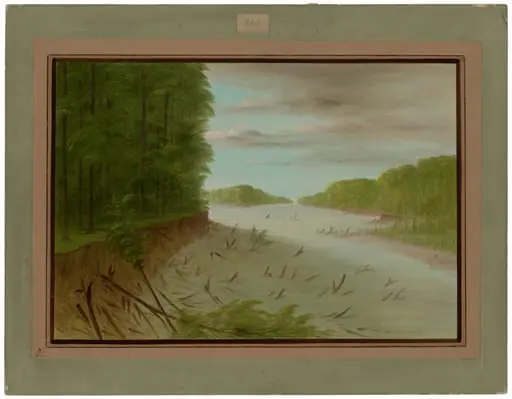 Scene from the Lower Mississippi
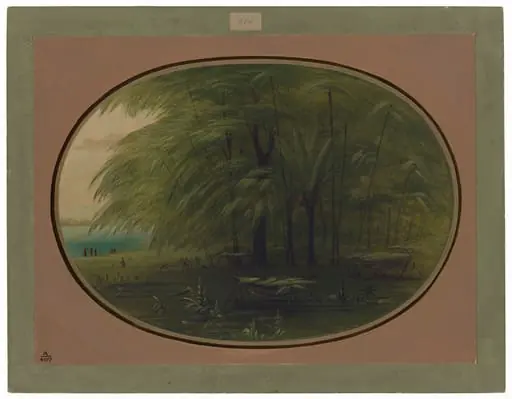 An Indian Village - Shore of the Amazon
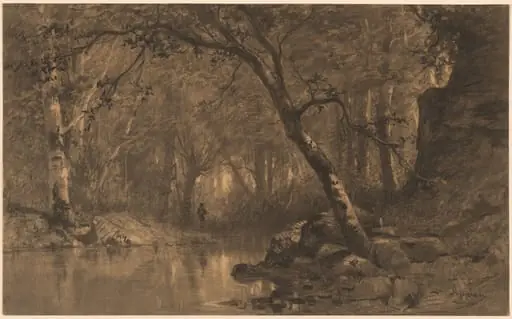 A Woodland River with a Fisherman
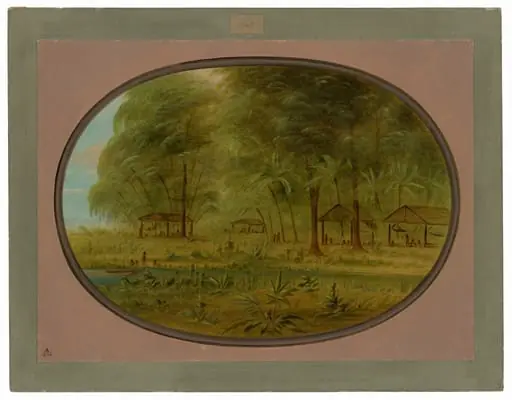 A Caribbe Village in Dutch Guiana
 Woodland Pond
 A Lagoon of the Upper Amazon
 Interior of an Amazon Forest - Zurumati
 Canards
 Spearing by Moonlight - Chaco