
Artist
Movement
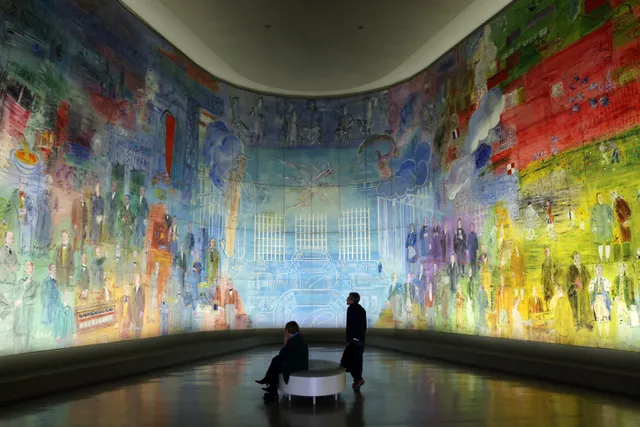
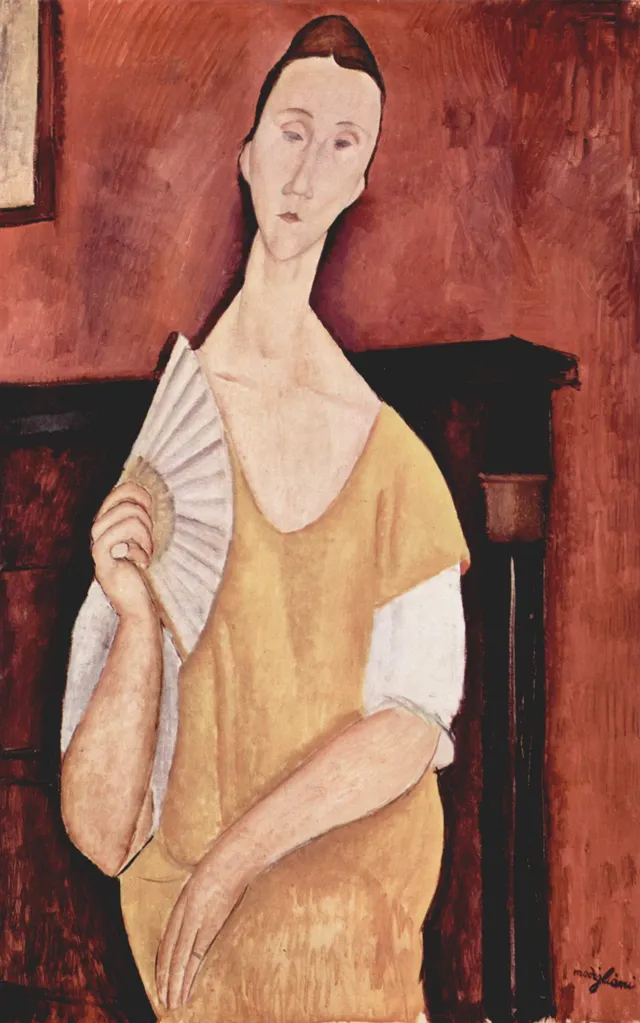
Art Deco is an art movement dating from 1910. The gallery holds 2 works in this movement, including works by Amedeo Modigliani and Jean Dunand. Browse Art Deco paintings, portraits, pictures and artworks from the world's public-domain museum collections.
Art Deco was the dominant decorative and design idiom of the 1920s and 1930s, an influential visual-arts style that first crystallized in France before spreading across Europe and the Americas. It took its name from the Exposition Internationale des Arts Décoratifs et Industriels Modernes, the vast fair inaugurated in Paris on 28 April 1925 between the Grand Palais and Les Invalides, which showcased the new manner to an international public. The label "Art Deco" itself came later: the art historian Bevis Hillier popularized it with his 1968 book Art Deco of the 20s and 30s. The style arose from the optimism and accelerating modernity of the post-war "Machine Age" — a deliberate embrace of industry, speed, and new transportation that distinguished it from its sinuous predecessor, Art Nouveau.
Where Art Nouveau drew on organic, whiplash curves, Art Deco favored bold geometry: stepped "zigzag" silhouettes, sunbursts, chevrons, and streamlined symmetry. It married luxury to modern materials — chrome, glass, polished hardwoods, and lacquer — and prized rich color, lavish ornament, and superb craftsmanship. The aesthetic moved fluidly between fine and applied arts, shaping furniture, jewelry, textiles, posters, and architecture alike, and by the early 1930s it generated a sleeker American offshoot, Streamline Moderne.
The movement's canonical figures span media. The Polish-born painter Tamara de Lempicka, trained under André Lhote, produced the era's defining portraits, fusing Cubist faceting with chrome-cool glamour and dramatic chiaroscuro. The Swiss-French master Jean Dunand — represented in this collection — learned lacquer technique from the Japanese artist Seizo Sugawara and became a leading creator of Art Deco metalwork, panels, and furniture. Raoul Dufy gave the style one of its grandest monuments: La Fée Électricité, held here, a mural of 250 plywood panels (about 600 square metres) painted for the Pavilion of Electricity at the 1937 Paris Exposition.
Art Deco's reach proved enormous, stamping skyscrapers like New York's Chrysler Building (designed 1928), ocean liners, and cinemas worldwide. Though eclipsed by mid-century Modernism's austerity, it never fully disappeared, enjoying lasting revivals. Even works adjacent to its orbit — such as Modigliani's elegantly elongated Ritratto di Lunia Czechowska con ventaglio, also in this collection — reflect the stylized portraiture of the same Parisian moment.
Artist
Art Deco is an art movement. A sleek decorative style that swept architecture, fashion, and the visual arts from the 1920s through the 1940s.
Key Art Deco artists in the collection include Amedeo Modigliani and Jean Dunand.
Art Deco dates from around 1910.
Art Deco works in the collection are held by Musée d'art moderne de Paris.
Your cart is empty
Browse artworks →