Artist
Movement
Heidelberg School
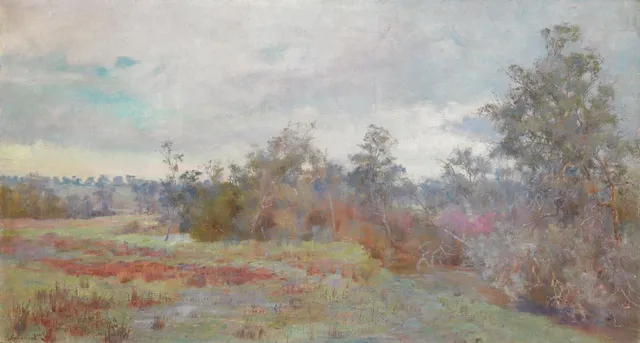
Heidelberg School is an art movement dating from 1880. The gallery holds 1 work in this movement, including works by Arthur Streeton, Thomas Roberts and Julian Ashton. Browse Heidelberg School paintings, portraits, pictures and artworks from the world's public-domain museum collections.
The Heidelberg School was the first distinctively Australian art movement, flourishing in the late 1880s and 1890s and often described as Australian Impressionism. It took its name from Heidelberg, then a rural village on Melbourne's north-eastern fringe, where the painters set up open-air camps. The movement was made possible in part by the expansion of Melbourne's suburban railways, which gave artists easy access to the surrounding "suburban bush" and the beaches of Port Phillip Bay. Melbourne critic Sidney Dickinson coined the term in an 1891 review of work by Arthur Streeton and Walter Withers, and it later came to embrace the whole circle who painted together at camps from the mid-1880s onward.
Working en plein air, the painters sought to record the specific conditions of the Australian landscape rather than impose European conventions on it. Their central preoccupation was light — the bleaching, high-key glare of the Australian sun — which they rendered in loose, rapid brushwork, blonde and silvery-blue tonalities, and broad atmospheric effects. The first camp was established at Box Hill around 1885 by Tom Roberts and Frederick McCubbin; later camps followed at Heidelberg (notably at Eaglemont) and along the bay. This experimental spirit culminated in the 9 by 5 Impression Exhibition, which opened on 17 August 1889 at Buxton's Rooms in Swanston Street: some 183 small "impressions", most painted on 9-by-5-inch cigar-box lids supplied by patron Louis Abrahams.
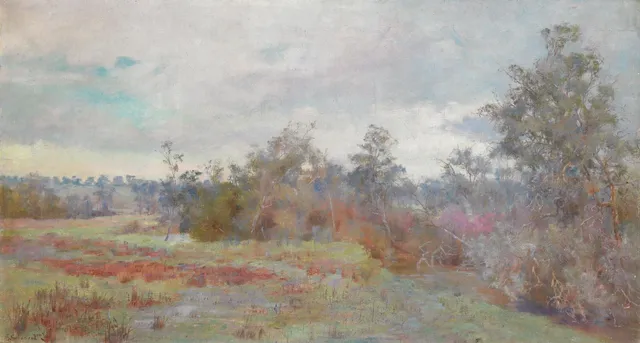
The movement's principal figures were Tom Roberts, Arthur Streeton, Frederick McCubbin and Charles Conder, with Walter Withers, Jane Sutherland and others in the wider circle. Roberts, who had studied in Europe before returning in 1885, brought Impressionist ideas with him. Canonical works include Roberts's monumental Shearing the Rams (1888–90), Streeton's radiant Golden Summer, Eaglemont (1889), and McCubbin's narrative bush pictures Down on His Luck (1889) and The Pioneer (1904). Sutherland, one of the few women in the group, painted intimate rural scenes such as the gallery's own After Autumn Rain.
Through these large "subject pictures" the Heidelberg painters fused Impressionist technique with stories of pioneering, pastoral labour and the bush, supplying potent images of national identity in the years before Federation. Closely related to French Impressionism and the plein-air naturalism of the Barbizon School and Jules Bastien-Lepage, the movement is now regarded as the foundation of a self-consciously Australian school of painting.
Key artists
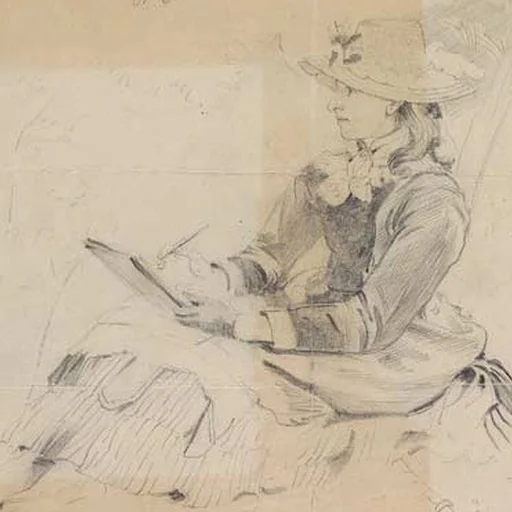
Works
Frequently asked questions
What is Heidelberg School?
Heidelberg School is an art movement. The founding movement of Australian national landscape painting, active in Melbourne from the late 1880s.
Who are the key Heidelberg School artists?
Key Heidelberg School artists in the collection include Arthur Streeton, Thomas Roberts and Julian Ashton.
When did Heidelberg School take place?
Heidelberg School dates from around 1880.
Where can I see Heidelberg School works?
Heidelberg School works in the collection are held by Art Gallery of New South Wales.