Movement
Heptanese school
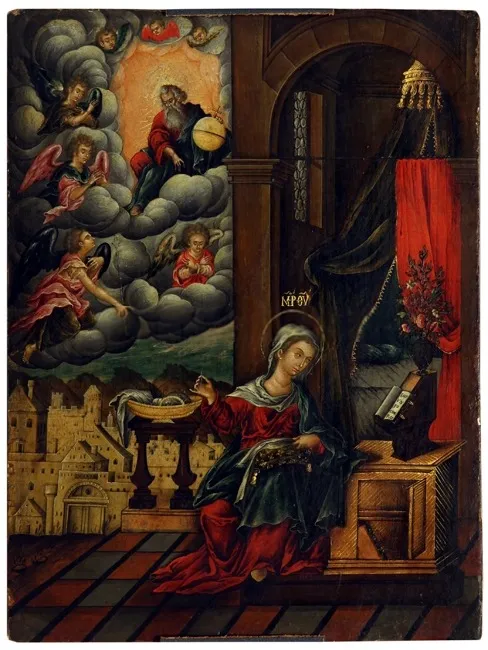
Heptanese school is an art movement of the 1700–1900 period. The gallery holds 1 work in this movement, including works by Theodore Poulakis. Browse Heptanese school paintings, portraits, pictures and artworks from the world's public-domain museum collections.
The Heptanese school—named for the Eptánisa, the "seven islands" of the Ionian Sea—was the leading school of Greek post-Byzantine painting from the middle of the seventeenth century until the middle of the nineteenth. It arose in the wake of catastrophe: when Crete, the long-flourishing centre of Orthodox icon painting, fell to the Ottomans with the surrender of Candia in 1669, many of its painters fled westward to Corfu, Zakynthos and Kefalonia. Unlike the Greek mainland, these islands remained outside Ottoman control, passing instead through Venetian, then briefly French, and finally British administration. That relative freedom, and their proximity to Italy, allowed the displaced Cretan tradition to evolve into what is often described as the first modern art movement in Greece.
Visually, the school marks a gradual but decisive turn from Byzantium toward Western Europe. Where the Cretan school had worked in egg tempera on wooden panel within rigid iconographic conventions, Heptanese painters increasingly adopted oil on canvas, three-dimensional perspective, naturalistic modelling and looser, more dramatic composition. The early generation absorbed Italian Baroque and Flemish models, frequently working after Northern engravings; later painters drew openly on Venetian masters such as Veronese. Crucially, the school also pioneered secular subject matter in Greek art, above all the bourgeois portrait, which advertised the sitter's class, profession and social standing.
The movement's founding figure is generally held to be Theodoros Poulakis (c. 1620–1692), born in Chania and active for years in Venice before settling on Corfu; more than 130 of his works survive, including the *Annunciation* held in this collection. Other early masters include Elias Moskos, Emmanuel Tzanes and Stephanos Tzangarolas. The pivotal theorist was Panagiotis Doxaras (1662–1729), who studied in Venice, translated Leonardo's *Trattato della pittura* into Greek, and in 1726 wrote the polemical treatise *On Painting* (*Peri zographias*), arguing that Greek art must abandon Byzantine formula for Western practice. His son Nikolaos Doxaras carried the programme forward, and it culminated in the searching, psychologically acute portraits of the Zakynthos painters Nikolaos Koutouzis (1741–1813) and Nikolaos Kantounis (1767–1834).
The Heptanese school thus forms the historical bridge between medieval Byzantine icon painting and modern secular Greek art, directly continuing the Cretan school while reorienting it toward Europe. Its influence reached Orthodox communities and monasteries well beyond the islands. After Greek independence the cultural centre of gravity shifted to Athens, and the founding of formal academic instruction there in the 1830s hastened the school's decline by mid-century.
Key artists
Works
Frequently asked questions
What is Heptanese school?
Heptanese school is an art movement. A tradition of post-Byzantine painting on the Ionian Islands (Heptanese) that flourished from the 17th through 19th centuries, bridging the Byzantine icon tradition with Italian Renaissance and Baroque naturalism.
Who are the key Heptanese school artists?
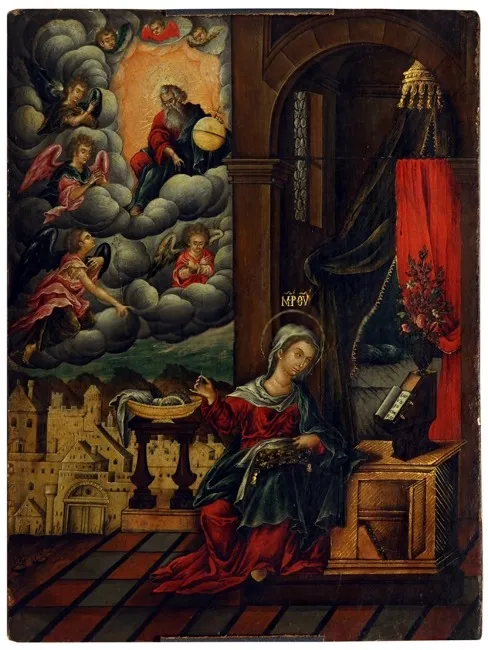
Key Heptanese school artists in the collection include Theodore Poulakis.
When did Heptanese school take place?
Heptanese school dates from 1700–1900.
Where can I see Heptanese school works?
Heptanese school works in the collection are held by Metropolitan Museum of Art.