Movement
Cretan school
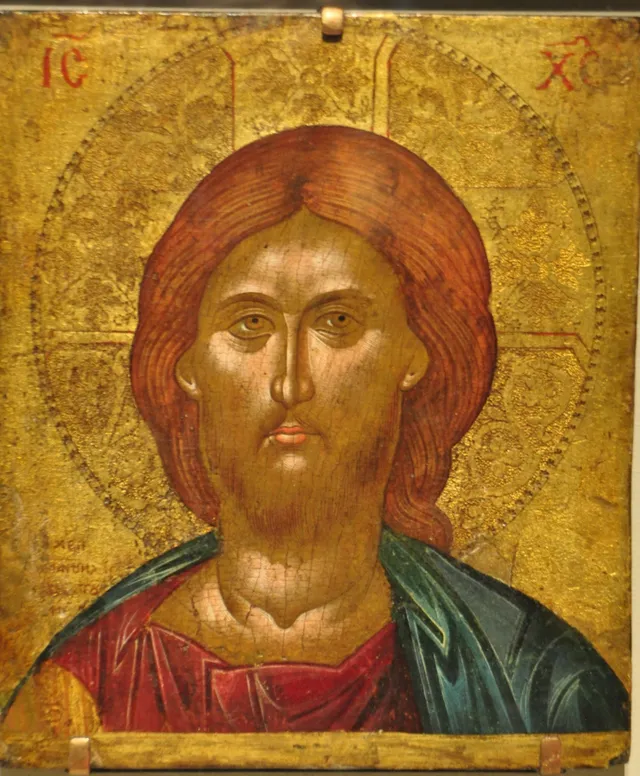
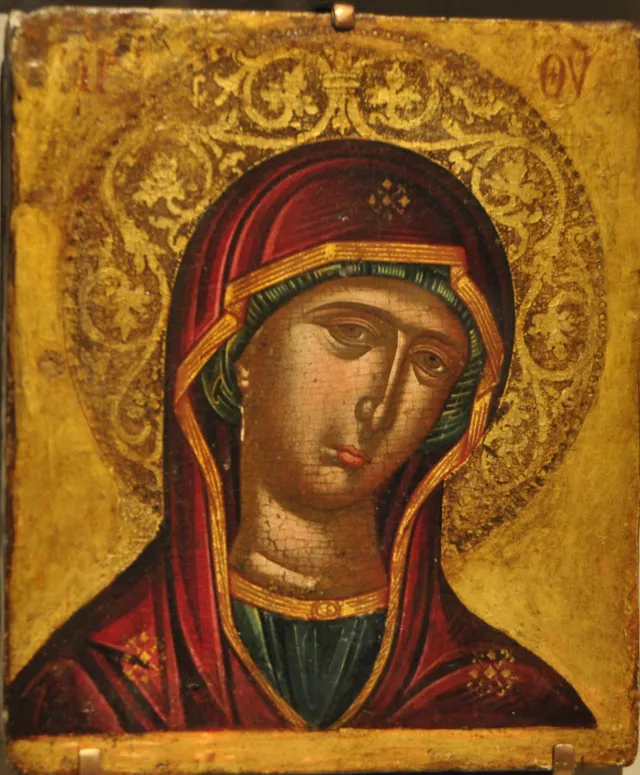
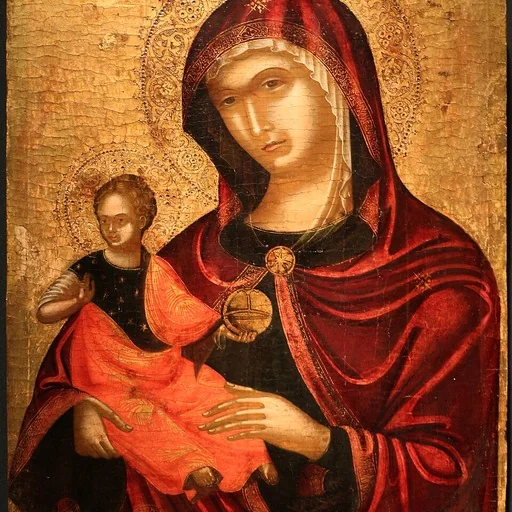
Cretan school is an art movement dating from 1300. The gallery holds 12 works in this movement, including works by Nikolaos Tzafouris, Angelos Akotantos and Emmanuel Tzanes. Browse Cretan school paintings, portraits, pictures and artworks from the world's public-domain museum collections.
The Cretan school was the dominant force in Greek religious painting from the fifteenth through the seventeenth century, an icon-painting tradition that flourished while Crete lay under Venetian rule. Its rise was bound up with the fall of Constantinople in 1453, after which artists and patrons fleeing the collapsing Byzantine world found refuge on the prosperous island. Candia (modern Heraklion) became the center of production; a guild modeled on Italian precedent, the Scuola di San Luca, organized a remarkably commercial trade in icons. One notorious 1499 contract ordered 700 images of the Virgin in just forty-five days, 500 in a Western manner and 200 in the Byzantine, attesting to both the scale of the workshops and the dual market they served.
The school's signature was a disciplined fusion of Eastern and Western practice. Many Cretan masters were effectively bilingual, able to paint alla greca in the Byzantine idiom or alla latina in the Renaissance manner, sometimes within a single panel. The mature style favored precise outlines, flesh modeled over a dark brown underpaint with dense, tiny highlights on the cheeks, brilliant garment colors, a geometric handling of drapery folds, and a balanced, carefully articulated composition.
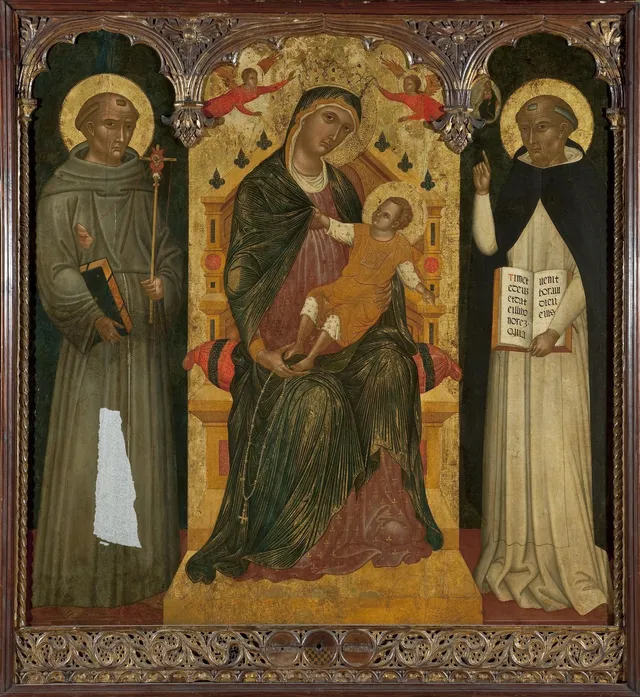
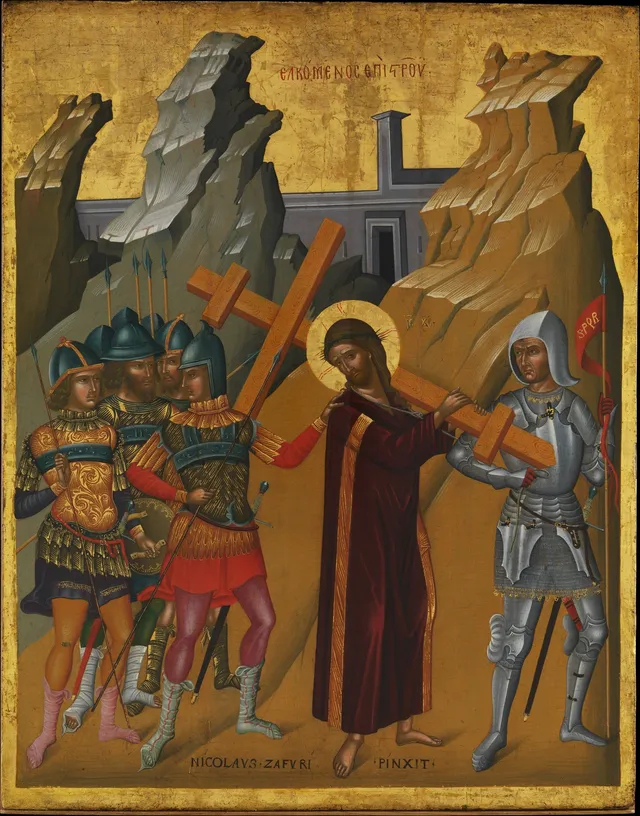
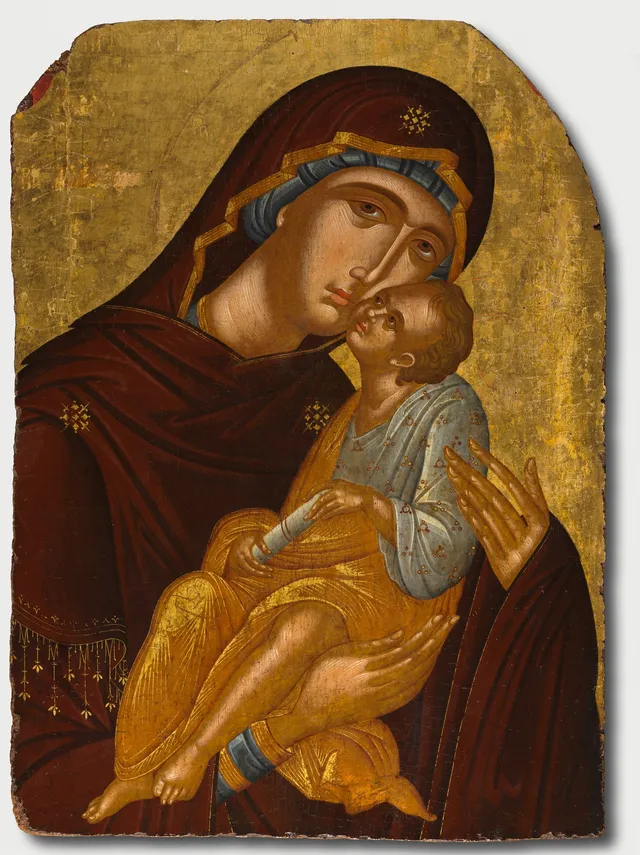
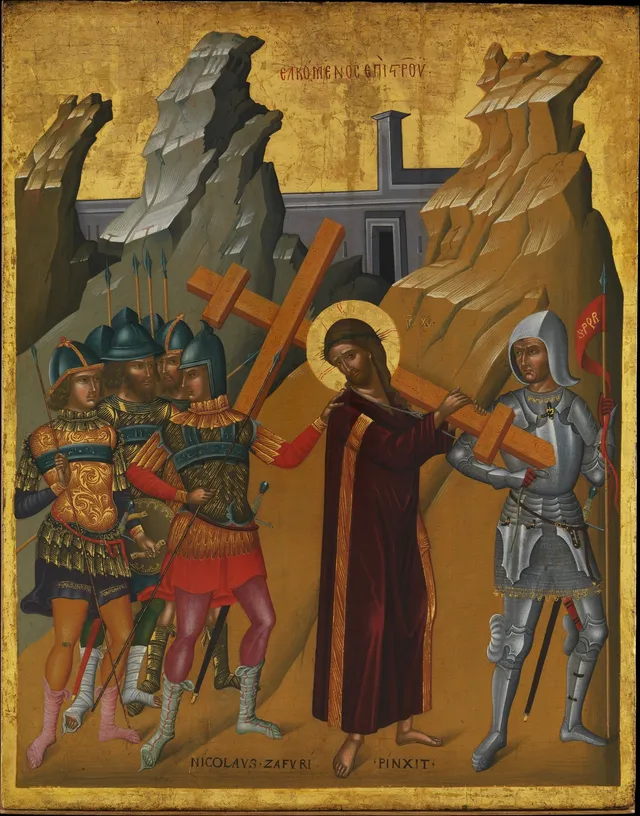
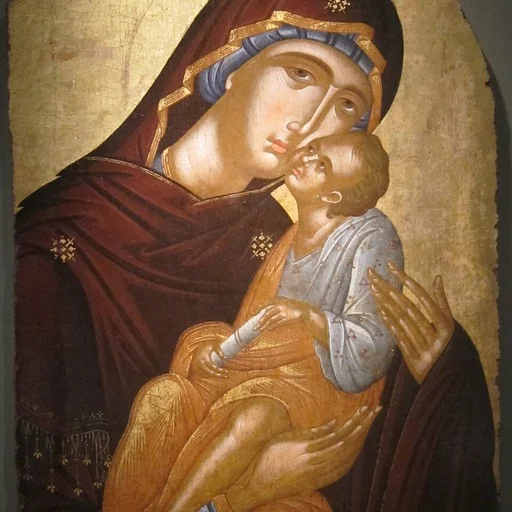
The founding fathers are conventionally named as Angelos Akotantos (active to c. 1457), long mistaken for a conservative but now recognized as a daring synthesizer of Byzantine and Western form; Andreas Ritzos (c. 1421–1492), his pupil; and Andreas Pavias. The sixteenth century brought the muralist Theophanes the Cretan (c. 1490–1559), whose signed frescoes survive at Meteora and on Mount Athos, alongside Michael Damaskinos and Georgios Klontzas. Its most famous product was Domenikos Theotokopoulos—El Greco—a Candia guild master before he left for Venice and Spain. Our collection holds characteristic panels including Andreas Ritzos's Madonna and Child with Saints, Akotantos's Virgin Eleousa, Nikolaos Tzafouris's Christ Bearing the Cross, and works by Emmanuel Tzanes.
The twenty-year Ottoman siege ending in the fall of Candia in 1669 broke the school. Painters scattered to the still-Venetian Ionian Islands, where their heirs—Tzanes among them—seeded the Heptanese school, carrying the tradition forward as it absorbed ever more Western European influence.
Key artists
Works
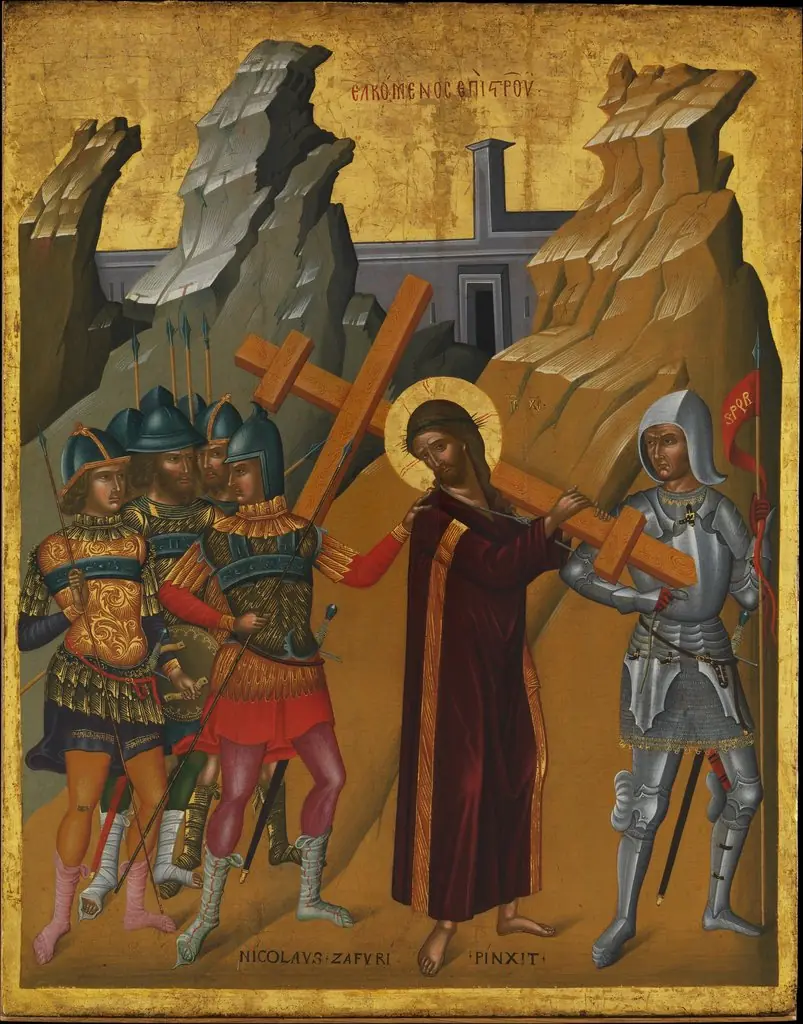 Christ Bearing the Cross
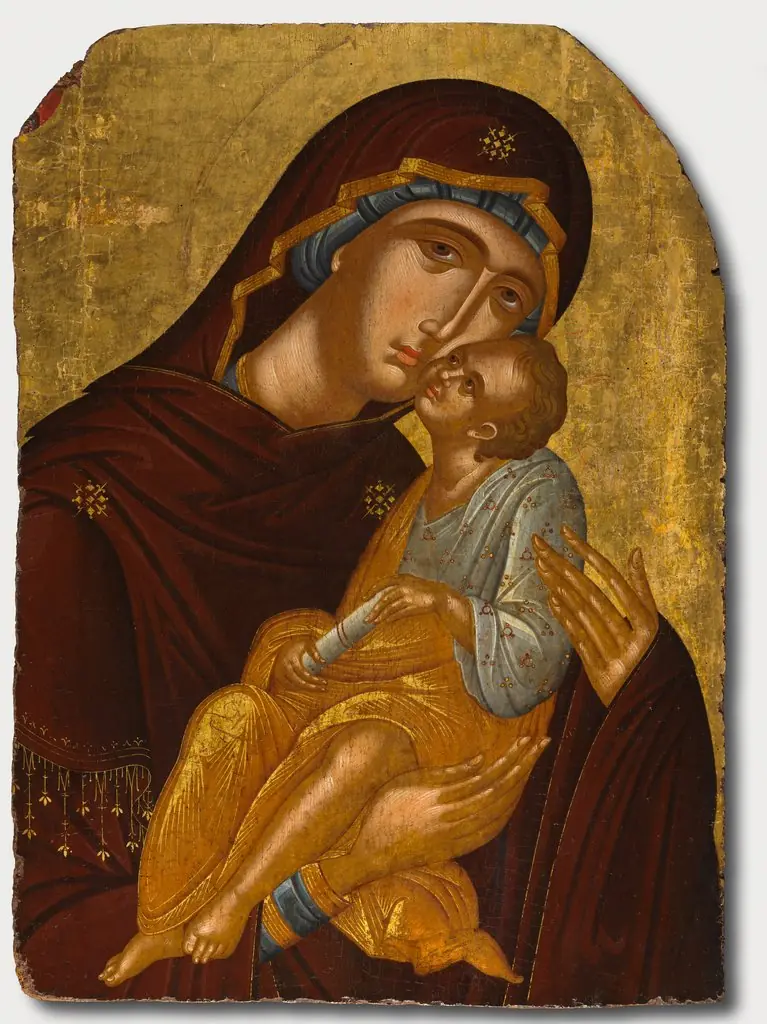 Icon of the Mother of God and Infant Christ (Virgin Eleousa)
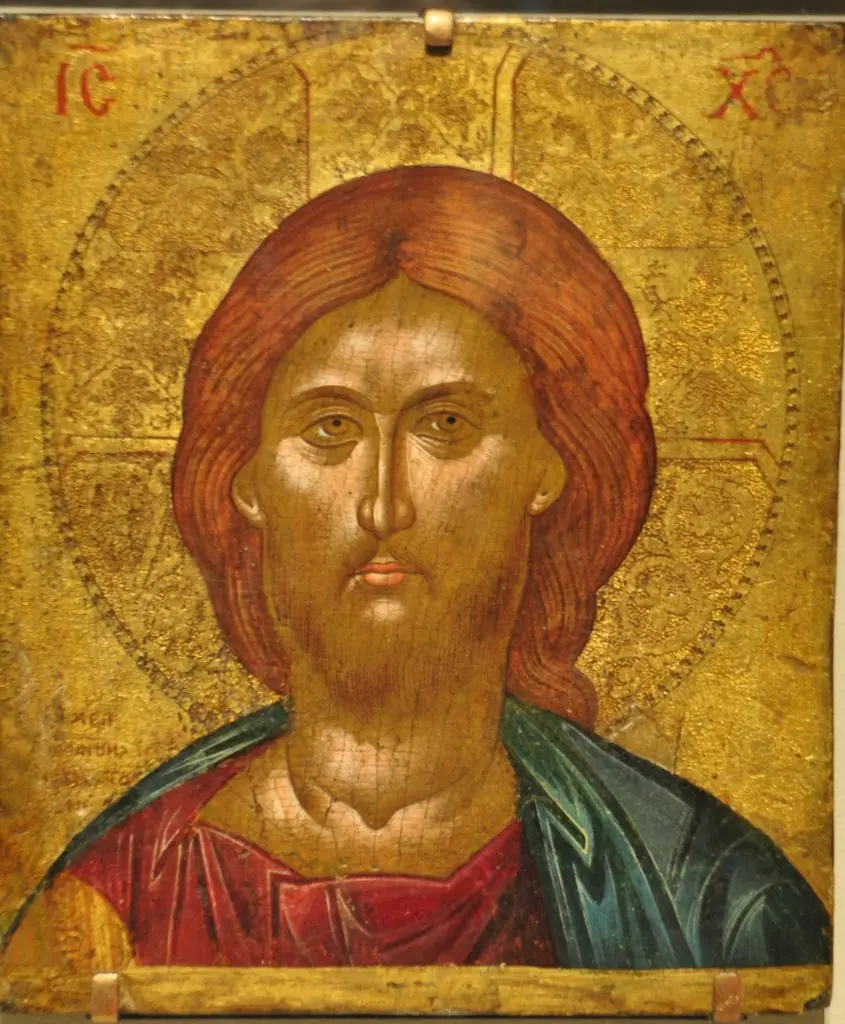 Head of Christ
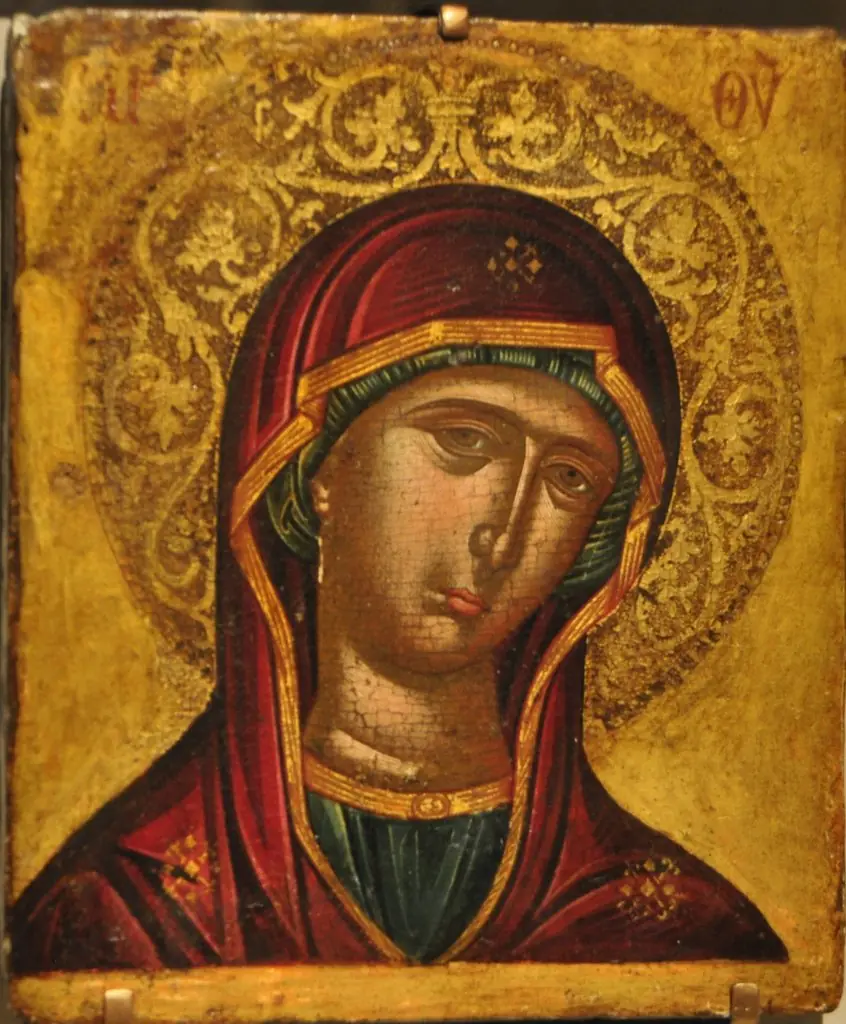 Head of the Virgin
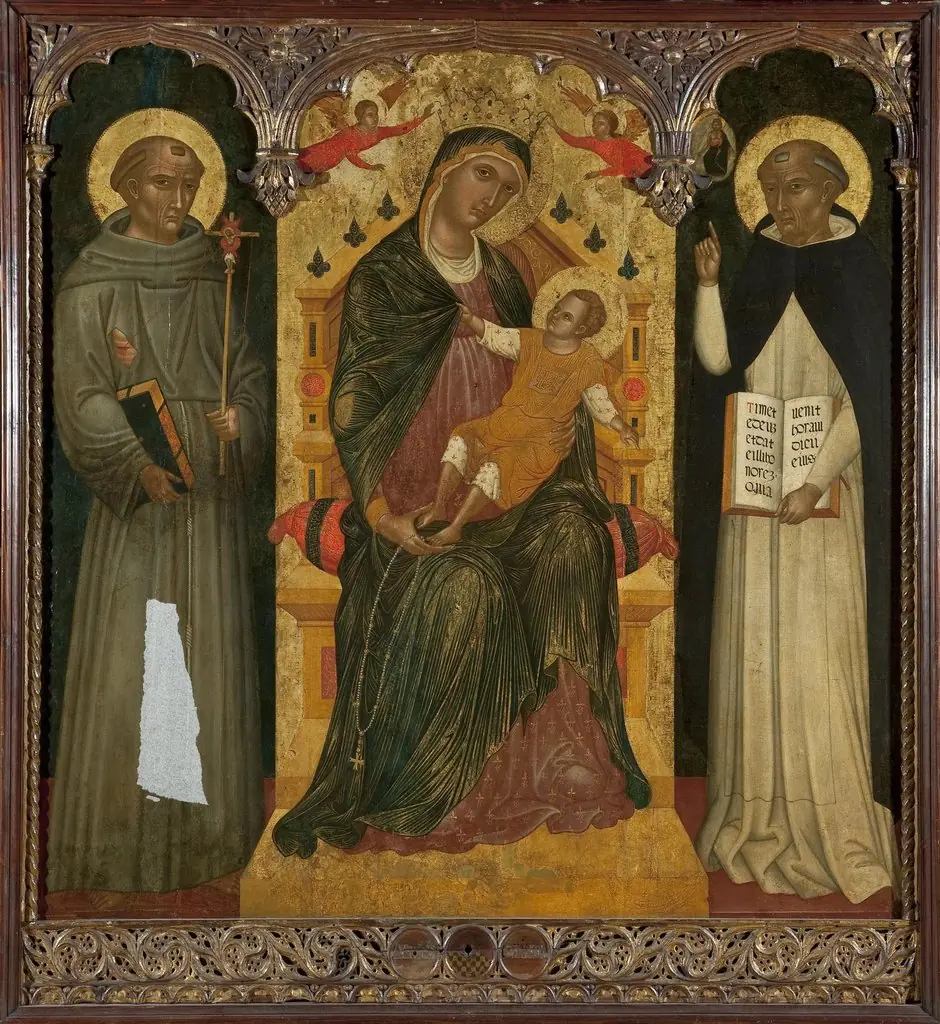 Madonna and Child with Saints
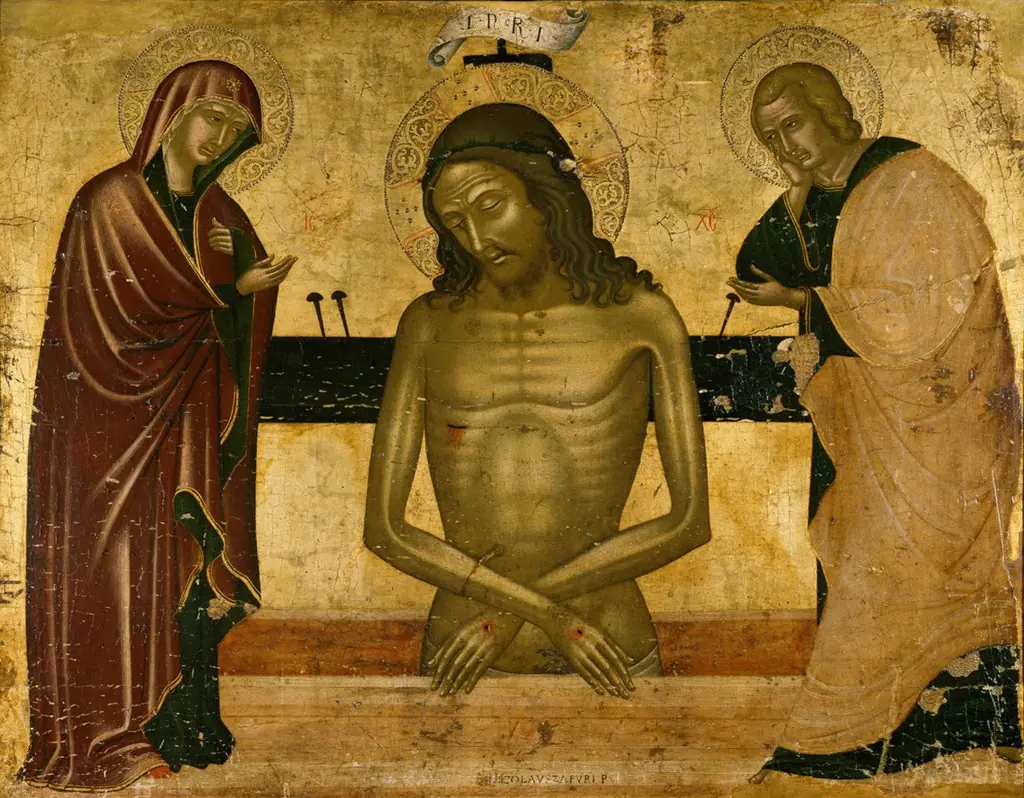 Entombment of Christ with John and Mary
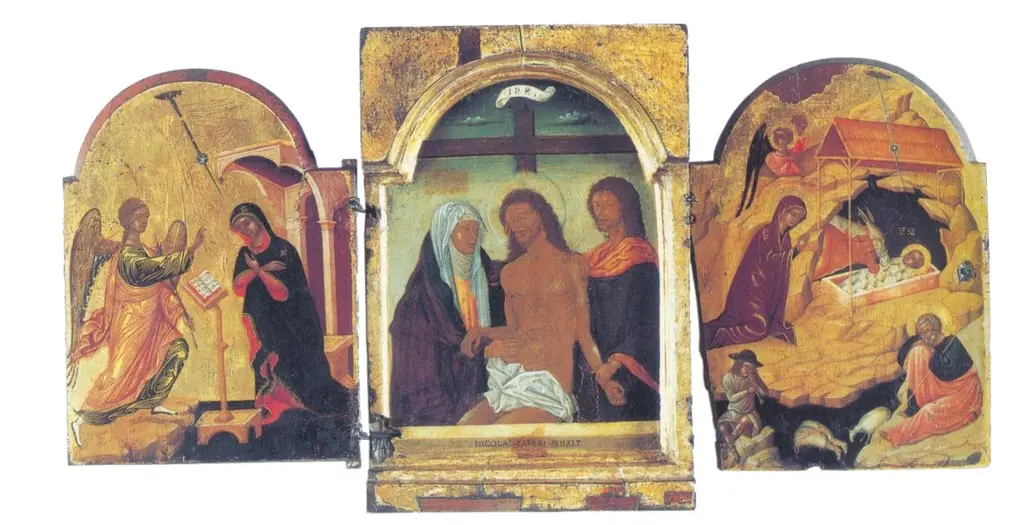 Triptych Pieta (Tzafouris)
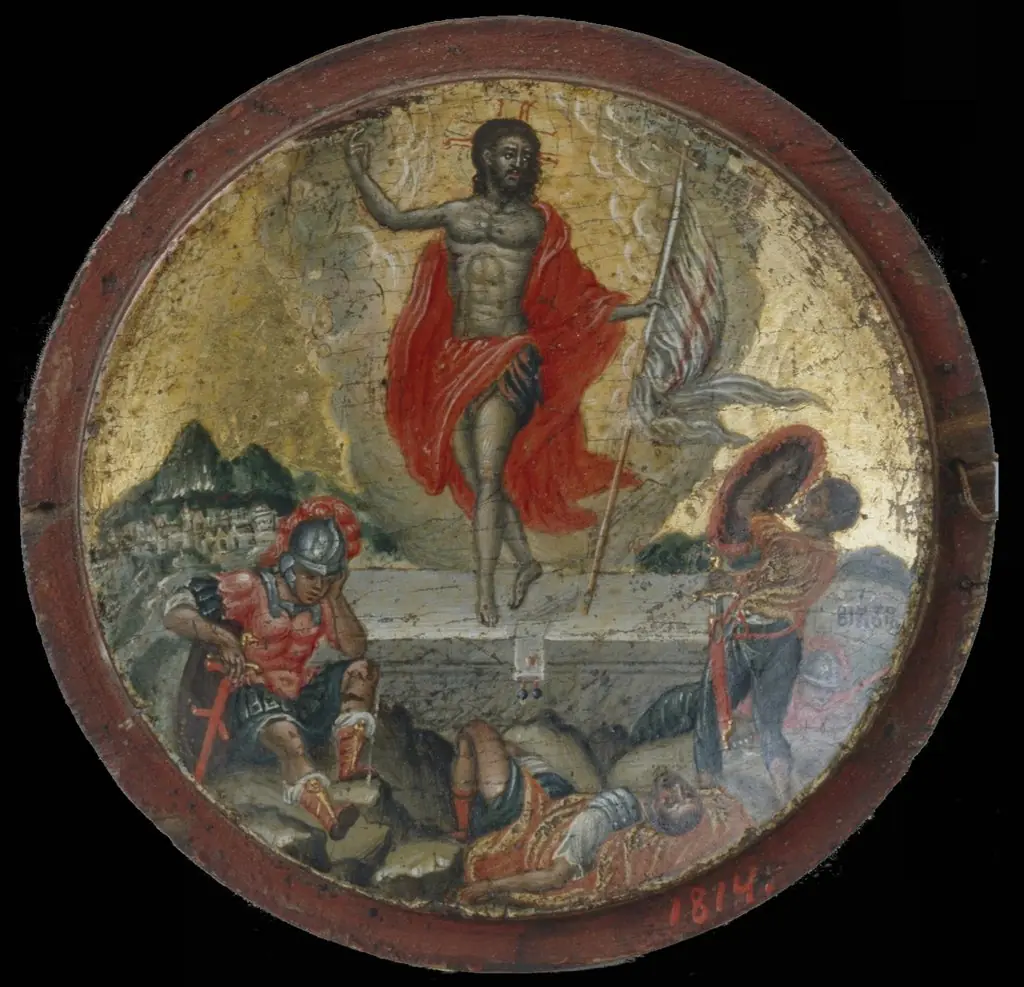 Panagiarion Showing the Resurrection (Victor of Crete)
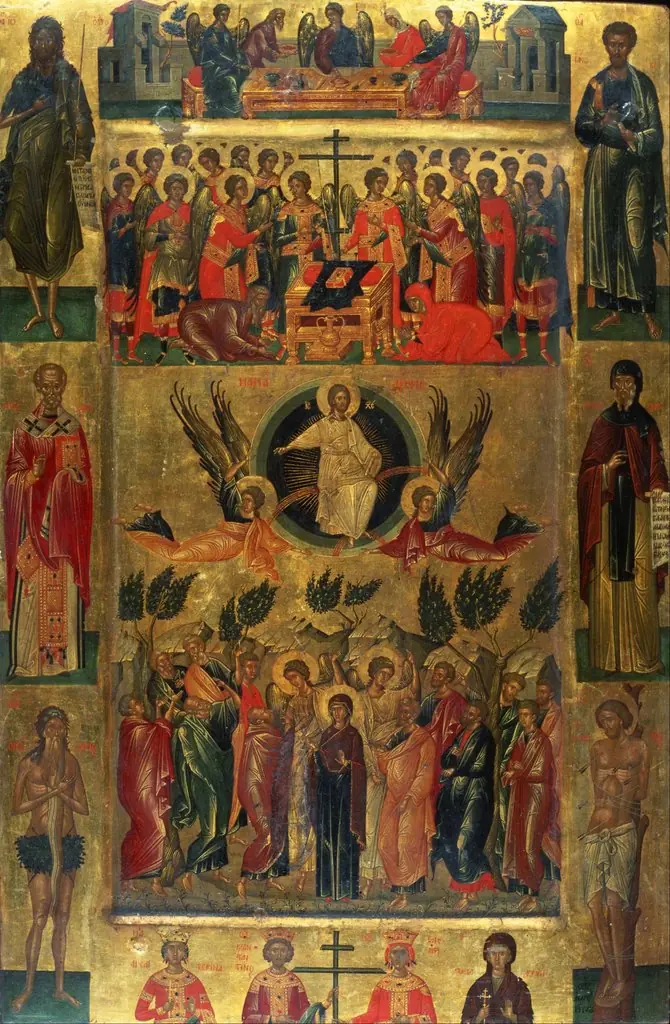 Ascension of Christ with the Hetoimasia
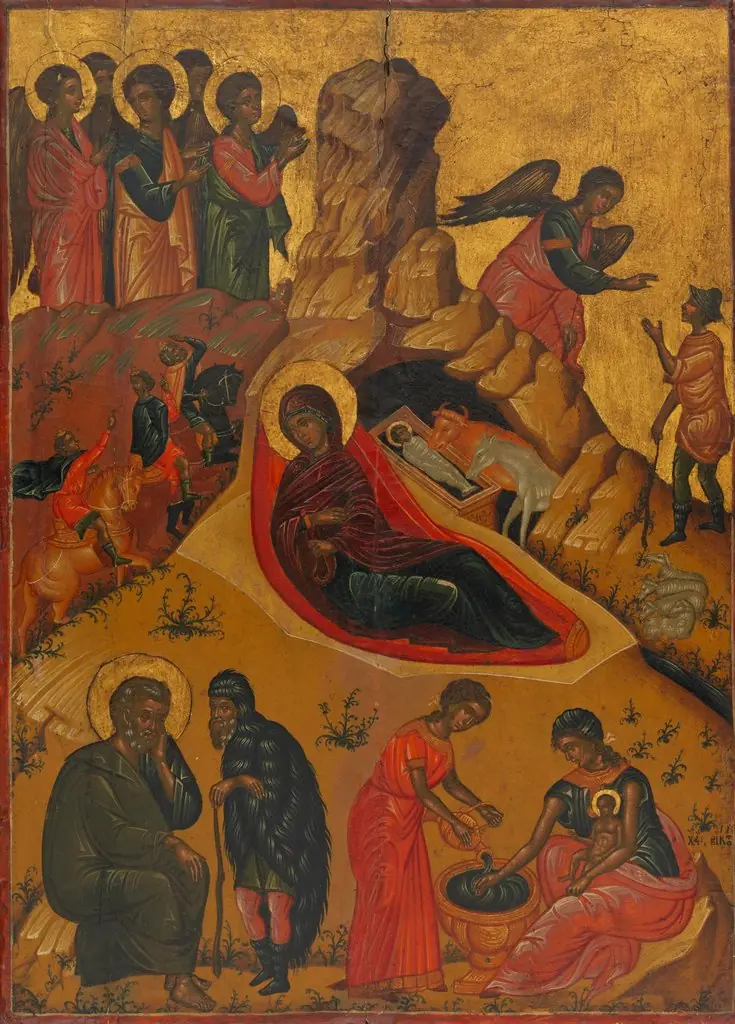 Nativity
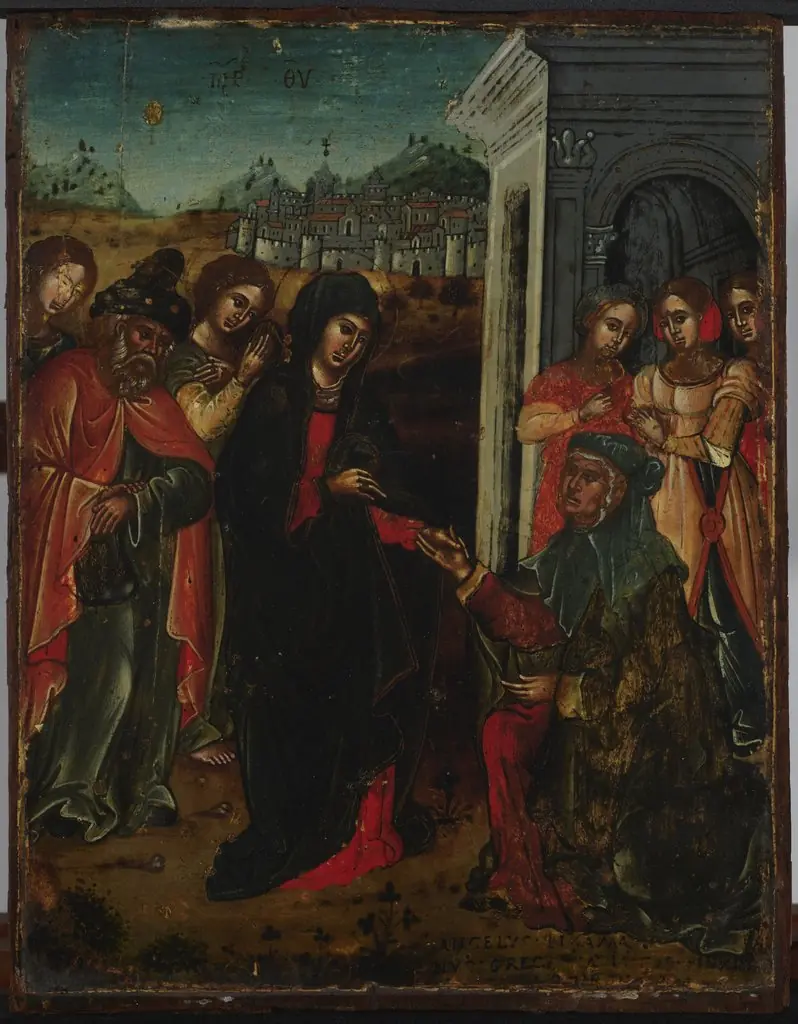 The Visitation
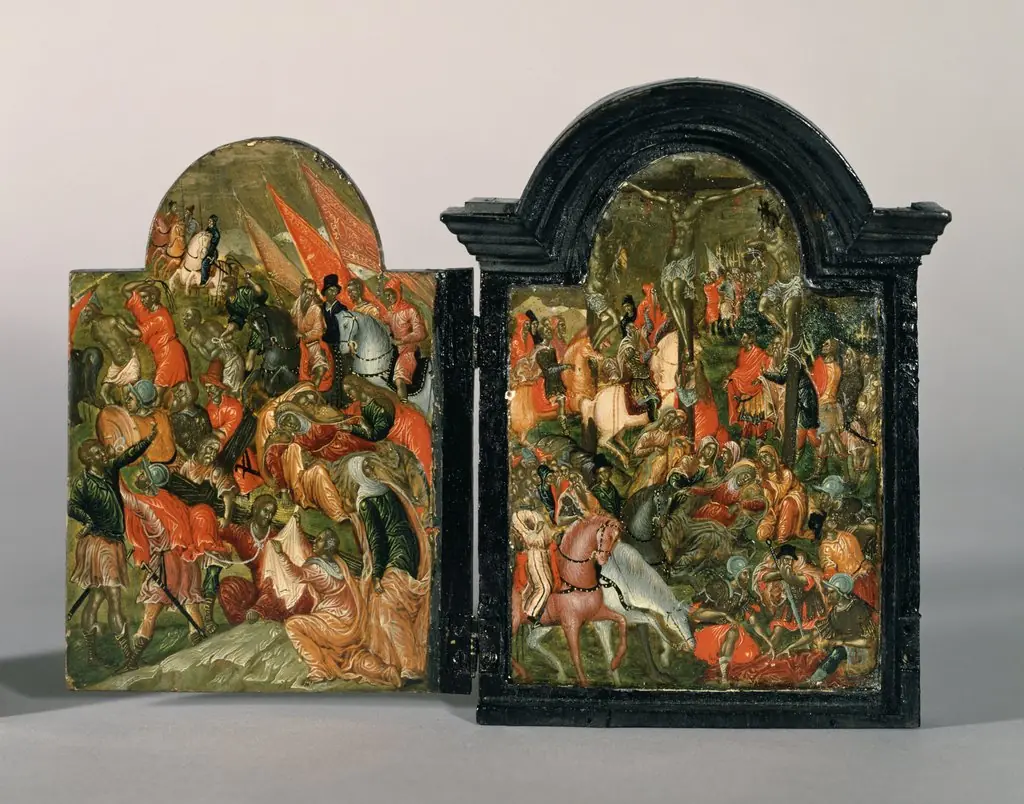 Scenes of Christ's Passion Triptych
Frequently asked questions
What is Cretan school?
Cretan school is an art movement. The painting tradition that flourished on Crete under Venetian rule from the 14th through 17th centuries, blending Byzantine iconographic conventions with Western Renaissance influence.
How many Cretan school works does Artifact World Gallery have?
Artifact World Gallery holds 12 public-domain Cretan school works, all free to view and download.
Who are the key Cretan school artists?
Key Cretan school artists in the collection include Nikolaos Tzafouris, Angelos Akotantos and Emmanuel Tzanes.
When did Cretan school take place?
Cretan school dates from around 1300.
Where can I see Cretan school works?
Cretan school works in the collection are held by Metropolitan Museum of Art, Hermitage Museum and Walters Art Museum.