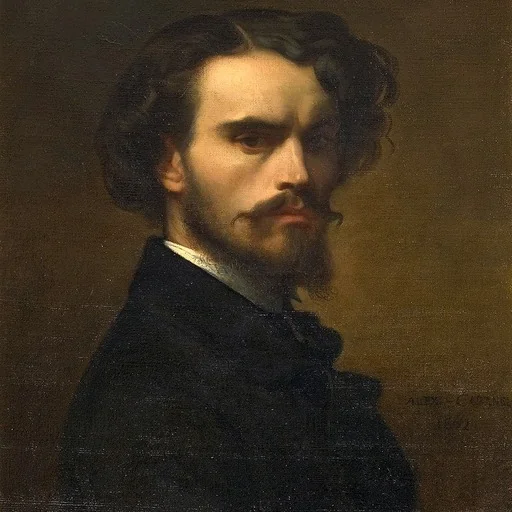
Movement
L'Art Pompier
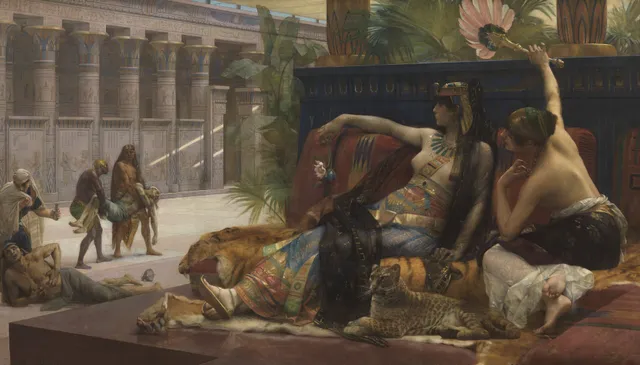
L'Art Pompier is an art movement. The gallery holds 1 work in this movement, including works by Alexandre Cabanel. Browse L'Art Pompier paintings, portraits, pictures and artworks from the world's public-domain museum collections.
"L'art pompier" — literally "fireman art" — is a derisive label coined in late nineteenth-century France for the grand, official academic painting that dominated the Paris Salon under the Second Empire and the early Third Republic. The name mocks the plumed, horse-hair-tailed helmets worn by French firemen of the era, which resembled the Attic and Greek helmets that academic painters draped over their allegorical figures, classical warriors, and Napoleonic cavalry. The coinage also puns on *pompéien* ("from Pompeii," nodding to the period's archaeological taste) and *pompeux* ("pompous"). To its detractors — among them the rising Realists and Impressionists — such work embodied bourgeois values: technically dazzling but insincere, theatrical, and overblown.
Visually, the style prized finish above all: invisible brushwork, porcelain-smooth flesh, exacting historical and ethnographic detail, and vast, carefully staged compositions drawn from mythology, antiquity, the Bible, and military history. These were the values taught by the École and the Académie des Beaux-Arts and rewarded with Salon medals and state commissions. Subject matter leaned toward the erotic-allegorical nude, the orientalist tableau, and the heroic history scene — pictures built to impress juries and fill the walls of museums and government buildings.
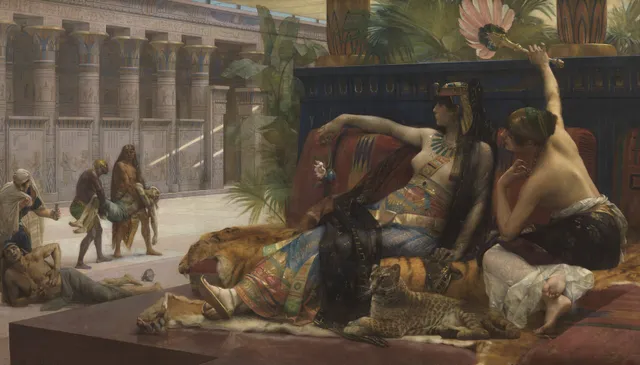
Its principal figures were the most decorated artists of their day: Alexandre Cabanel, William-Adolphe Bouguereau, Jean-Léon Gérôme, and Ernest Meissonier, alongside Thomas Couture, Paul Baudry, and Fernand Cormon. Canonical works include Cabanel's *The Birth of Venus* (1863), bought by Napoleon III; Bouguereau's *Dante and Virgil* (1850); Meissonier's meticulous *1814, Campagne de France* (1864); and Cormon's *Cain* (1880). Our collection holds Cabanel's *Cleopatra Testing Poisons on Condemned Prisoners* (1887, now in the Royal Museum of Fine Arts Antwerp), an orientalist drama after Plutarch that was fêted by critics on its Paris debut.
For much of the twentieth century, modernist taste treated "pompier" as a synonym for everything the avant-garde had overthrown, and these painters were exiled to museum storerooms. That verdict has softened markedly since the opening of the Musée d'Orsay in 1986, which hangs the academic painters alongside the Realists and Impressionists who once defined themselves against them — restoring "l'art pompier" as a serious, if still contested, chapter of nineteenth-century art rather than merely its punchline.
Key artists
Works
Frequently asked questions
What is L'Art Pompier?
L'Art Pompier is an art movement. A derogatory French term (roughly 'fireman art') for the grand academic painting that dominated the Salon in the second half of the 19th century — polished history scenes, mythologies, and nudes by painters like William-Adolphe Bouguereau and Alexandre Cabanel.
Who are the key L'Art Pompier artists?
Key L'Art Pompier artists in the collection include Alexandre Cabanel.
Where can I see L'Art Pompier works?
L'Art Pompier works in the collection are held by Royal Museum of Fine Arts Antwerp.