Movement
Rococo Revival
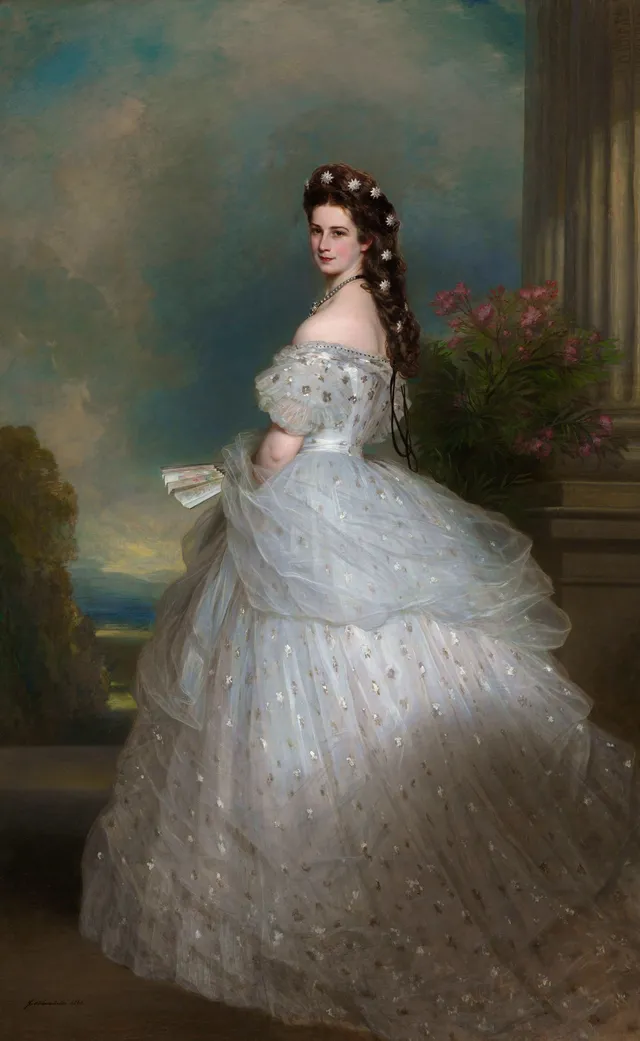
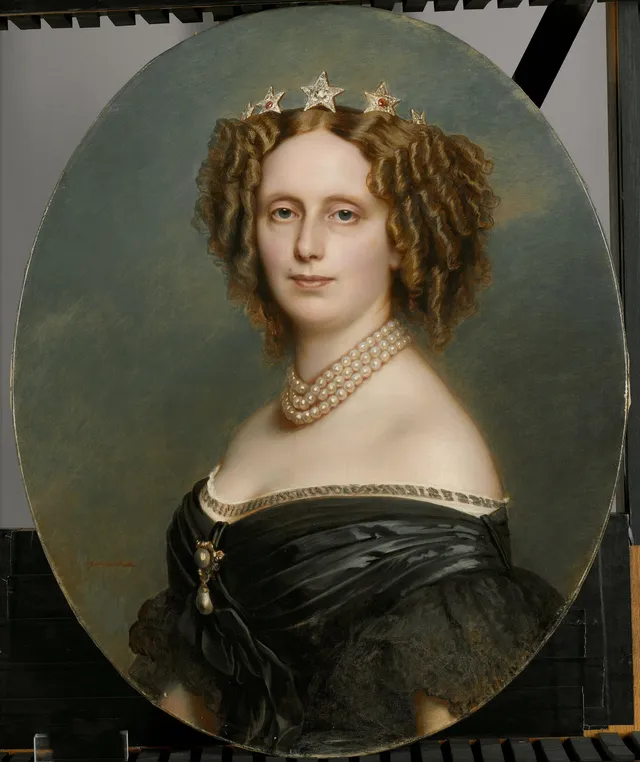
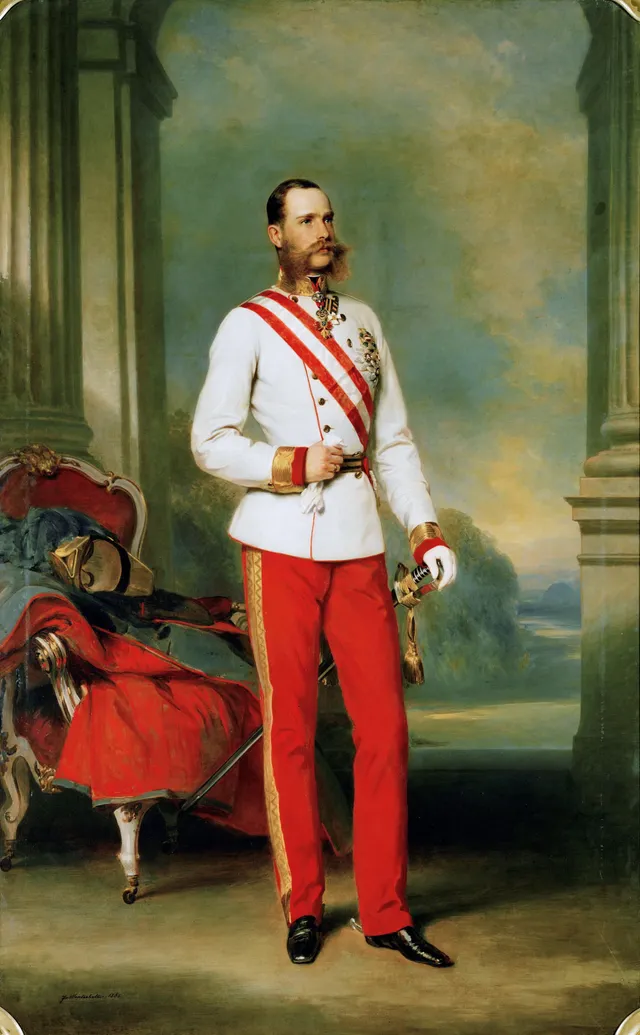
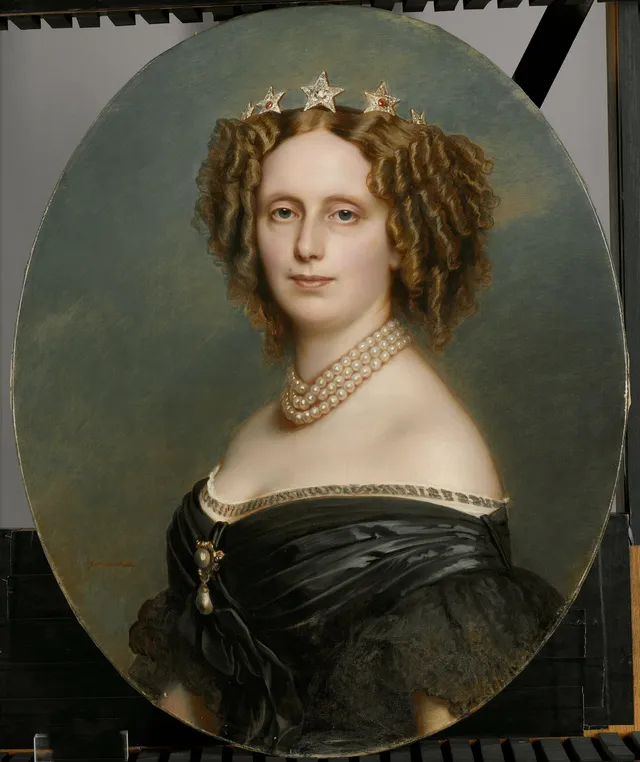
Rococo Revival is an art movement dating from 1830. The gallery holds 3 works in this movement, including works by Franz Xaver Winterhalter. Browse Rococo Revival paintings, portraits, pictures and artworks from the world's public-domain museum collections.
Rococo Revival—sometimes called the "Second Rococo" or Neo-Rococo—was a nineteenth-century resurrection of the light, curvilinear court style that had flourished in France under Louis XV. It first reappeared in furniture and interiors in the late 1820s and 1830s and reached its height between roughly 1840 and 1870. In much of Europe, and above all in France, the original Rococo was remembered as a national style, so its return carried patriotic and nostalgic overtones; the revival flourished under the July Monarchy of Louis-Philippe (1830–1848) and the Second Empire of Napoleon III, and spread to Britain (where it became known as Victorian Rococo), to Bavaria and the Austro-Hungarian lands, and across the Atlantic to the United States. It was, in part, an expression of Romantic-era taste for ornament, luxury, and naturalistic profusion, reacting against the austerity of Neoclassicism.
The style is recognized by its sinuous C- and S-scrolls, asymmetrical cartouches, oval and serpentine forms, and a dense vocabulary of naturalistic ornament—flowers, foliage, fruit, and shells—rendered in carving, gilding, and porcelain. Interiors paired muted Louis XV boiserie and plasterwork with machine-printed, flocked, or embossed wallpapers in floral and ribbon patterns, while furniture favored cherry, walnut, and especially rosewood.
In the decorative arts the revival's most inventive figure was the German-born American cabinetmaker John Henry Belter (1804–1863), whose patented technique laminated and steam-bent up to a dozen or more layers of rosewood, then pierced and carved them into extravagant, openwork chairs and sofas of remarkable strength. In painting, the style is epitomized by Franz Xaver Winterhalter (1805–1873), the era's preeminent court portraitist, whose airy, idealized likenesses of European royalty consciously echoed eighteenth-century elegance. Our collection holds three of his canvases, including portraits of Emperor Franz Joseph I and of Empress Elisabeth of Austria; his celebrated Empress Eugénie Surrounded by her Ladies-in-Waiting (1855) remains the movement's signature image.
Rococo Revival was one of several competing historicist currents—alongside Gothic and Renaissance Revivals—that defined Victorian eclecticism. Its taste for sumptuous curves and decorative excess persisted into the Belle Époque and helped prepare the ground for the organic, whiplash lines of Art Nouveau at the century's close.
Key artists
Works
Frequently asked questions
What is Rococo Revival?
Rococo Revival is an art movement. A 19th-century return to Rococo decorative forms in furniture, interiors, and porcelain, especially in the reign of Louis-Philippe and during the Second Empire.
Who are the key Rococo Revival artists?
Key Rococo Revival artists in the collection include Franz Xaver Winterhalter.
When did Rococo Revival take place?
Rococo Revival dates from around 1830.
Where can I see Rococo Revival works?
Rococo Revival works in the collection are held by Kunsthistorisches Museum and Rijksmuseum.