January 29 in Art History
5 real events recorded on January 29, the earliest from 1858. 1 artist was born , 1 died on this date.
The day's biggest moments
Born on this day 1
- 1858 Born
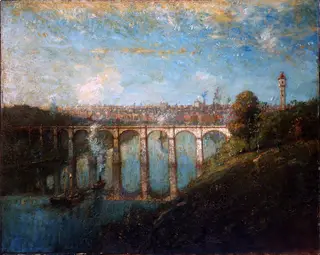
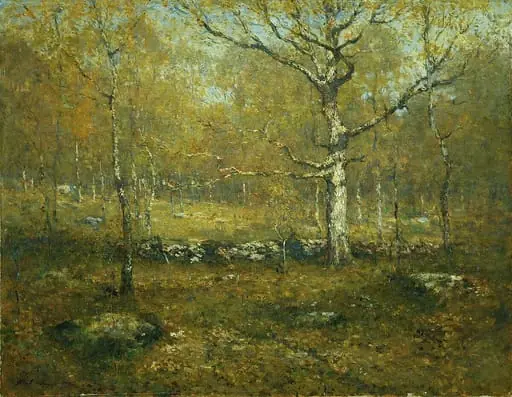
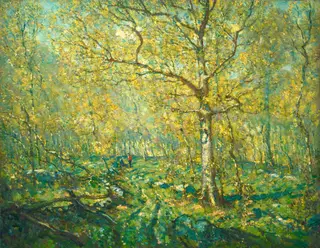
Born this day: Henry Ward Ranger
Henry Ward Ranger, born on January 29, 1858, was a prominent American landscape and marine painter, and a key figure in the Tonalist movement. He led the Old Lyme Art Colony and created notable works such as High Bridge, New York, and Seascape. Ranger's art often captured serene natural scenes.
Ranger's contributions to American art, particularly in the Tonalist movement, remain significant to this day.
Died on this day 1
- 1899 Died
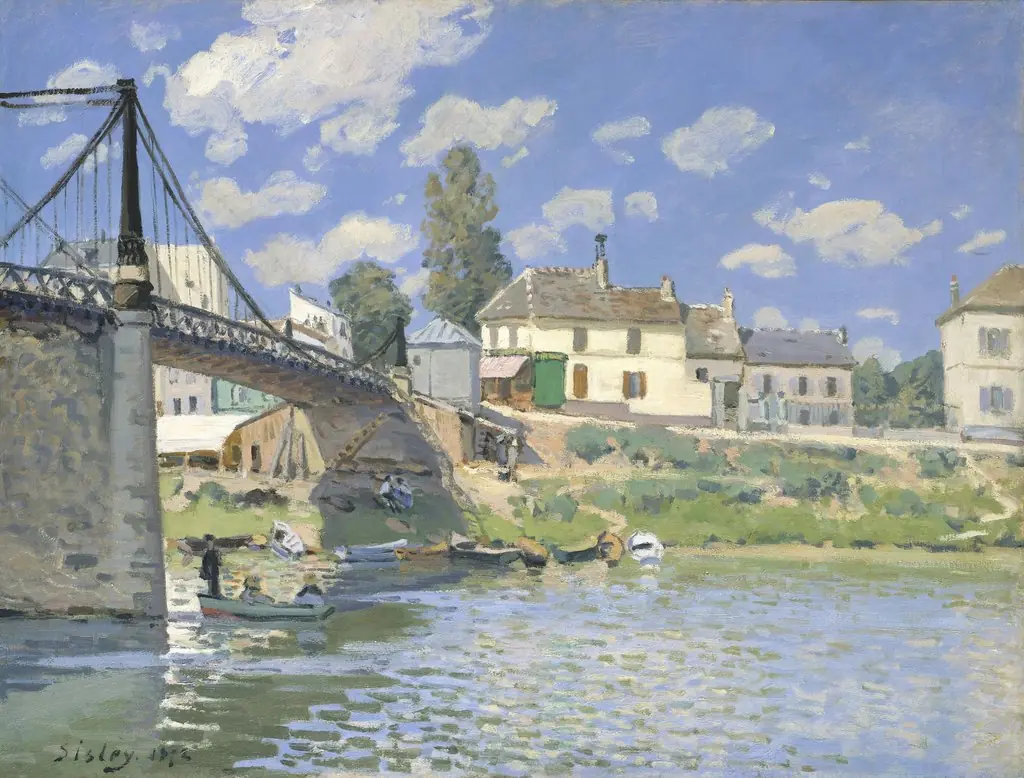
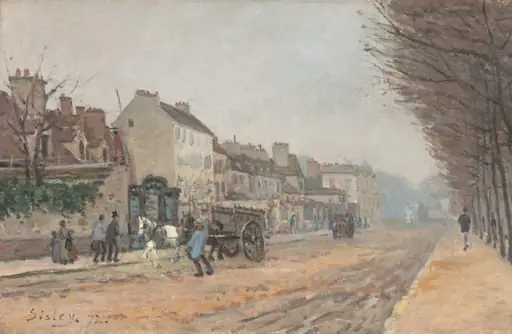
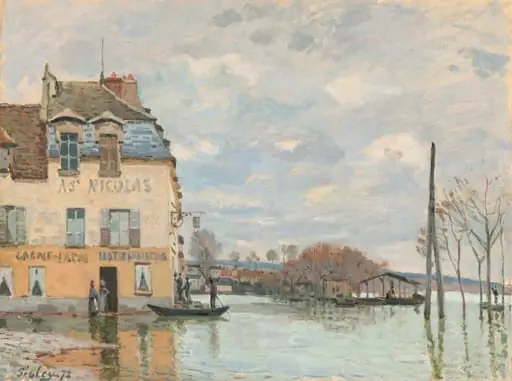
Died this day: Alfred Sisley
Alfred Sisley, a British Impressionist landscape painter, dedicated his life to capturing the beauty of the outdoors. Born to British parents in France, he spent most of his life there, consistently painting en plein air. His works, such as The Bridge at Villeneuve-la-Garenne and The Seine at Bougival, are characterized by tranquility and soft colors.
He remains a key figure in the Impressionist movement, celebrated for his serene and expressive landscapes.
Exhibitions & salons 1
- 1924 Exhibition
AKhRR's Revolution, Everyday Life and Work opened
The sixth exhibition of AKhRR, the Association of Artists of Revolutionary Russia, opened in Moscow at the State Historical Museum under the title "Revolution, the Everyday Life and Work." The documented listing gives the scale as 499 paintings and sculptures by 134 authors, including Mikhail Avilov, Abram Arkhipov, Mikhail Bobyshov, Alexander Vakhrameev, Nikolai Dormidontov, Yuly Klever, Piotr Kotov, Vasily Svarog, and Rudolf Frentz. AKhRR had been formed in the early Soviet period and became one of the most influential organizations shaping art acceptable to the new state. Its exhibitions promoted legible, socially oriented imagery of revolutionary life, labor, and Soviet subjects, helping build the framework from which Socialist Realism would later be codified.
AKhRR's exhibition culture helped move Soviet art toward state-backed narrative realism.
Openings & foundings 2
- 1928 Founding
American Artists Professional League instituted
Frederick Ballard Williams called a meeting of 15 Salmagundi Club members in New York to form a professional league of American artists. The American Artists Professional League was instituted at that meeting, with Williams as president, Wilford Conrow as secretary, and Gordon Grant as treasurer; attending academicians included Hobart Nichols and Bruce Crane. The league promoted traditional realist fine art and framed itself as a national organization for American artists and art lovers. Its early campaigns joined professional advocacy with practical studio concerns: it pushed for official portrait commissions to go to U.S. artists, supported research into the chemical purity of pigments, and later developed American Art Week and the Grand National Exhibition as recurring public platforms for realist artists.
The AAPL became a durable institutional advocate for American realist painters, illustrators, and sculptors.
- 1937 Founding Landmark
American Abstract Artists prospectus issued
The American Abstract Artists General Prospectus was issued in New York, formalizing an artists' organization devoted to abstract art at a time when American galleries and museums offered little support for nonrepresentational work. The group had decided earlier in January to create American Abstract Artists, and the prospectus gave the new association its program: unite abstract painters and sculptors, bring their work before the public, foster appreciation, and create exhibition opportunities. Its early membership included artists working through Cubist, geometric, biomorphic, and Neoplastic idioms, with women artists such as Gertrude Greene, Alice Mason, Rosalind Bengelsdorf, and Esphyr Slobodkina central to its organization. The first AAA exhibition followed that year at Squibb Gallery, becoming a major non-museum presentation of American abstraction in the 1930s.
AAA helped build a public and institutional platform for American abstraction before Abstract Expressionism became dominant.
Werner Drewes , Byron Browne , Josef Albers , Ilya Bolotowsky , Gertrude Greene , Burgoyne Diller