Artist
Alfred Sisley
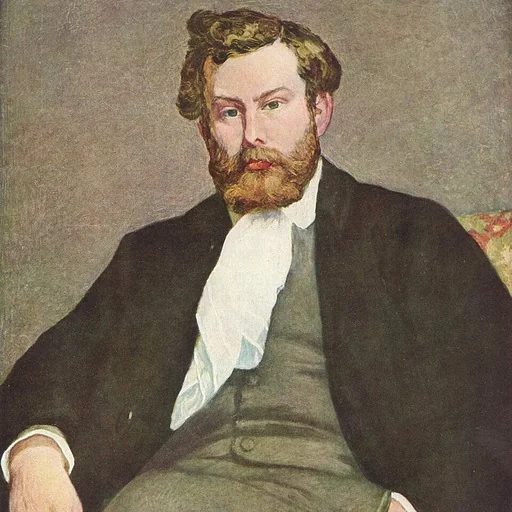
British, 1839–1899
Alfred Sisley was a British Impressionism painter. 113 works are cataloged here, principally at National Gallery of Art, most of them oil paintings. Alfred Sisley was born in former 4th arrondissement of Paris.
Alfred Sisley (; French:; 30 October 1839–29 January 1899) was a French-Born British Impressionist landscape painter who was born to British parents, but spent most of his life in France. He was the most consistent of the Impressionists in his dedication to painting landscape en plein air (i.e., outdoors). He deviated into figure painting only rarely and, unlike Renoir and Pissarro, he found that Impressionism fulfilled his artistic needs.
Among his important works are a series of paintings of the River Thames, mostly around Hampton Court, executed in 1874, and landscapes depicting places in or near Moret-sur-Loing. The notable paintings of the Seine and its bridges in the former suburbs of Paris are, like many of his landscapes, characterised by tranquillity in pale shades of green, pink, purple, dusty blue, and cream. Over the years Sisley's power of expression and colour intensity increased.
Works by Alfred Sisley
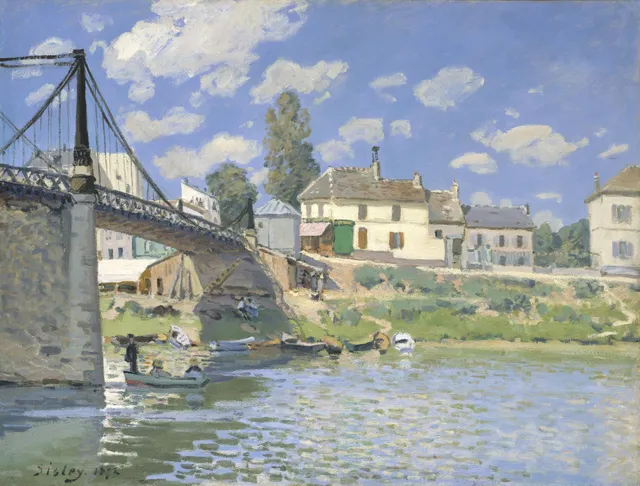 The Bridge at Villeneuve-la-Garenne
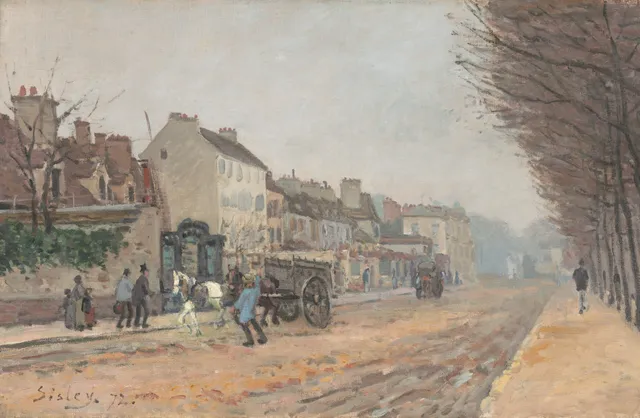 Boulevard Héloïse, Argenteuil
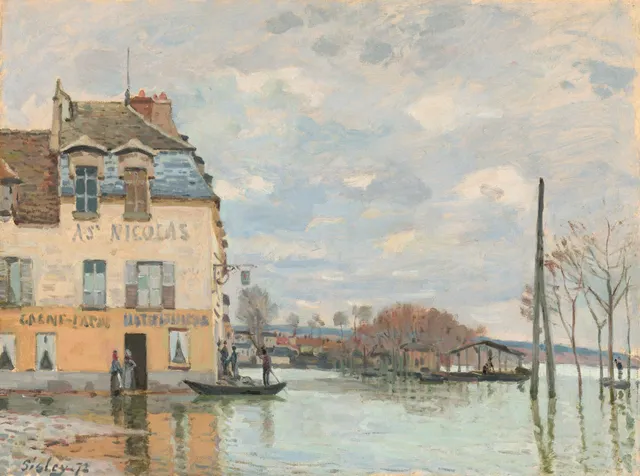 Flood at Port-Marly
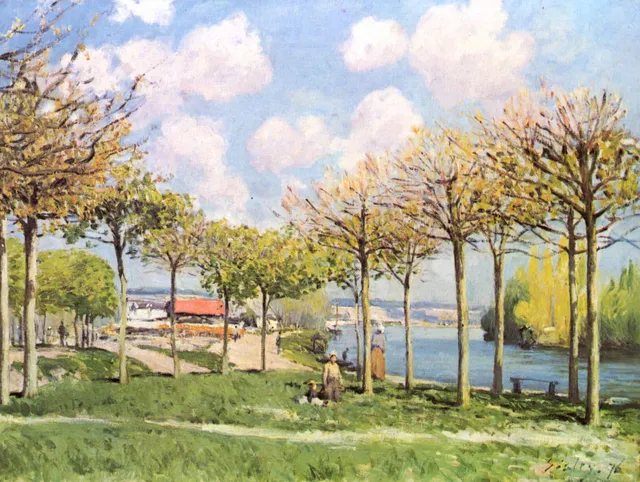 The Seine at Bougival
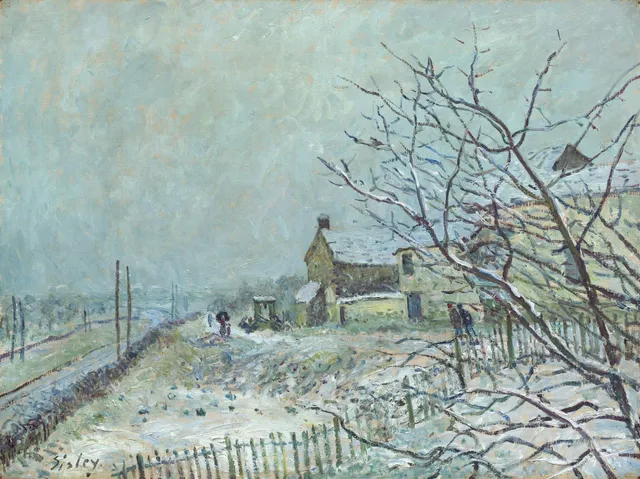 First Snow at Veneux-Nadon
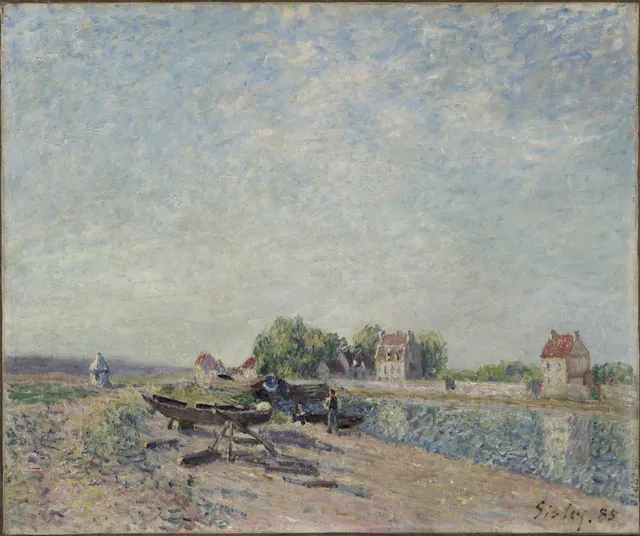 Saint-Mammès, Loing Canal
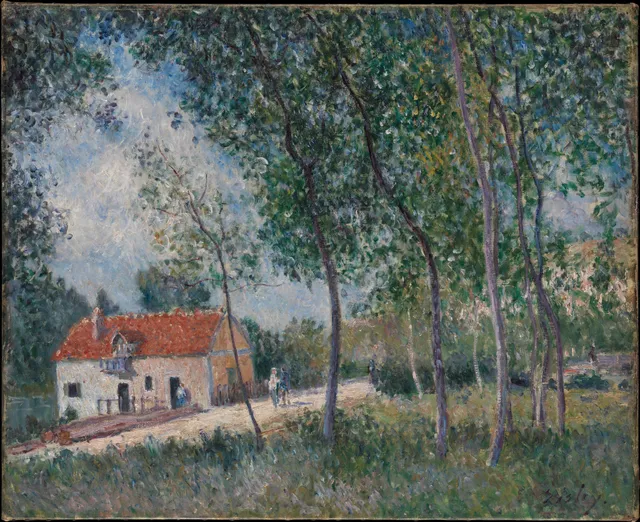 The Road from Moret to Saint-Mammès
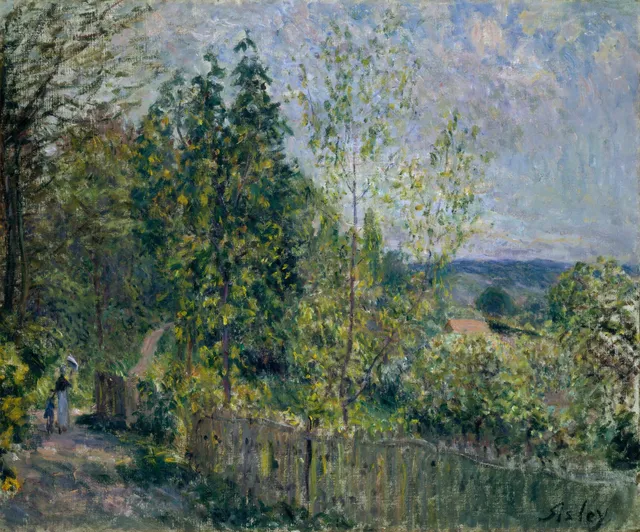 The Road in the Woods
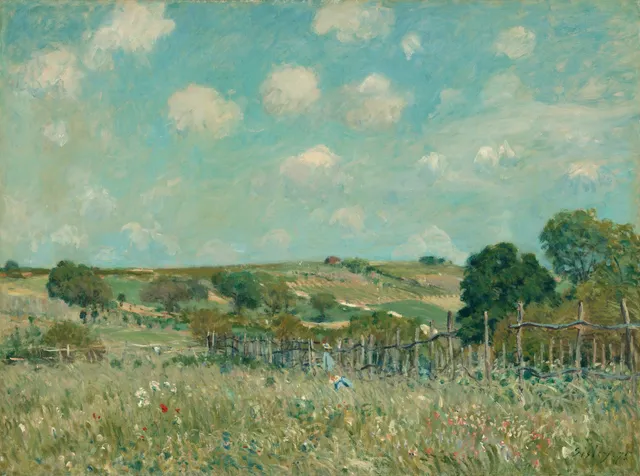 Meadow
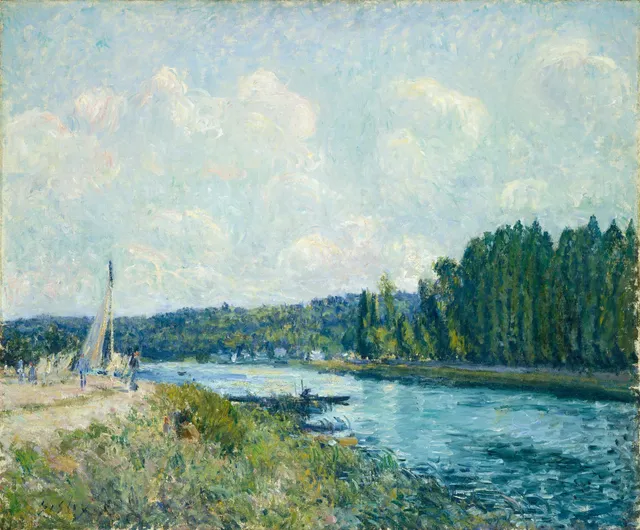 The Banks of the Oise
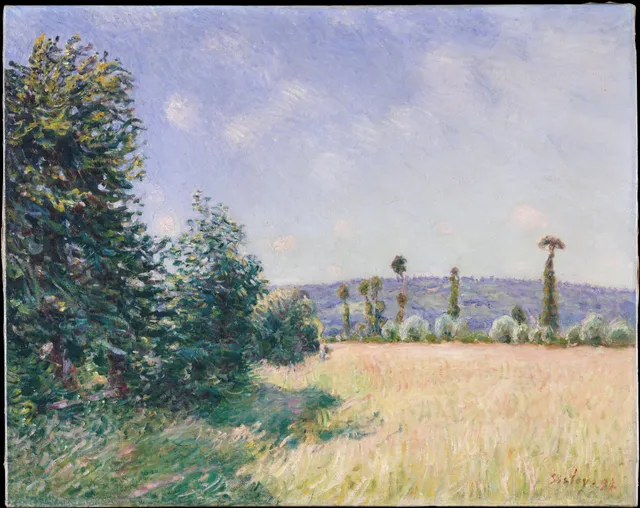 Sahurs Meadows in Morning Sun
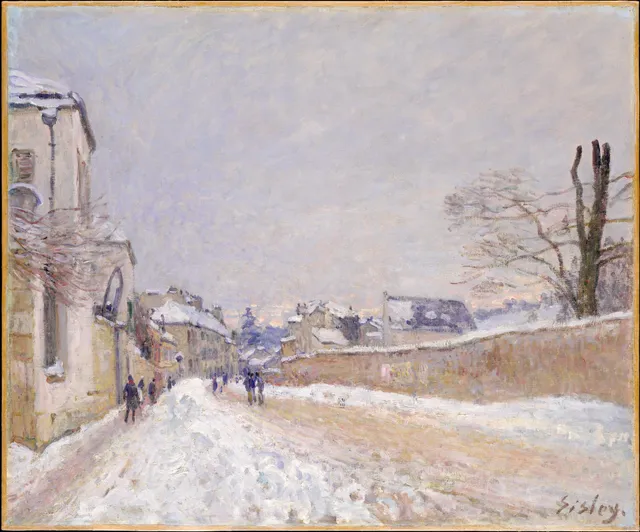 Rue Eugène Moussoir at Moret: Winter
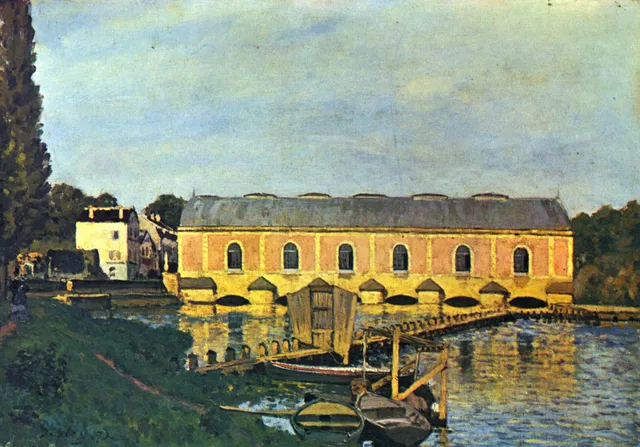 La Machine de Marly
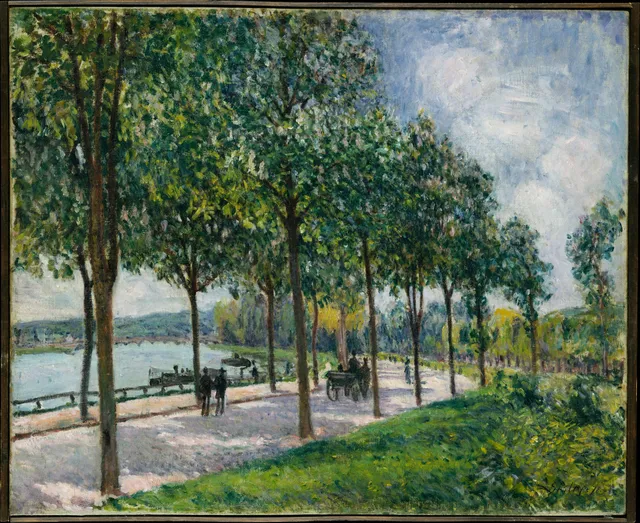 Allée of Chestnut Trees
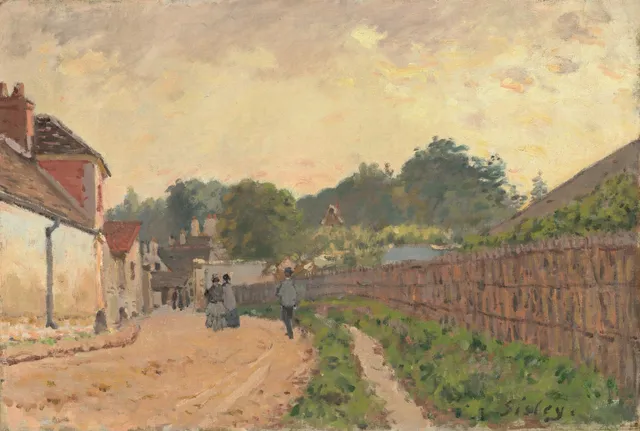 Marly-le-Roi
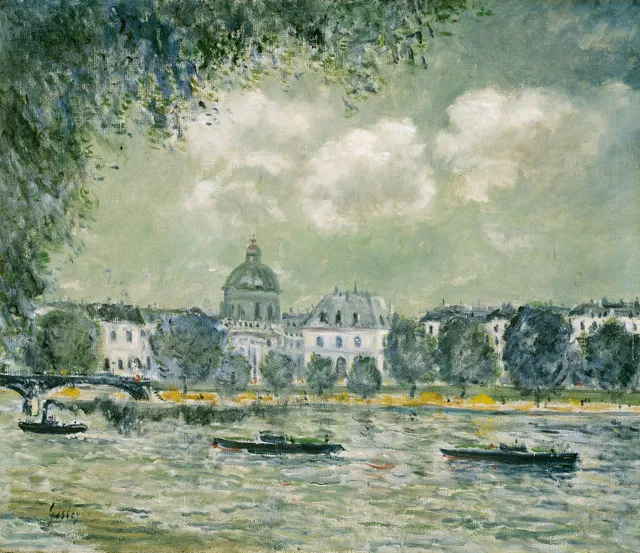 Landscape along the Seine with the Institut de France and the Pont des Arts
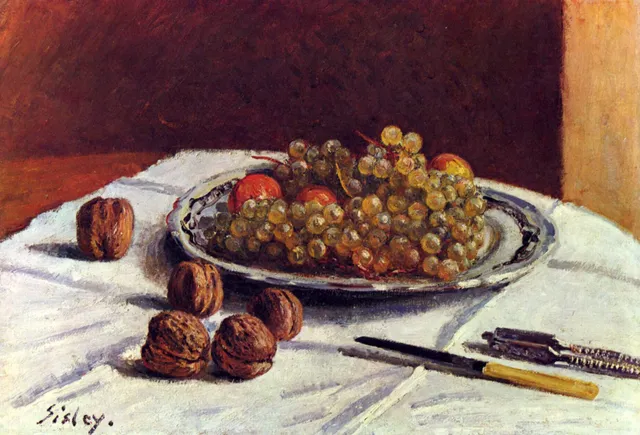 Grapes and Walnuts on a Table
Collections represented


Moments involving Alfred Sisley
- First Impressionist Exhibition · 1874 The model of the self-organized group exhibition was born, eight Impressionist shows followed through 1886, and with them the modern idea of the avant-garde.
- Paris 1874: Inventing Impressionism Opens at Musee d'Orsay · 2024 The exhibition renewed scholarly and public attention to Impressionism's institutional origins.
Featured in a course
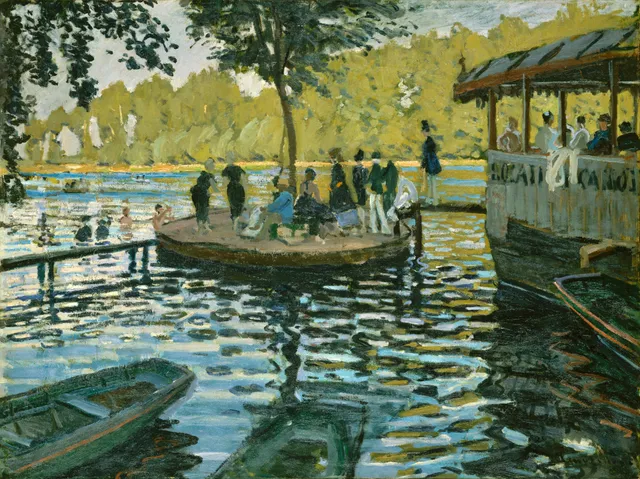
Artists in a similar vein