Artwork
Spring Woods
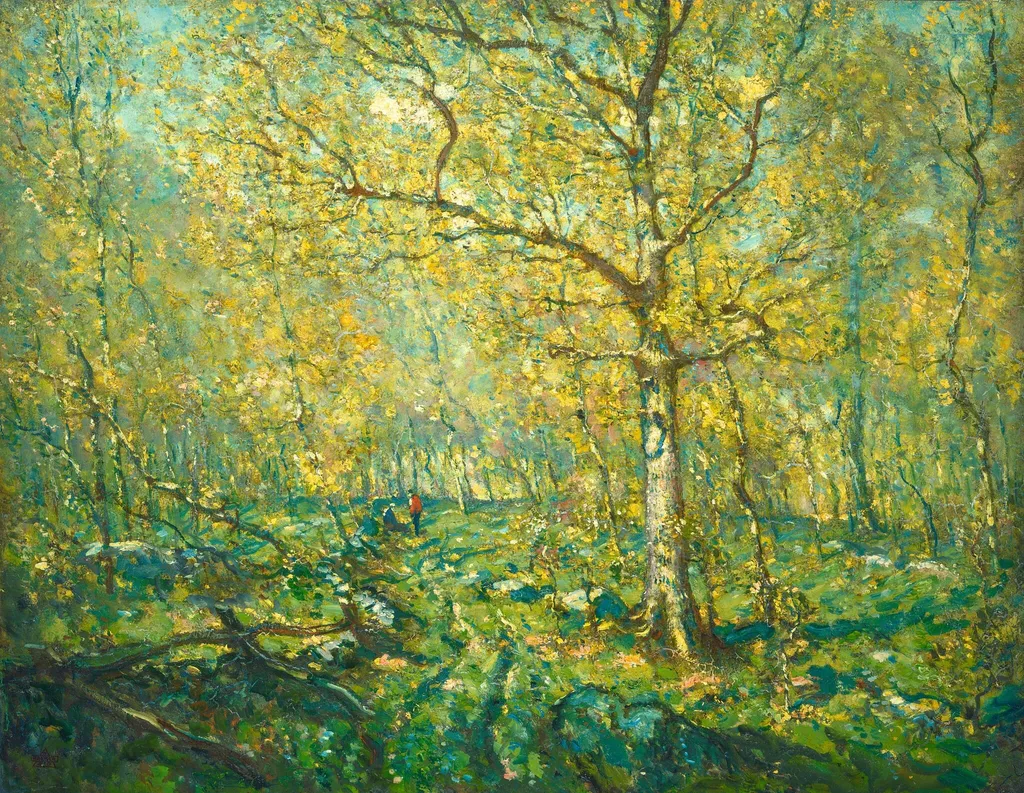
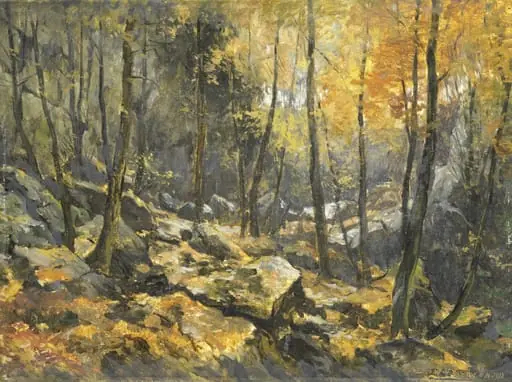
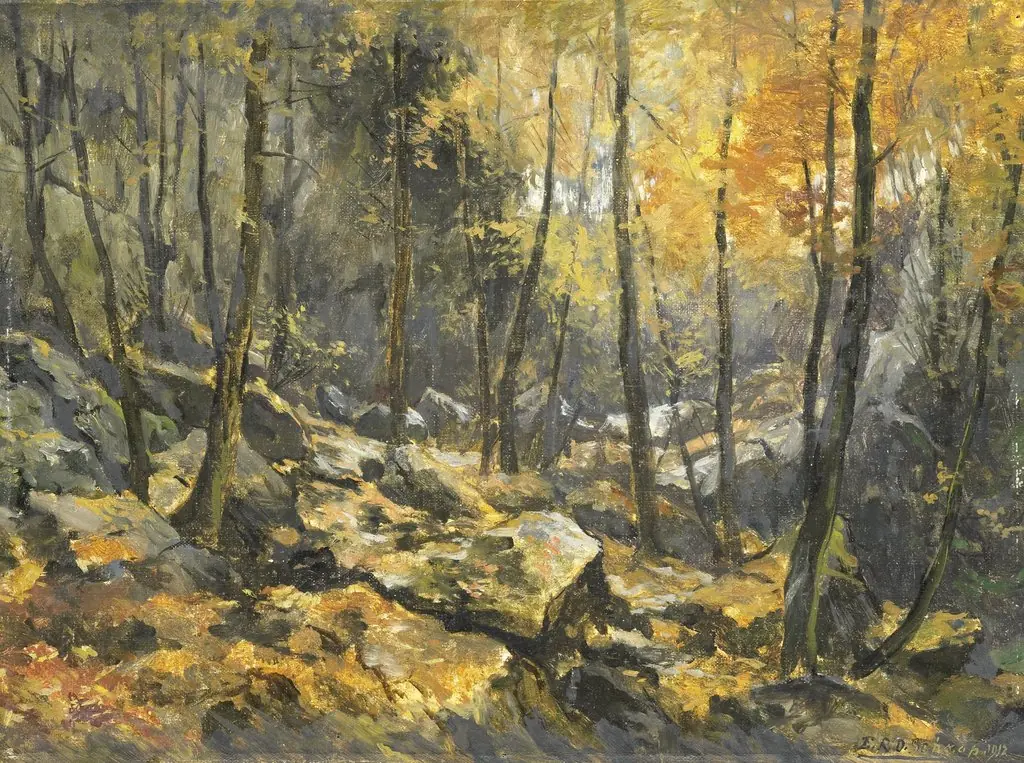
Spring Woods is an oil painting by the American Impressionist artist Henry Ward Ranger. It dates from 1910 and is held in the collection of the National Gallery of Art.
- Inscription
- Inscribed:lower left in rectangle, superimposed on triangle: RANGER; in points of triangle: N A D
About this work
Subject & Meaning
The work belongs to the genre of American landscape painting and reflects the artist’s interest in rendering natural forms with subtle tonal modulation.
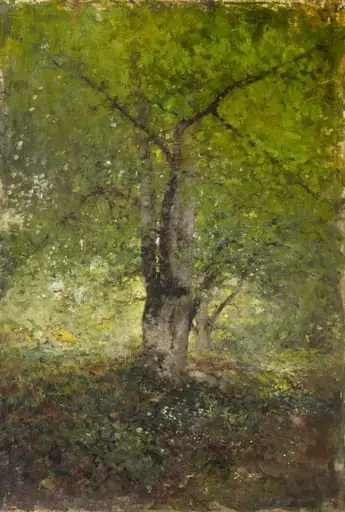
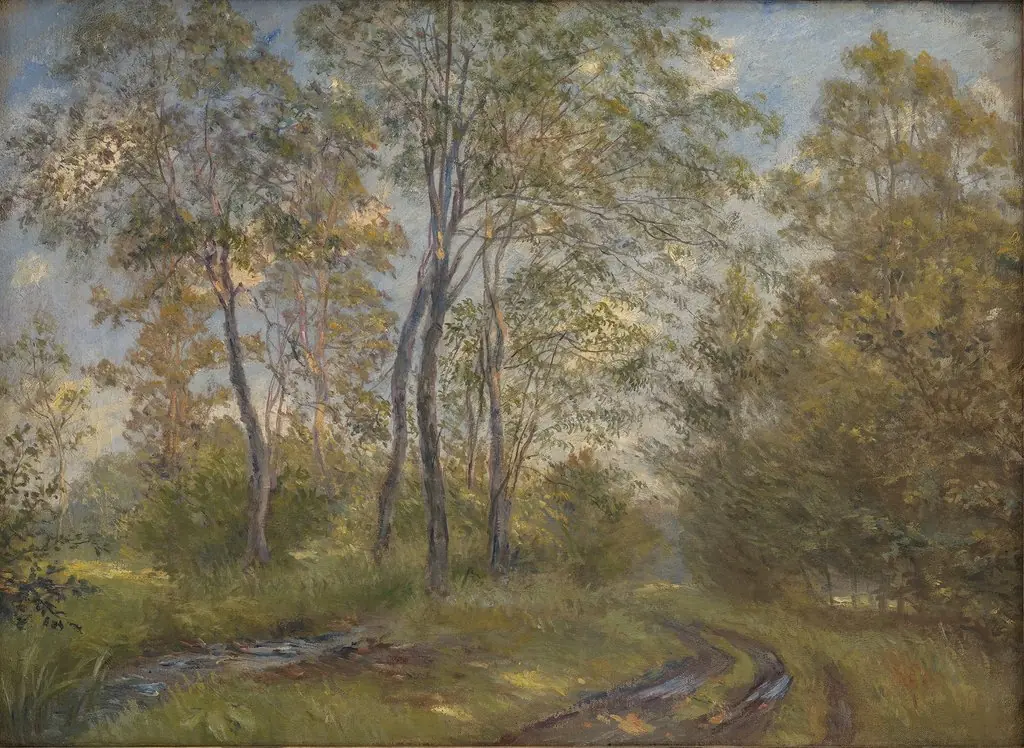
Spring Woods is a 1910 oil on canvas landscape that portrays a solitary tree within a forested setting. The work belongs to the genre of American landscape painting and reflects the artist’s interest in rendering natural forms with subtle tonal modulation. According to the National Gallery of Art’s cataloguing data, the painting was acquired by Chester Dale and later bequeathed to the institution, where it remains on view.
The depiction of a tree serves as the central visual element, emphasizing the quiet presence of nature in the composition.
Technique & Style
Created in 1910, Spring Woods is an oil painting executed on a canvas support. The work measures 71.2 cm in height and 91.7 cm in width. As a landscape genre piece, the composition focuses on the depiction of trees.
The medium consists of oil paint applied to the canvas, characteristic of the artist's approach to the subject matter.
History & Provenance
Spring Woods, an oil on canvas landscape painted in 1910, was created by Henry Ward Ranger. The work entered the market when it was bought directly from the artist by George S. Palmer of New London, Connecticut. Palmer later consigned the painting to Milch Galleries in New York, which included it in the sale of the American Art Galleries auction on 23 January 1926 as lot 74.
Chester Dale acquired the piece after the sale and subsequently bequeathed it to the National Gallery of Art in 1963. The painting measures 71.2 by 91.7 (units as recorded).
Spring Woods entered the collection of the National Gallery of Art in Washington, D.C., in 1963 as a bequest from Chester Dale. Prior to this acquisition, the painting was purchased directly from the artist by George S. Palmer of New London, Connecticut. It later appeared at an auction held by the American Art Galleries in New York on January 23, 1926, where it was consigned by Milch Galleries as part of a sale featuring estates and private collectors.
The work is currently held by the National Gallery of Art under the accession number 1963.10.202.
Overview
Spring Woods, painted by Henry Ward Ranger in 1910, is an oil on canvas landscape that exemplifies the artist's mature Tonalist style. The composition centers on a cluster of slender birch trees, their white bark rendered with delicate precision against a backdrop of soft, emerging spring foliage. Ranger captures the specific quality of light filtering through the canopy, creating a luminous atmosphere where shadows play across a mossy forest floor.
Executed during a period when the artist had fully transitioned from the darker, more atmospheric techniques of his earlier outdoor studies to a refined, decorative approach, the work reflects his dedication to the quiet beauty of the American woodland. The painting avoids dramatic narrative in favor of a meditative focus on color harmony and the subtle interplay of light and texture. As a representative piece from 1910, it demonstrates Ranger's role in bridging the gap between American Impressionism and Tonalism, prioritizing mood and the poetic essence of the landscape over strict realism.
Context
Henry Ward Ranger's exploration of light and atmosphere in landscapes aligns with broader artistic interests of his era. His pursuit of a luminous quality in his forest scenes shares an aesthetic kinship with the works of American landscape painters such as George Inness. Both artists sought to convey the spiritual and emotional resonance found within natural settings through their handling of light and color.
Own this work as a print
Artist & collection
Artist
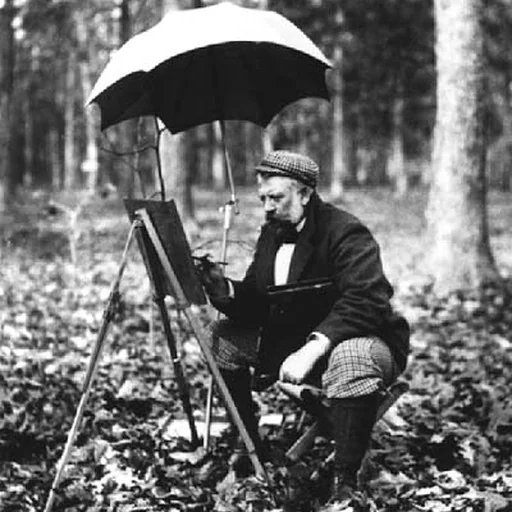
Henry Ward Ranger (January 29, 1858 – November 7, 1916) was an American artist. Born in western New York State, he was a prominent landscape and marine painter, an important Tonalist, and the leader of the Old Lyme Art…