March 18 in Art History
7 real events recorded on March 18, the earliest from 1578. 2 artists were born , 1 died on this date.
The day's biggest moments
Born on this day 2
- 1578 Born
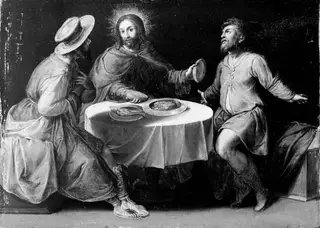
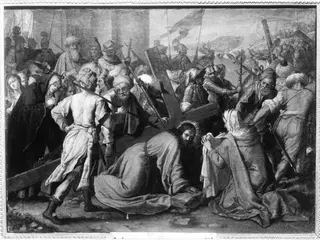
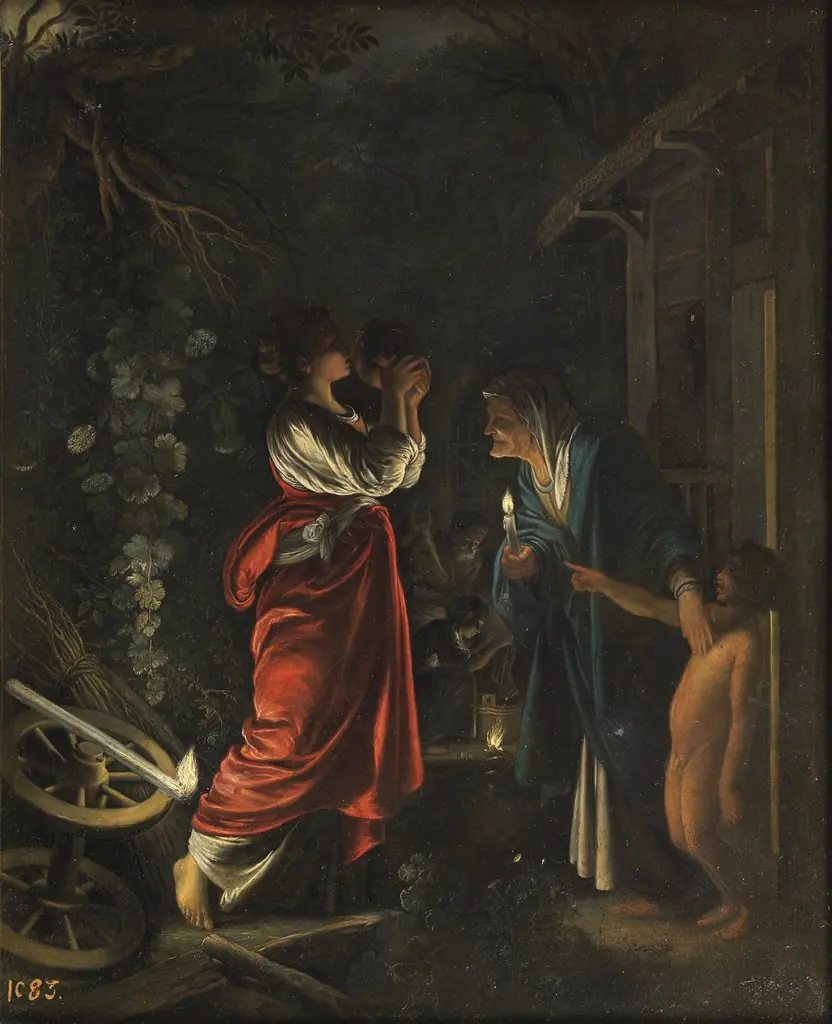
Born this day: Adam Elsheimer
Adam Elsheimer, a German Baroque painter, was born on March 18, 1578. He worked in Rome, producing influential small oils on copper plates that showcased innovative light effects and landscape treatments. His works, such as 'Christ and the Disciples in Emmaus' and 'Ceres in the House of Hecuba', demonstrate his unique style.
Elsheimer's innovative and influential paintings left a lasting impact on artists like Rembrandt and Peter Paul Rubens.
- 1861 Born
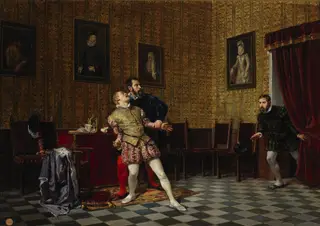
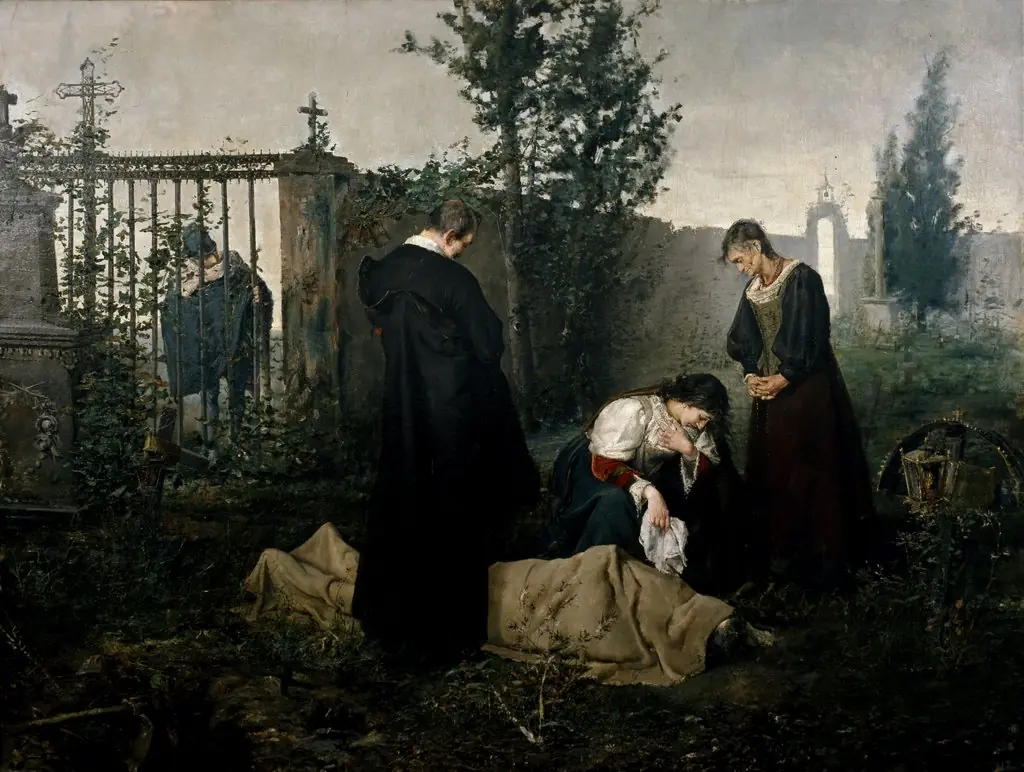
Born this day: José Uría y Uría
José Uría y Uría, a Spanish artist born on March 18, 1861, is known for his works such as Prince Don Carlos and the Duke of Alba and Lope de Vega en el cementerio, showcasing his unique perspective. His art reflects his Spanish heritage and cultural influences.
José Uría y Uría's legacy lies in his contributions to Spanish art, leaving a lasting impact on the country's cultural landscape.
Died on this day 1
- 1862 Died
Died this day: Charles Bird King
Charles Bird King, an American portrait artist, was known for his portrayals of Native American leaders and tribesmen, with a style influenced by Dutch art. His work, including pieces like Poor Artist's Cupboard and Henry Clay, showcases his skill, despite criticism for inaccurate cultural depictions.
Charles Bird King's artwork remains a significant part of American art history, offering a complex glimpse into the country's past.
Exhibitions & salons 1
- 1939 Exhibition
All-Union Exhibition "Industry of Socialism" opens
On March 18, 1939, Moscow opened the All-Union Art Exhibition "Industry of Socialism," one of the most ambitious Soviet thematic exhibitions of the late 1930s. Contemporary and later listings describe 1,015 works by 459 artists, including Mikhail Avilov, Samuil Adlivankin, Sergey Gerasimov, Aleksandr Gerasimov, Igor Grabar, Boris Ioganson, Arkady Plastov, Arkady Rylov, Martiros Saryan, David Shterenberg, and others. The exhibition mattered because it used a large national survey to bind Socialist Realist aesthetics to industrial modernization, presenting labor, factories, state planning, and heroic production as subjects worthy of monumental painting and graphic art. It also became a benchmark for official Soviet exhibition culture just months before the outbreak of World War II.
It helped consolidate industrial labor as a central subject of state-sponsored Soviet art.
Openings & foundings 2
- 2016 Opening
The Met Breuer opens
On March 18, 2016, the Metropolitan Museum of Art opened the Met Breuer in Marcel Breuer's former Whitney Museum building on Madison Avenue. Architectural Digest documented the reopening date and the building's new role as a Met outpost; Vanity Fair described the restoration of the Brutalist structure and the inaugural curatorial program. The opening exhibitions paired "Unfinished: Thoughts Left Visible," a cross-period show about incomplete works from the Renaissance to contemporary art, with a survey of Indian modernist Nasreen Mohamedi. The event marked the Met's most visible attempt to expand its modern and contemporary profile by occupying a building already charged with postwar museum history.
Although short-lived, the Met Breuer sharpened debate over how encyclopedic museums should present modern and contemporary art.
- 2021 Opening
Frick Madison opens to the public
On March 18, 2021, Frick Madison opened to the public, temporarily relocating the Frick Collection from its Gilded Age mansion to the former Met Breuer building while the Frick House underwent renovation. The New Yorker preview identified the new home and date, and Vogue's review confirmed the public opening and described the altered display: Old Master paintings, sculpture, decorative arts, clocks, porcelains, and carpets were organized more strictly by region and chronology against the spare gray interiors of Breuer's building. The move was historically unusual for the Frick, whose collection had long been experienced as a house-museum ensemble shaped by Henry Clay Frick's domestic interiors.
The temporary installation reframed the Frick's collection as museum display rather than mansion environment.
J.M.W. Turner , Titian , Jean Honoré Fragonard , Rembrandt van Rijn , Frans Hals The Frick Collection, Manhattan
Auctions, prizes & heists 1
- 1990 Heist Landmark
Isabella Stewart Gardner Museum heist
In the early hours of March 18, 1990, two men disguised as police officers entered Boston's Isabella Stewart Gardner Museum after claiming to respond to a disturbance. They restrained the guards and stole 13 works, including Vermeer's "The Concert," Rembrandt's "Christ in the Storm on the Sea of Galilee," works by Degas and Manet, and a Napoleonic eagle finial. The Gardner Museum's own account describes the breach of protocol and the thieves' movement through the galleries, while the Wikipedia extract summarizes the theft's scale and continuing unresolved status. The case became one of the most consequential art crimes in modern museum history because the works remain missing and the empty frames are preserved in the galleries.
The theft permanently changed museum-security discourse and left some of the world's most famous unrecovered artworks missing.
Govaert Flinck , Johannes Vermeer , Edgar Degas , Rembrandt van Rijn Isabella Stewart Gardner Museum, Boston