March 20 in Art History
7 real events recorded on March 20, the earliest from 1811. 2 artists were born , 1 died on this date.
The day's biggest moments
Born on this day 2
- 1811 Born
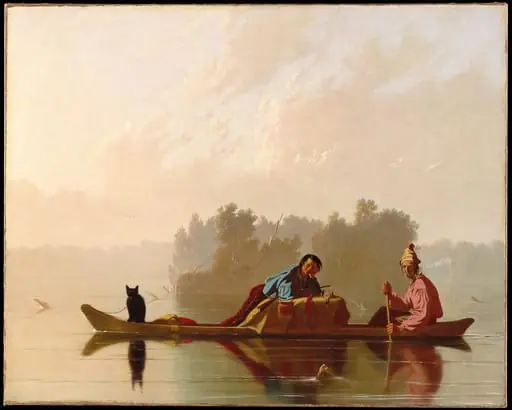
Born this day: George Caleb Bingham
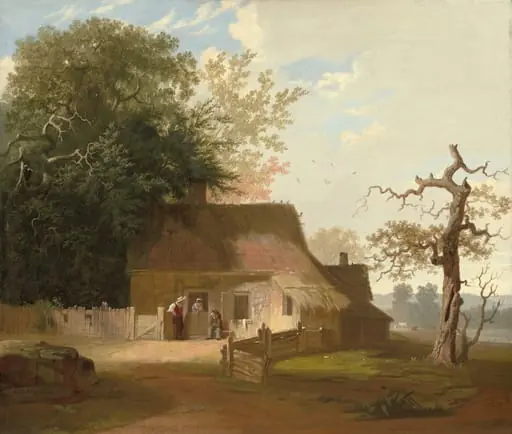
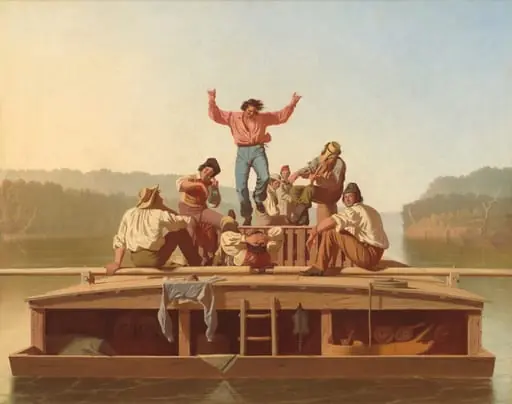
George Caleb Bingham, born on March 20, 1811, was a prominent American artist of the 19th century, known for his classic narrative scenes of the early American West. His genre paintings, such as Fur Traders Descending the Missouri, capture the unique aspects of the American frontier, depicting life along the Mississippi and Missouri rivers with themes of community and river life.
He is remembered as one of the most important American artists of the 19th century, chronicling America's westward expansion through his iconic works.
- 1867 Born
Born this day: Jerome Myers
Jerome Myers, born on March 20, 1867, was an American artist and writer associated with the Ashcan School, known for his sympathetic depictions of the urban landscape and its people. His work often focused on the lives of new immigrants in New York City's Lower East Side.
Myers' contributions to introducing European modernism to America through the 1913 Armory Show remain significant in American art history.
Died on this day 1
- 1835 Died
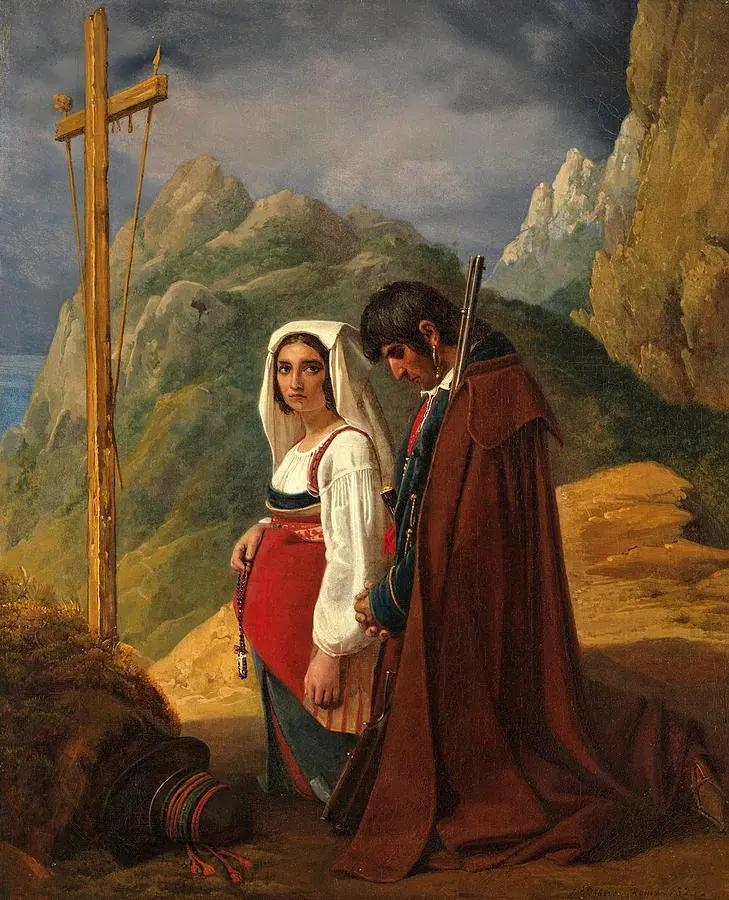
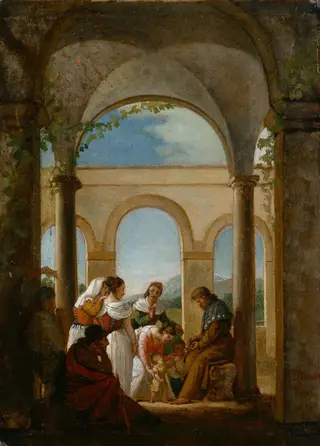
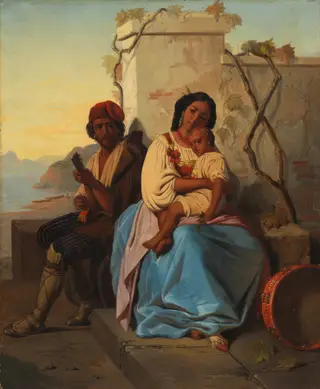
Died this day: Léopold Robert
Léopold Robert was a Swiss artist known for his detailed and evocative paintings, often depicting everyday life and scenes from Italy. His work showcases a sense of intimacy and quiet contemplation, as seen in pieces like 'Brigand and his wife in prayer' and 'Italian Scene'.
Léopold Robert's legacy lies in his captivating representations of 19th-century life and culture.
Exhibitions & salons 3
- 1908 Salon
The 1908 Salon des Independants Opens
The 24th Salon des Independants opened in Paris on March 20, 1908, running through May 2. Held under Paul Signac's presidency, it was vast even by Indépendants standards, with more than 1,300 artists and thousands of works. Its art-historical importance lies less in a single canonical hanging than in the critical vocabulary it provoked: Guillaume Apollinaire singled out a painting by Georges Braque for originality, while Louis Vauxcelles, writing on the opening date, described the most radical contributors as 'barbarous schematizers' seeking an abstract art. The show sits at a turning point between Fauvism, Cézannist structure, and proto-Cubism, when artists including Braque, Jean Metzinger, Henri Le Fauconnier, and Robert Delaunay were pushing modern painting toward geometric simplification.
It helped prepare the language and public reception that would soon crystallize around Cubism.
Guillaume Apollinaire , Paul Signac , Jean Metzinger , Georges Braque , Henri Le Fauconnier
- 1912 Salon Landmark
The 1912 Salon des Independants Opens
The Salon des Independants opened in Paris on March 20, 1912, and ran through May 16. The exhibition came one year after the Cubist concentration in Room 41 had shocked the 1911 Salon, and it made the movement look less like a passing scandal than a durable collective program. In the 1912 hanging, Cubists gathered around Room 20, with works by Albert Gleizes, Jean Metzinger, Fernand Léger, Robert Delaunay, Henri Le Fauconnier, Alexander Archipenko, Roger de La Fresnaye, and newcomer Juan Gris. Marcel Duchamp's Nude Descending a Staircase was listed in the catalogue but withdrawn before the exhibition, a revealing sign of the tensions inside the Cubist circle over motion, Futurist influence, and acceptable titles.
The show consolidated Cubism as an international avant-garde force rather than a local Parisian provocation.
Robert Delaunay , Fernand Léger , Jean Metzinger , Albert Gleizes , Henri Le Fauconnier
- 2024 Exhibition
Whitney Biennial Even Better Than the Real Thing Opens
The 2024 Whitney Biennial, Even Better Than the Real Thing, opened at the Whitney Museum of American Art on March 20, 2024, and ran through August 11. The Whitney described it as the eighty-first edition of the longest-running survey of contemporary art in the United States, featuring seventy-one artists and collectives. Organized by Chrissie Iles and Meg Onli with Min Sun Jeon and Beatriz Cifuentes, and with film and performance programs involving guest curators, the exhibition framed contemporary art around bodies, identity, ecological precarity, technology, and contested ideas of the real. Its subtitle explicitly responded to artificial intelligence and political uses of authenticity, making the Biennial a snapshot of U.S. contemporary art at a charged cultural moment.
It marked a major institutional survey of art after the mainstream arrival of generative AI and renewed debates over embodiment.
Openings & foundings 1
- 1924 Founding
Tucson Fine Arts Association Is Founded
On March 20, 1924, the institution now known as the Tucson Museum of Art was founded in Tucson's Presidio district as the Tucson Fine Arts Association. Its creation by members of the Tucson Women's Club and other local supporters, including Louise Norton, established a civic art organization before Tucson had a purpose-built art museum. The association initially functioned as a gallery and lecture space, later moving into the Temple of Music and Art and expanding through exhibitions, educational programming, and collecting. Its development from volunteer-led art association to regional museum is important for the history of art infrastructure in the American Southwest, especially in relation to Western American, Latin American, Native American, Asian, modern, and contemporary collections.
The founding created the institutional base for one of Arizona's major art museums.