Artwork
Brigand and his wife in prayer
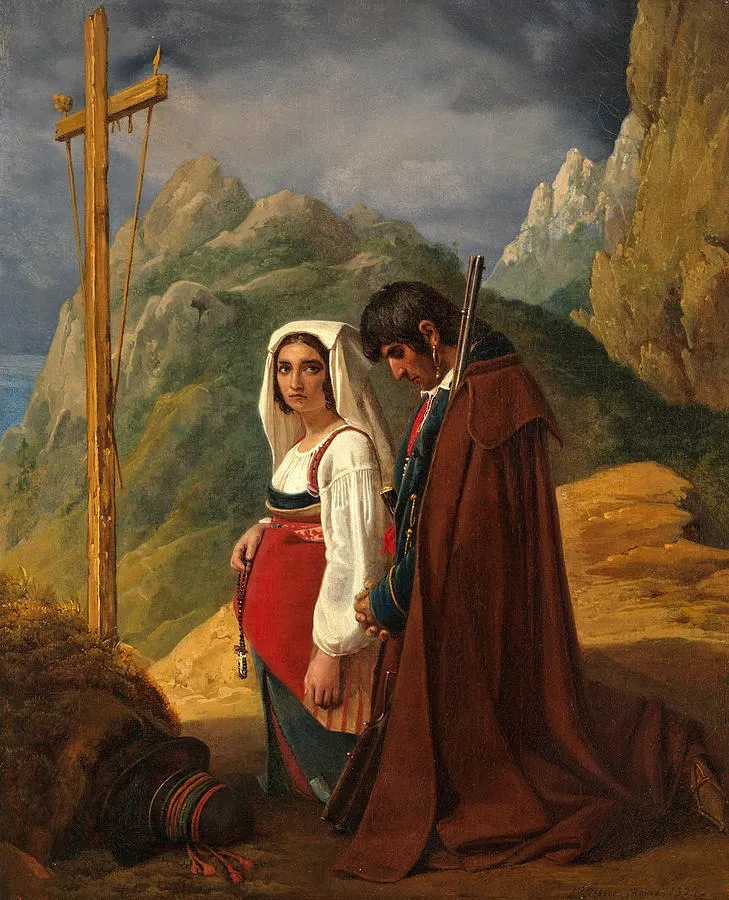
Brigand and his wife in prayer is an oil painting by the French Romanticist artist Léopold Robert. It dates from 1824 and is held in the collection of the Metropolitan Museum of Art.
About this work
Subject & Meaning
As a genre scene, the work illustrates the piety of the brigante subculture, a subject the artist encountered after witnessing mass arrests in the Papal States.
The painting depicts a brigand and his pregnant wife kneeling in prayer before a simple wooden roadside cross set against a backdrop of central Italian mountains. As a genre scene, the work illustrates the piety of the brigante subculture, a subject the artist encountered after witnessing mass arrests in the Papal States. Iconographically, the couple's traditional attire and the husband's resting musket contrast with their spiritual devotion; the wife clutches a rosary while both pray for the husband's criminal success and the wife's health.
This juxtaposition symbolizes the artist's fascination with the faithful nature of these outlaws, portraying their frugality and religious sincerity despite their criminal vocation. The scene transforms a figure of lawlessness into a sympathetic representation of domestic devotion and resilience within a harsh landscape.
Technique & Style
Created in 1824, Brigand and his wife in prayer is an oil painting executed on canvas. The work measures 44.8 by 36.5 centimeters and was produced in Rome. Stylistically, the piece is noted for its naturalistic depiction of the subjects, specifically a brigand and his pregnant wife kneeling before a wooden cross in a mountainous setting.
The artist rendered the figures in attire consistent with their vocation and class: the husband wears a frilled shirt and overcoat with a musket, while the wife is clad in traditional peasant garb and holds a rosary. Although intended initially for the Prix de Rome, the painting was submitted to the Salon of 1824 in Paris. Critics of the era praised its realistic portrayal of the Italian brigante subculture while noting its departure from strict genre conventions.
History & Provenance
Painted in 1824, Brigand and his Wife in Prayer was executed by Léopold Robert after his firsthand observation of mass arrests of briganti in the Papal States, which inspired his focus on this social type. The work was conceived for the Salon of 1824 in Paris rather than the Prix de Rome due to Robert’s Swiss nationality and the post-Napoleonic political climate. It entered the Metropolitan Museum of Art as part of the Wheelock Whitney Collection, formed primarily from 18th- and 19th-century French paintings donated by Wheelock Whitney III.
Brigand and his wife in prayer is held by the Metropolitan Museum of Art, where it forms part of the Whitney Collection, a group of French works from the eighteenth and nineteenth centuries donated by Wheelock Whitney III. The work was exhibited in the Salon of 1824 in Paris, where it was originally created by Léopold Robert for that venue rather than for the Prix de Rome. Later, the painting appeared in the exhibition titled The Path of Nature: French Paintings from the Wheelock Whitney Collection, 1785–1850.
While specific accession numbers are not provided in the available records, the painting remains a key component of the museum's holdings of Italianate genre scenes from the early nineteenth century.
Context
Léopold Robert's 1824 painting, Brigand and His Wife in Prayer, occupies a distinct position in early 19th-century genre art by merging naturalistic observation with the romanticized Italian brigand subculture. Originally conceived for the Prix de Rome, political constraints regarding the artist's Swiss nationality redirected the work to the 1824 Paris Salon, where it garnered acclaim for its vivid realism yet faced criticism for defying strict genre conventions. The piece reflects Robert's broader artistic preoccupation with the piety and frugality of the brigante people, a fascination sparked by witnessing their mass arrest by Papal authorities.
By depicting a criminal couple in a moment of devout prayer before a roadside cross, Robert challenged contemporary expectations, elevating a marginalized social group through sympathetic portraiture. This approach situates the work within a transitional moment in French art, bridging neoclassical scholarship and the emerging interest in ethnographic genre scenes.
Legacy
The painting Brigand and his wife in prayer was shown at the Salon of 1824, where it attracted attention for its naturalistic portrayal of a devout brigand couple, though some critics noted its reluctance to conform to an established genre. After the exhibition it entered the Whitney Collection and is now housed in the Metropolitan Museum of Art as part of that group of French works from the eighteenth and nineteenth centuries. Its continued presence in a major museum collection underscores its enduring reputation as a notable example of Léopold Robert’s genre scenes and of early‑nineteenth‑century interest in Italian brigand culture.
Overview
Léopold Robert's early 19th-century painting, "Brigand and his wife in prayer," is rendered in oil on canvas. It depicts a scene of two figures, a brigand and his wife, engaged in prayer amidst the rugged mountainous landscape of central Italy. The work captures a moment of devotion set against a backdrop suggesting a life of hardship and peril.
Artist & collection

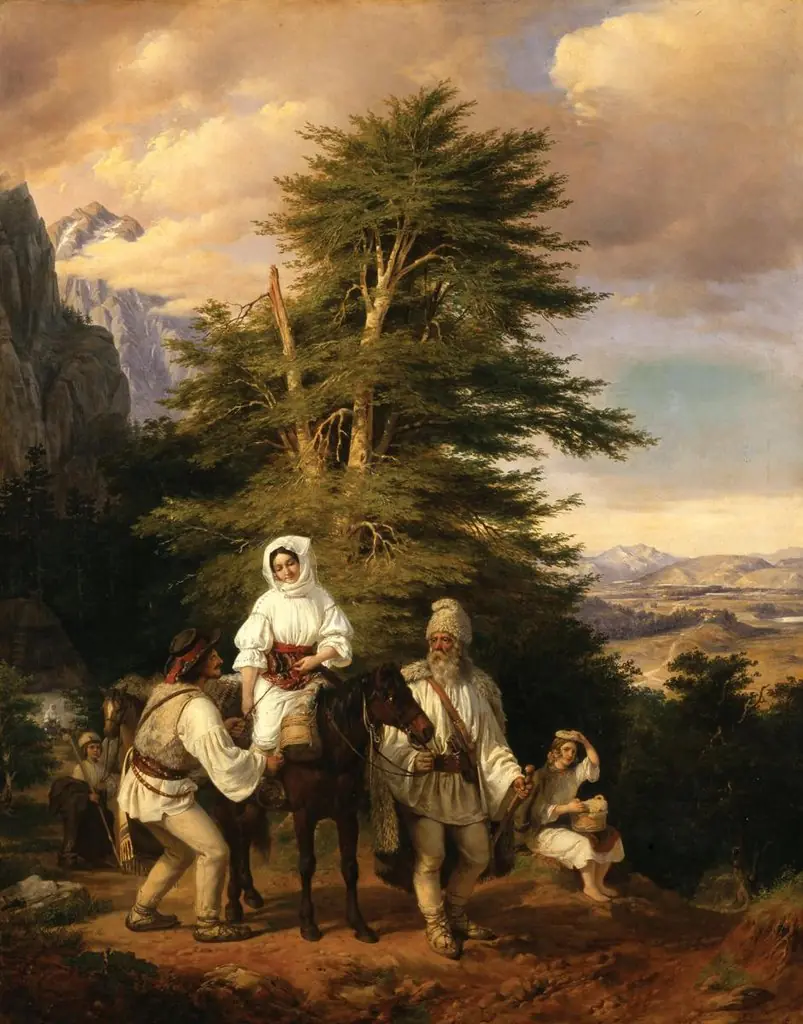
- Romanian Family Heading for the Fair
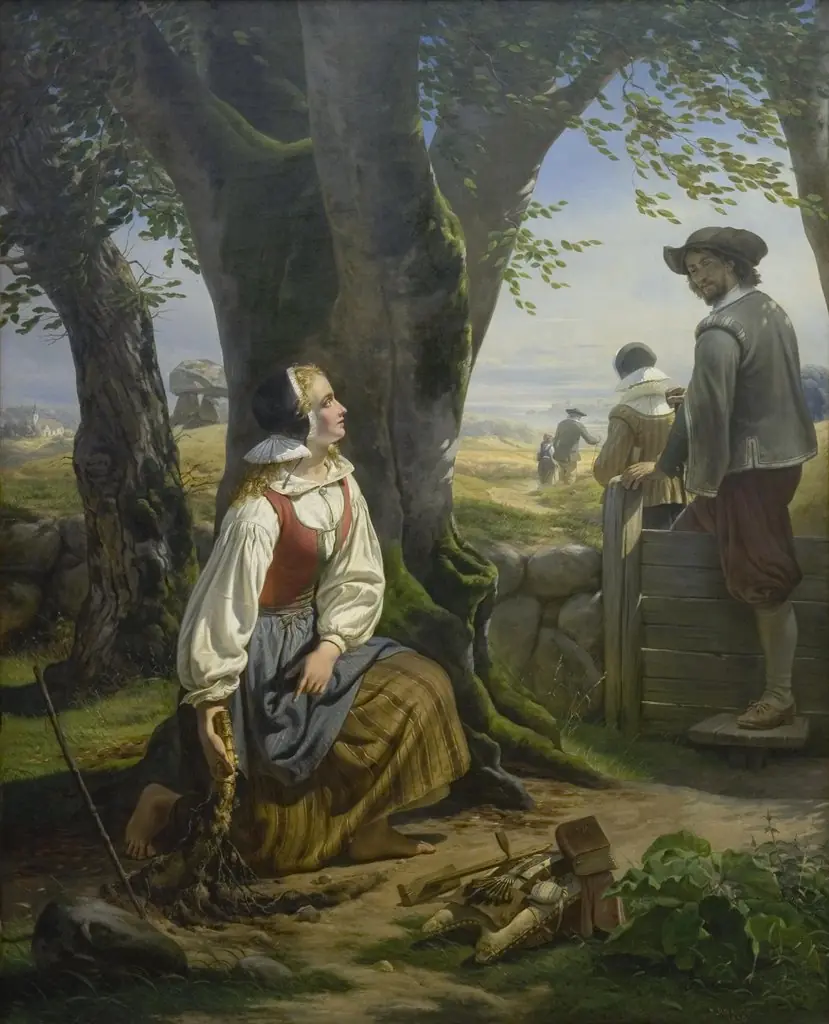 Kirsten Svendsdatter Finds the Gold Horn at Gallehus on 20 July 1639
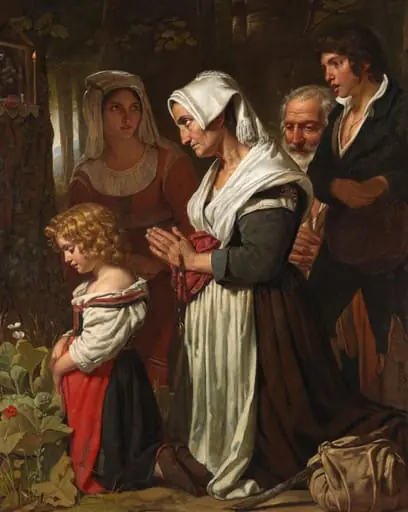 Godsvrucht
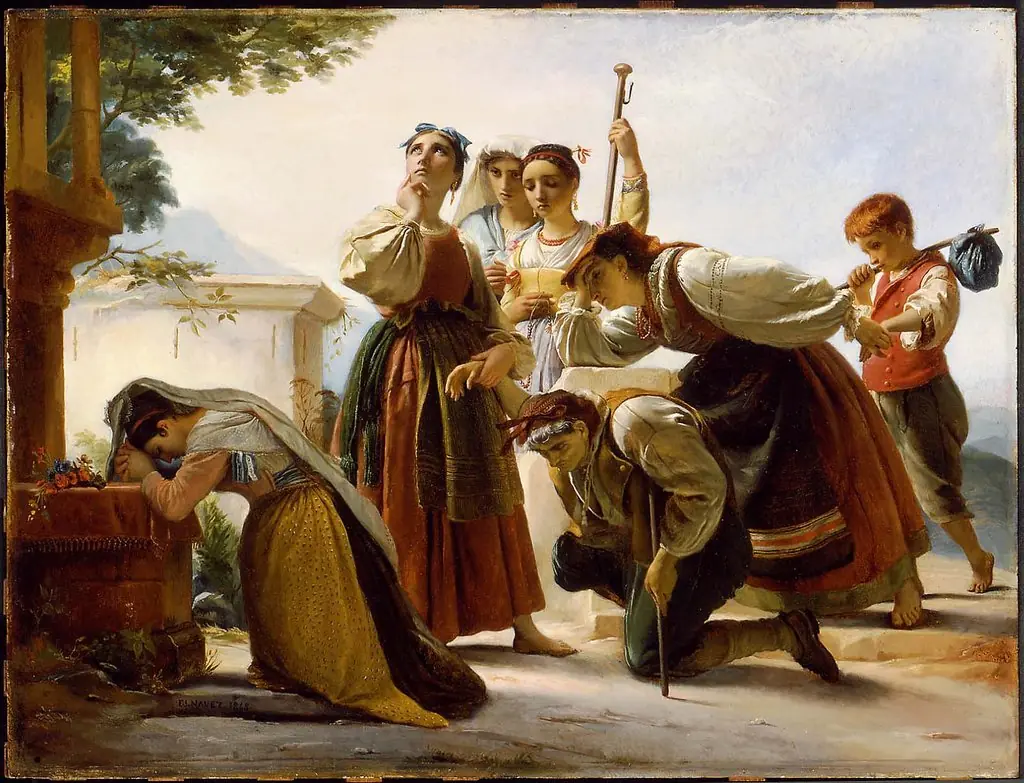 Pilgrimage in the Roman Campagna
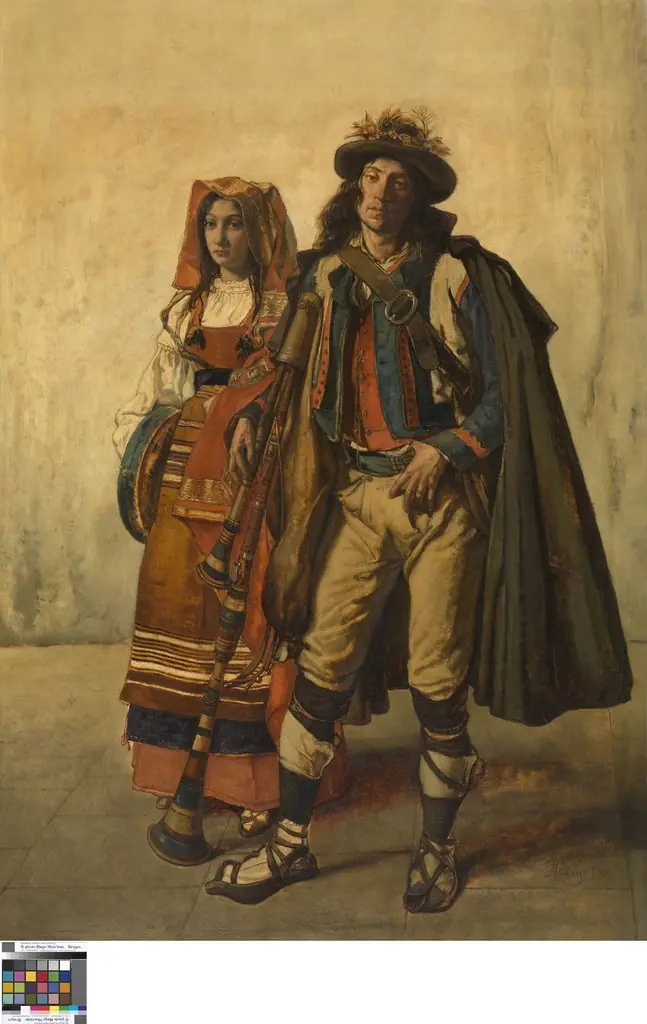 Zampogna player and his wife
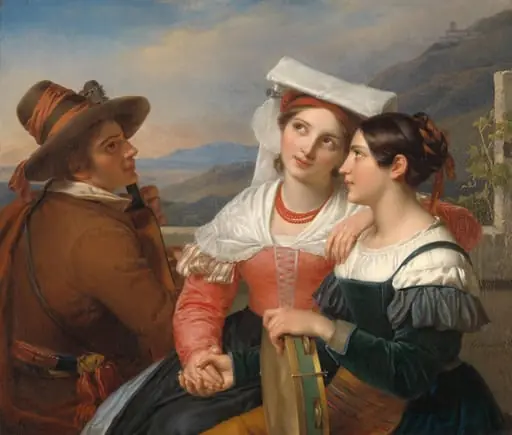 Een van zin
 The Poor at the Fountain
 Memories of Italy
 Roman pilgrims
 Italialainen tamburiininsoittajatar
 Highlanders' Dance
 Fisherman's Family