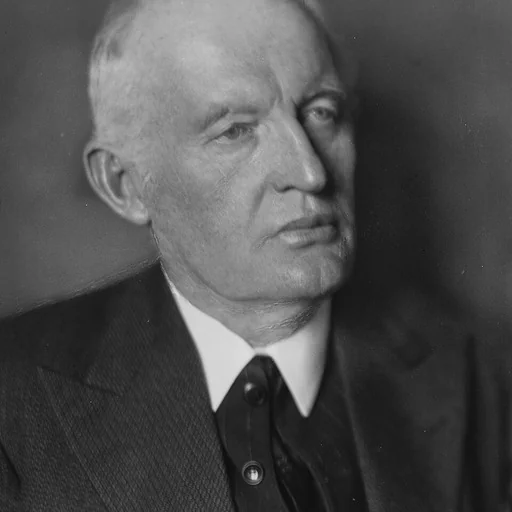
Subject
Edvard Munch
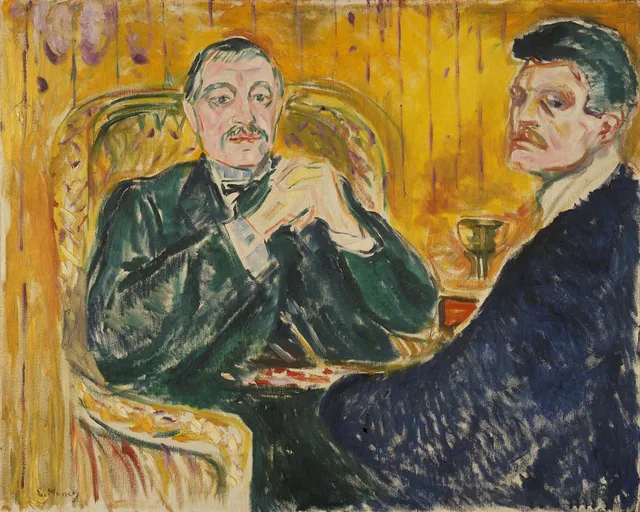
Edvard Munch is a subject in art. The gallery holds 48 works in this subject in art, including works by Edvard Munch and Akseli Gallen-Kallela.
Edvard Munch (Norwegian pronunciation: ) is a 1974 Norwegian biographical psychological docudrama film written, narrated and directed by English filmmaker Peter Watkins. It is about the Norwegian Expressionist painter Edvard Munch.
Key artists

Artist
Overview
Edvard Munch is a 1974 Norwegian-Swedish biographical psychological docudrama directed by English filmmaker Peter Watkins, chronicling the life and artistic development of the Norwegian Expressionist painter Ed marks a distinctive approach to the artist biopic genre, employing documentary techniques and non-professional actors to explore the intersection of personal trauma and creative output. The film covers approximately three decades of Munch's life, from the early 1880s to around 1900, tracing his evolution from a young painter in Kristiania through his formative experiences in Paris and Berlin. Originally produced as a two-part miniseries for Norwegian and Swedish state television networks NRK and SVT, it later received theatrical distribution, including an American release in 1976. The film stars Geir Westby, a non-professional Norwegian actor, in his debut and only acting role as the painter, with Watkins himself providing English-language voiceover narration to maintain the documentary aesthetic.
Iconography & meaning
The film constructs its iconography around the central thesis that Munch's art emerged from sustained personal suffering and social alienation. Watkins presents disease, death, and doomed love as the generative forces behind Munch's visual language, with particular emphasis on the tuberculosis death of his sister Sophie and his fraught affair with a married woman known as Mrs. Heiberg. The film documents Munch's artistic breakthroughs, including his move toward layered textures, deep canvas incisions, and the eventual stripping away of perspective and detail in favor of psychological immediacy. The recurring visual motifs in the film mirror those in Munch's paintings: the blending of lovers' faces, the pervasive atmosphere of jealousy, and the symbolic vocabulary of love, pain, despair, and death. Watkins understood the film as a challenge to conventional art historical approaches, seeking instead to demonstrate the deep connection between personal biography and artistic creation. The director explicitly identified with Munch's experiences of restless struggle and critical attack, stating that he knew he was also making a film about himself.
Across movements & periods
The film Edvard Munch itself represents a significant intervention in the history of artist biopics, emerging from the political and formal experimentation of Peter Watkins's career while engaging with the development of Expressionism as an artistic movement. Watkins began developing the project in 1968 after visiting the Munch Museum in Oslo, though financial negotiations delayed research until 1971. The film captures a pivotal period in European art history, documenting Munch's transition from Naturalism to Symbolism and his encounters with avant-garde circles in Paris and Berlin, including friendships with August Strindberg and Stanislaw Przybyszewski. The film's production context, its use of non-professional actors, and its hybrid documentary-drama format reflect Watkins's ongoing formal innovations, previously explored in works like The War Game and Culloden. Shot on 16-mm film in Oslo and As Measurement between February and June 1973, the production employed Watkins's characteristic techniques including direct address to camera, staged interviews, and voiceover narration. The film's reception history also traces broader patterns in cultural politics: despite positive European television responses, NRK suppressed the film after its initial broadcast, even destroying original sound materials, necessitating that Watkins and a sound engineer reconstruct audio from magnetic film copies for the approximately 40-minute-shorter theatrical version.
Notable depictions
The most significant cinematic depiction of Edvard Munch remains Peter Watkins's 1974 film, distinguished by Geir Westby's widely praised performance in his sole acting role. Westby's portrayal received universal critical acclaim and has been considered by many critics, scholars, and cinephiles as one of the finest male acting performances in cinema history. The film itself is widely regarded as one of the best biographical movies ever made and one of the greatest Norwegian films of all time. Critical assessments varied in tone but acknowledged the film's ambition. Vincent Canby of The New York Times, who had previously been harsh toward Watkins's earlier work, described it as a moving, multilayered, empathetic portrait that successfully captured the interplay of sensitivity, emotional chaos, and discipline that constitutes a great artist. John Simon of New York Magazine, while ultimately judging the film a failure, offered respectful analysis of its limitless, manic scope, calling it the most brilliant failure he_prefix he had seen in years. The Daily Telegraph, following the British premiere, stated that no more penetrating film about an artist could be recalled, praising Watkins's method of working quietly yet restlessly, directly yet without order, without contradiction. The film received the 1976 British Academy Television Award for Best Foreign Television Production and was presented out of competition at the 1976 Cannes Film Festival, with its New York theatrical opening on September 12, 1976.
Legacy
The legacy of Watkins's Edvard Munch extends beyond its critical accolades to influence discussions of how artists' lives can be represented on screen and how biography intersects with art history. The film's suppression by NRK and the destruction of its original sound materials paradoxically ensured its status as a contested and carefully preserved work, with Watkins personally involved in salvaging its theatrical version. Its recognition by the British Academy in 1977 for Best Foreign Program solidified its international standing. The film has contributed to ongoing scholarly interest in Watkins's oeuvre and his distinctive approach to historical and biographical subjects through what he termed the monoform, a critical concept in understanding his editing and narrative techniques. More broadly, the film has served as a touchstone for discussions of the artist biopic genre, demonstrating how non-professional casting, direct address, and documentary techniques can produce intense psychological insight rather than mere historical illustration. Watkins himself described it as his most personal film and a magical creative experience, and its production in Norway during his exile from Britain linked its making to broader patterns of political displacement and artistic persistence. The film continues to be analyzed in cinema studies and art history contexts, with resources held by institutions including the British Film Institute, and has been made available through various archival and distribution channels despite its complicated production history.
Works
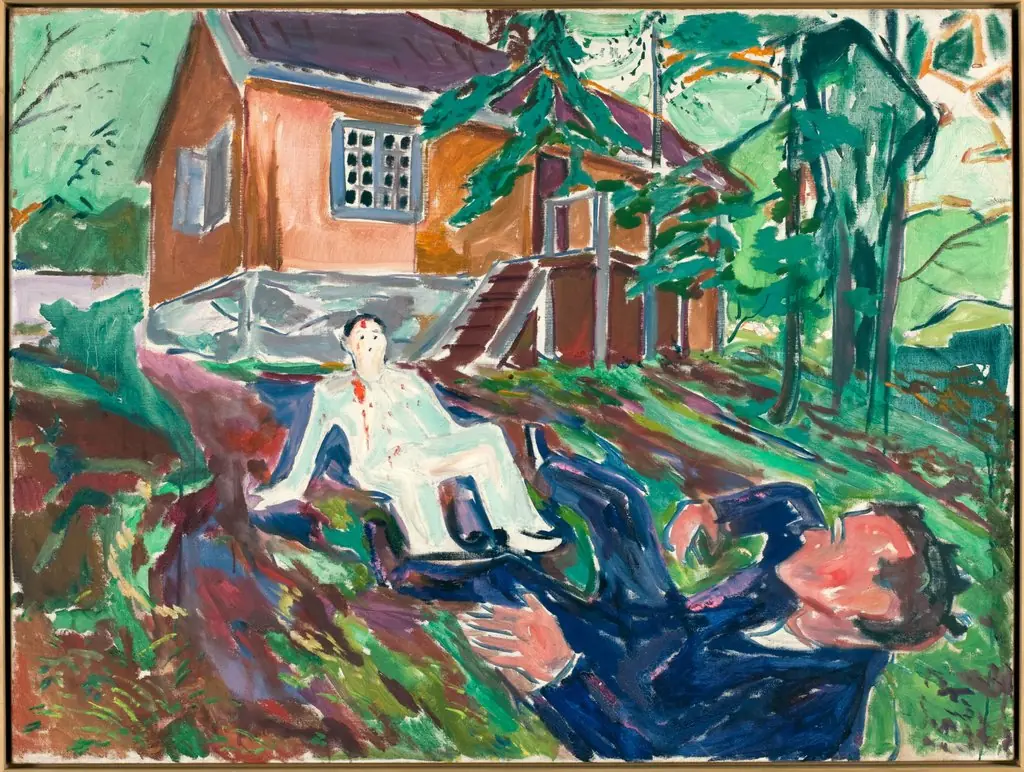 The Fight
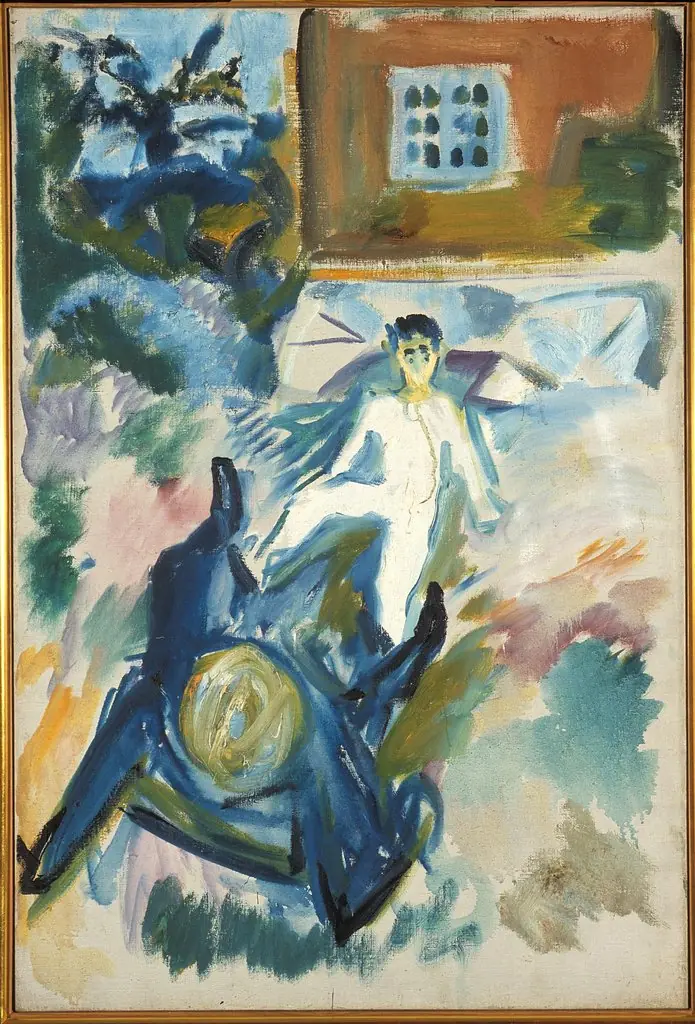 The Fight
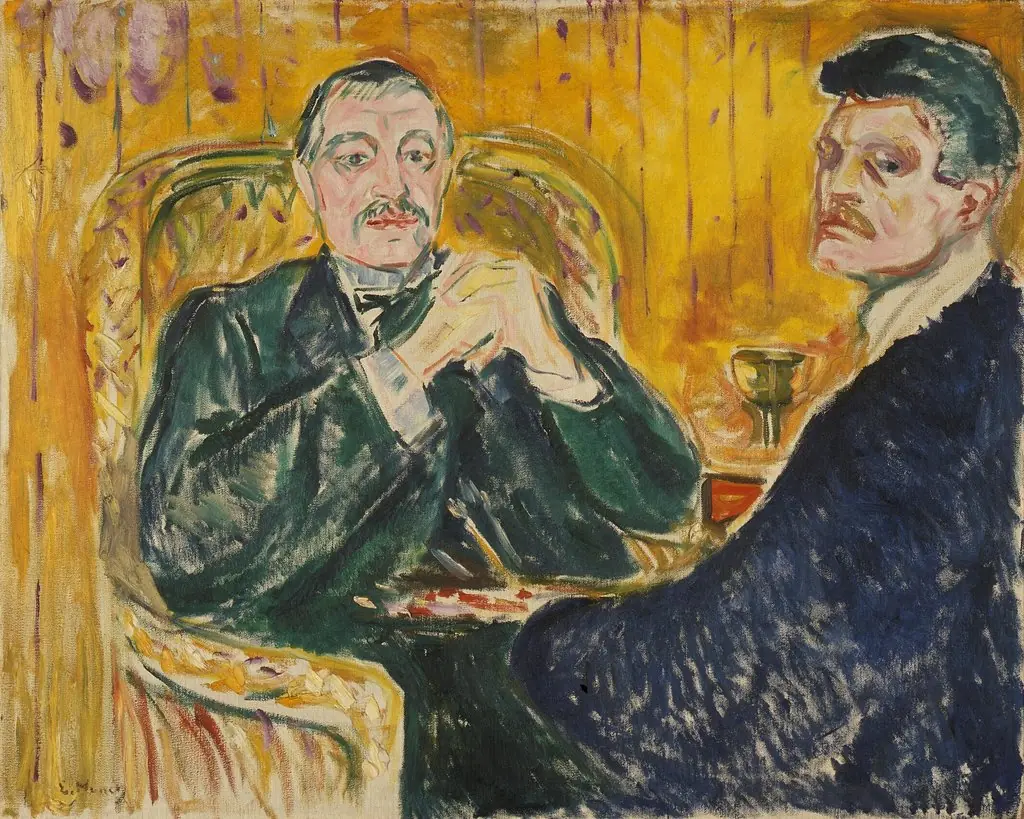 Torvald Stang and Edvard Munch
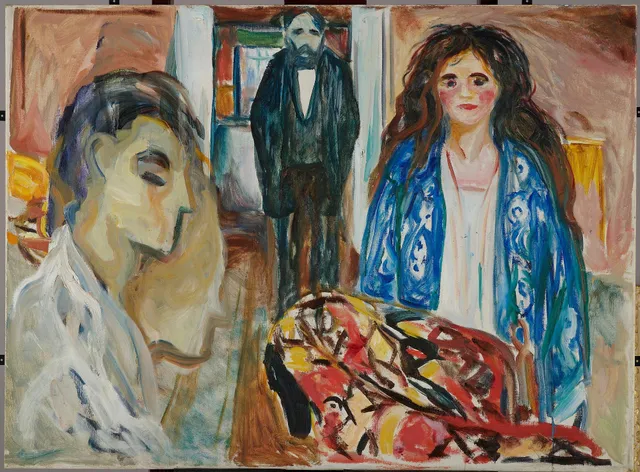
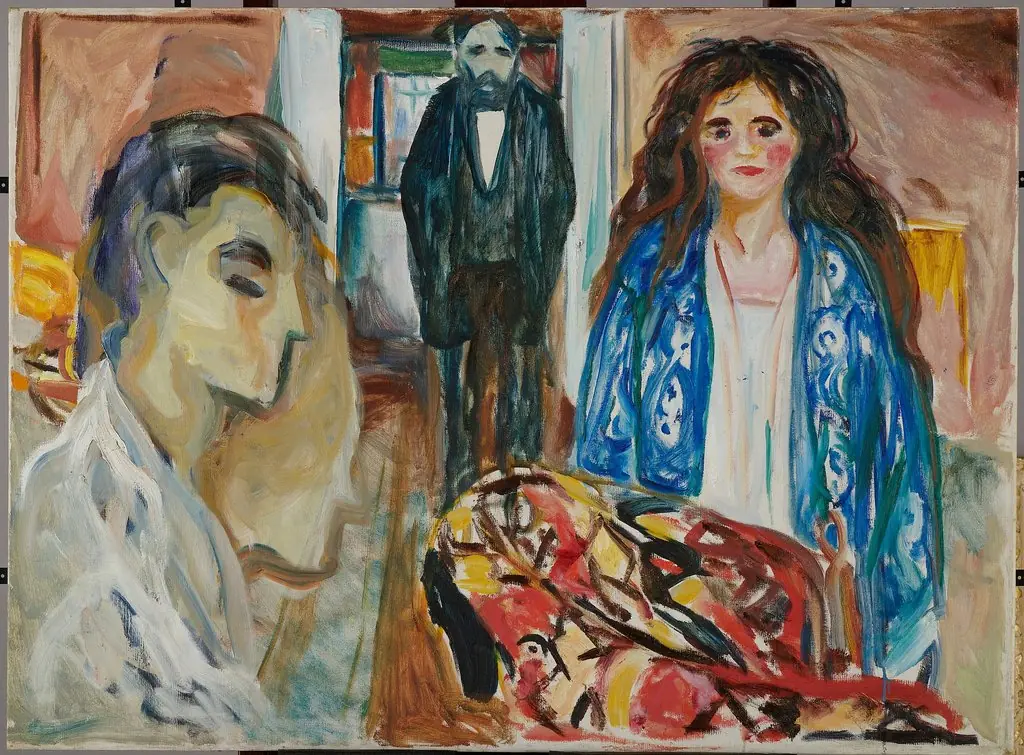 The Artist and his Model. Jealousy-Theme
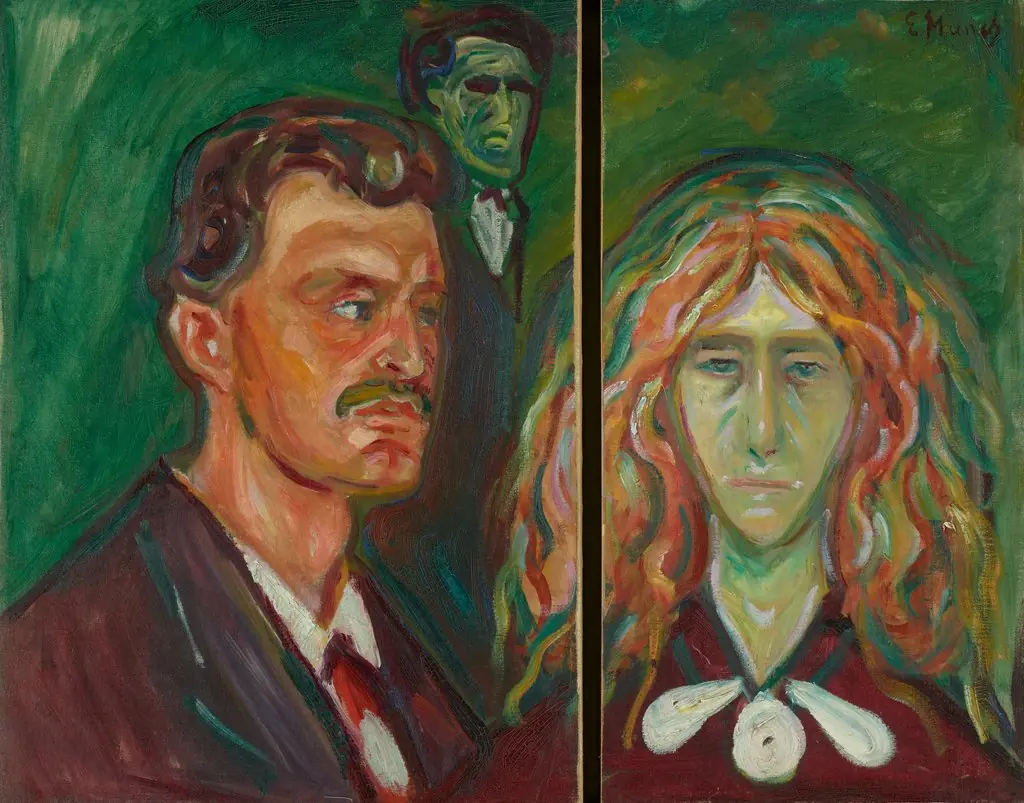 Caricature Portrait of Tulla Larsen
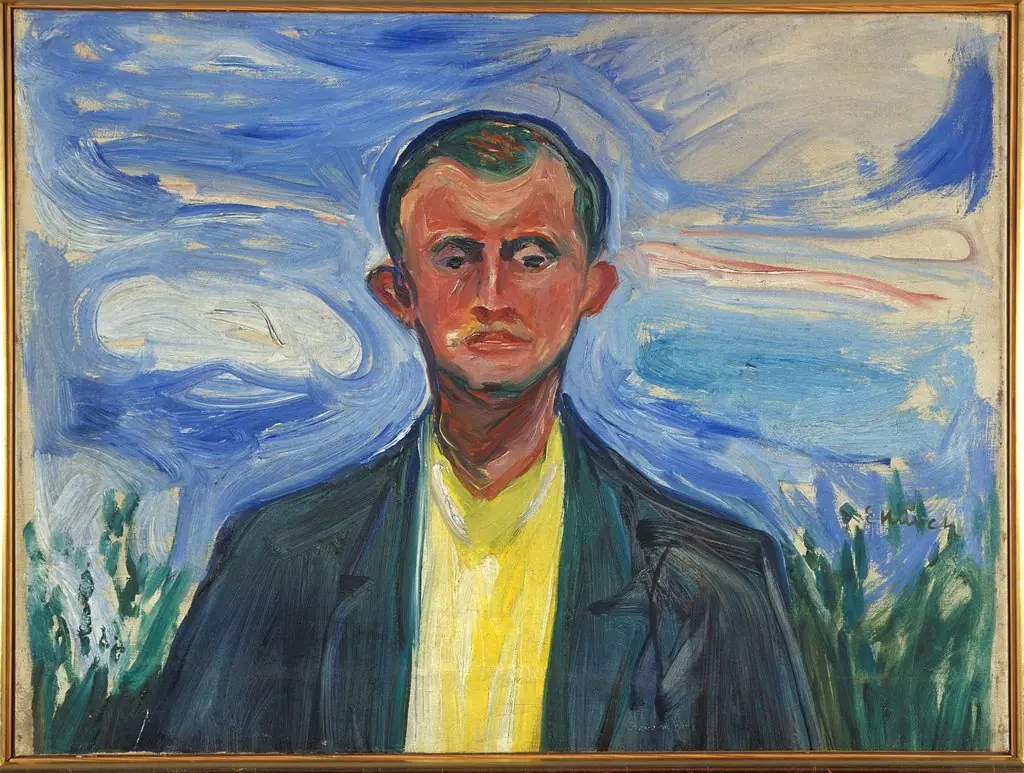 Self-Portrait against a Blue Sky
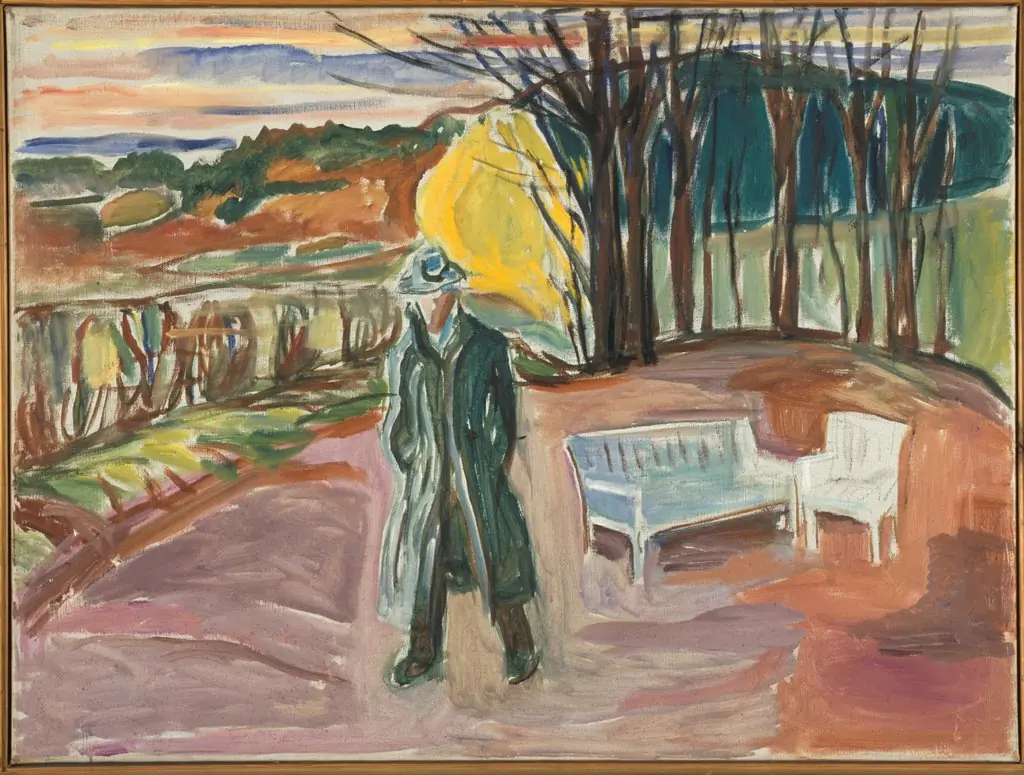 Self-Portrait by the Arbour
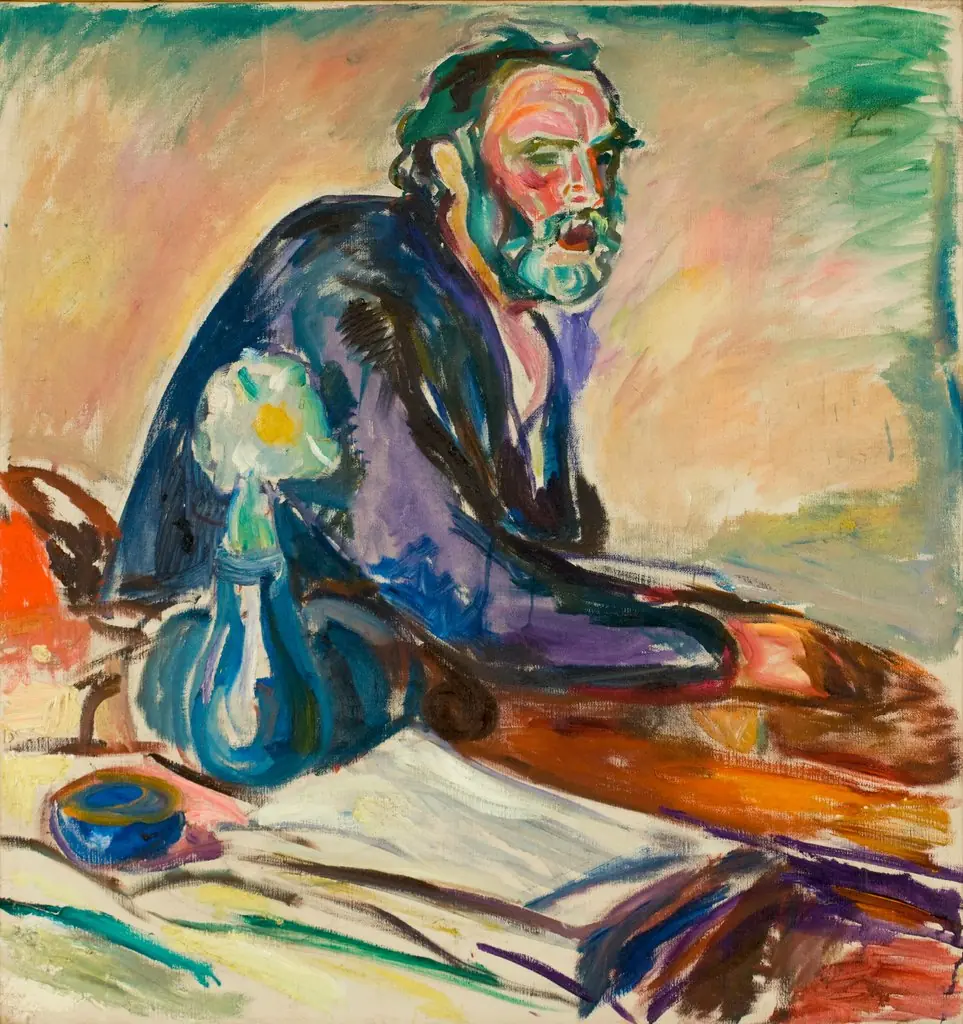 Man with Bronchitis
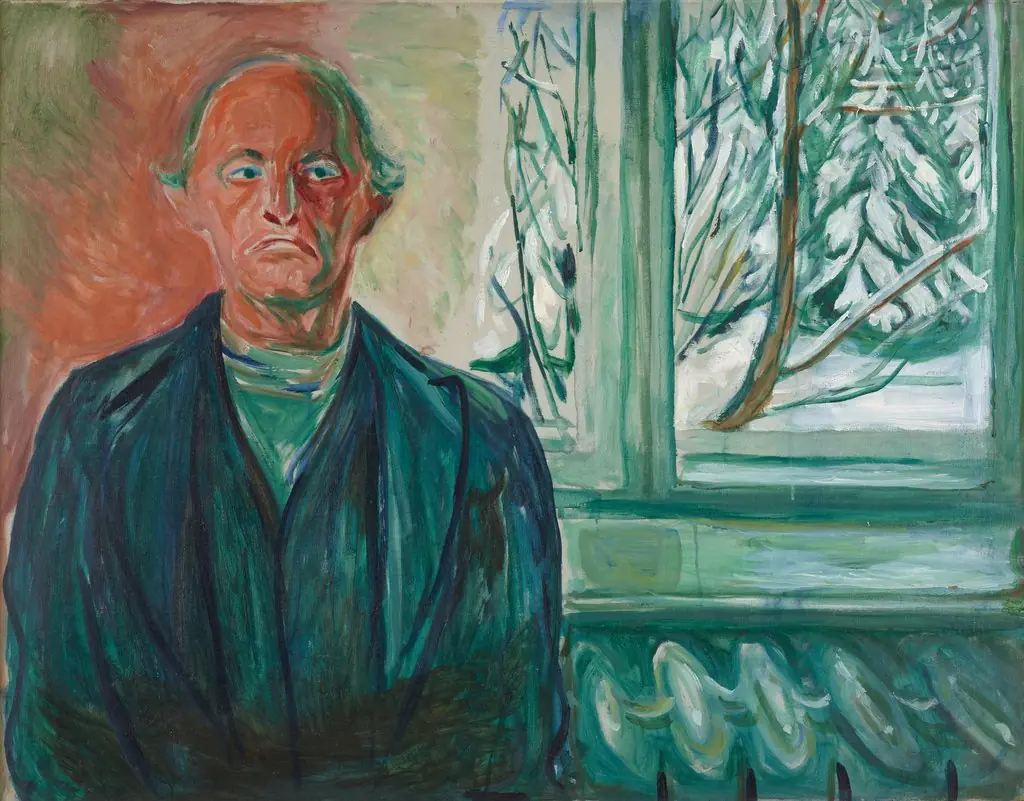 Self-Portrait by the Window
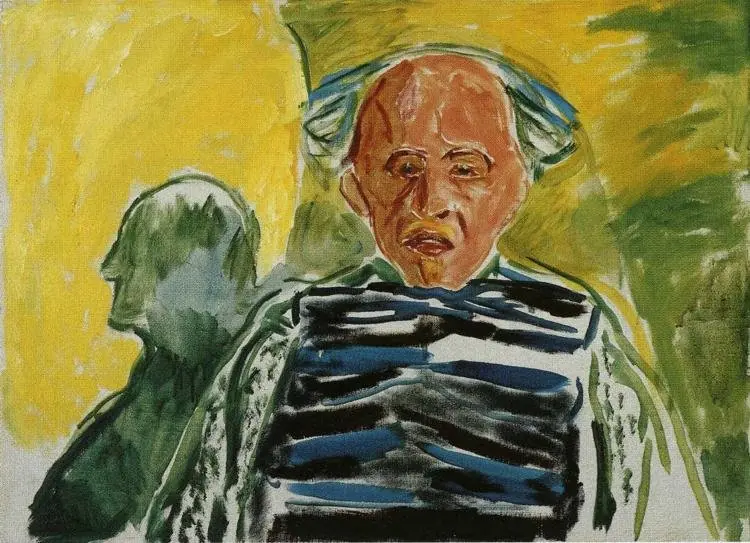 Self-Portrait
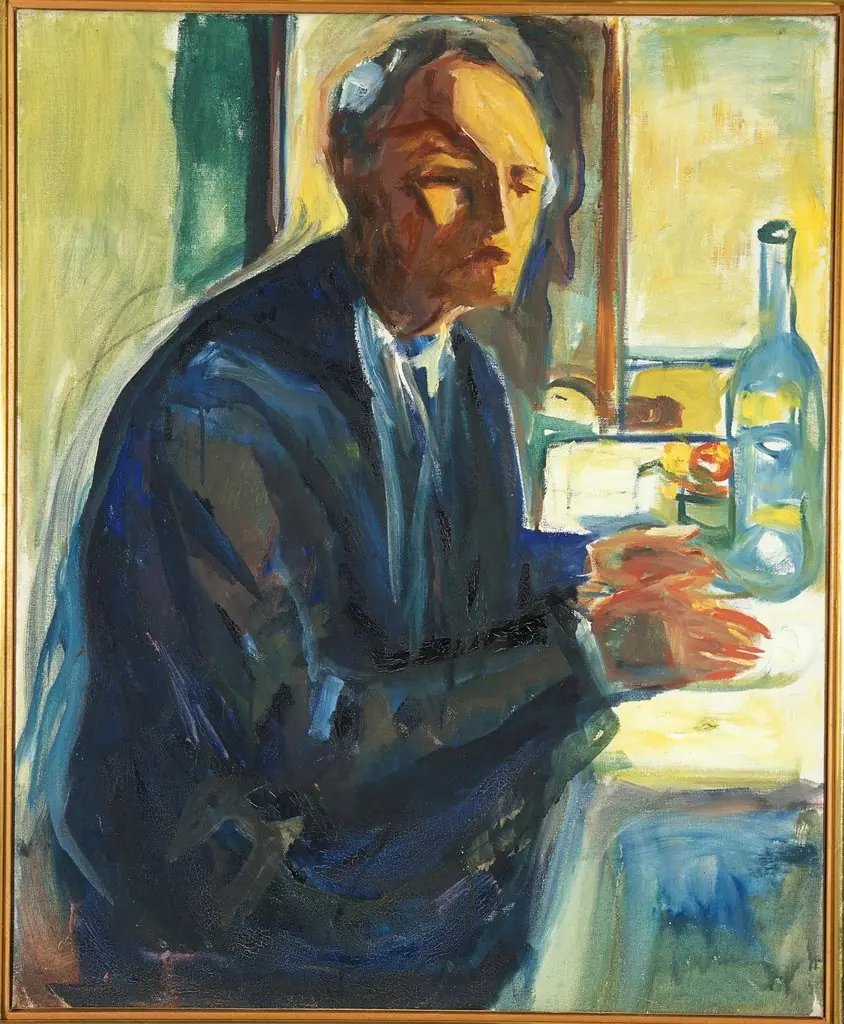 Self-Portrait at the Wedding Table
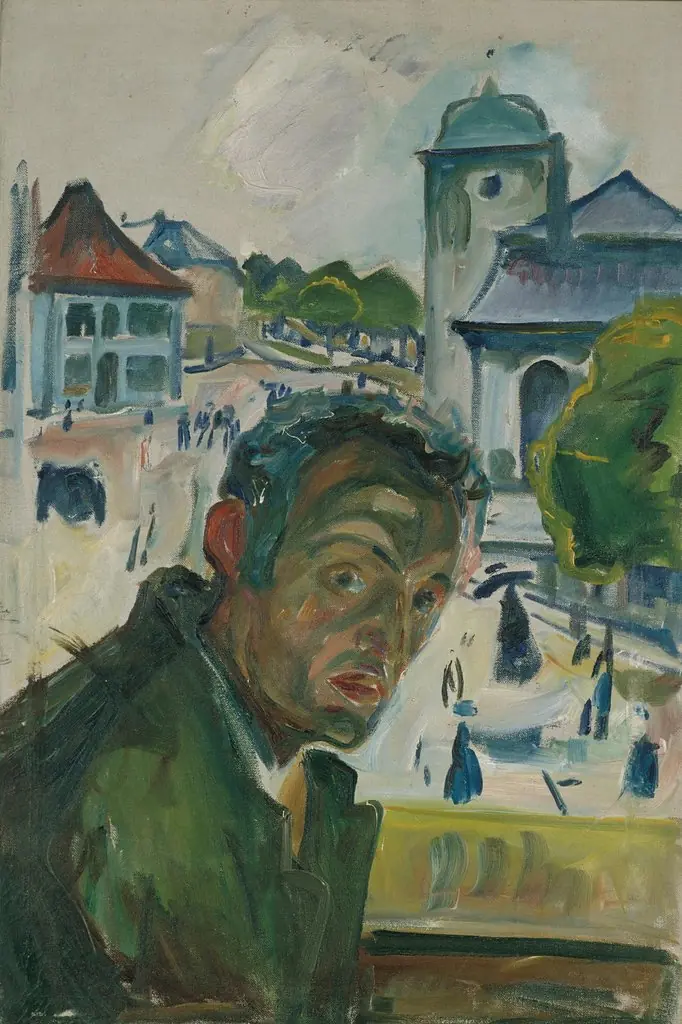 Self-Portrait in Bergen
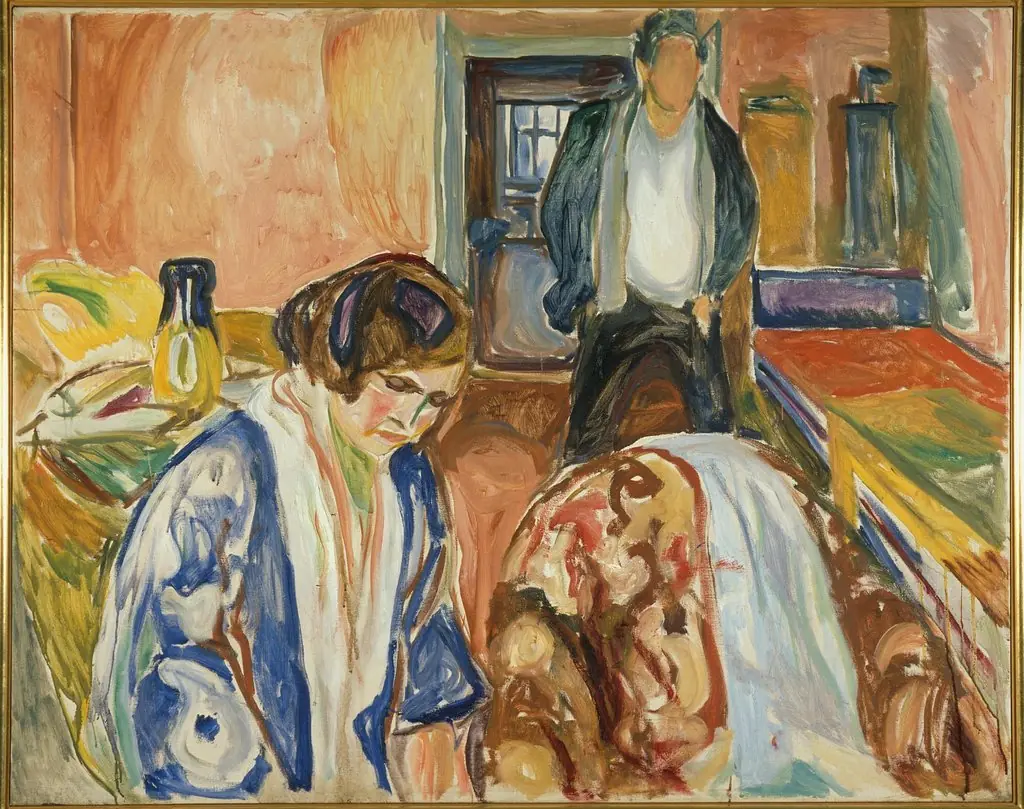 The Artist and his Model
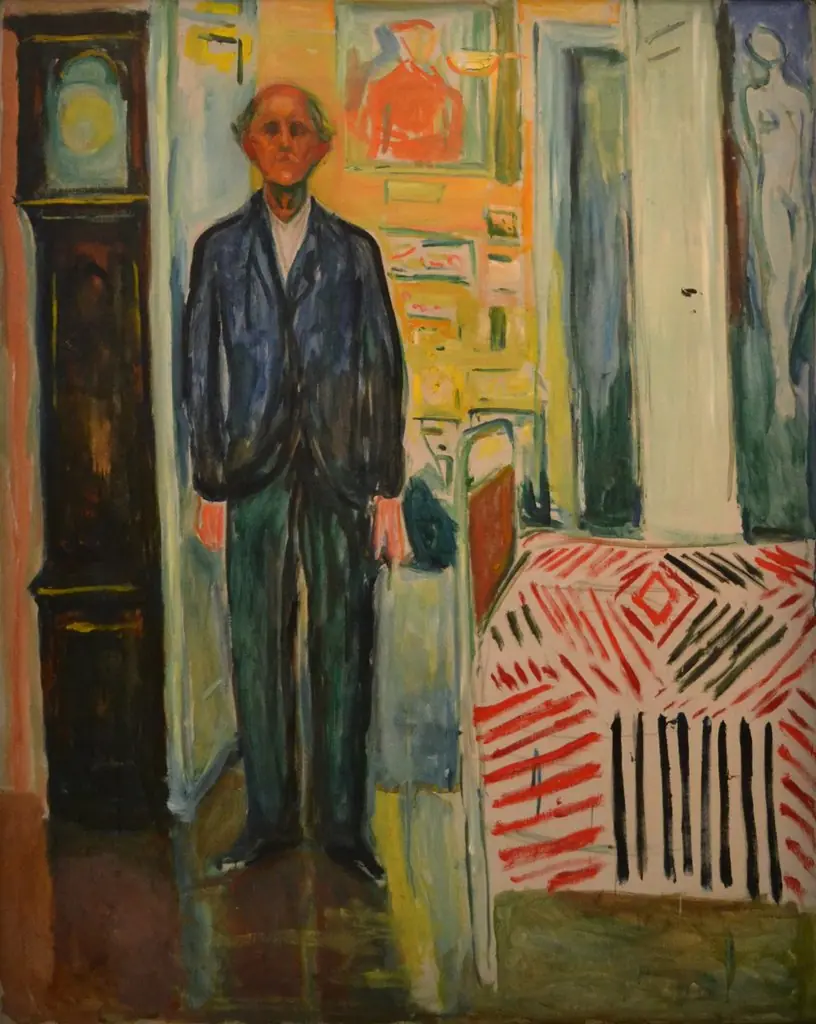 Self-Portrait. Between the Clock and the Bed
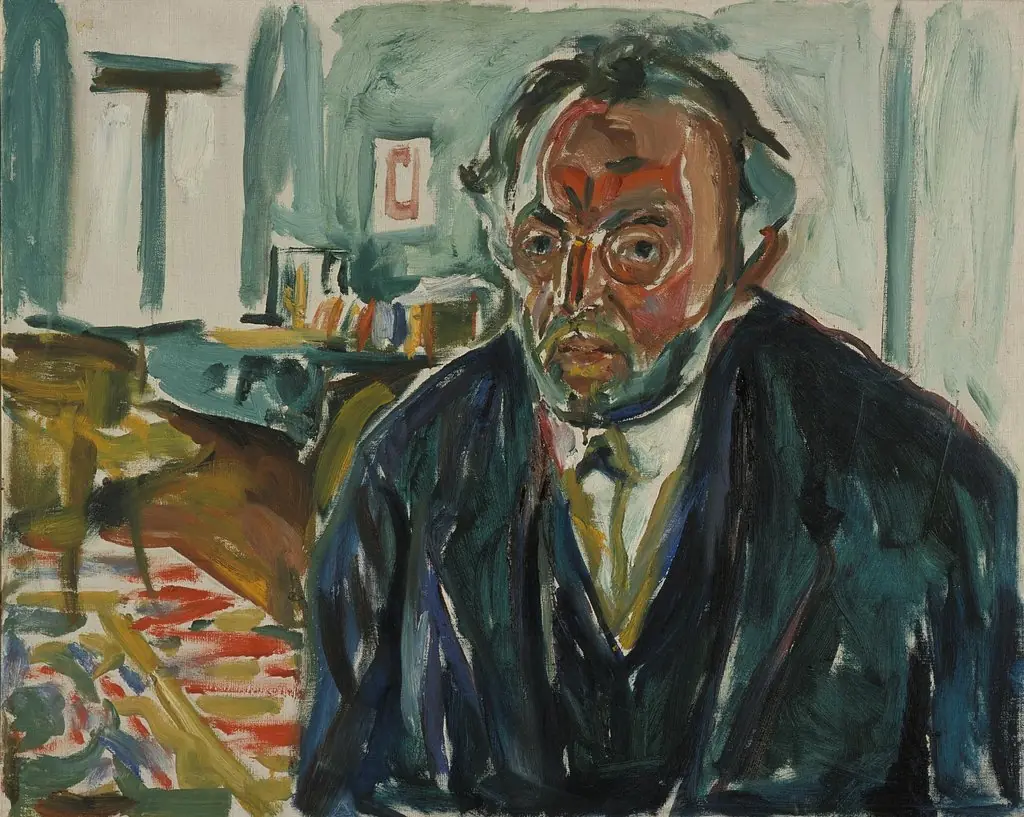 Self-Portrait after the Spanish Flu
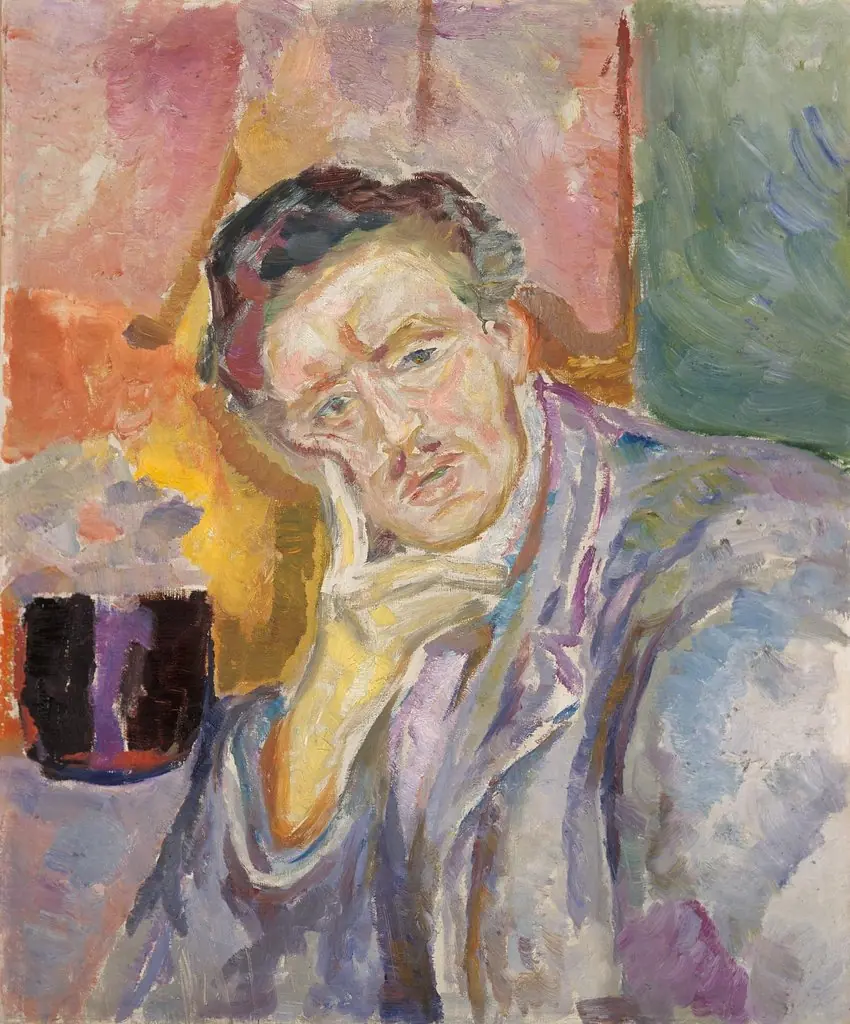 Self-Portrait with Hand under Cheek
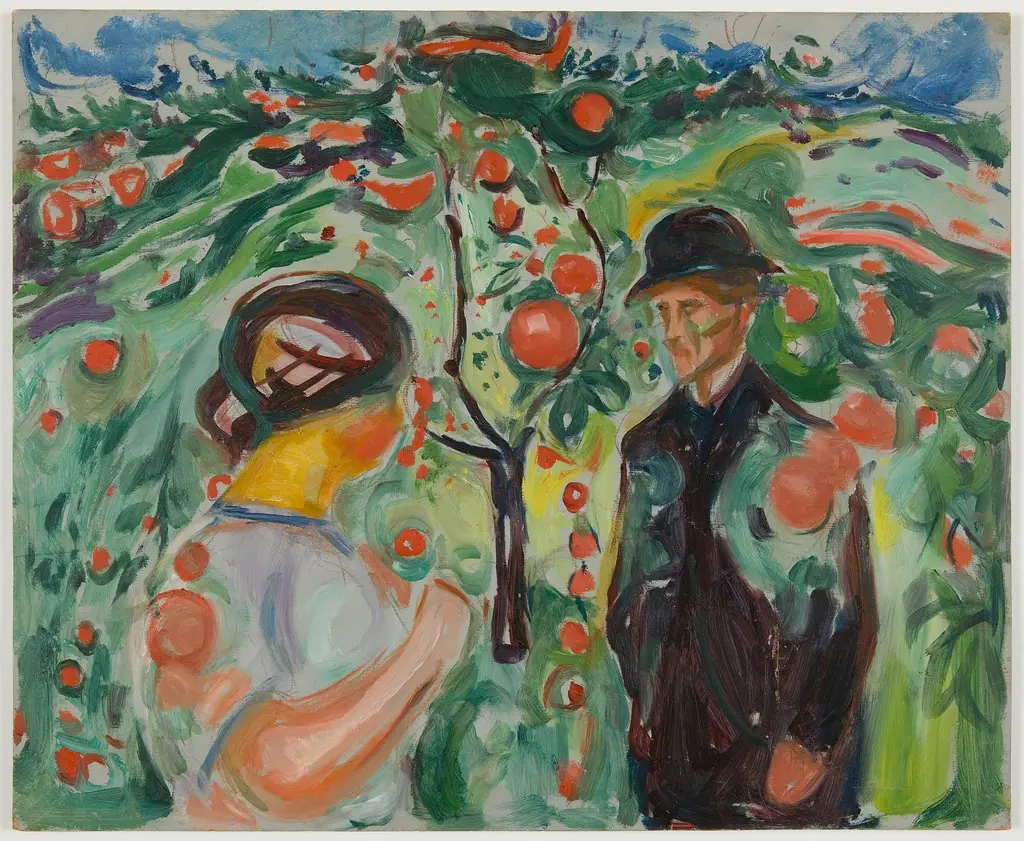 Beneath the Red Apples
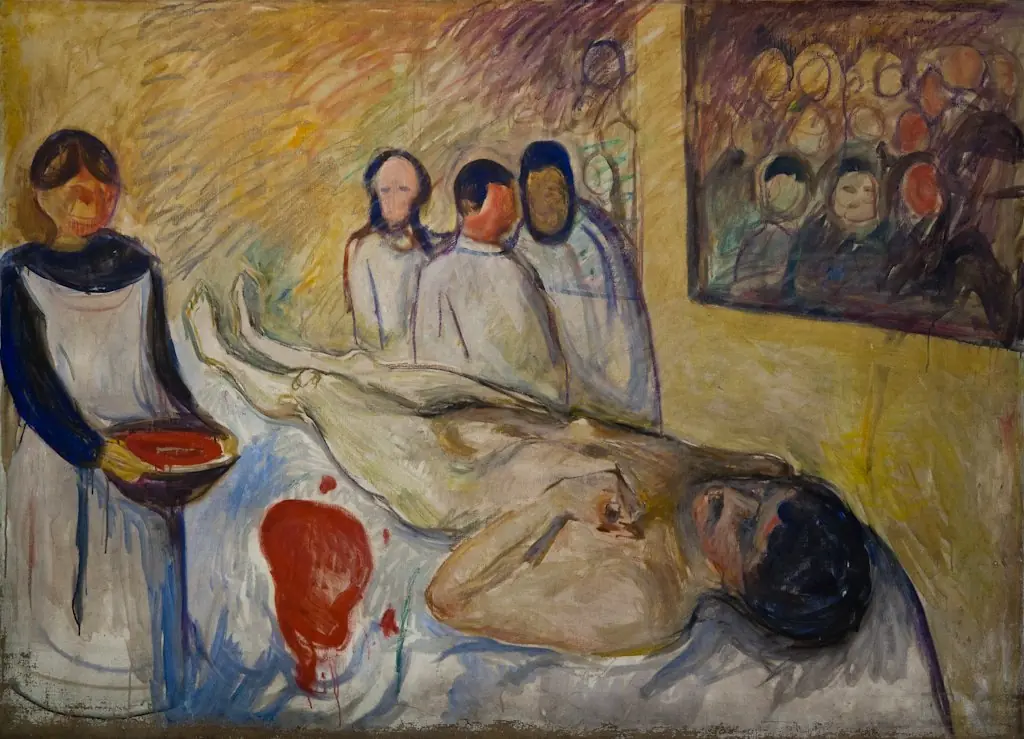 On the Operating Table
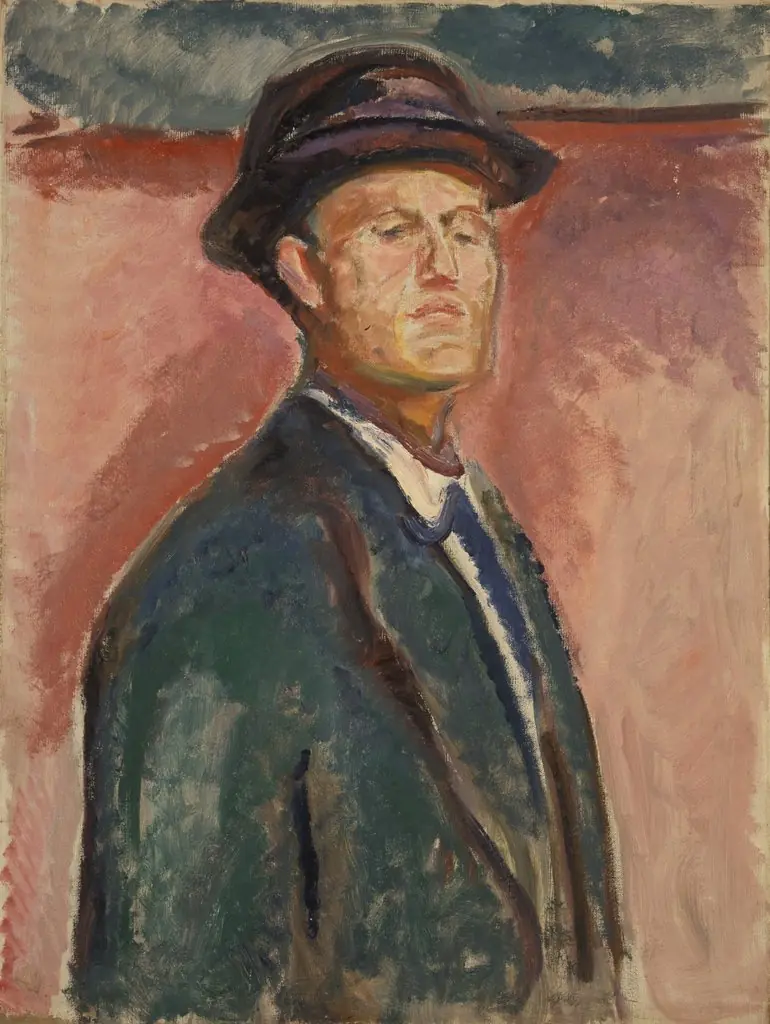 Self-Portrait with Hat
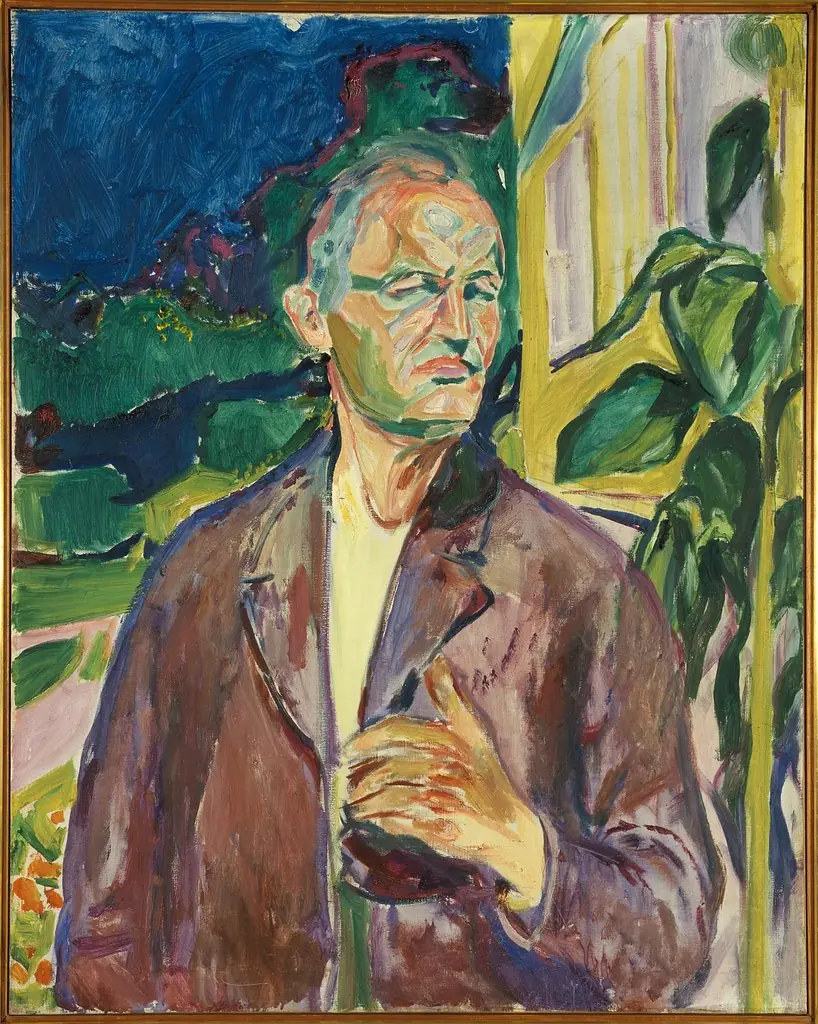 Self-Portrait in Front of the House Wall
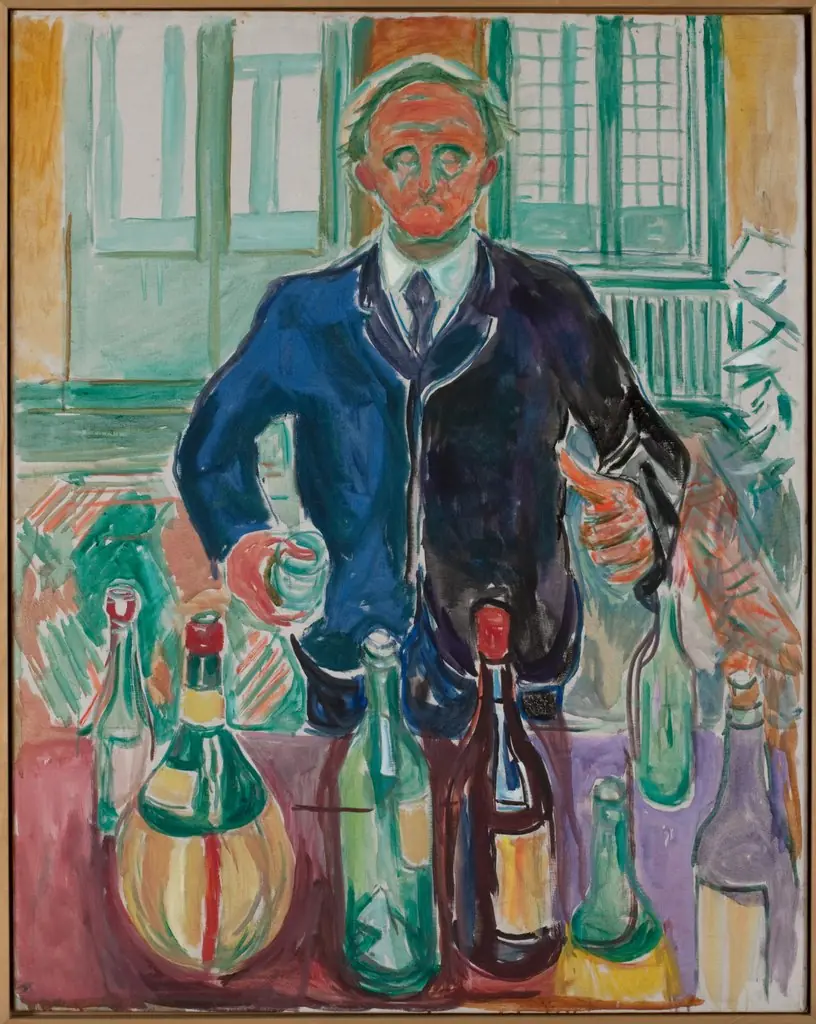 Self-Portrait with Bottles
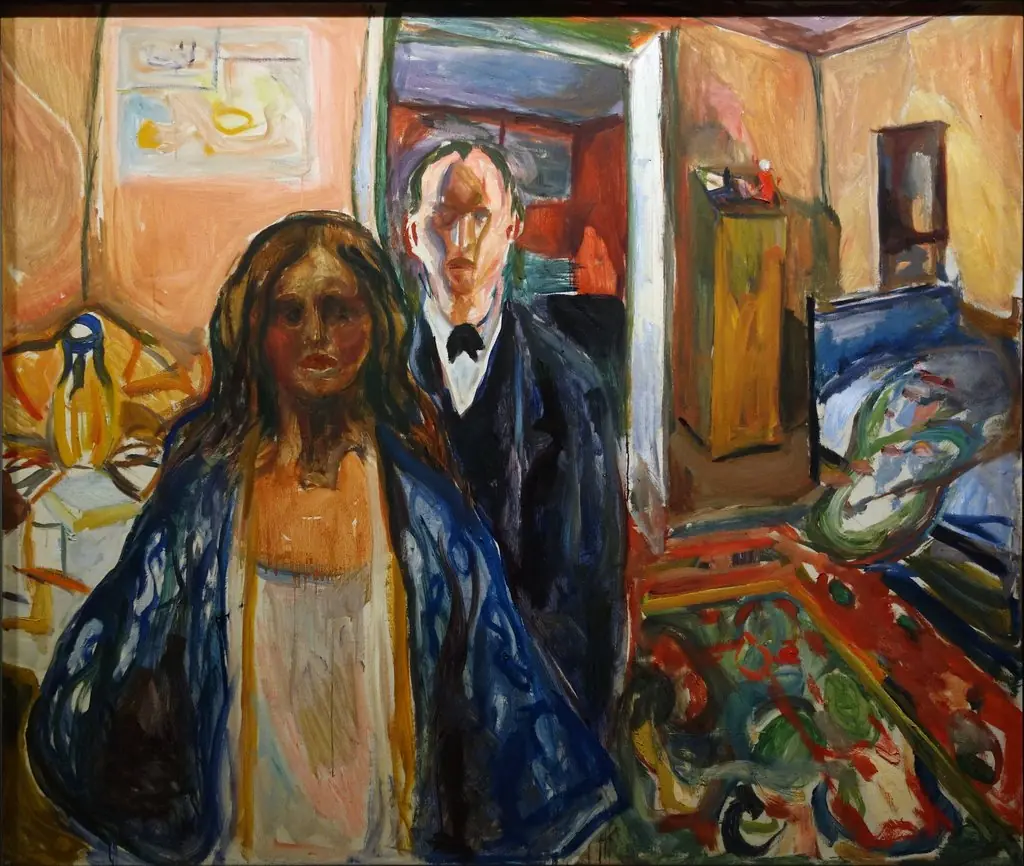 The Artist and his Model
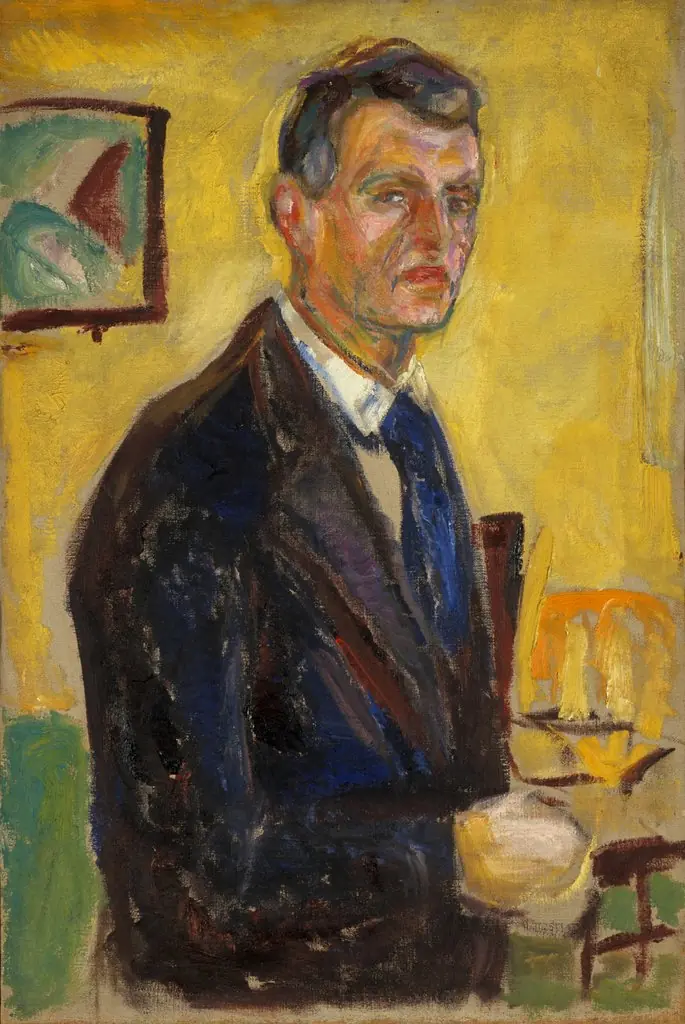 Self-Portrait against Yellow Background
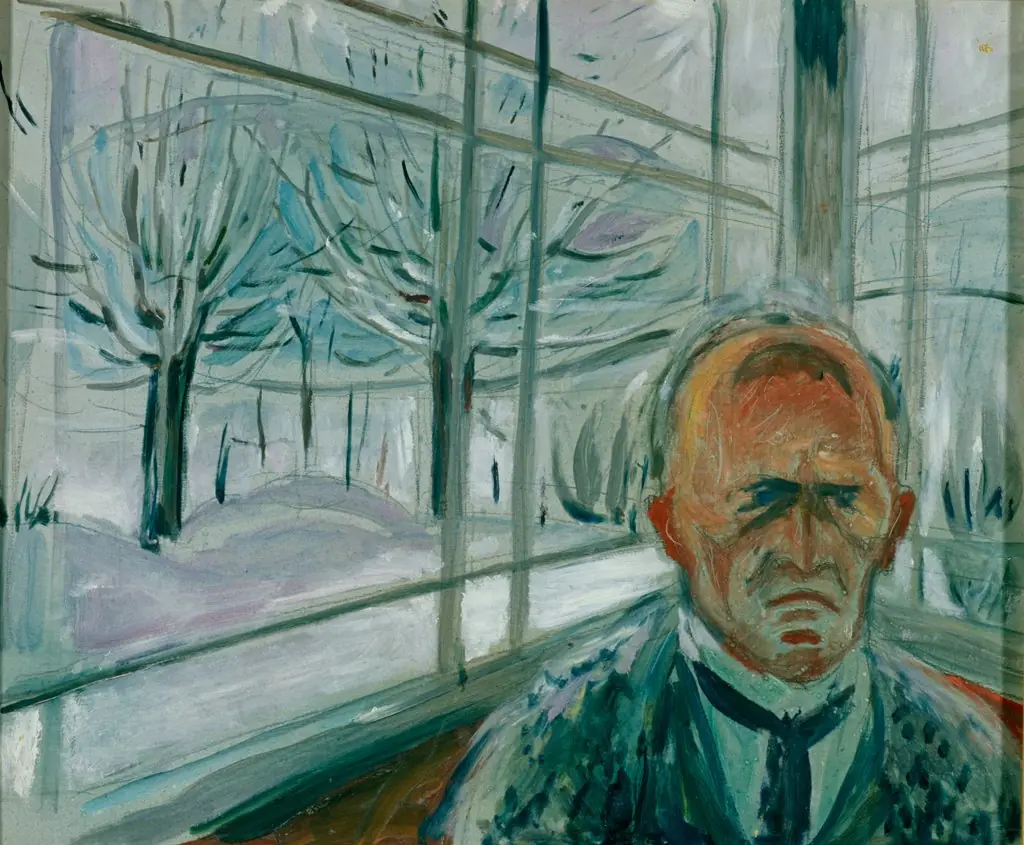 Self-Portrait on the Glass Veranda
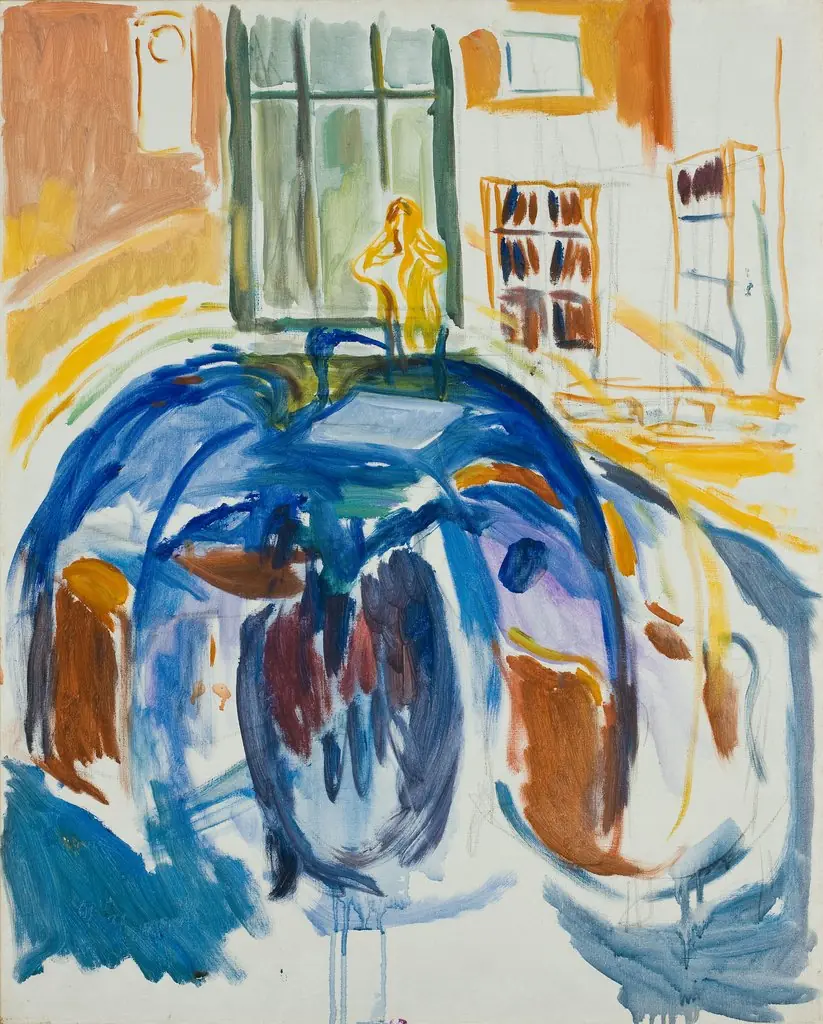 Disturbed Vision
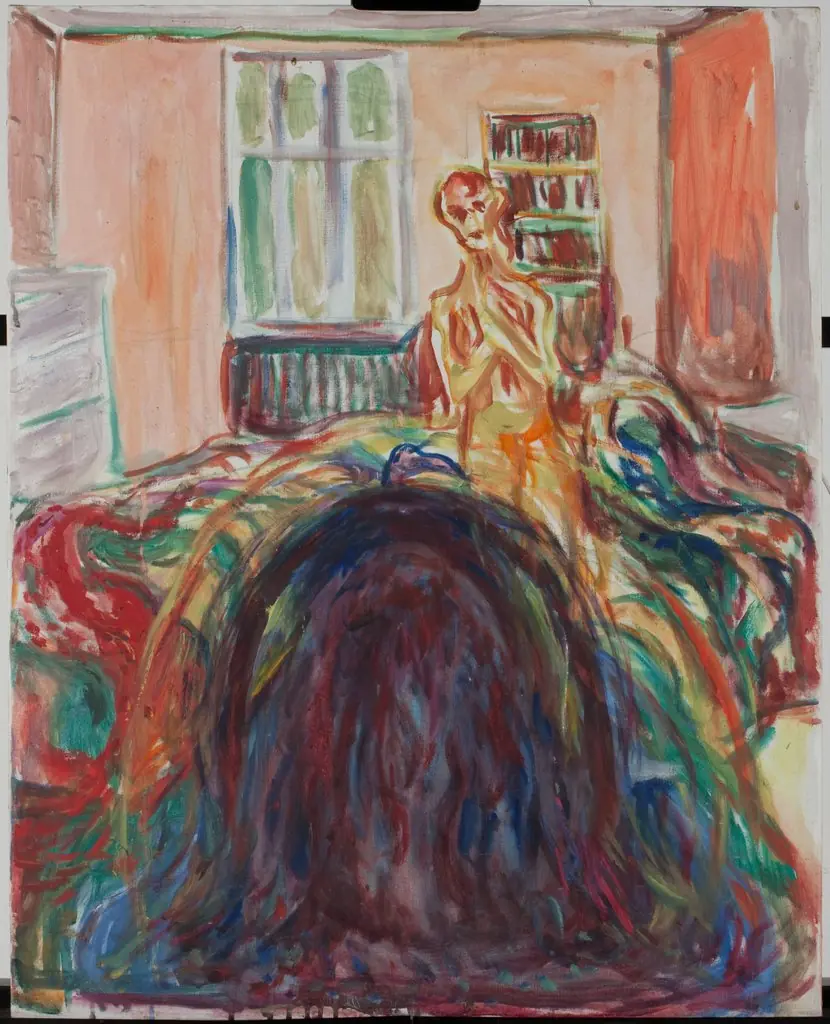 Disturbed Vision
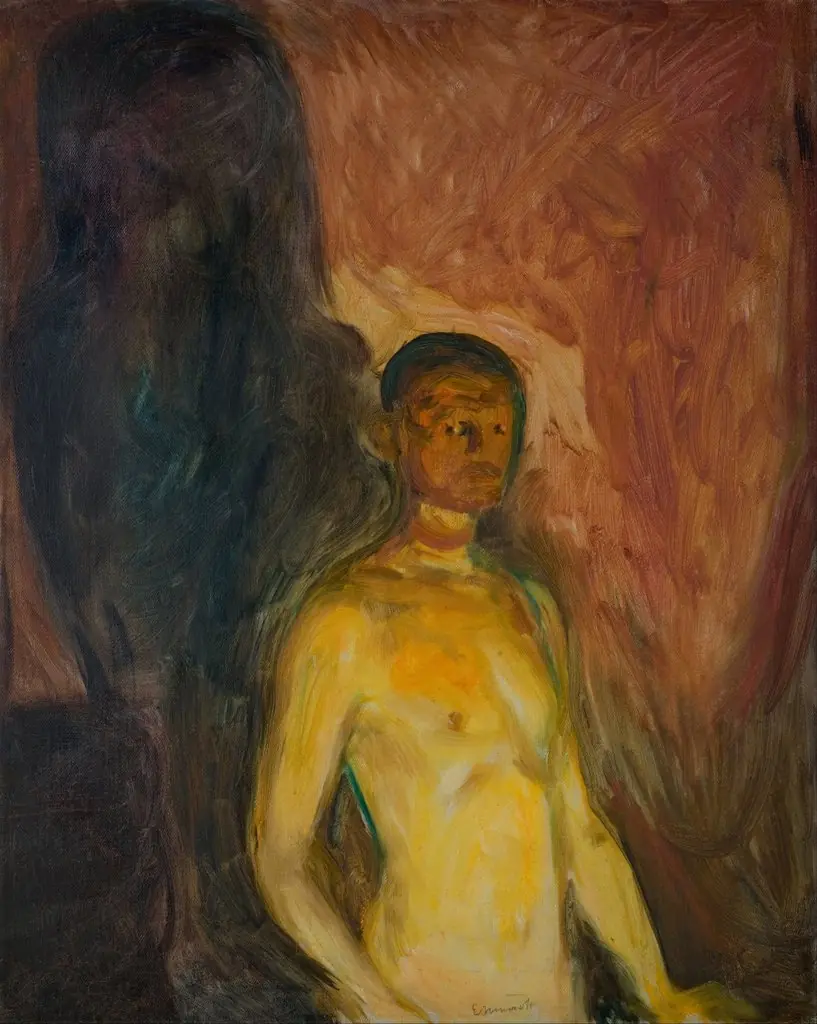 Self-Portrait in Hell
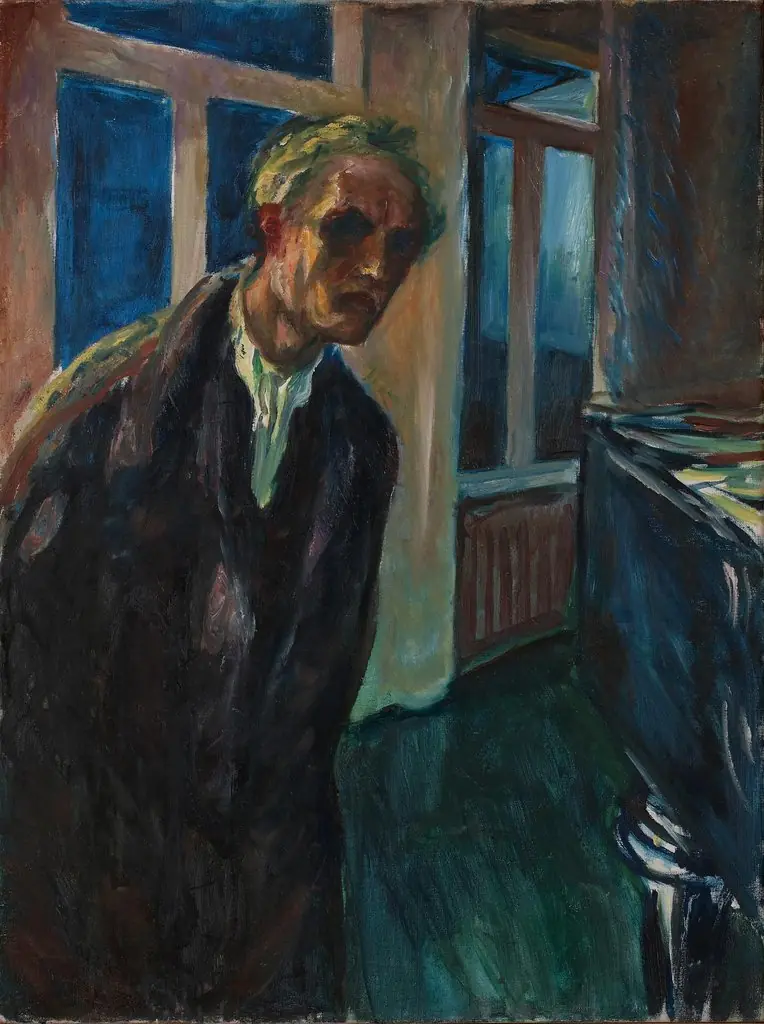 The Night Wanderer (A self-portrait)
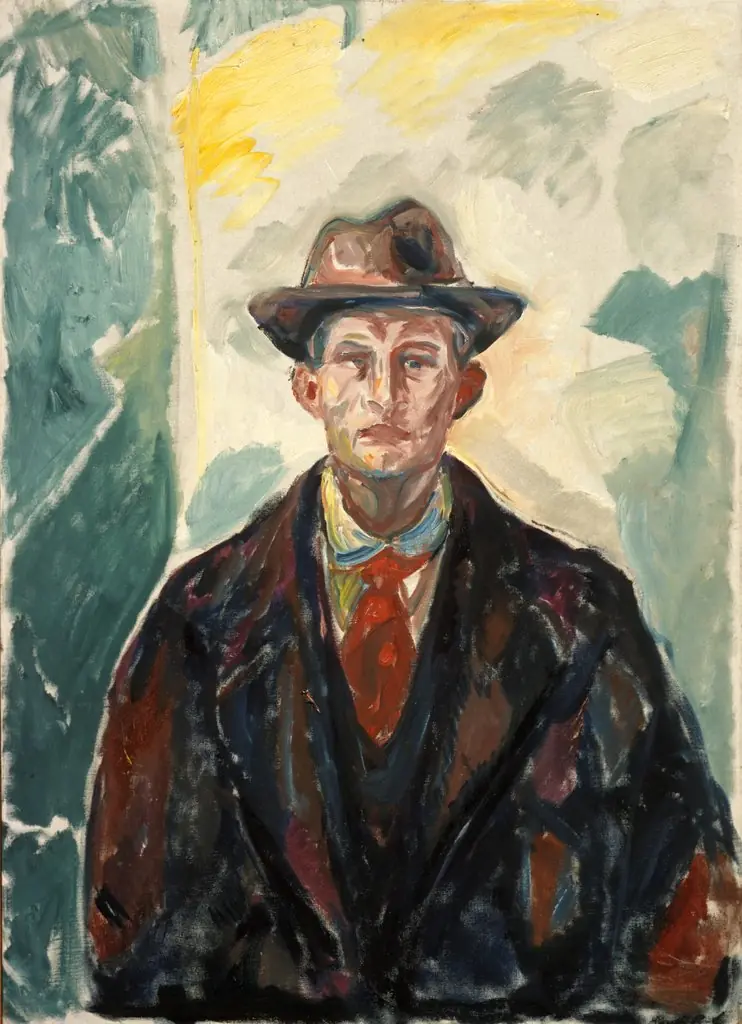 Self-Portrait with Hat and Red Tie
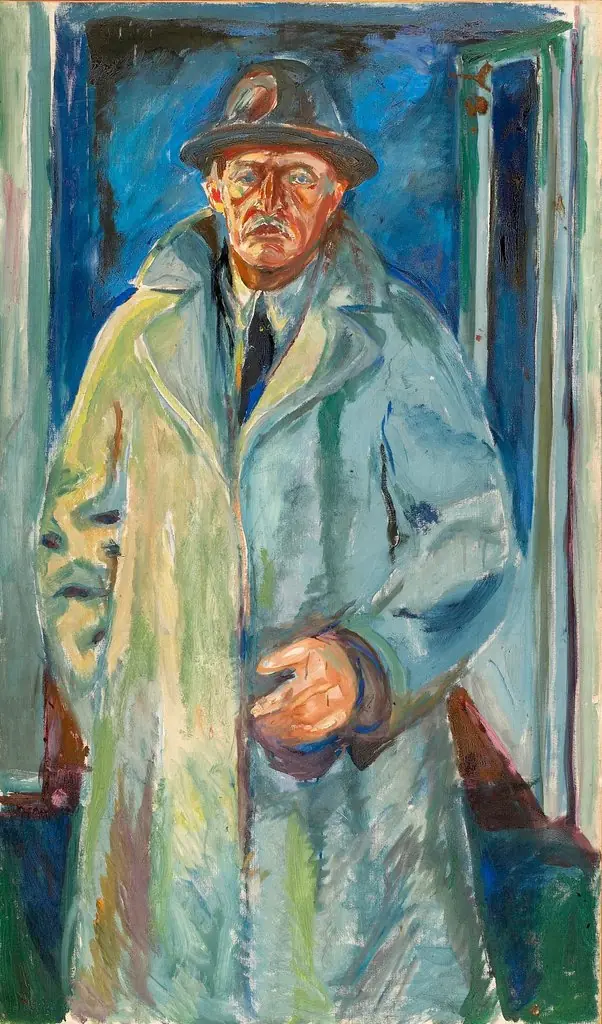 Self-Portrait in Hat and Coat
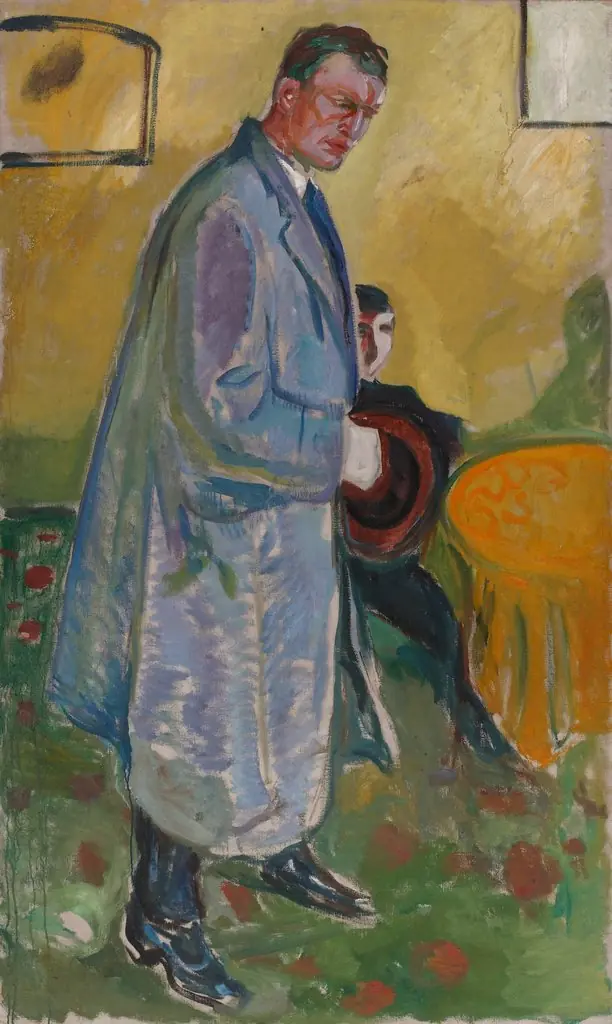 Self-Portrait with Hat and Overcoat
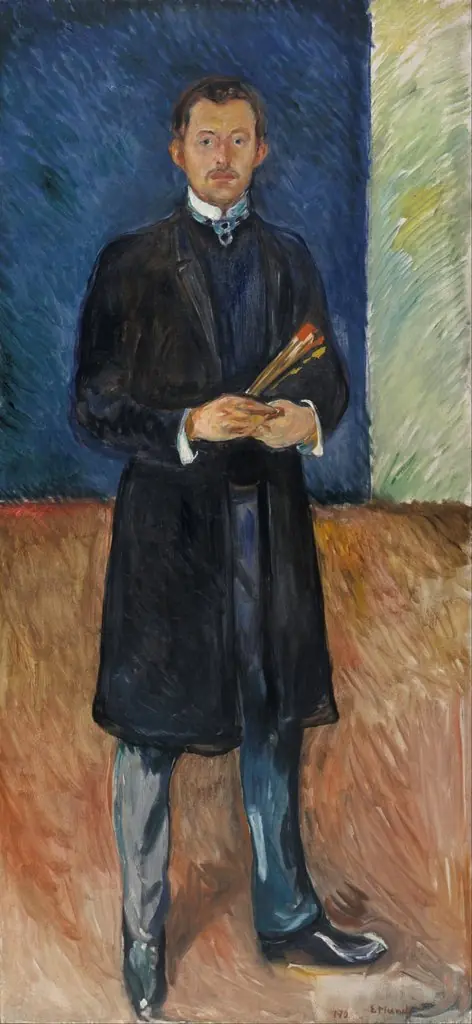 Self-Portrait with Brushes
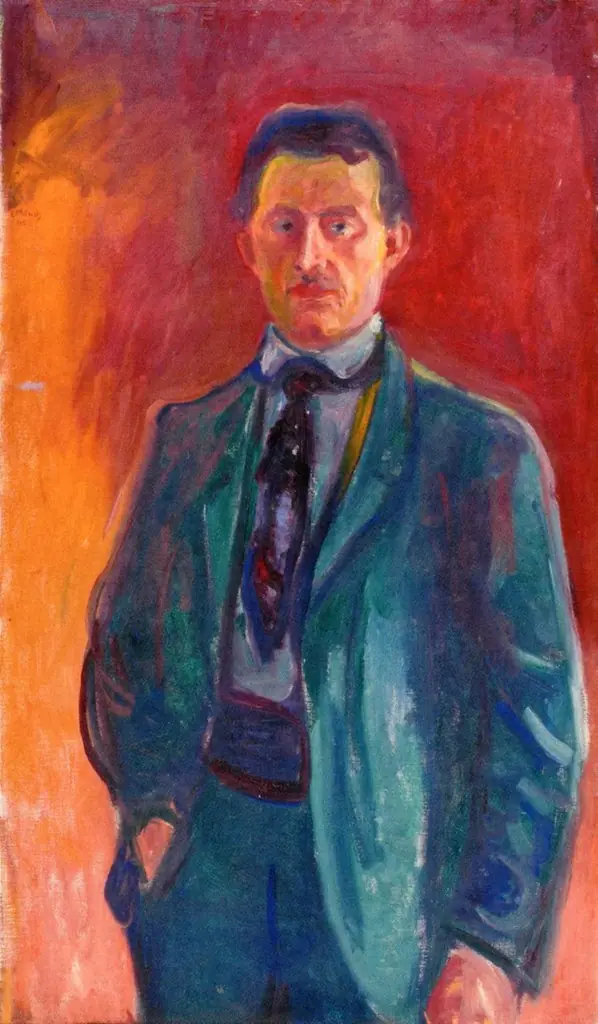 Self-Portrait against Red Background
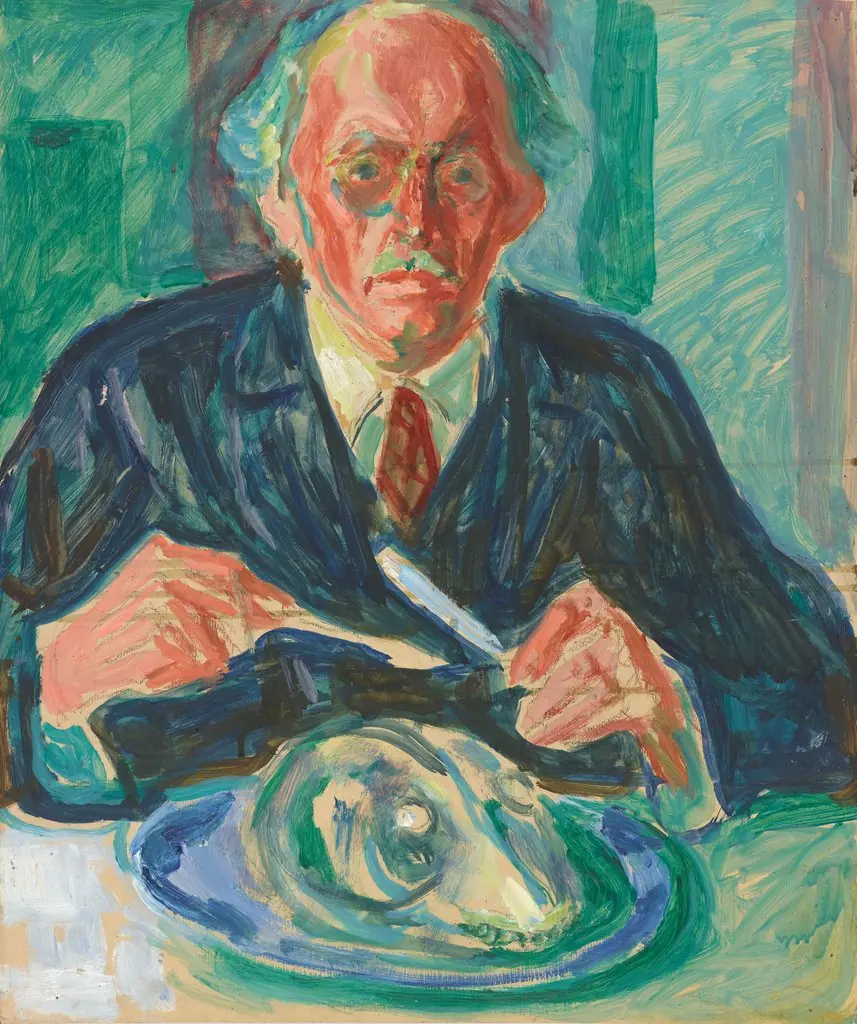 Self-Portrait, with a Cod's Head on the Plate
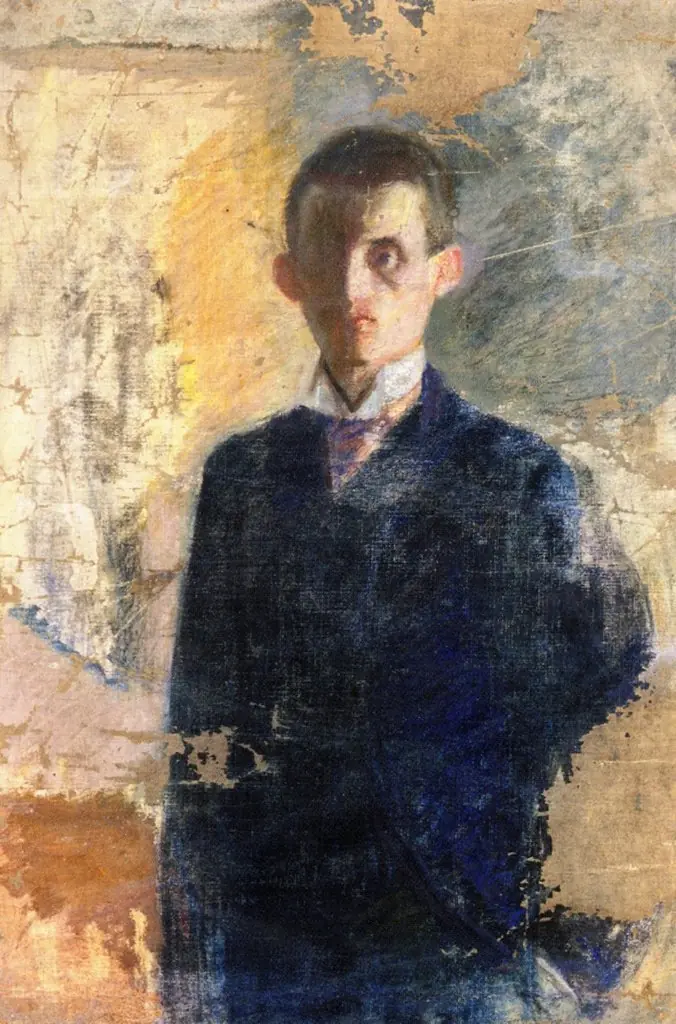 Self-Portrait
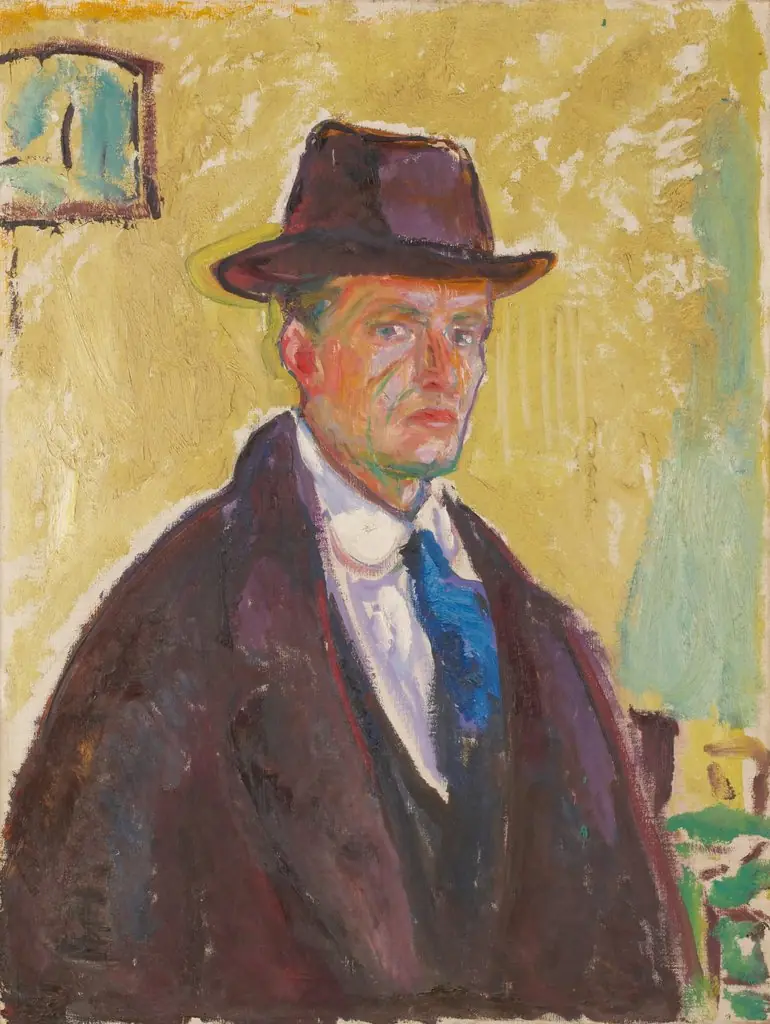 Self-Portrait in Hat and Coat
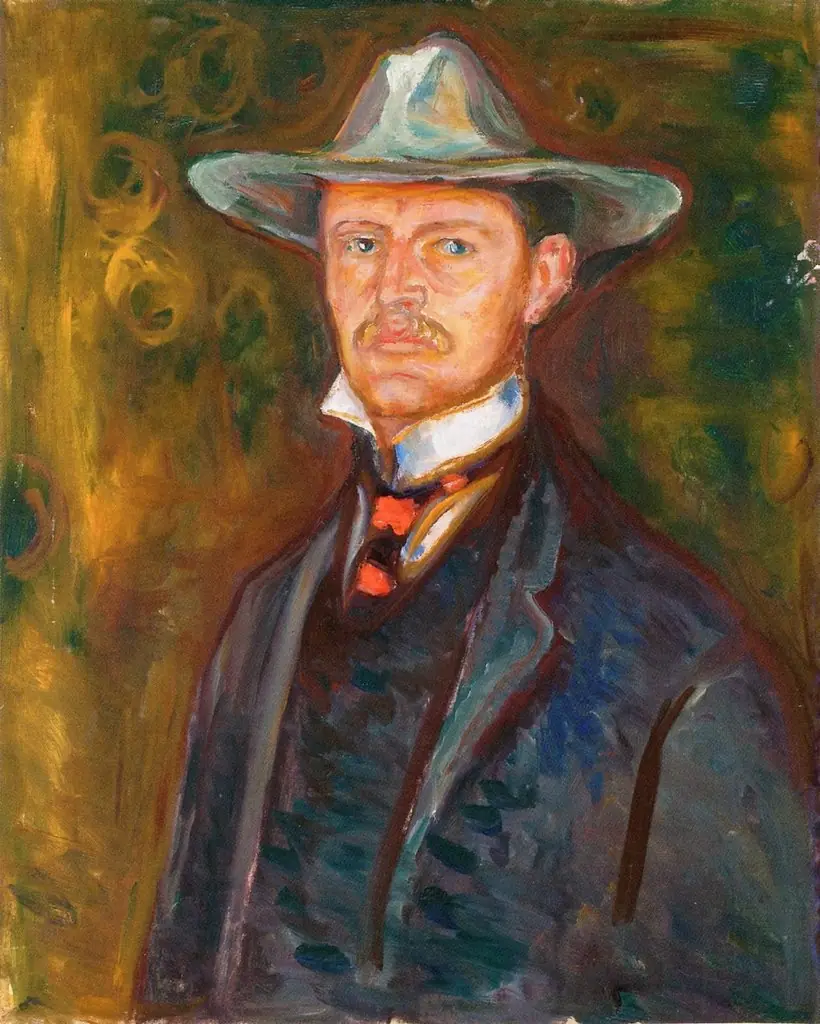 Self-Portrait in Broad Brimmed Hat
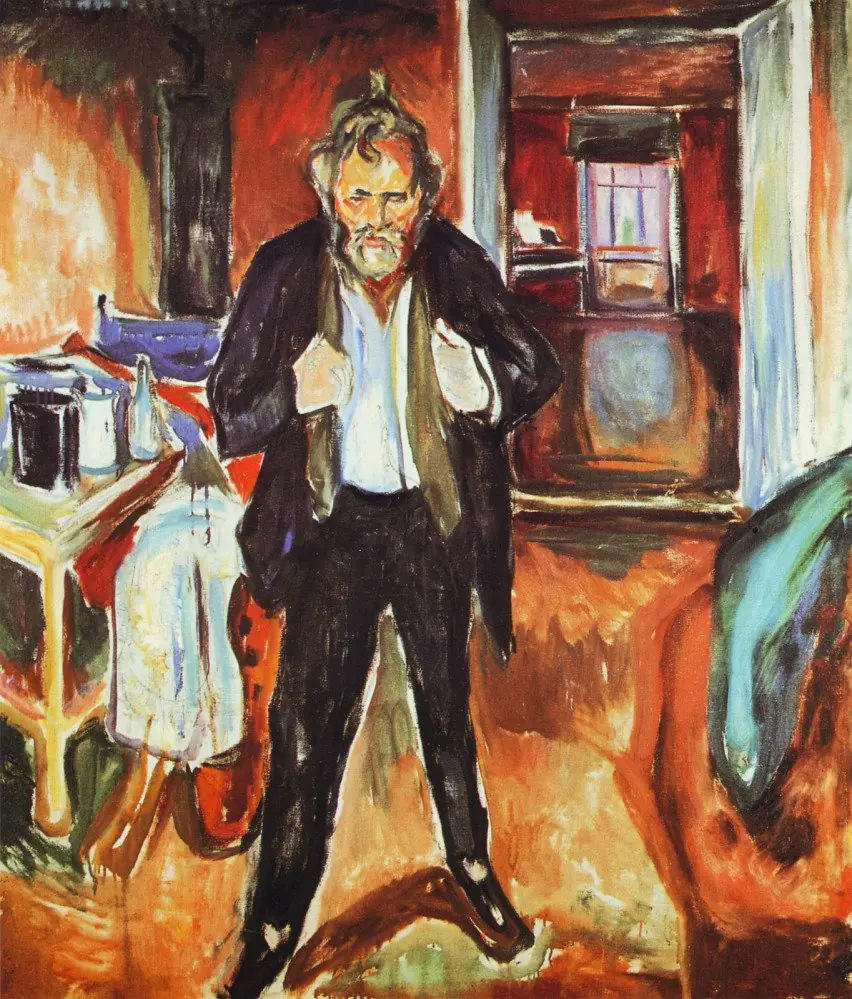 Sleepless Night. Self-Portrait in Inner Turmoil
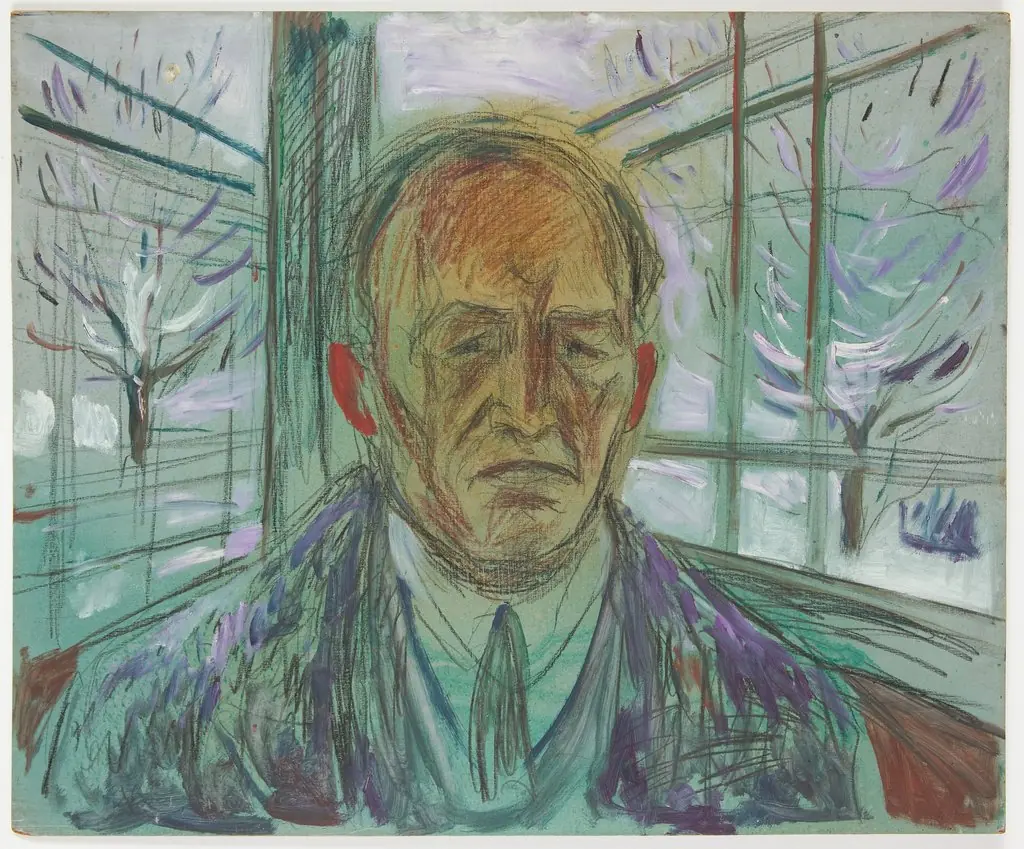 Self-Portrait on the Glass Veranda
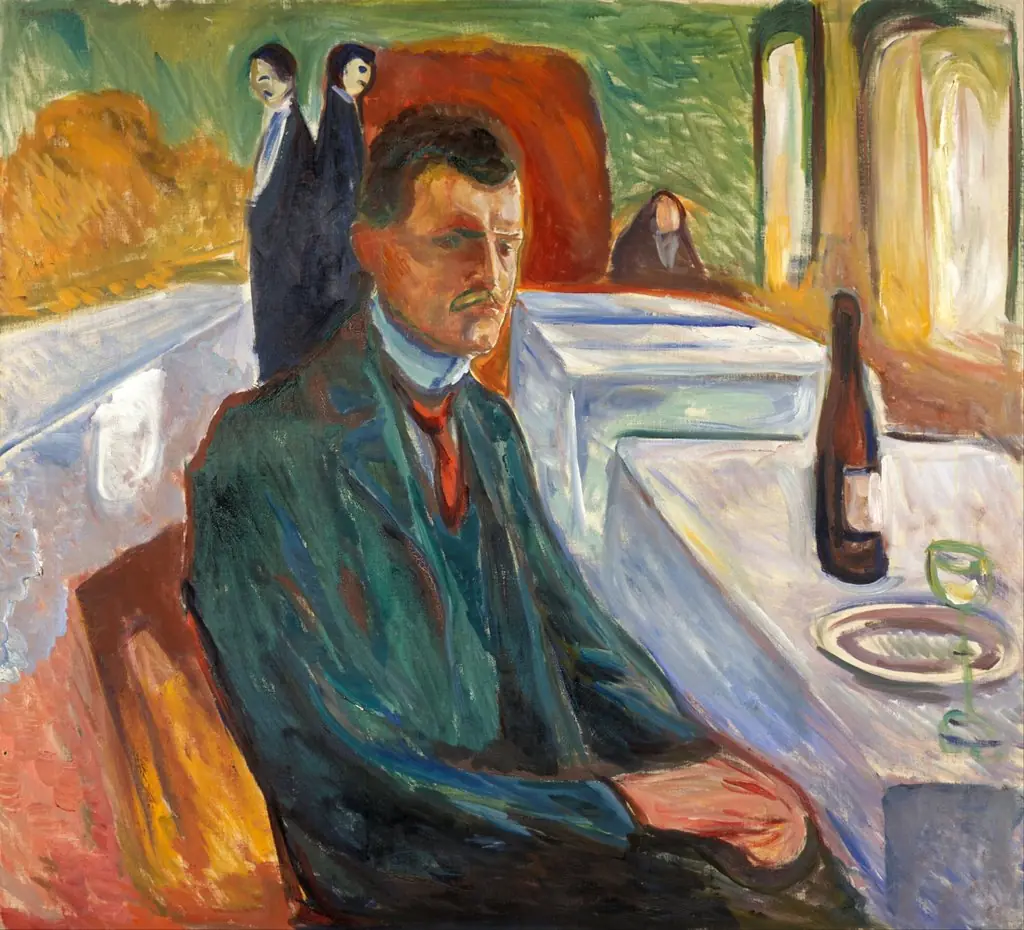 Self-Portrait With a Bottle of Wine
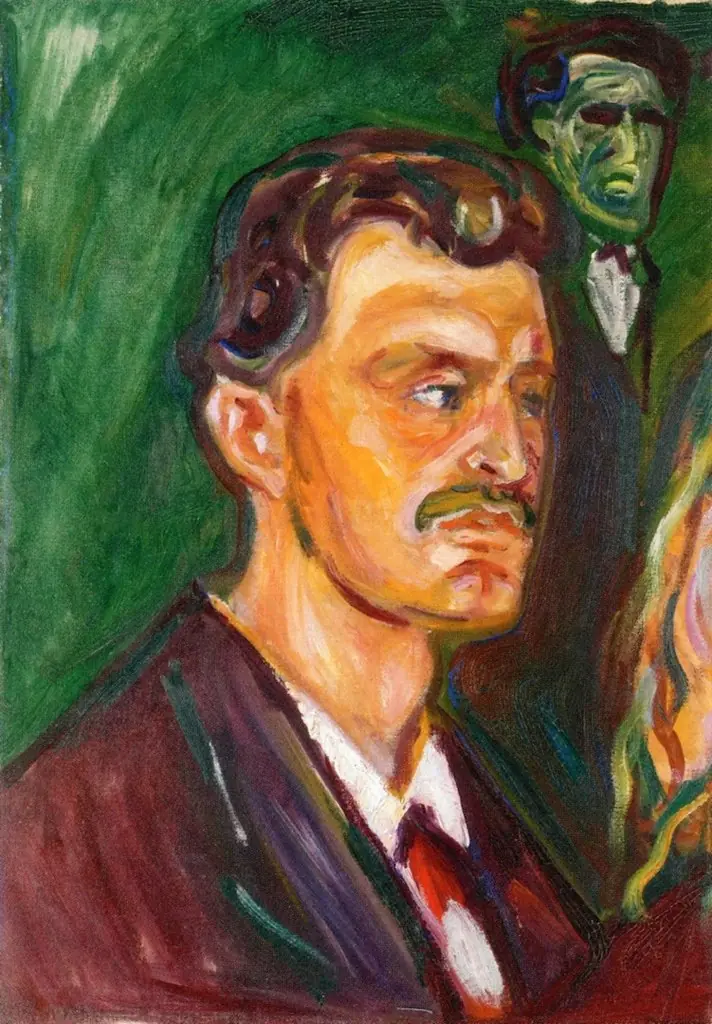 Self-Portrait against a Green Background
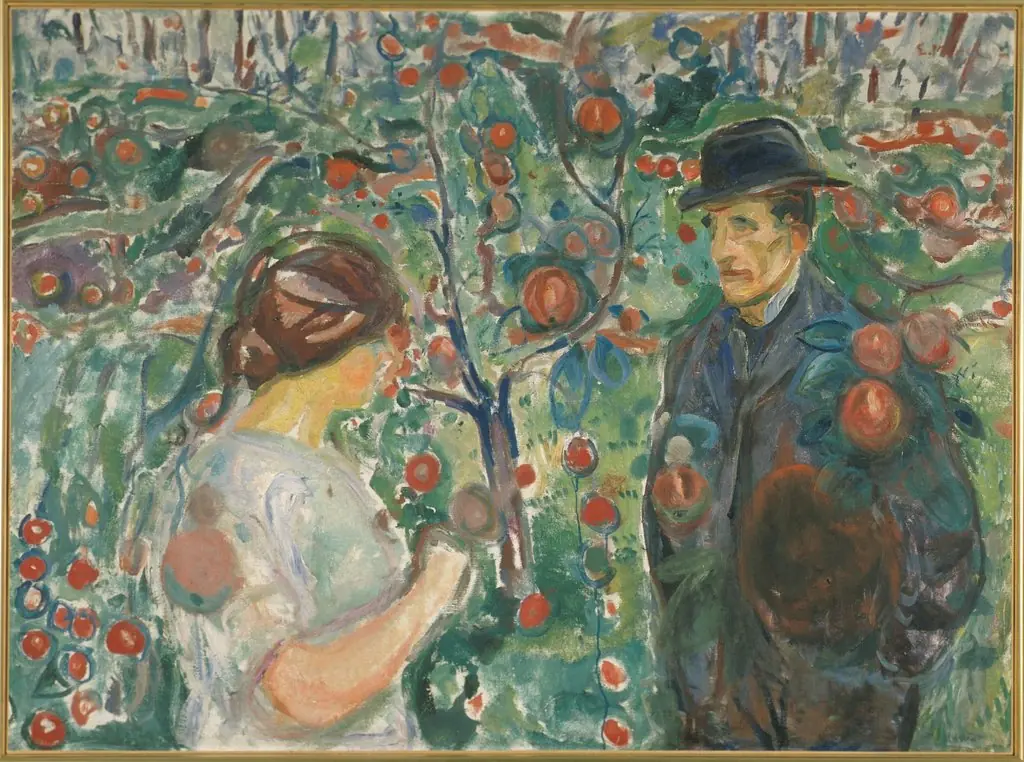 Beneath the Red Apples
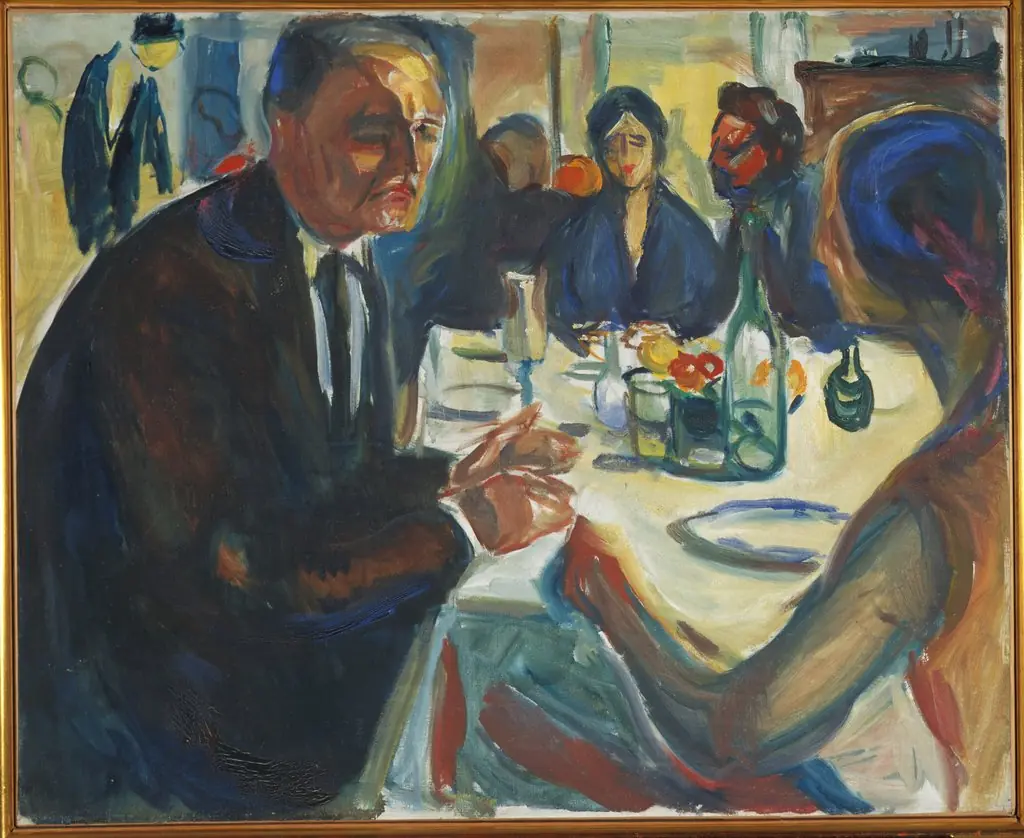 Self-Portrait at the Wedding Table
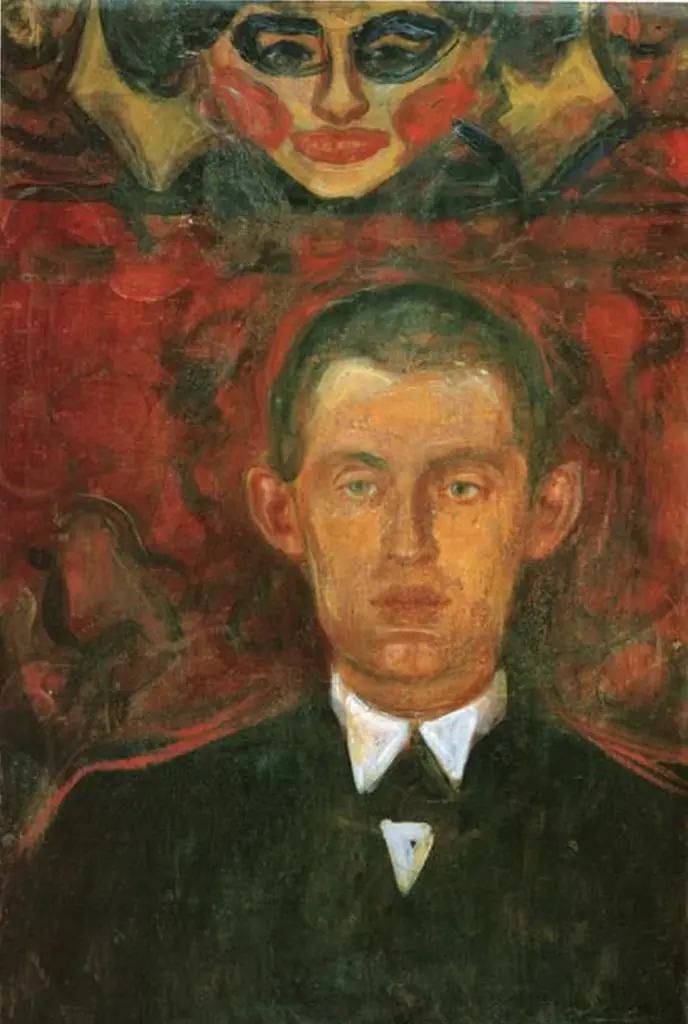 Self-Portrait under the Mask of a Woman
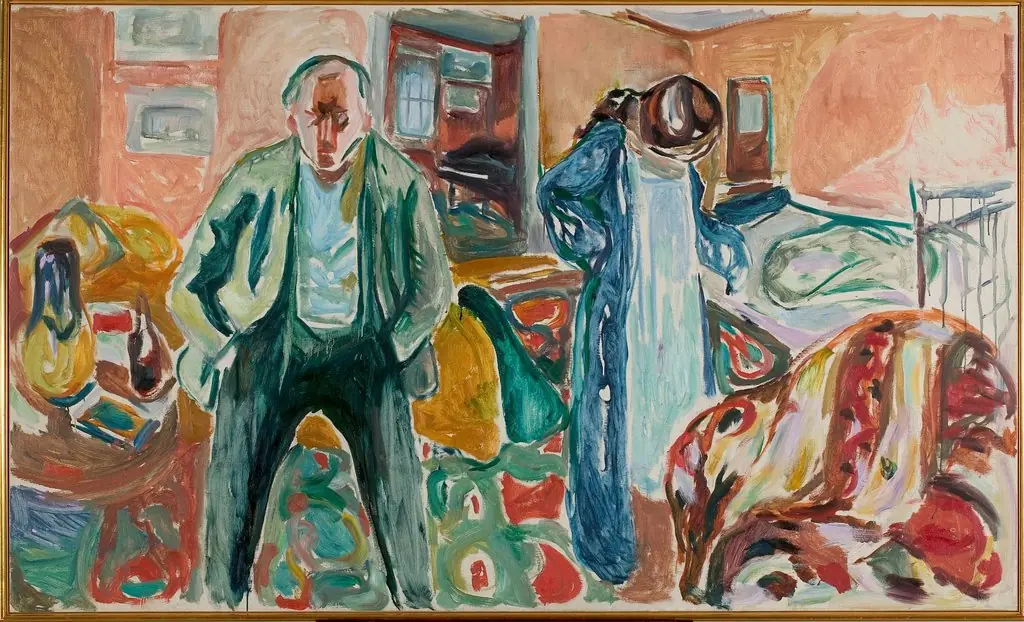 The Artist and his Model
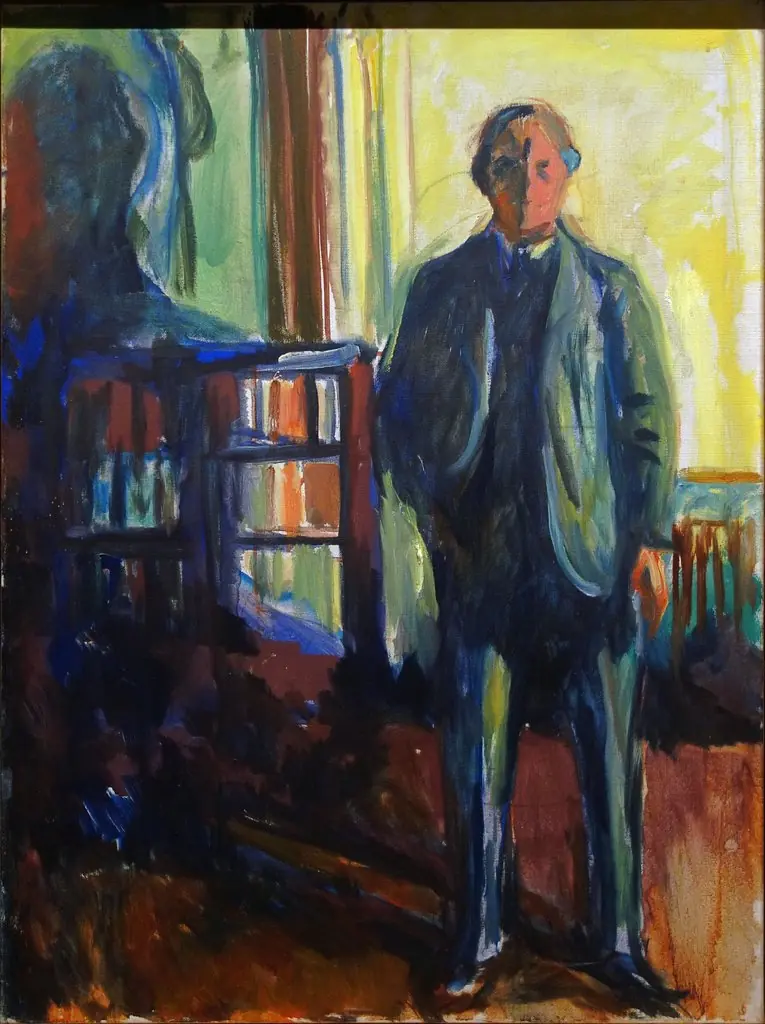 Self-Portrait with Hand in Pocket
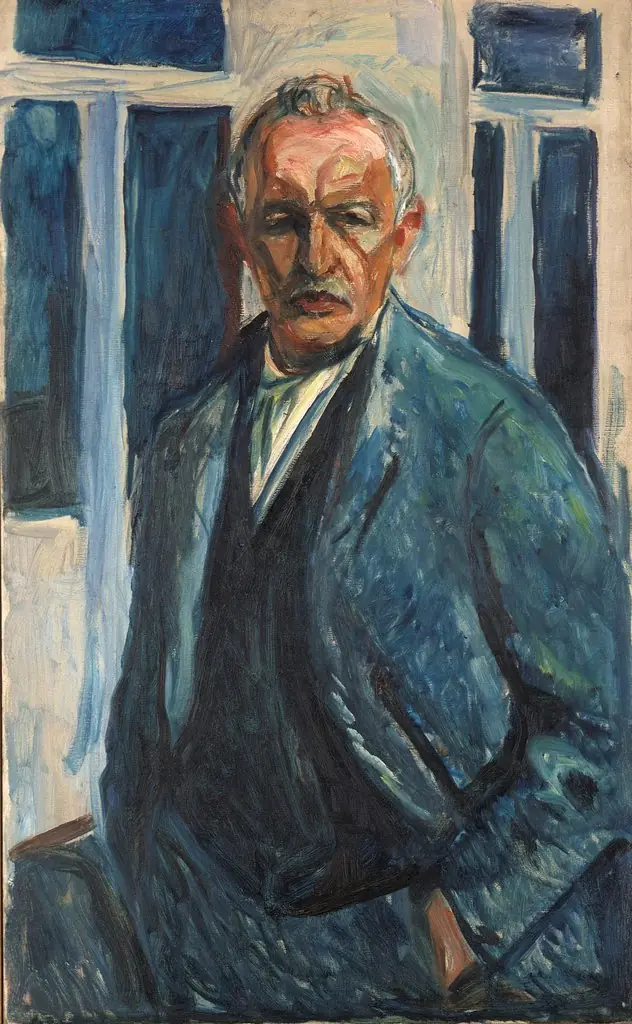 Self-Portrait with Hands in Pockets
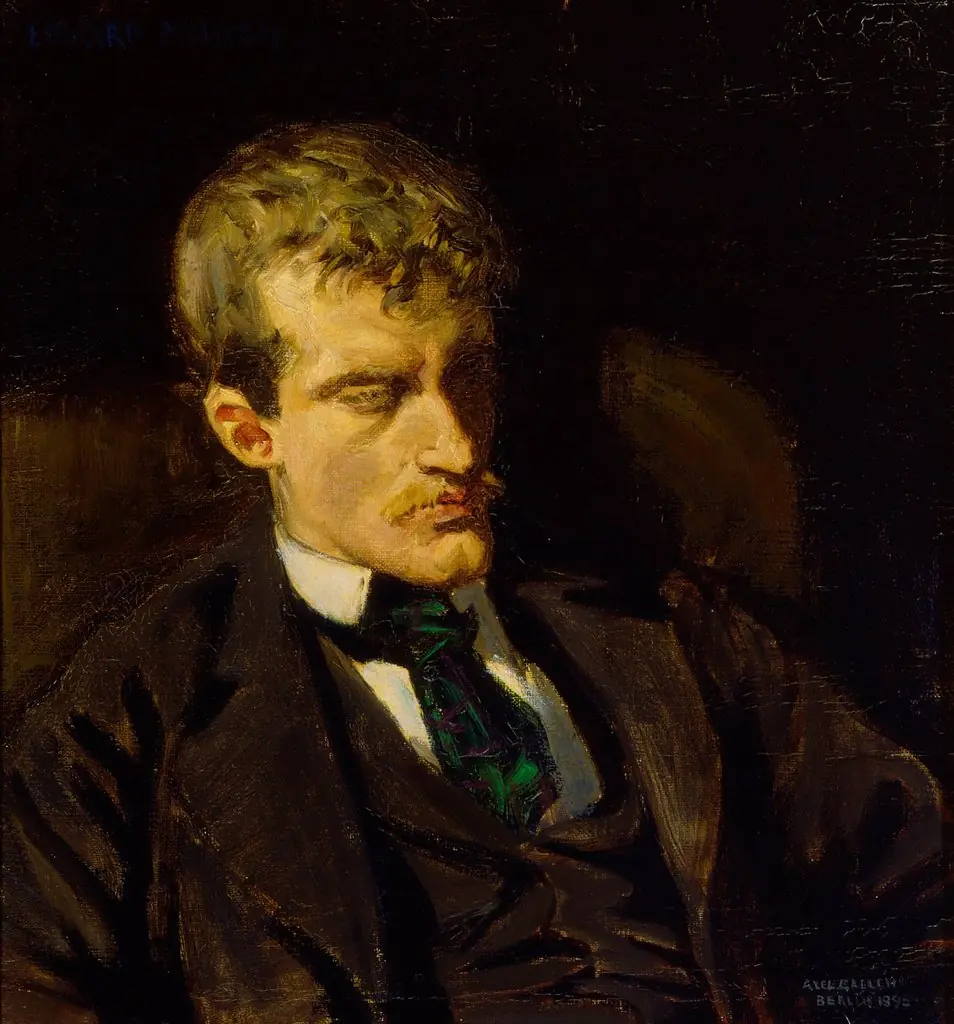 Portrait of Edvard Munch
Frequently asked questions
What is Edvard Munch?
Edvard Munch (Norwegian pronunciation: ) is a 1974 Norwegian biographical psychological docudrama film written, narrated and directed by English filmmaker Peter Watkins.
How many Edvard Munch works does Artifact World Gallery have?
Artifact World Gallery holds 48 public-domain Edvard Munch works, all free to view and download.
Who are the key Edvard Munch artists?
Key Edvard Munch artists in the collection include Edvard Munch and Akseli Gallen-Kallela.
Where can I see Edvard Munch works?
Edvard Munch works in the collection are held by Munch Museum and Finnish National Gallery.