Artist
Akseli Gallen-Kallela

Finland
Akseli Gallen-Kallela is a Finland Art Nouveau artist. 167 works are cataloged here, principally at Gallen-Kallela Museum.
Akseli Gallen-Kallela (born Axel Waldemar Gallén; 26 April 1865 – 7 March 1931) was a Finnish painter and a leading figure of Finnish romantic nationalism around the turn of the 20th century. He is considered a pioneer of a distinctly Finnish national art, and his work is regarded as a very important aspect of Finnish national identity. Gallen-Kallela began his career as a realist painter influenced by Jules Bastien-Lepage before turning, in the 1890s, towards symbolism and a stylised national-romantic idiom. He is best known for his depictions of the Kalevala, the Finnish national epic, including The Defense of the Sampo, Lemminkäinen's Mother and the Aino Triptych, as well as for his illustrations to the Kalevala and to Aleksis Kivi's novel Seven Brothers. He was also active as a graphic artist, designer and fresco painter, executing monumental works for the Finnish pavilion at the Paris World Fair of 1900 and the Jusélius Mausoleum in Pori. He finnicized his name from Gallén to Gallen-Kallela in 1907.
Overview
Akseli Gallen-Kallela (born Axel Waldemar Gallén; 26 April 1865-7 March 1931) was a Finnish painter, architect, and designer who became the leading figure of Finnish romantic nationalism at the turn of the twentieth century. Widely regarded as a pioneer of a distinctly Finnish national art, he is famously associated with visualizing the Kalevala, the Finnish national epic, through paintings such as The Defense of the Sampo, Lemminkäinen's Mother, and the Aino Triptych. His work spans realism, symbolism, and national romanticism, and he was active across multiple media including oil painting, fresco, graphic art, and design. In 1907 he finnicized his name from Gallén to Gallen-Kallela, affirming his commitment to Finnish cultural identity. His art remains a cornerstone of Finnish national identity and one of the country's most internationally recognized artistic achievements.
Biography & dates
Gallen-Kallela was born in Pori on the west coast of Finland, then part of the Russian Empire, into a Swedish-speaking family. His father, Peter Wilhelm Gallén, held positions as police chief, lawyer, and bank cashier, while his mother Anna Mathilda Wahlroos encouraged his early artistic interests. After the family moved to Tyrvää in 1867, Gallen-Kallela was educated at home until 1876, when at age eleven he was sent against his wishes to the Swedish Normal Lyceum in Helsinki; his father had opposed his ambition to become a painter. Between 1878 and 1881 he attended evening classes at the Finnish Art Society's drawing school and studied at the School of Arts and Crafts. He enrolled full-time at the Finnish Art Society's drawing school in autumn 1881, receiving private instruction from Sigrid August Keinänen and later from Albert Edelfelt and Adolf von Becker. In 1884 he moved to Paris, studying at the Académie Julian and the Atelier Cormon until 1889. There he befriended Albert Edelfelt, the Norwegian painter Carl Dørnberger, and the Swedish writer August Strindberg. He was strongly influenced by the naturalist plein air painting of Jules Bastien-Lepage, whose memorial exhibition he saw in 1885. His painting Old Woman with a Cat (1885), executed in Salo and completed in Paris, provoked controversy at the Finnish Art Society exhibition in 1886 for its uncompromising realism. He married Mary Helena Slöör in 1890, and their honeymoon journey to Kuhmo and East Karelia with the Swedish painter Louis Sparre became a foundational moment for karelianism, the artistic interest in Karelia that became central to Finnish national romanticism. The couple had three children: Impi Marjatta (1891-1895), Kirsti (1896-1980), and Jorma (1898-1939). The death of Impi Marjatta from diphtheria in March 1895, which cut short a trip to Berlin where he had been preparing a joint exhibition with Edvard Munch, marked a turning point in his work, making his art more aggressive in tone. From 1896 to 1899 he painted his most celebrated Kalevala works. In 1897-1898 he and Mary traveled through Italy, studying frescoes in Florence and Pompeii. For the Paris World Fair of 1900 he painted frescoes for the Finnish Pavilion, earning two gold and two silver medals. In 1901 he received a commission for a fresco at the Jusélius Mausoleum in Pori. He helped the Russian writer Maxim Gorki escape authorities in 1906, and from March 1907 was briefly a member of the artists' association Die Brücke, though he soon left due to irreconcilable differences. He painted a portrait of composer Gustav Mahler during Mahler's visit to Helsinki in 1907. Between 1909 and 1911 he lived in British East Africa (present-day Kenya), producing approximately 150 paintings showing French Expressionist influence and keeping notebooks later published by his son as the "Afrikka-Kirja" (Africa Book). Upon his return he built Tarvaspää, a castle-like studio residence northwest of Helsinki. Following Finnish independence in December 1917, he became a symbolic figure of the White faction during the Finnish Civil War; in 1918 General Carl Gustaf Emil Mannerheim appointed him wing adjutant. In the 1920s he returned to Kalevala illustrations, producing the cubism-influenced "Koru-Kalevala" (Jewel Kalevala) in 1921, while his "Suur-Kalevala" (Great Kalevala) remained unfinished. In 1923-1924 he lived in the United States, settling in the artists' colony at Taos, New Mexico. He died on 7 March 1931 in Stockholm, Sweden.
Style & movement
Gallen-Kallela's artistic trajectory moved from French naturalist realism through symbolism to a stylized national-romantic idiom. His early career was shaped by Jules Bastien-Lepage's naturalist plein air painting, which he encountered in Paris; works like Old Woman with a Cat (1885) established a new realist tradition in Finnish art. By the 1890s, under the influence of French Symbolism and Art Nouveau (Jugendstil), he turned toward symbolism and spiritual themes, engaging with theosophy and viewing the artist as a chosen being perceiving invisible realities through a sixth sense. His symbolist period produced works of pronounced European significance, including Ad Astra (1894-1896), an altar-like painting depicting a cosmic vision of resurrection influenced by Édouard Schuré's writings on transmigration. The pantheistic reverence for nature underlying his work was expressed through landscapes that treated nature as sacred, with art serving to manifest nature's grandeur. His Kalevala paintings from 1896-1899 represent the culmination of his national-romantic style: bold, flattened forms, strong contours, and a decorative synthesis of Finnish mythological narrative with international symbolist and Art Nouveau tendencies. His style continued to evolve through monumental fresco work, expressionist-influenced African paintings, and late experiments with cubist-influenced illustration. Throughout, his art served Finnish patriotic aims, particularly during the period of Russification, using cultural assertion as political resistance.
Major works
Gallen-Kallela's most significant works are his Kalevala paintings from 1896-1899: The Defense of the Sampo (1896), Lemminkäinen's Mother (1897), Joukahainen's Revenge (1897), and Kullervo's Curse (1899). These monumental canvases, created at his studio-residence Kalela near Lake Ruovesi, established the visual iconography of the Finnish national epic and remain his best-known paintings. The Aino Triptych (1889-1891), his first major Kalevala-inspired work, initiated this series of mythological compositions. His fresco work includes the cupola paintings for the Finnish Pavilion at the 1900 Paris World Fair, featuring The Forging of the Sampo, The Defense of the Sampo, Ilmarinen Plowing the Field of Vipers, and The Departure of Väinämöinen. The Ilmarinen fresco contained covert political content: one viper wears a small Romanov crown, expressing his desire for Finnish independence. He also designed the Iris Room for the Friends of Finnish Handicraft within the pavilion. In 1901 he painted the fresco Kullervo Sets Off for War for the Jusélius Mausoleum in Pori; the original frescoes were destroyed by fire in 1931 and later reconstructed by his son according to his sketches. He produced illustrations for the Kalevala and for Aleksis Kivi's novel Seven Brothers (1906), a central work of Finnish literature. His graphic work included the 1921 "Koru-Kalevala" (Jewel Kalevala), influenced by cubism, and the unfinished "Suur-Kalevala" (Great Kalevala). His 1907 portrait of Gustav Mahler and the 1894-1896 symbolist painting Ad Astra are significant works outside his mythological repertoire.
Influences & students
Gallen-Kallela's formative teachers in Helsinki included Sigrid August Keinänen, Albert Edelfelt, and Adolf von Becker, the last of whom he credited as his most influential instructor. In Paris he studied under William-Adolphe Bouguereau and Robert-Fleury at the Académie Julian before moving to Fernand Cormon's atelier, where he found inspiration for his historical and identity-oriented projects. The French naturalist Jules Bastien-Lepage was a decisive early influence, particularly through the 1885 memorial exhibition that shaped his realist approach.
His circle included significant Nordic cultural figures: the Finnish sculptor Emil Wikström, with whom he shared lodgings in Paris; the Swedish writer August Strindberg and painter Ernst Josephson; Norwegian writers Bjørnstjerne Bjørnson and painters Edvard Munch, Frits Thaulow, and Carl Dørnberger; and the French ceramist Henry Dehaulme de Vallombreuse. Through his Berlin connections, including the writer Adolf Paul and art historian Julius Meier-Graefe, he established links that led to his brief association with the artists' group Die Brücke in 1907. His close association with composer Jean Sibelius, poet Eino Leino, and conductor Robert Kajanus within the Young Finnish Party circle placed him at the center of Finland's cultural nationalism.
His wife Mary Helena Slöör served as model for several important works including a Madonna image (1890) and the Aino Triptych. His son Jorma later published his Africa notebooks and reconstructed the Jusélius Mausoleum frescoes. No specific pupils are documented in the sources, though his artistic circle and the broader karelianist movement carried forward his national-romantic visual language.
Legacy
Gallen-Kallela's legacy rests on his establishment of a visual national memory for Finland and his foundational role in creating a distinctly Finnish national art. His Kalevala paintings became canonical images inseparable from Finnish cultural identity, while his multifaceted practice spanning painting, fresco, graphic art, architecture, and design demonstrated the comprehensive possibilities of national romanticism. His international recognition was secured by the success at the 1900 Paris World Fair, and he represented Finland at the 1914 Venice Bienn pavilion. His works were exhibited alongside Edvard Munch's as early as 1895 in Berlin. The political dimension of his art, from the hidden anti-Russian symbolism in his 1900 frescoes to his role as a White faction symbol during the Civil War, has been subject to ongoing scholarly examination. His studio-residences Kalela and Tarvaspää stand as architectural monuments to his vision. The reconstruction of the Jusélius Mausoleum frescoes by his son preserved an important part of his monumental work. His Africa paintings, approximately 150 works from 1909-1911, represent a significant but less-known corpus showing expressionist development. His late cubist-influenced Kalevala illustrations indicate an artist continuing to evolve formally until his death. He died in Stockholm in 1931, and his work remains among the most internationally recognized Finnish art, central to national identity and to scholarly study of European symbolism, national romanticism, and the cultural politics of early twentieth-century nation-building.
Works by Akseli Gallen-Kallela
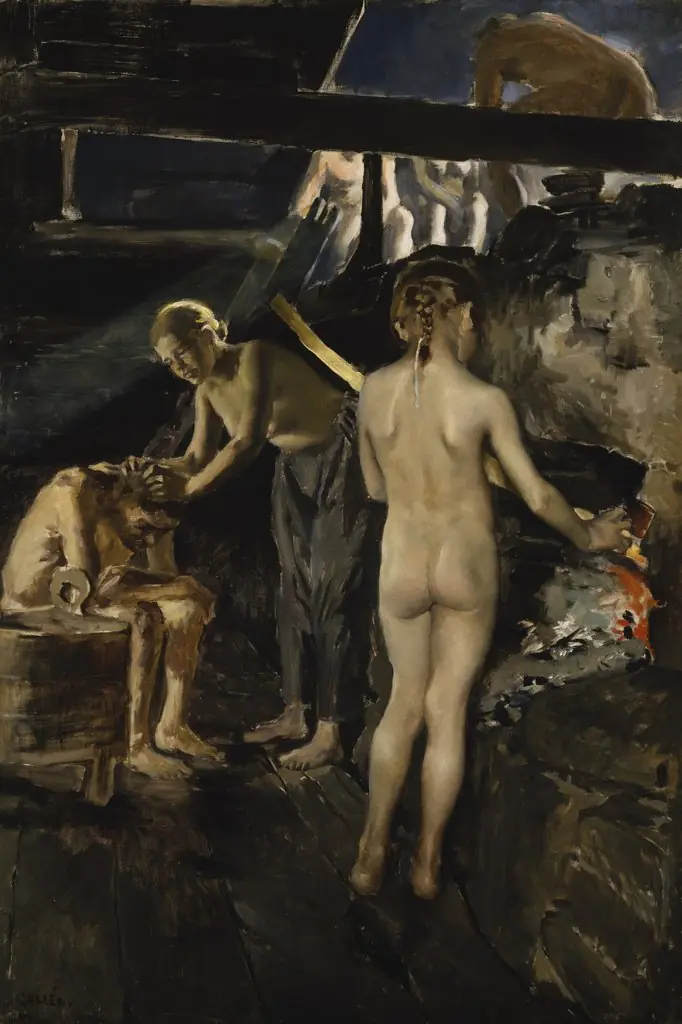 In the Sauna
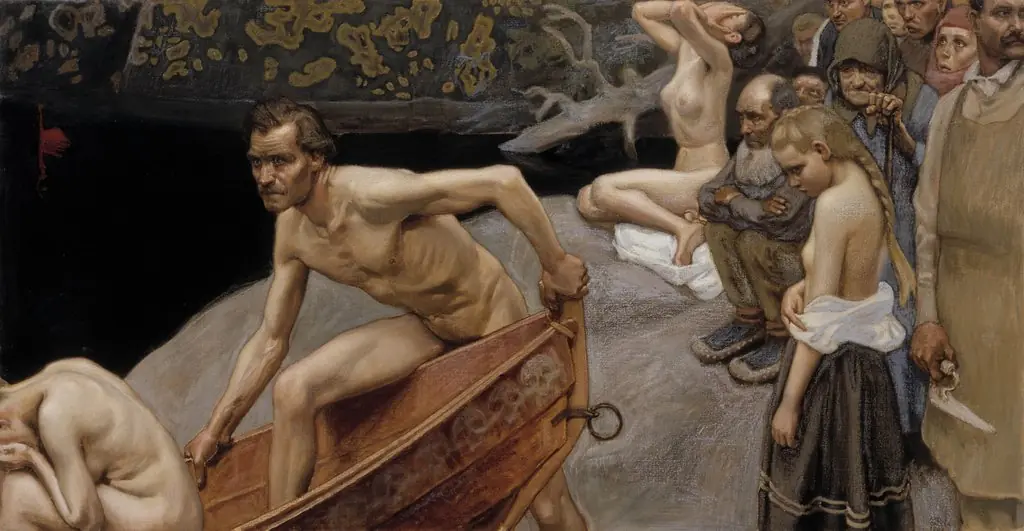 By the River of Tuonela, study for the Jusélius Mausoleum frescos
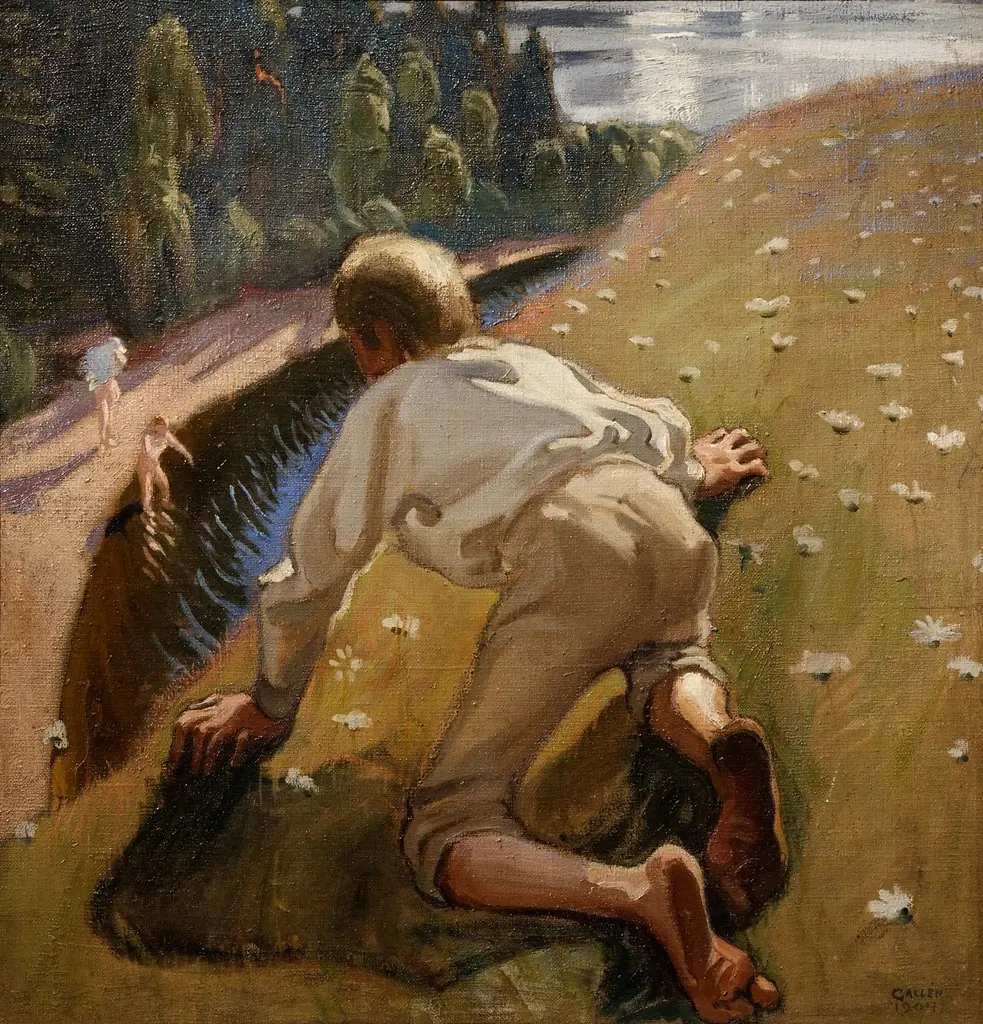 Young faun
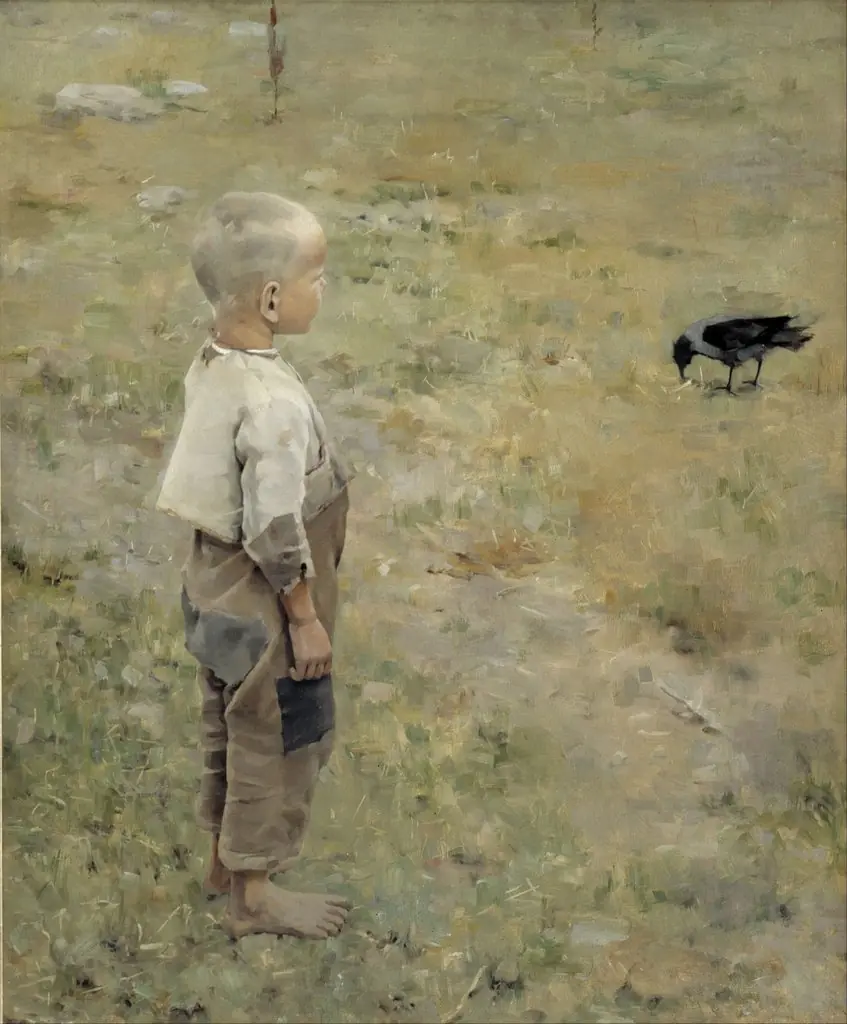 Boy with a Crow
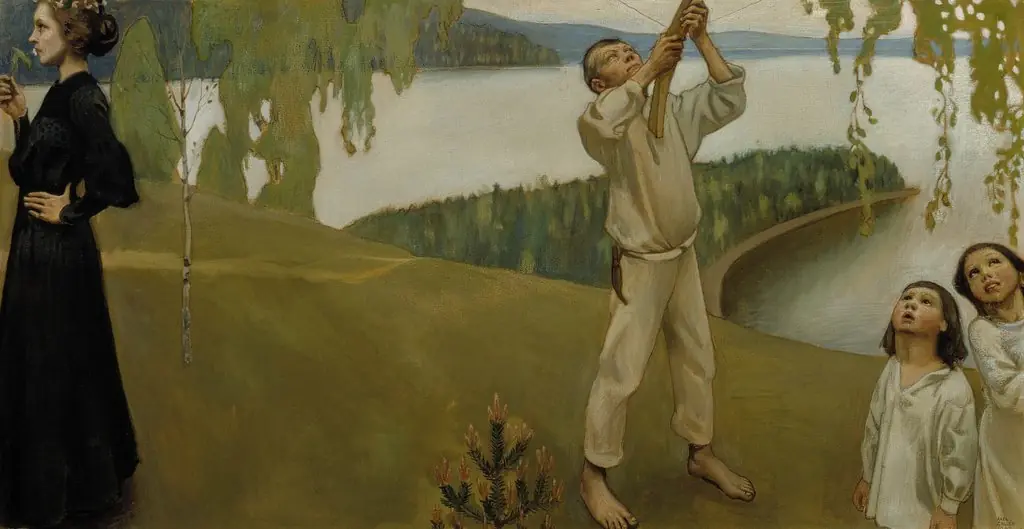 Spring, study for the Jusélius Mausoleum frescos
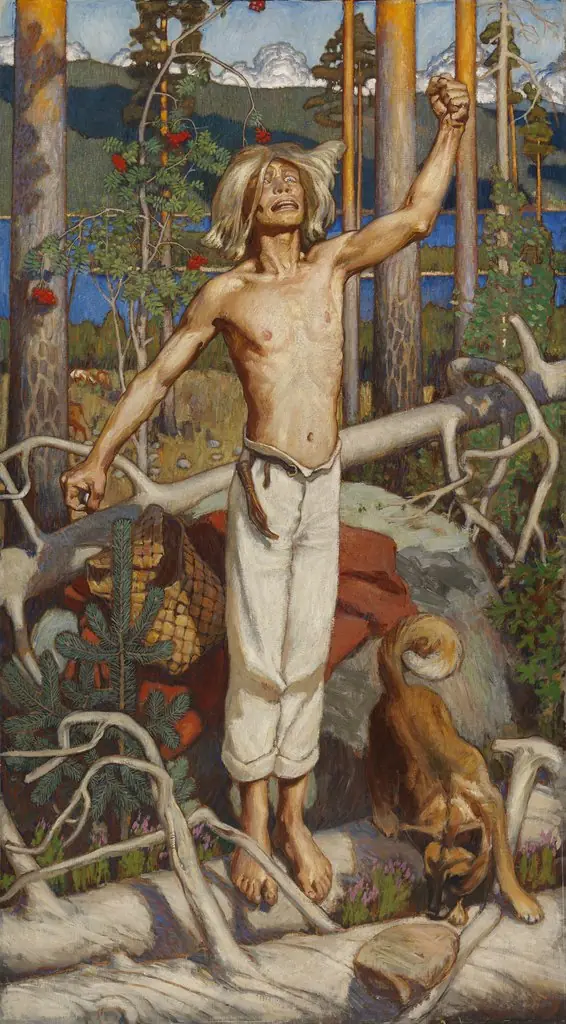 Kullervo Cursing
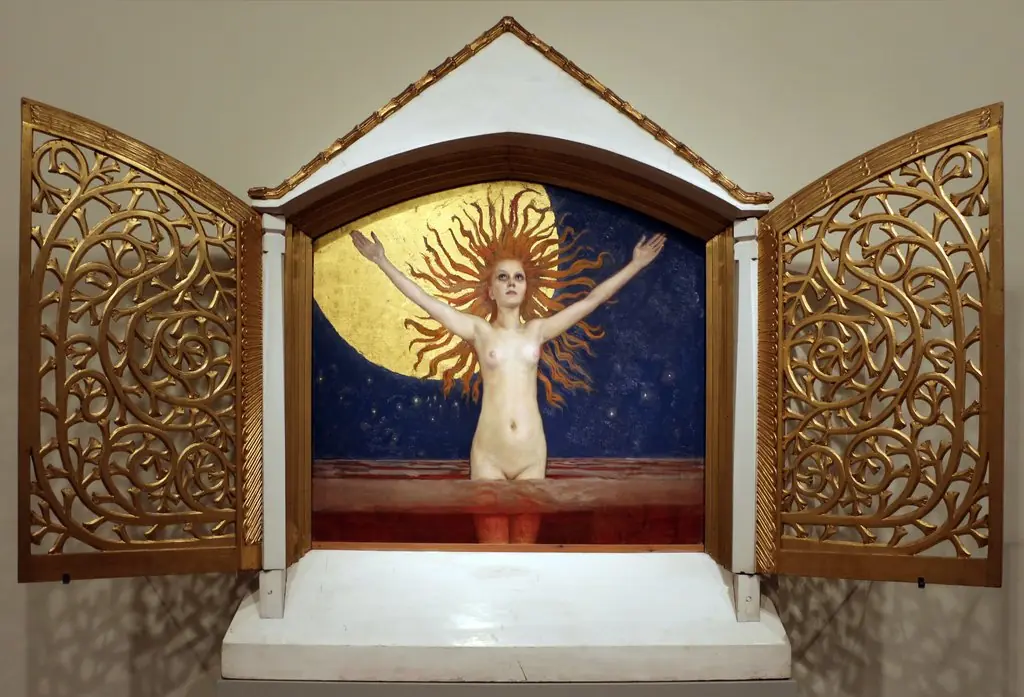 Ad Astra
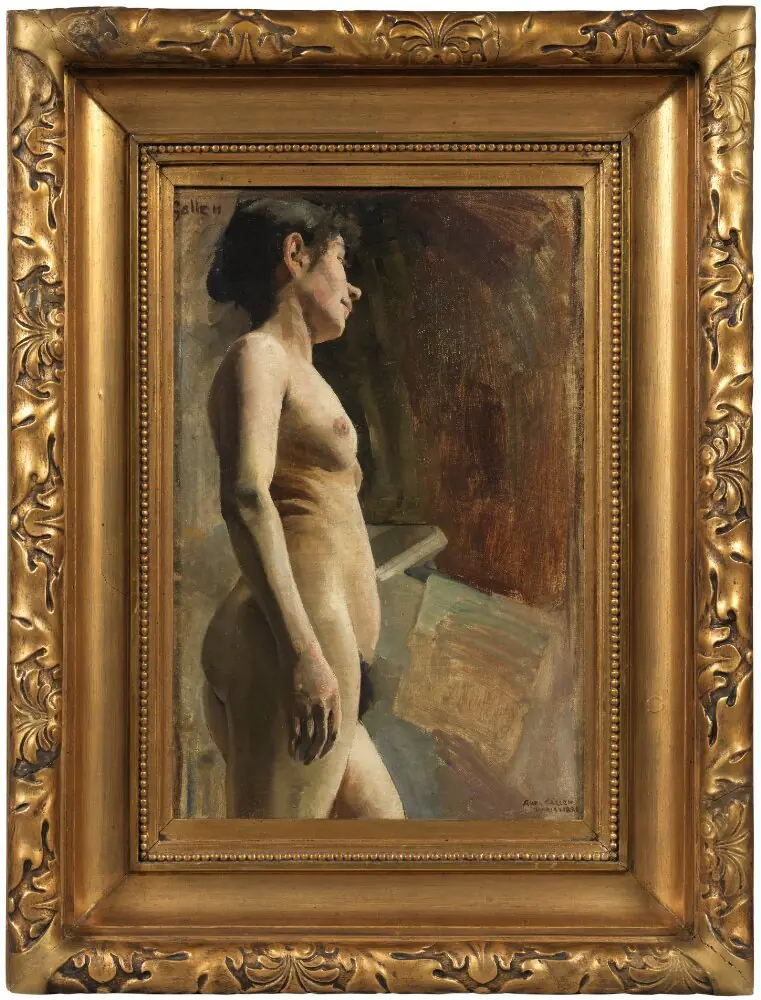 Nude Study
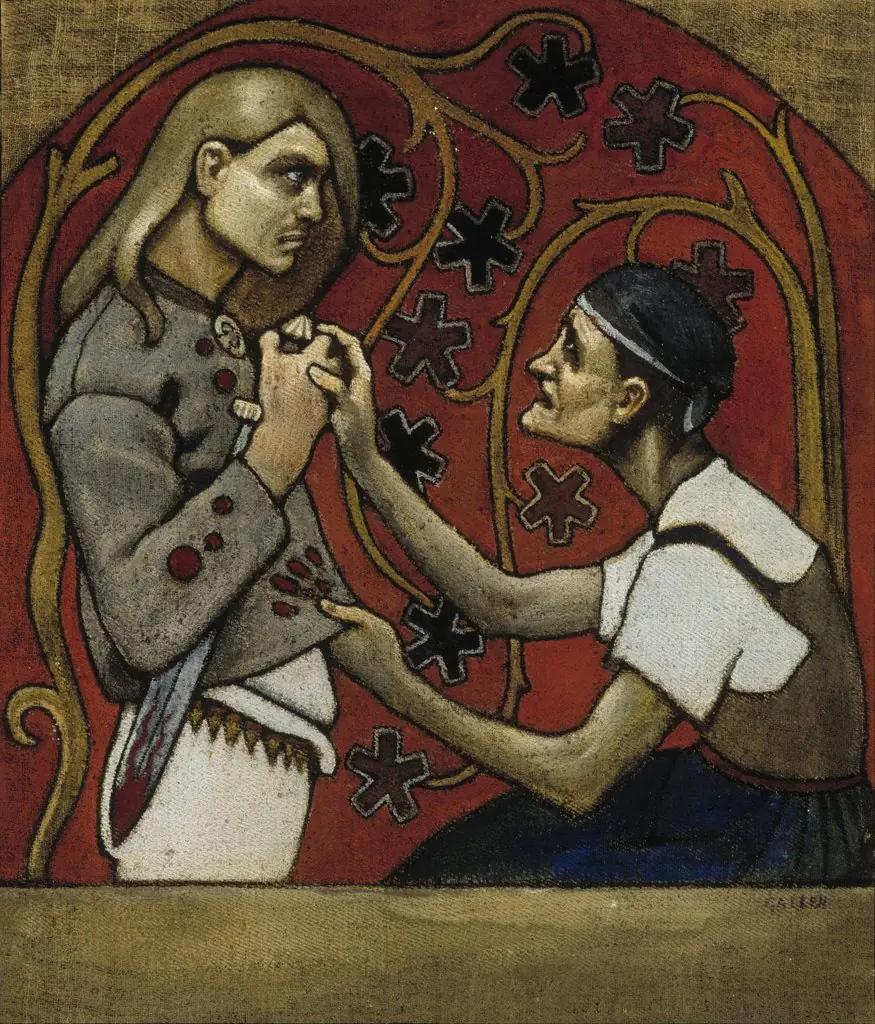 The Fratricide
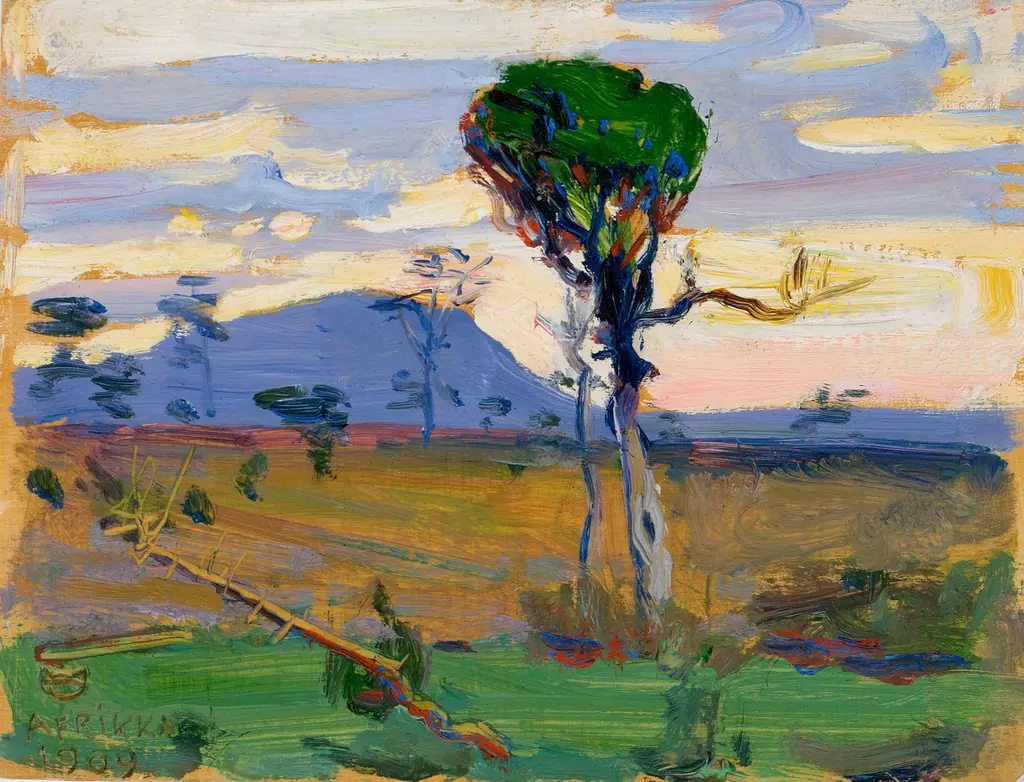 Mt. Donia Sabuk
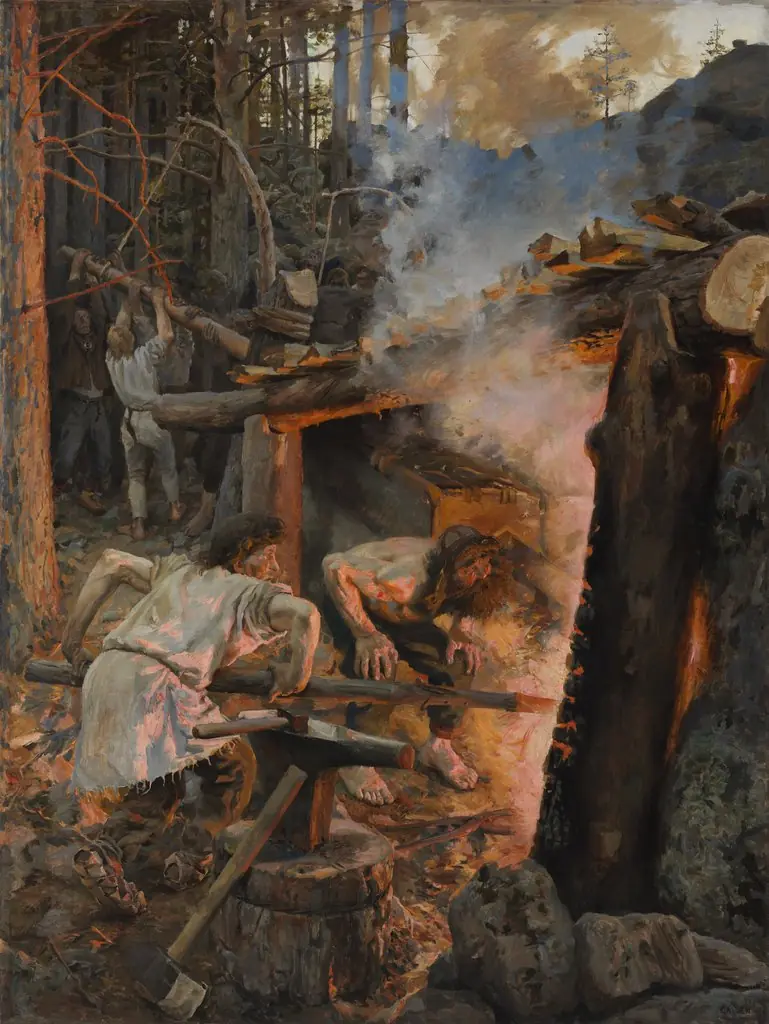 The Forging of the Sampo
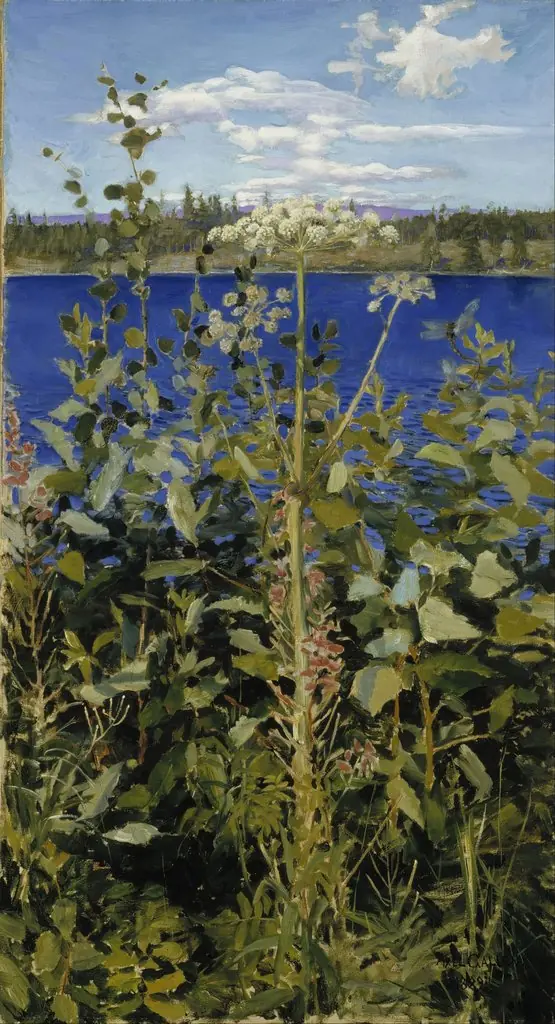 Wild Angelica
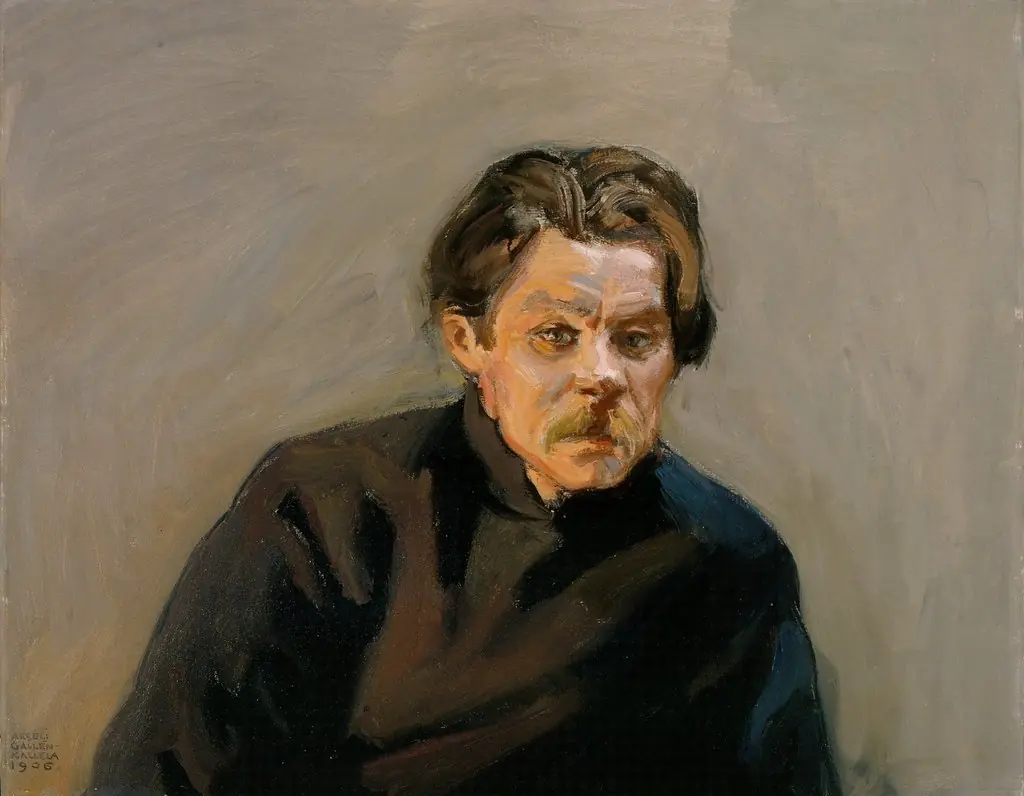 Maxim Gorky
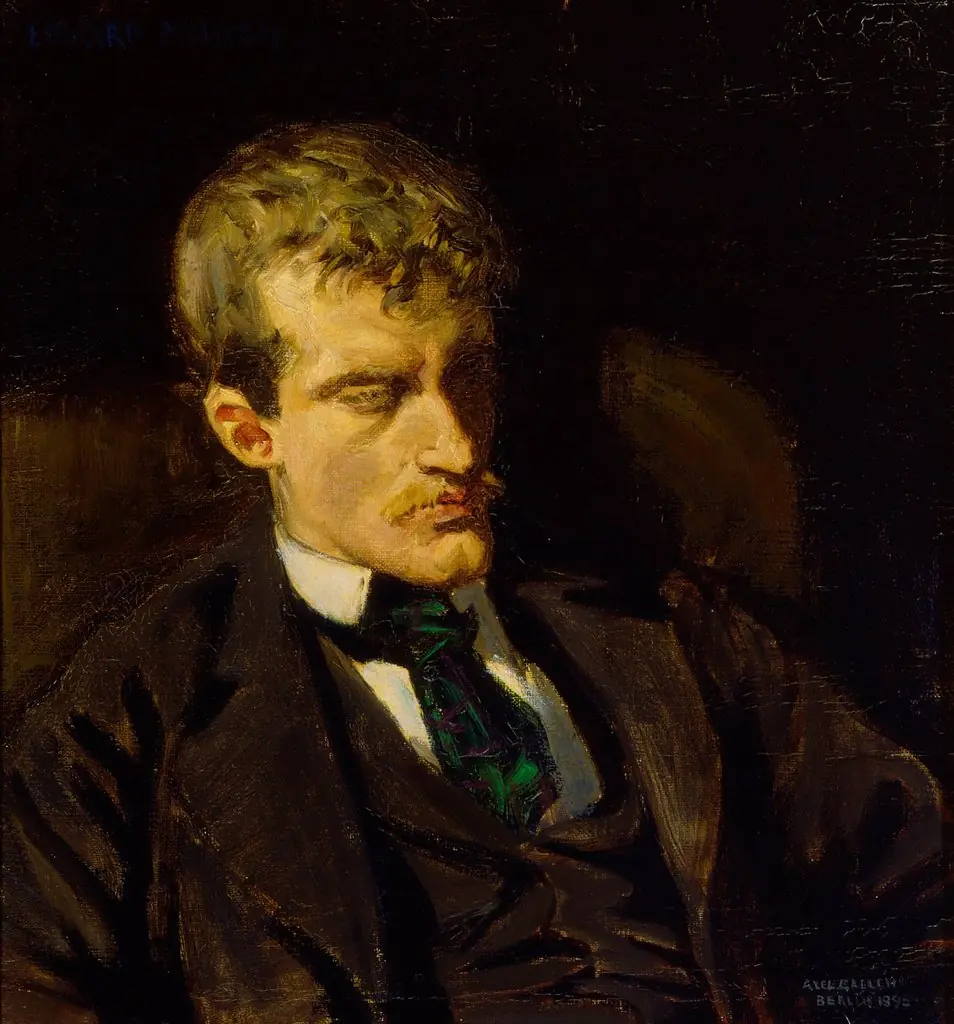 Portrait of Edvard Munch
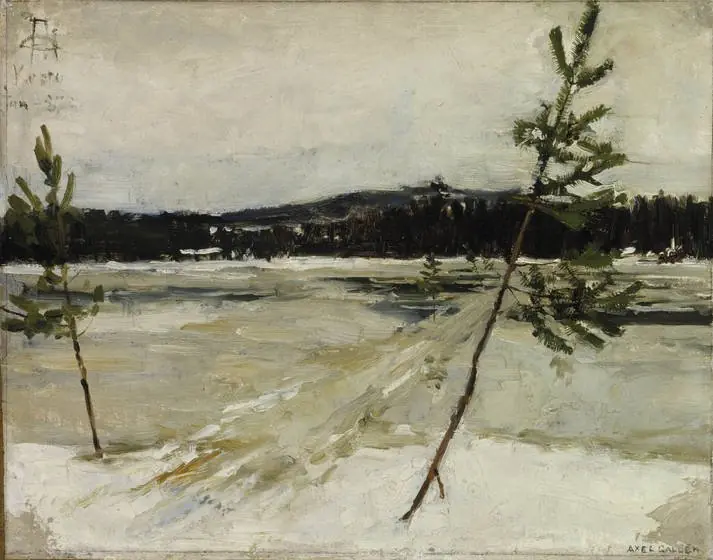 Path on the Ice
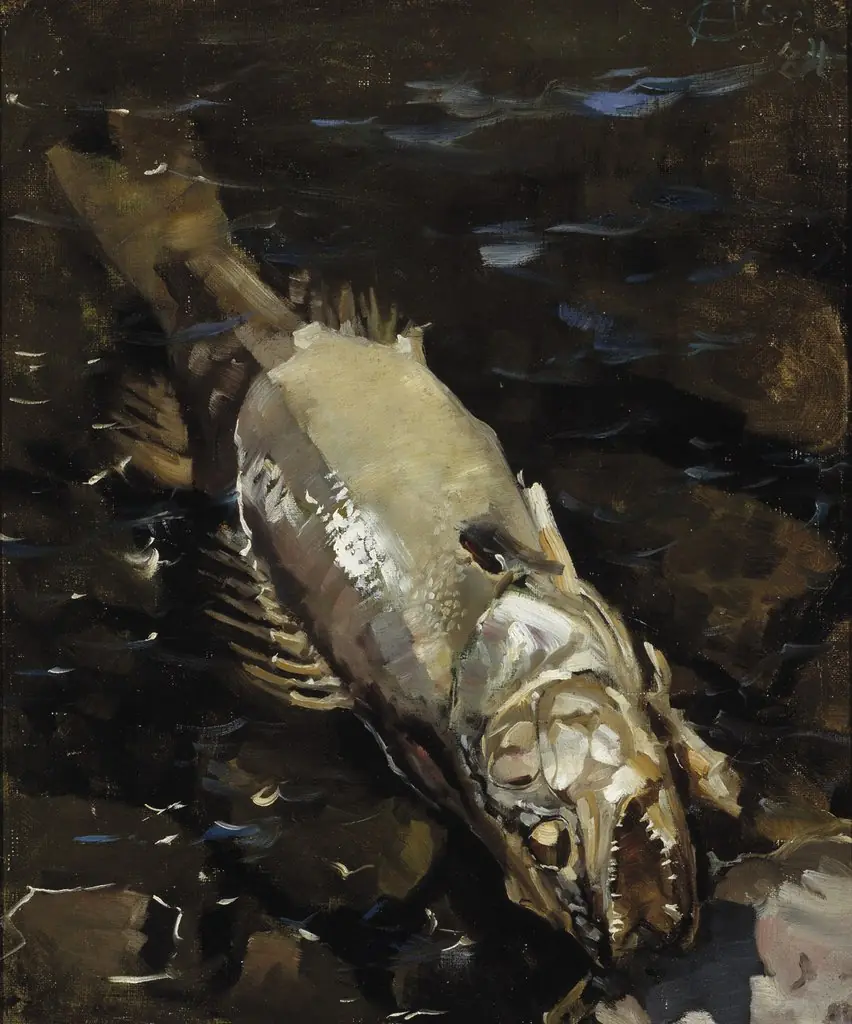 Decaying Sander
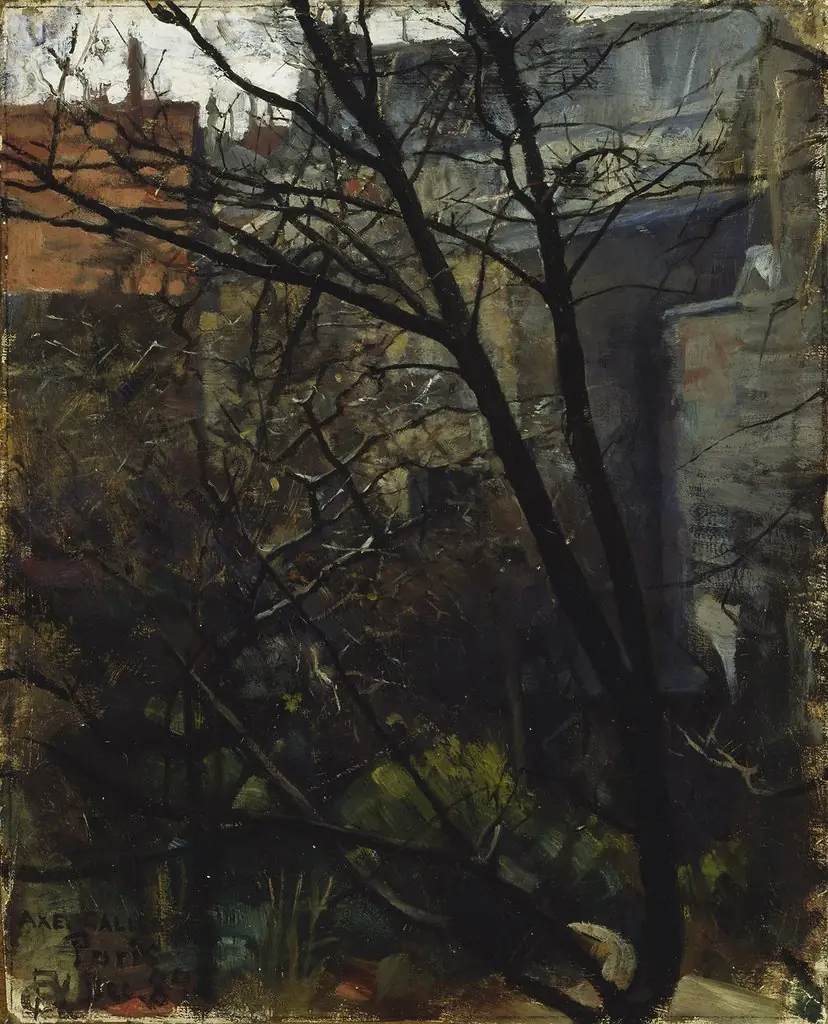 Parisian backyard
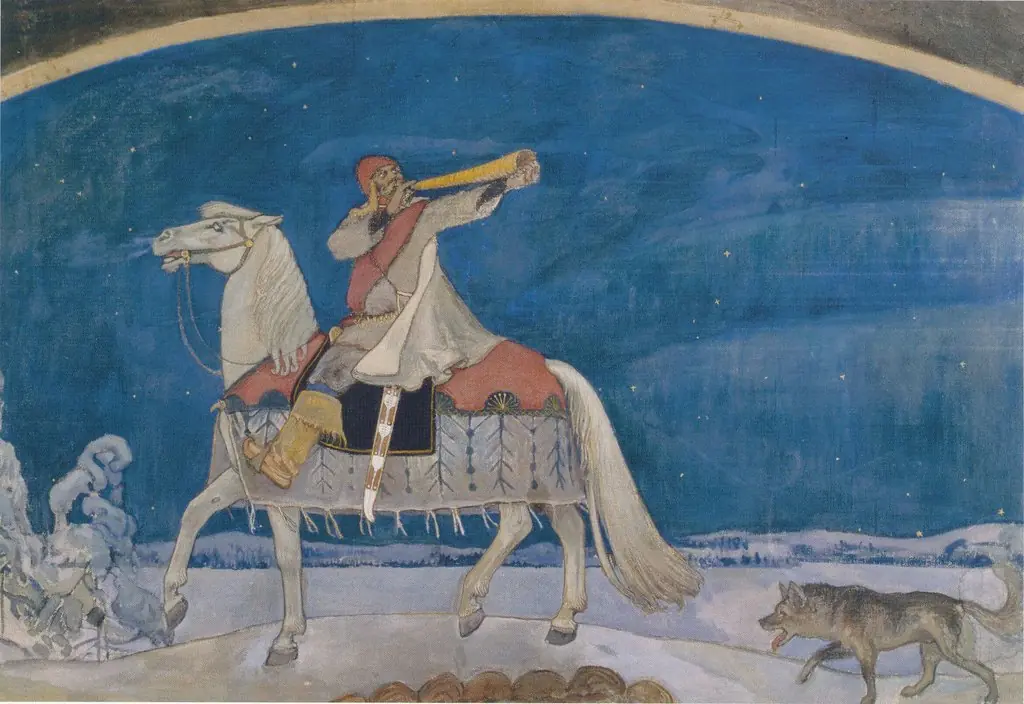 Kullervo Sets off for Battle
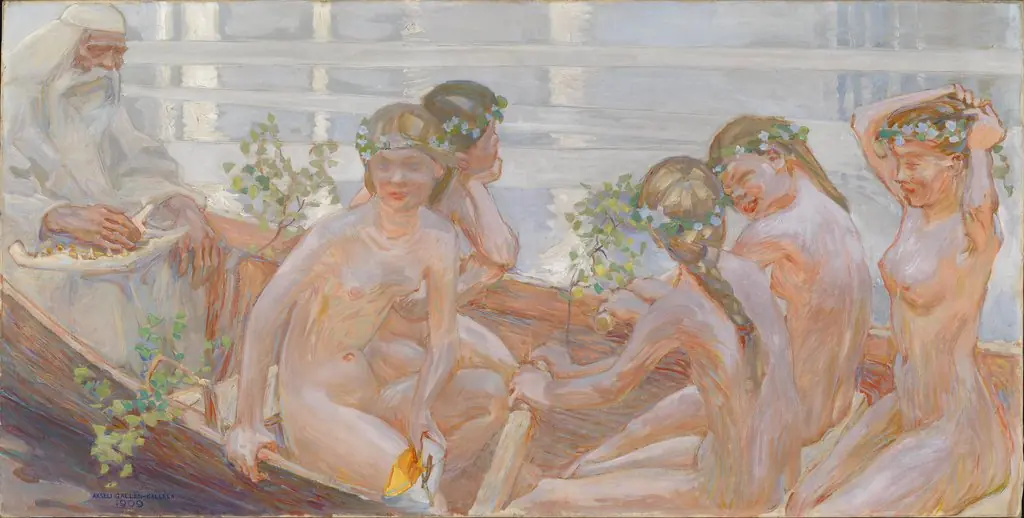 Väinämöinen's Voyage
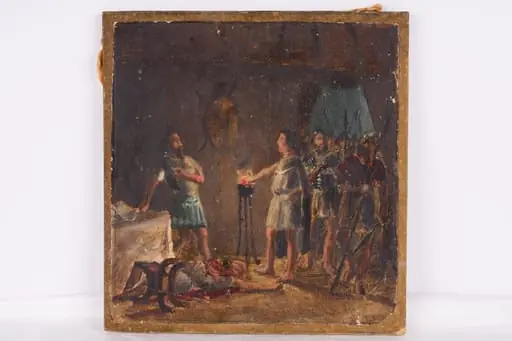 Mucius Scaevola
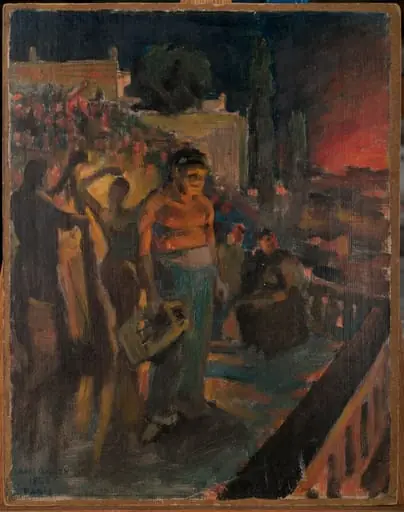 Nero Rooman palossa
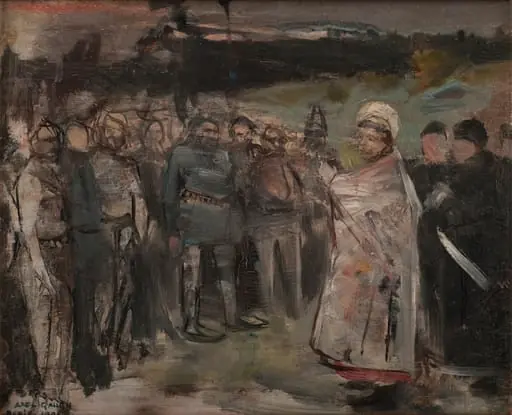 Piispa Henrik kastaa suomalaisia
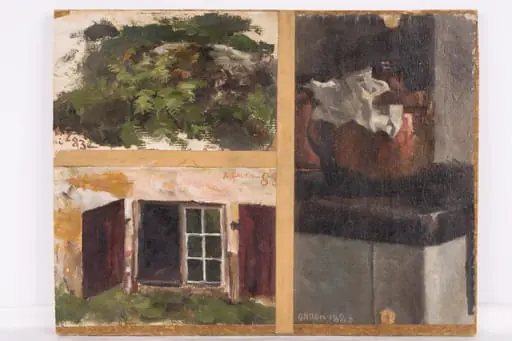 Pikkuharjoitelmia 3 kpl
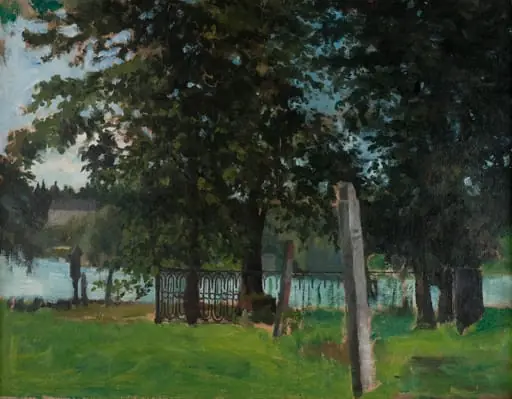 Gallénien perhehauta Tyrväällä
167 works in the catalog · 24 shown
Collections represented


Artists in a similar vein