Collection

Bute Collection at Mount Stuart
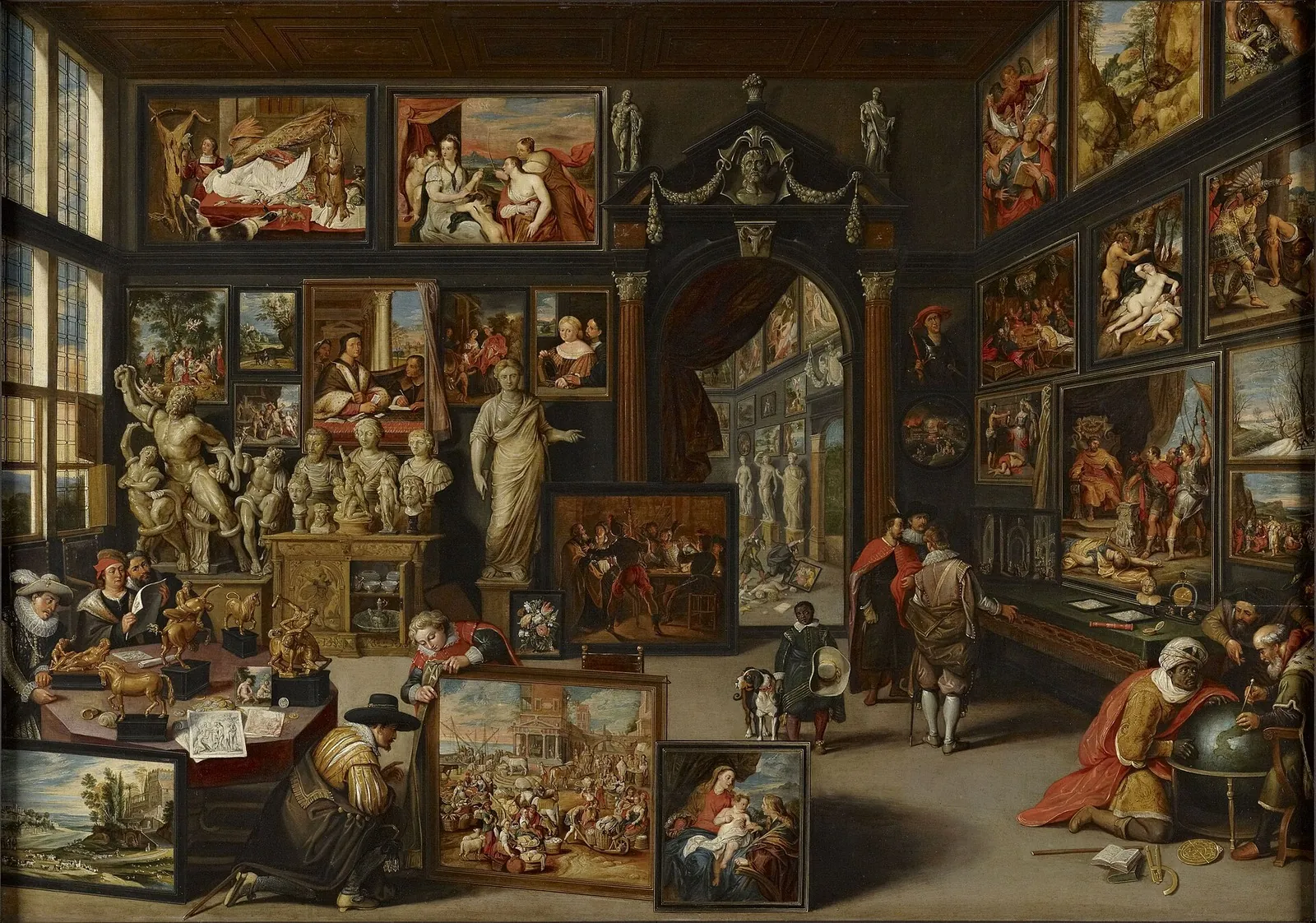
Bute Collection at Mount Stuart

Bute Collection at Mount Stuart is a collection in Argyll and Bute, United Kingdom. 1 work from its collection is in this catalog, including Aelbert Cuyp.

About Bute Collection at Mount Stuart

art collection at Mount Stuart House, Bute, Scotland, UK

Bute Collection at Mount Stuart by the numbers

Founded
1750

Works from Bute Collection at Mount Stuart

Plan your visit

Bute Collection at Mount Stuart

What's on

  • Step into the Story of Mount Stuart this Summer

    1 Apr 2026 – 18 Oct 2026

  • Trysorau Cymreig / Welsh Treasures: Object of the Month Displays

    1 Apr 2026 – 18 Oct 2026

  • Every Thursday 11am - 3.30pm Veronica Ryan: The Weather Inside II

    30 May 2026 – 18 Oct 2026

Artworks shown from Bute Collection at Mount Stuart are in the public domain; images via the open-access programs of their source collections. Spotted an error in this record? Tell us.

Overview

The Bute Collection at Mount Stuart is one of the largest and most significant privately owned collections of art in Britain, housed at Mount Stuart House on the western Scottish Isle of Bute in Argyll and Bute. Amassed over three centuries by the Stuart (later Crichton-Stuart) family, the earls and marquesses of Bute, the collection has survived two serious house fires and major auction sales to retain many of its earliest acquisitions. Today it remains in the possession of the current Marquess of Bute, while the building itself has been operated by a charitable trust and open to the public since 1995. The collection is internationally recognised for its scope, spanning from the 12th century to the present day, and encompasses fine and decorative art, archives, and historic libraries.

Founding & history

The formation of the Bute Collection began around 1750, coinciding with the construction of the original Georgian seat at Mount Stuart, which served as the catalyst for the family's art collecting. The most significant early figure was John Stuart, 3rd Earl of Bute (1713-1792), the first Scottish-born Prime Minister and confidante of King George III. Following his political fall and retirement in 1763, the 3rd Earl devoted himself to collecting at his Bedfordshire estate, Luton Hoo, where by the end of the century approximately five hundred paintings were assembled, including some of the finest seventeenth-century Dutch and Flemish works in the nation. The collection today retains more than two hundred paintings believed to be his personal acquisitions. His son, John Stuart, 1st Marquess of Bute (1744-1814), served himself served as an honorary cataloguer and custodian of the collection even before his father's death. Later, John Crichton-Stuart, 4th Marquess of Bute (1881-1947), expanded the collection with Dutch masterpieces, Tudor panel portraits, and English sporting art. The collection's history is documented through a vast archive of family papers, household inventories, valuations, and picture lists spanning nearly three centuries and more than a dozen family properties across England, Scotland, and Wales. In 2017, the 3rd Earl and his collection were the focus of a major exhibition, publication, and academic conference jointly hosted by Mount Stuart and the Hunterian Art Gallery, Glasgow, building upon Francis Russell's 2004 biography, John, 3rd Earl of Bute: Patron and Collector.

Collection scope

The Bute Collection contains more than six hundred paintings, ranging from Cinquecento Italian religious works to seventeenth-century Dutch genre subjects to Georgian Grand Manner portraits. Beyond paintings, the collection comprises over 6,000 examples of fine and decorative art, including furniture, sculpture, tapestry, textiles, silver, and metalwork. The archive is of international significance, containing half a million records within 3,500 boxes dating from 1158 to the present day, including family papers, estate correspondence, designs, surveys, plans, inventories, photographs, glass-plate negatives, and cine-film. The historic libraries hold over 27,000 volumes, from precious early printed books and eighteenth-century Gaelic pamphlets to hand-coloured atlases and unique embroidered bookbindings. The book collection traces back to the 2nd Earl of Bute, who brought books for his new library at the first Mount Stuart House from the Mansion House, Rothesay, in 1719. The collection also includes 25,000 books on topics including theology, botany, agriculture, and Scottish history and literature. In 2016, a Shakespeare First Folio, previously belonging to Isaac Reed, was discovered in the house's library.

Notable holdings

The painting collection is particularly strong in seventeenth-century Dutch and Flemish works acquired by the 3rd Earl of Bute, which were considered among the finest in the nation when housed at Luton Hoo. The collection retains more than two hundred paintings believed to be his personal acquisitions. The 4th Marquess of Bute added notable Tudor panel portraits and English sporting art in the first half of the twentieth century. Among the library's treasures is the Shakespeare First Folio discovered in 2016, which had belonged to Isaac Reed. The decorative arts include custom-designed furniture by Robert Weir Schultz from the early twentieth century. The collection as a whole reflects the varied interests of successive generations of the Crichton-Stuart family, from theological and botanical works to Scottish history and literature.

Building & site

Mount Stuart House stands on the east coast of the Isle of Bute, Scotland, and serves as the ancestral home of the Marquesses of Bute. The present building is a monumental redbrick neo-Gothic structure designed by Sir Robert Rowand Anderson and built between 1879 and 1900, replacing an earlier Georgian house largely destroyed by fire on 3 December 1877. The original house had been built in 1719 for James Stuart, 2nd Earl of Bute. The 3rd Marquess of Bute, John Patrick Crichton-Stuart (1847-1900), one of the richest men in the world at the time, was the driving force behind this architectural extravagance, having previously created Cardiff Castle and Castell Coch. He employed many of the same builders and craftsmen from South Wales, including William Burges, who built an oratory at the house, and H. W. Lonsdale. The interiors were created by leading Victorian designers. The house features the colonnaded Marble Hall at the centre of the main block and the Marble Chapel with its elaborate spired tower, the tallest part of the building. Two earlier wings in Georgian style with sash windows, painted white, survive from the previous house. Mount Stuart claims to have the world's first heated indoor swimming pool and was the first home in Scotland to be lit by electricity, with other modern conveniences including a passenger lift. The house is a Category A listed building, designated on 20 July 1971. During World War I, Mount Stuart served as a Royal Naval Hospital, admitting 2,120 patients and equipped with an X-ray room and operating theatre.

Visiting

Mount Stuart House is located on the Isle of Bute in Argyll and Bute, Scotland. The building is owned privately but operated by the Mount Stuart Trust, a charitable trust, and has been open to the public since 1995. The contents of the house, including the paintings, remain in the possession of the current marquess. Visitors can access the collection of fine and decorative art, which is carefully curated within the nineteenth-century interiors that provide the foundation for the character and atmosphere of the house. The trust administers and cares for the world-class historic collection. Further information about visiting is available through the official website at www.mountstuart.com.