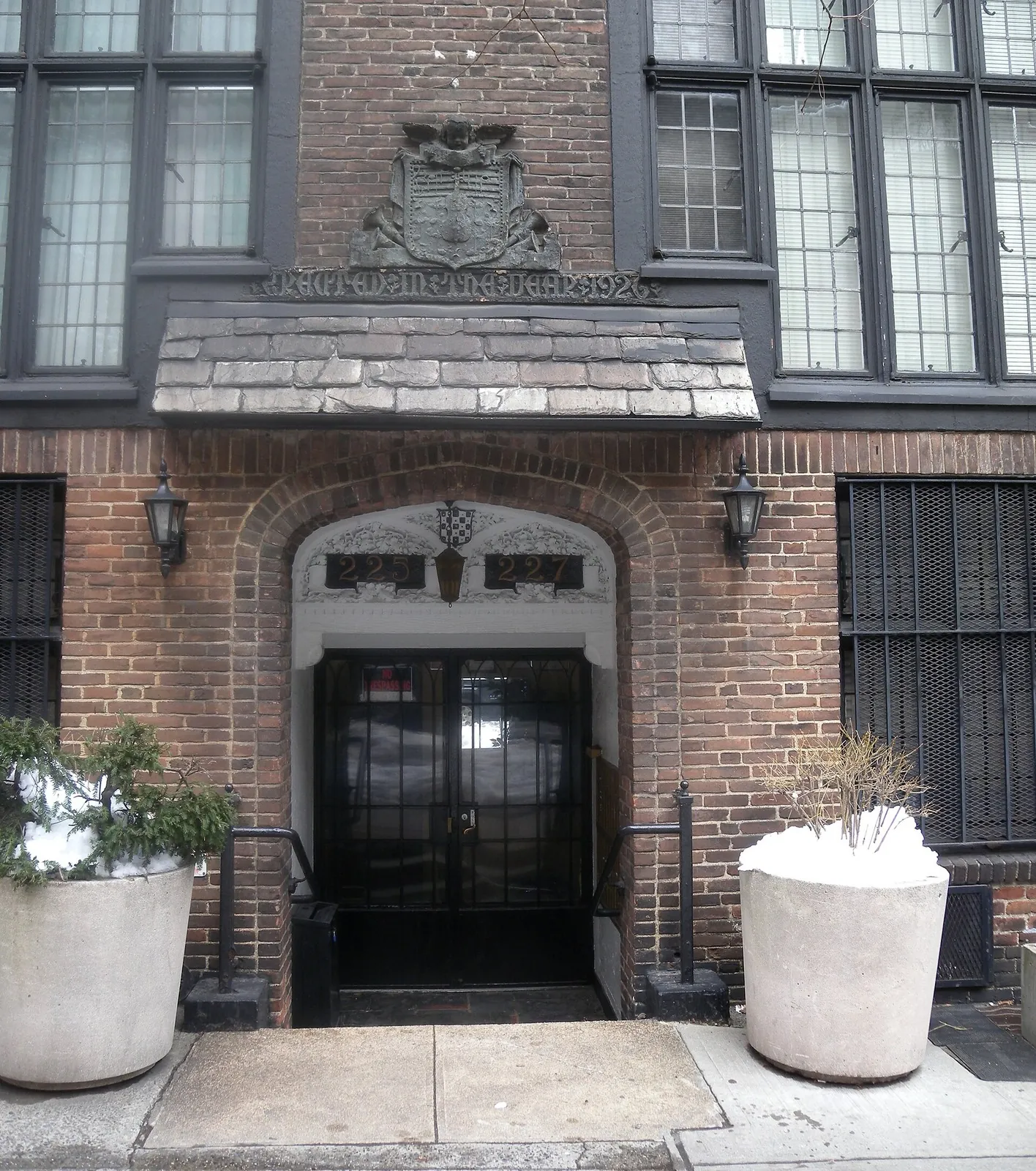
Art Museum
Museum of Modern Art, Madrid

Image: Wikimedia Commons.
Museum of Modern Art, Madrid is an art museum in Madrid, Spain.
About Museum of Modern Art, Madrid
The Museum of Modern Art (Museo de Arte Moderno or M.A.M.) was the Spanish national museum dedicated to 19th- and 20th-century painting. It was set up in 1894. It closed in 1971, when its 19th-century collections were merged into those of the Museo del Prado, but housed at the Casón del Buen Retiro, and its 20th-century collections formed into the Spanish Museum of Contemporary Art (Museo Español de Arte Contemporáneo or MEAC), the predecessor of the present-day Museo Nacional Centro de Arte Reina Sofía.
Museum of Modern Art, Madrid by the numbers
- Founded
- 1894
Overview
The Museum of Modern Art (Museo de Arte Moderno, commonly abbreviated M.A.M.) was Spain's national museum dedicated to 19th- and 20th-century painting, operating in Madrid from 1894 to 1971. Located in the Palacio de Biblioteca y Museos Nacionales at the corner of Paseo de Recoletos and Calle Villanueva, it served as the principal state institution for contemporary art acquisition and exhibition before its dissolution. Its closure in 1971 marked a significant reorganization of Spanish national collections: the 19th-century works were transferred to the Museo del Prado, while the 20th-century holdings became the foundation of the Spanish Museum of Contemporary Art (MEAC), direct predecessor of today's Museo Nacional Centro de Arte Reina Sofía. The museum's history thus represents a crucial chapter in the institutional development of modern and contemporary art in Spain.
Founding & history
The museum was created by royal decree on 4 August 1894, initially under the name Museo de Arte Contemporáneo, though this was later changed to Museo de Arte Moderno. Its official inauguration took place on 1 August 1898, presided over by Queen Regent Maria Christina of Habsburg-Lorraine, with full opening of all galleries completed the following year. The establishment fulfilled a long-standing professional demand, first articulated in a petition dated 15 December 1847 addressed to Queen Isabella II by prominent artists including Vicente López, Antonio María Esquivel, Jenaro Pérez Villaamil, Rafael Tegeo, Vicente Jimeno, and Alejandro Ferrant. This petition, titled "Exposición que elevan a S. M. varios artistas para la fundación de un Museo Histórico Nacional de Autores Contemporáneos," sought a Spanish equivalent to Paris's Musée du Luxembourg dedicated to living artists. Prior to the M.A.M.'s creation, this role had been partially filled by the Museo del Prado, whose early catalogues by Luis Eusebi included a section for "Artistas vivos o recientemente fallecidos," and by the Museo de la Trinidad, which maintained a "Galería de cuadros contemporáneos" until its dissolution in 1872. During the Spanish Civil War, fifty-four works from the museum were evacuated alongside pieces from the Prado, El Escorial, and private collections; these travelled first to Valencia, then Catalonia, and finally to Geneva. A decisive reorganization came with the decree of 9 October 1951, splitting the museum into the Museo Nacional de Arte del Siglo XIX and the Museo Nacional de Arte Contemporáneo, both remaining in the same building. The collections were briefly reunified in 1968 as the Museo Español de Arte Contemporáneo, but the definitive closure followed the ministerial order of 5 February 1971, which transferred 19th-century works to the Prado and established the MEAC for 20th-century holdings.
Collection scope
The museum's chronological boundaries were formally established by a royal decree of 25 October 1895, which set Francisco de Goya as the limit, considered the "last representative of ancient Spanish painting." The collection was intended to follow a criterion of "universal character," connecting Spanish art with that of "cultivated nations" and beginning from the period when aesthetic theories practiced by David or Canova were introduced to Spain in the early 19th century. Initially focused on 19th-century painting and the promotion of living artists, the museum's character shifted over decades as 20th-century acquisitions grew increasingly prominent. The older 19th-century works came to be perceived as an impediment to the museum's desired image of modernity, contributing to the 1951 split. The Prado, meanwhile, retained significant 19th-century works it considered essential to Spanish artistic heritage, including Mariano Fortuny's Los hijos del pintor en el salón japonés, Federico de Madrazo's La Condesa de Vilches, and the Ramón de Errazu bequest, as well as foreign works by Ernest Meissonier and Anders Zorn. A later royal decree in 1995 established 1881, Picasso's birth year, as the dividing line between Prado and Reina Sofía collections, resulting in some works initially transferred to the Prado being reassigned to the Museo Nacional Centro de Arte Reina Sofía.
Notable holdings
Specific works in the M.A.M. collection included Eduardo Rosales's La Condesa de Santovenia, which belonged to the Duke of la Torre and was deposited at the museum before being evacuated during the Civil War. The museum's holdings comprised 3,101 19th-century works at the time of their 1971 transfer to the Prado. While the Prado retained major 19th-century paintings that never entered the M.A.M., the modern museum's true growth came through its 20th-century acquisitions, which formed the core of what became the MEAC and subsequently the Reina Sofía collection. The 1995 redistribution based on Picasso's birth year clarified the attribution of certain works that had initially gone to the Prado in 1971.
Building & site
The museum occupied the Palacio de Biblioteca y Museos Nacionales in Madrid, specifically the southwest corner of the building bounded by Paseo de Recoletos and Calle Villanueva. This same building also housed the Biblioteca Nacional and the Museo Arqueológico Nacional. Following the 1951 division, the Museo de Arte Contemporáneo occupied the lower floors while the Museo del Siglo XIX was situated upstairs. After the museum's definitive closure in 1971, its installations were transferred to the Biblioteca Nacional. The 19th-century collections moved to the Prado's Casón del Buen Retiro annex, where they were exhibited from 24 June 1971 until 1997; since 2009, a selection has been displayed in the Prado's Villanueva building.
Visiting
The Museum of Modern Art no longer exists as an operating institution. Its successor for 20th-century art is the Museo Nacional Centro de Arte Reina Sofía, while 19th-century works are now integrated into the Museo del Prado. The original building at the corner of Paseo de Recoletos and Calle Villanueva continues to serve cultural functions through the Biblioteca Nacional and Museo Arqueológico Nacional. The museum's legacy persists in these two major Madrid institutions, which together preserve and display the collections that the M.A.M. assembled over nearly eight decades.
Museums near Museum of Modern Art, Madrid
- Art Museum Museo del Prado Madrid, Spain
- Art Museum Thyssen-Bornemisza Museum Madrid, Spain
- Art Museum Museo de la Trinidad Madrid, Spain
- Cultural Institution Instituto Cervantes Madrid, Spain
- Birthplace of Cervantes (Alcalá de Henares) Alcalá de Henares, Spain
- Palace Royal Monastery of San Lorenzo de El Escorial San Lorenzo de El Escorial, Spain