Art Museum
Museum of the City of New York

Image: Wikimedia Commons.
Museum of the City of New York is an art museum in New York City, United States.
About Museum of the City of New York
The Museum of the City of New York (MCNY) is a history and art museum in Manhattan, New York City. It was founded by Henry Collins Brown in 1923 to preserve and present the history of New York City and its people. It is located at 1220–1227 Fifth Avenue between East 103rd to 104th Streets, across from Central Park on Manhattan's Upper East Side, at the northern end of the Museum Mile section of Fifth Avenue.
The red brick with marble trim museum was built in 1929–30 and was designed by Joseph H. Freedlander in the neo-Georgian style, with statues of Alexander Hamilton and DeWitt Clinton by sculptor Adolph Alexander Weinman facing Central Park from niches in the facade.
Museum of the City of New York by the numbers
- Founded
- 1923
Plan your visit
Museum of the City of New York
- Website
- www.mcny.org
- Get Tickets
- Book on Tiqets
We may earn a commission from ticket bookings, at no extra cost to you.
Moments held at Museum of the City of New York
Overview
The Museum of the City of New York (MCNY) is a history and art museum located at 1220-1227 Fifth Avenue in Manhattan, New York City. Founded by Henry Collins Brown in 1923, it was established to preserve and present the history of New York City and its people. Situated between East 103rd and 104th Streets, the museum occupies the northern end of the Museum Mile section of Fifth Avenue, directly across from Central Park on Manhattan's Upper East Side. As a private non-profit organization, MCNY receives government support as a member of New York City's Cultural Institutions Group, supplementing its income through endowments, admission fees, and contributions.
Founding & history
The museum was originally housed in Gracie Mansion, where space constraints quickly became apparent. An early success came with the 1926 exhibition "Old New York," presented at the American Fine Arts Building on West 57th Street, which demonstrated the need for a permanent headquarters. A design competition among five invited architects followed, with Joseph H. Freedlander's Colonial Revival scheme selected. The city donated the Fifth Avenue site, and construction funds were raised by public subscription. Though the Wall Street crash of 1929 forced scaling back of original plans, the building was dedicated on January 11, 1932. The structure was designated a New York City landmark on January 24, 1967, and in 1982 the museum received The Hundred Year Association of New York's Gold Medal Award for outstanding contributions to the city.
A proposed relocation to the historic Tweed Courthouse in Lower Manhattan NS announced in 2000 under Mayor Rudy Giuliani's administration, with El Museo del Barrio slated to take over the Fifth Avenue building. The incoming administration of Michael Bloomberg reversed this decision, instead housing the New York City Department of Education in the courthouse. This reversal prompted the resignation of then-director Robert R. McDonald, who was succeeded in 2002 by Susan Henshaw Jones, previously president of the National Building Museum in Washington, D.C. A proposed merger with the New-York Historical Society also failed to materialize, and the museum was passed over for space at the World Trade Center site.
Under Jones's leadership, the museum recommitted to its East Harlem-adjacent location through a major expansion. Groundbreaking occurred on August 2, 2006, with completion in February 2008 and a ribbon cutting later that year. The Polshek Partnership-designed pavilion added a 3,000-square-foot glass structure with two levels for artifact display, while the 1932 building was restored and augmented with a silver vault, research room, and artifact handling room. The first phase cost $28 million, part of an ultimately projected $85 million total renovation. In late 2011, MCNY temporarily assumed operation of the South Street Seaport Museum, which reopened in January 2012.
Collection scope
The museum holds more than 1.5 million items, with particular strength in objects from the 19th and early 20th centuries. Its holdings span paintings, drawings, prints, photographs, costumes, decorative objects, furniture, antique toys, ship models, rare books and manuscripts, marine and military collections, police and fire collections, and a theater collection documenting Broadway's golden age. The museum was the first in the United States to establish a curatorial department for toys.
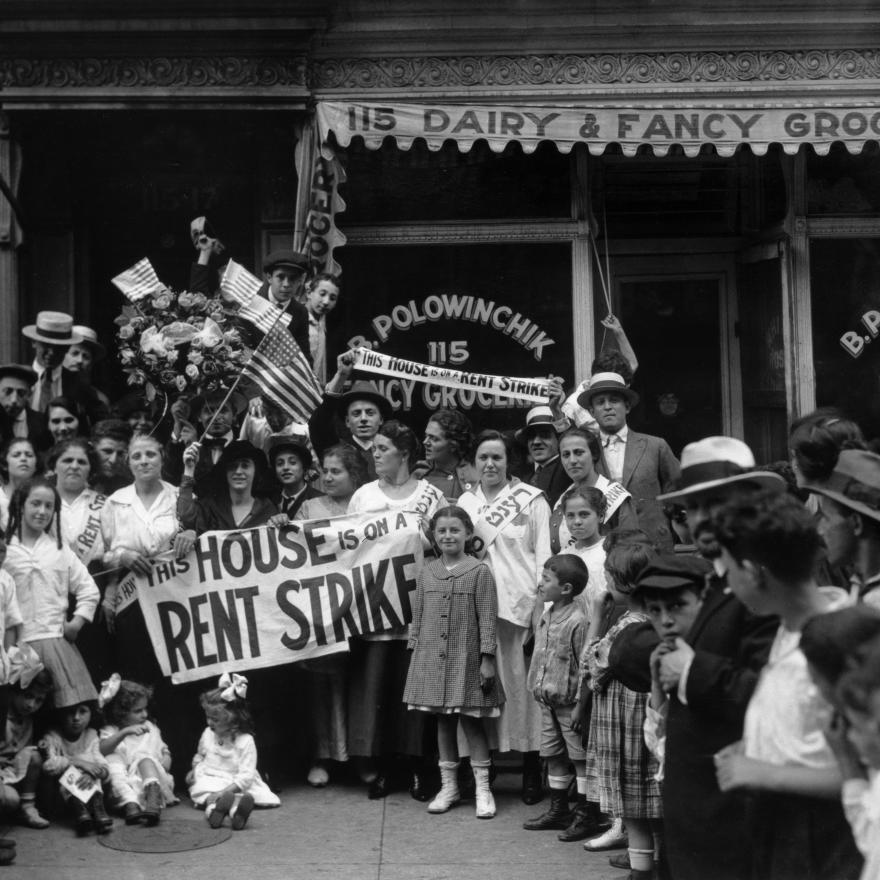
The comprehensive photographic collection ranks among the most important in the United States, including works by Percy Byron, Jacob Riis, and Berenice Abbott, along with Depression-era Federal Art Project photographs and still photography by film director Stanley Kubrick. The print collection includes over 3,000 works by Currier and Ives.
The costume collection encompasses early Dutch women's clothing from the 17th century through four centuries to the present, including baptismal garments, diapers, sportswear, and outerwear, making it a significant scholarly resource for fashion research. The New York Silver Collection, spanning 1678 to 1984, is housed on the museum's first floor. Transportation artifacts include ship figureheads, an omnibus, a Bellevue Hospital ambulance, a 19th-century police wagon, and a 1980 Checker Cab.
Notable holdings
Among the rarest objects is a chair belonging to Sarah Rapelje, daughter of Joris Jansen Rapelje of Nieuw Amsterdam, said to be the first child of European parentage born in what is now New York State. The chair was donated by her Brinckerhoff descendants.
The museum long housed recreations of two furnished rooms from John D. Rockefeller's residence, donated by John D. Rockefeller, Jr. In 2008, these were deaccessioned, with one room going to the Metropolitan Museum of Art and the other to the Virginia Museum of Fine Arts. A notable model of New Amsterdam based on the Castello Plan of 1660 is also in the collection.
Additional distinctive artifacts include seats from Yankee Stadium, hats belonging to Congress members and women's rights activist Bella Abzug, a Vera Maxwell-designed war workers jumpsuit, and a barbershop chair. The collection also encompasses artifacts from the 1950s and 1960s Greenwich Village folk music revival, documented in a 2015 exhibition and accompanying publication.
From October 2004 through July 2009, the permanent exhibition "Perform" was the only permanent exhibition in New York City focused on theater in New York, featuring objects ranging from Bill "Bojangles" Robinson's tap shoes to advertising materials from Avenue Q. The exhibition "In the Dugout with Jackie Robinson: An Intimate Portrait of a Baseball Legend" ran until September 15, 2019, commemorating the centennial of Robinson's birth with memorabilia and rare footage.
Building & site
The museum building was constructed in 1929-30 to designs by Joseph H. Freedlander in the neo-Georgian style. Its red brick facade with marble trim features statues of Alexander Hamilton and DeWitt Clinton by sculptor Adolph Alexander Weinman, set in niches facing Central Park. The 1967 landmark designation recognized its architectural significance. The 2006-2008 expansion by the Polshek Partnership added contemporary gallery space while restoring the original structure, integrating modern exhibition needs with the historic Georgian Revival fabric.
Visiting
The Museum of the City of New York is located at 1220-1227 Fifth Avenue between East 103rd and 104th Streets, across from Central Park on Manhattan's Upper East Side. As a private non-profit organization, it operates with government support through membership in New York City's Cultural Institutions Group, with additional funding from endowments, admission fees, and contributions. Public support also comes from the New York State Council on the Arts, the National Endowment for the Humanities, and the National Endowment for the Arts. The city of New York owns the museum building and supports operations through operating funds and rent arrangements. The museum maintains a website at http://www.mcny.org/.
Museums near Museum of the City of New York
- Cooper Hewitt, Smithsonian Design Museum Manhattan, United States
- Art Museum Solomon R. Guggenheim Museum Manhattan, United States
- Art Museum Neue Galerie Manhattan, United States
- Art Museum Metropolitan Museum of Art Manhattan, United States
- Art Museum The Frick Collection Manhattan, United States
- Art Museum Museum of Modern Art Manhattan, United States


What's on
Exhibitions
We may earn a commission from ticket bookings, at no extra cost to you.