Artist
Henri Gervex

France
Henri Gervex is a France Impressionism artist. 4 works are cataloged here, principally at Royal Museums of Fine Arts of Belgium.
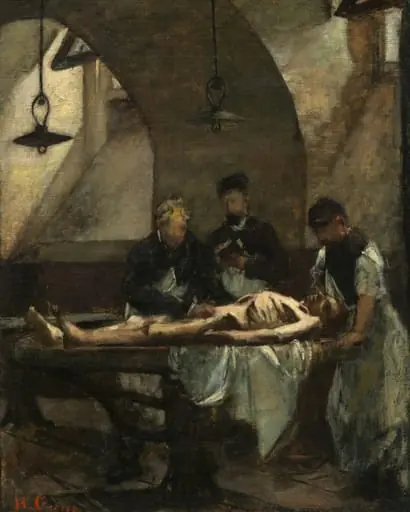
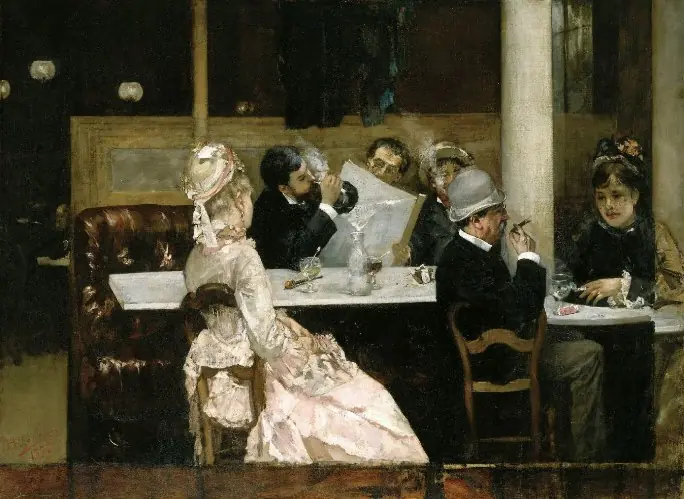
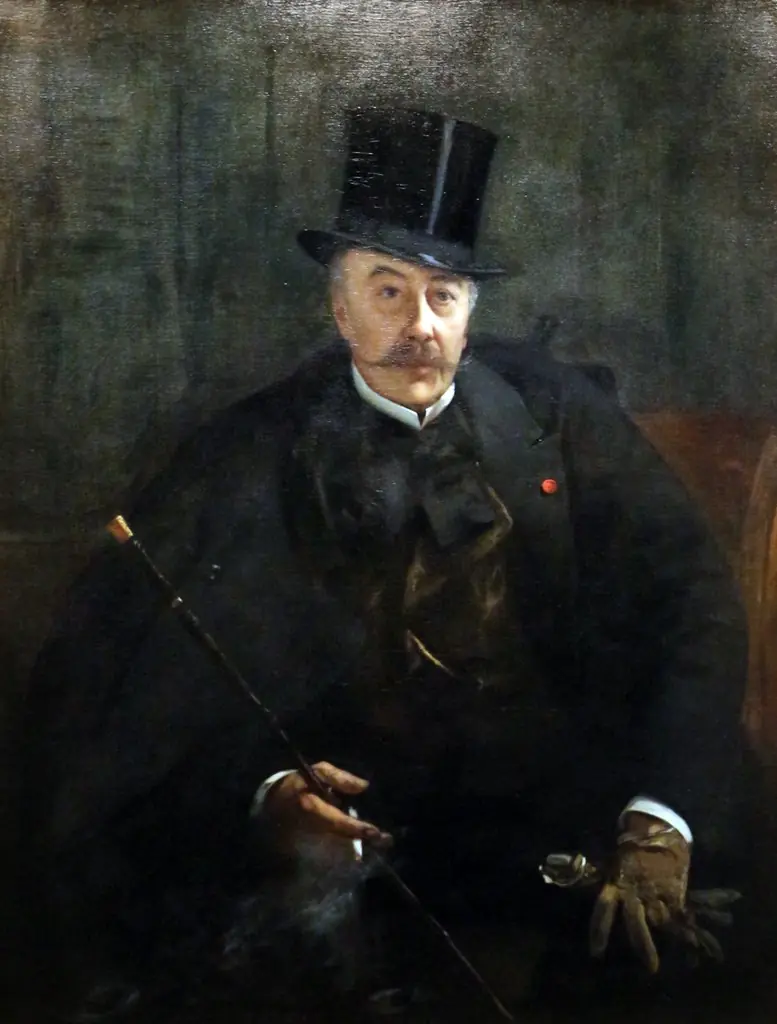
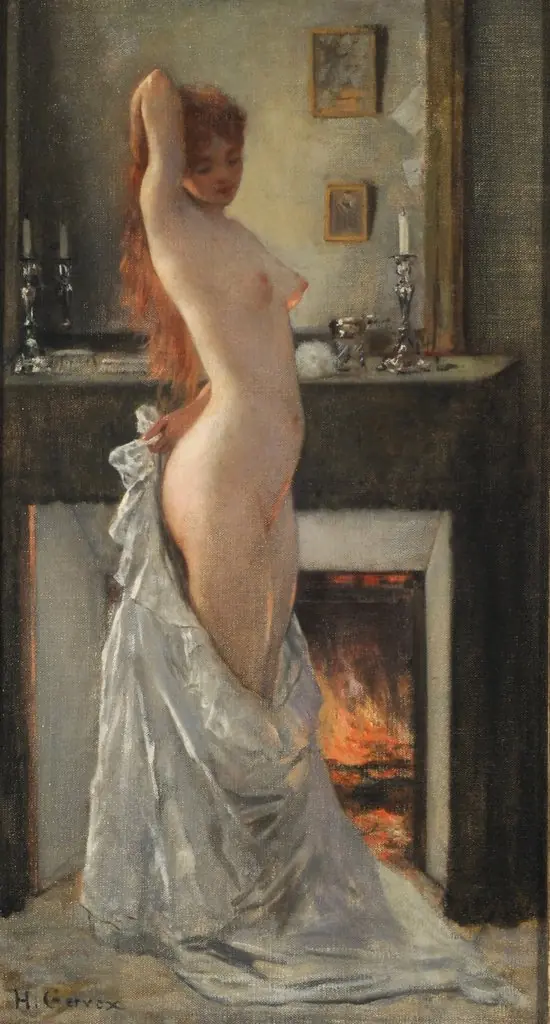
Henri Gervex (10 December 1852 – 7 June 1929) was a French painter who studied painting under Alexandre Cabanel, Pierre-Nicolas Brisset, and Eugène Fromentin.
Overview
Henri Gervex (10 December 1852-7 June 1929) was a French painter of the late nineteenth and early twentieth centuries whose career bridged academic tradition and modern life. Trained in the studios of Alexandre Cabanel and Eugène Fromentin, he achieved prominence through a versatile practice that encompassed mythological subjects, modern-life scenes, official commissions, and portraiture. His 1878 painting Rolla, rejected from the Paris Salon for immorality, became a sensational succès de scandale that established his reputation. Gervex subsequently built a career as a favored artist of the French state and international elites, receiving commissions from Czar Nicholas II and decorating public buildings in Paris. Elected to the Académie des Beaux-Arts in 1913, he represents a significant, if now understudied, figure in the French art establishment of the Belle Époque.
Biography & dates
Henri Alexandre Gervex was born in Paris on 10 December 1852, the son of Joséphine Peltier and Félix Nicolas Gervex, a piano maker. In 1867, at age fifteen, he entered the atelier of Pierre-Nicolas Brisset through a family connection. Three years later he served in the 152nd Battalion of the National Guard. In 1871 he was admitted to the École des Beaux-Arts in Paris, where he studied for five years in the studio of Alexandre Cabanel alongside Jean-Louis Forain, Fernand Cormon, and Eugène Damas. He also received instruction from the Orientalist painter Eugène Fromentin.
Gervex made his Salon debut in 1873 with a sleeping bather (Baigneuse endormie), now lost. The following year he received a second-class medal for Satyr Sporting with a Bacchante, which was purchased by the state for the Musée du Luxembourg. In 1876 he met Édouard Manet and began associating with Impressionist painters, an encounter that lightened his palette.
The scandal of Rolla in 1878, rejected from the Salon for its depiction of a naked prostitute in a contemporary setting, proved a turning point. The painting was exhibited privately at the gallery of dealer Bague at 41 rue de la Chaussée-d'Antin, where it drew enormous crowds. Gervex was later depicted as the model for the opportunistic painter Fagerolles in Émile Zola's 1886 novel L'Œuvre.
In the 1880s Gervex traveled extensively: to Spain, to England three times (the first in 1882 with Auguste Rodin), and to Italy with Guy de Maupassant and Georges Legrand. He was active in the Cercle des Mirlitons presided over by Ernest Meissonier, exhibited at the newly founded Cercle artistique de la Seine, and founded a painting academy with Ferdinand Humbert. In 1882 he began work on decorations for the mairie of the 19th arrondissement of Paris.
On 9 February 1893 he married Henriette Marie Marguerite Fauche, daughter of Marius Fauche; their daughter Colette was born 18 December 1894. Gervex made his first trip to Russia in 1896, where he was named Commander of the Order of Saint Anne. He received further commissions from Czar Nicholas II, including paintings of the coronation and royal portraits. He was promoted to Officer of the Legion of Honour in 1889 and Commander on 15 October 1911. In 1913 he was elected to the Académie des Beaux-Arts and became president of the Société des pastellistes. During the First World War, too old for military service, he produced small works on wood and canvas depicting wartime scenes that were reproduced in illustrated periodicals.
Gervex built a house and studio at 68 rue de Chavreau in Paris in the 1890s to accommodate his large-scale commissions. He died in Paris on 7 June 1929. His studio was later purchased by the dancer Isadora Duncan.
Style & movement
Gervex's artistic trajectory moved from academic mythological painting toward modern realism and naturalism, with a late phase of official commemorative art. His early nudes, such as Satyr Sporting with a Bacchante, showed the influence of Cabanel's polished, idealized style. The encounter with Manet and the Impressionists in 1876 prompted a visible lightening of his palette and greater attention to contemporary subjects.
His modern-life paintings of the late 1870s and 1880s, including Rolla and his hospital scenes, aligned him with a naturalistic tendency in French painting that emphasized unidealized, contemporary subjects. Dr Péan at the Salpétrière and related clinic paintings were explicitly conceived in dialogue with Rembrandt's Anatomy Lesson, translating the Dutch master's format into modern medical settings with surgeons in white coats gathered around patients. His decorative work for municipal buildings and the large-scale panorama The History of the Century (1889), painted with Alfred Stevens, demonstrated his capacity for monumental, crowd-filled compositions. His pastel portraits and society paintings maintained the elegant finish of academic technique while depicting contemporary Parisian life.
Major works
Rolla (1878, 173 × 220 cm, now Musée des Beaux-Arts, Bordeaux) remains Gervex's most famous work, a succès de scandale rejected from the Salon for immorality that was subsequently exhibited with enormous commercial success. Satyr Sporting with a Bacchante (1874, Musée du château des ducs de Bourbon, Montluçon) earned him a Salon medal and state purchase. The Musée du Luxembourg holds his painting of the same title, though the relationship between these versions requires clarification.
His hospital and medical scenes include Dr Péan at the Salpétrière and Docteur Péan à l'hôpital St.-Louis, the latter initiating a series of clinic paintings. The Civil Marriage (1881) features Valtesse de La Bigne, the courtesan who also inspired Zola's Nana. His official commissions included The Distribution of Awards (1889) at the Palais de l'Industrie, The Coronation of Nicolas II, and The Mayors' Banquet (1900). For the Hôtel de Ville, Paris, he painted the ceiling of the Salle des Fêtes and, with Emile-Henri Blanchon, decorative panels for the mairie of the 19th arrondissement. He also painted decorative panels for the Sorbonne and, in 1898, participated in the decoration of the salle Dorée of the restaurant Le Train Bleu at the Gare de Lyon with The Battle of Flowers at Nice. The panoramic painting The History of the Century (1889), executed with Alfred Stevens and numerous assistants, measured approximately 120 × 20 meters for the Paris Exposition Universelle.
Other significant works include The Birth of Venus, Communion at Trinity Church (1877), Return from the Ball, Diana and Endymion (1875), Job, At the Ambassadeurs, Yachting in the Archipelago, Diane and Acteon, Nana, and Maternity. During the First World War he produced Une ambulance à Poitiers and Le train des blessés, among other works reproduced in the press.
Influences & students
Gervex's principal teachers were Alexandre Cabanel, under whom he studied for five years at the École des Beaux-Arts; Pierre-Nicolas Brisset, in whose atelier he trained from age fifteen; and Eugène Fromentin, the Orientalist painter with whom he also apprenticed. His fellow students in Cabanel's studio included Jean-Louis Forain and Fernand Cormon. The influence of Édouard Manet and the Impressionists, whom he met in 1876, marked a significant shift in his approach to color and subject matter. Gervex's own teaching and circle included Jacques-Émile Blanche (1861-1942), Georges Dubosc (1854-1927), and Henry Gerbault (1863-1930) as pupils. He maintained close ties with Auguste Rodin, with whom he traveled to England, and with Guy de Maupassant. He founded a painting academy with Ferdinand Humbert, taking over the Atelier Cormon. His association with the Cercle des Mirlitons placed him within Ernest Meissonier's orbit, while his frequent stays at Dieppe with the parents of Jacques-Émile Blanche and at Deauville and Trouville connected him to broader artistic and literary circles, including Marcel Proust, who visited him repeatedly.
Legacy
Gervex's posthumous reputation has suffered from the critical eclipse of academic and official painting in the twentieth century. His work, emblematic of the French art establishment during the Third Republic, fell outside the narrative of modernismiste innovation that dominated art historical scholarship. The institutional recognition he received during his lifetime, however, was considerable: Chevalier of the Legion of Honour in 1882, Officer in 1889, Commander in 1911; election to the Académie des Beaux-Arts in 1913; membership in the Académie royale des Sciences, des Lettres et des Beaux-Arts de Belgique in 1926; and the French Croix de Guerre in 1918. He also received foreign honors including the Order of Leopold of Belgium (1883), the Order of Saint Olaf from the King of Sweden and Norway (1890), the Order of Saint Michael from Bavaria (1892), and the Order of Charles III of Spain.
His house and studio at 68 rue de Chavreau, built in the 1890s to accommodate large-scale commissions, was later acquired by Isadora Duncan. His works are held in French national collections including the Musée d'Orsay and the Musée du Luxembourg, as well as the Musée des Beaux-Arts in Bordeaux. The market for his paintings has been modest compared to his contemporaries who aligned with avant-garde movements, though Rolla retains historical significance as a key example of censorship and scandal in nineteenth-century French art. Recent scholarly attention has focused on his role as a mediator between academic tradition and modern-life subjects, and on his documentary value for the social and political culture of the Belle Époque.
Works by Henri Gervex
Collections represented


Artists in a similar vein