Artist
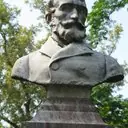
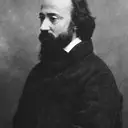
Adolphe Appian
France
Adolphe Appian is a France Barbizon school artist. 48 works are cataloged here, principally at National Gallery of Art.
Adolphe Appian (born as Jacques Barthelemy Adolphe Appian; 28 August 1819 – 29 April 1898) was a French landscape painter and etcher.
Overview
Adolphe Appian, born Jacques Barthélemy Adolphe Appian (23 August 1818/1819-29 April 1898), was a French landscape painter and etcher associated with the École lyonnaise and the Barbizon school. Working primarily in Lyon and the surrounding regions of southern France, he produced atmospheric riverscapes, marsh scenes, and coastal views in oil, charcoal, and etching. Though he began with the muted, monochromatic palette characteristic of early Barbizon influence, he shifted in 1867 to warmer, more luminous color. His work as an etcher influenced the American artist Stephen Parrish, and he earned institutional recognition including a gold medal at the Paris Salon of 1868 and appointment as Chevalier of the Legion of Honour in 1892.
Biography & dates
Appian was born in Lyon, where he also died on 29 April 1898. He entered the École des Beaux-Arts de Lyon in 1833 and studied there until 1836 under Jean-Michel Grobon and Augustin Alexandre Thierrat. At age fifteen he changed his name to Adolphe Appian. His early career involved work as a designer in Lyon's silk industry before he committed himself to landscape painting. He debuted at the Paris Salon in 1835 and exhibited at the Lyon Salon in 1847, then regularly at both venues from 1855 onward. The pivotal year 1852 brought friendships with Camille Corot and Charles-François Daubigny, after which he abandoned music to concentrate on painting. He participated in the Exposition universelle in London in 1862 and in Paris in 1889. In 1885 he received a gold medal of honor at the 27th Exposition des Amis des arts de la Somme in Amiens for his charcoal works. He was named Chevalier of the Legion of Honour in July 1892. Appian spent numerous summers at Artemare in the Bas-Bugey, painting sites of the Valromey, and made repeated stays at Fontainebleau and the village of Rossillon. He was the father of painter Jean Louis Appian (1862-1896).
Style & movement
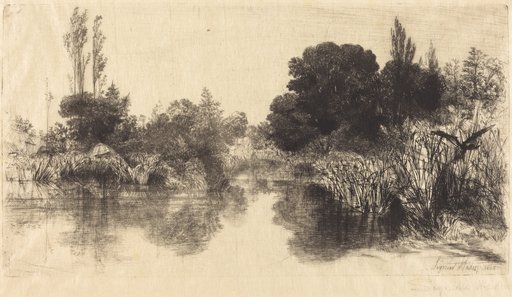
Appian's artistic formation combined the decorative training of Lyon's silk-design school with the naturalist landscape tradition of the Barbizon school. His early paintings of the Rhône riverside and southern France employed a monochromatic, atmospheric palette that the German Wikipedia characterizes as occasionally bluish and somewhat kitsch in its poetic effect. The encounter with Corot and Daubigny in 1852 oriented him definitively toward Barbizon precepts. In 1867 he underwent a significant chromatic transformation, abandoning cold, dark tones for warmer, more brilliant and luminous colors while continuing to produce charcoal drawings and small etchings in the Barbizon manner. His charcoal technique earned him the nickname "Delacroix du fusain" (Delacroix of charcoal). As an etcher, he produced approximately ninety works, with plates printed by Auguste Delâtre from 1863 onward, following two trial etchings in 1853-1854. His graphic work appeared in the collections of the Société des aquafortistes.
Major works
Appian's 1866 Paris exhibition brought imperial attention: two works were purchased by Napoleon III and Princess Mathilde. In 1867, Napoleon III acquired Le Lac du Bourget. Appian exhibited Trübes Wetter, Der Felsenweg, Das Bois des Roches, and Die Ufer des Furon im Oktober in 1868, alongside charcoal drawings Umgebungen von Rochefort and Sumpf von Virieu le Grand. His paintings are held in numerous French public collections. The Musée municipal de Bourg-en-Bresse holds Le Haut du Bois des Roches (Ain) (1870), Marine, côte méditerranéenne (1890), and La Gardeuse de dindons à Crémieux (c. 1860). The Musée des beaux-arts de Lyon preserves Le Débarras, Le Retour du marché (1859), and Temps gris, marais de la Burbanche. The Musée des Ursulines in Mâcon holds Les Marais de Rossillon (1867). Other significant works include Un soir, au bord du Rhône à Rix (1869, etching) at the Musée Thomas-Henry in Cherbourg-Octeville; Une Route dans les environs de Gênes (1875) at the Musée Paul-Dini in Villefranche-sur-Saône; and Environs de Carqueiranne (c. 1882) at the Musée des beaux-arts de Rouen. The California Palace of the Legion of Honor in San Francisco holds a collection of his prints, and other American institutional holdings include the Cleveland Museum of Art and Pomona College Museum of Art.
Influences & students
Appian's principal artistic influences were his teachers Jean-Michel Grobon and Augustin Alexandre Thierrat at the École des Beaux-Arts de Lyon, and more decisively Camille Corot and Charles-François Daubigny, whom he met in 1852. These Barbizon painters redirected his practice from divided attention between music and painting to exclusive dedication to landscape. The sources do not record Appian having pupils of his own, though his son Jean Louis Appian (1862-1896) became a painter. Appian's etching had a distinct and documented influence on the American artist Stephen Parrish.
Legacy
Appian's posthumous reputation rests on his double achievement as a painter of the Lyonnais and Rhône valley landscapes and as a significant etcher of the Barbizon circle. His graphic oeuvre was catalogued by Atherton Curtis in Adolphe Appian, son œuvre gravé et lithographié (Paris: Paul Prouté, 1968). A retrospective perspective came with the 1999 exhibition "100 peintures des collections du musée des Ursulines" in Mâcon, which included his work. His prints are held in the Bibliothèque nationale de France, including fourteen plates for L'Illustration nouvelle (1868-1881) and seven for L'Eau forte en... (1874-1881). The market and institutional presence for his work remains divided between French regional museums and American collections, reflecting both his local roots and his international influence through the graphic arts.
Works by Adolphe Appian
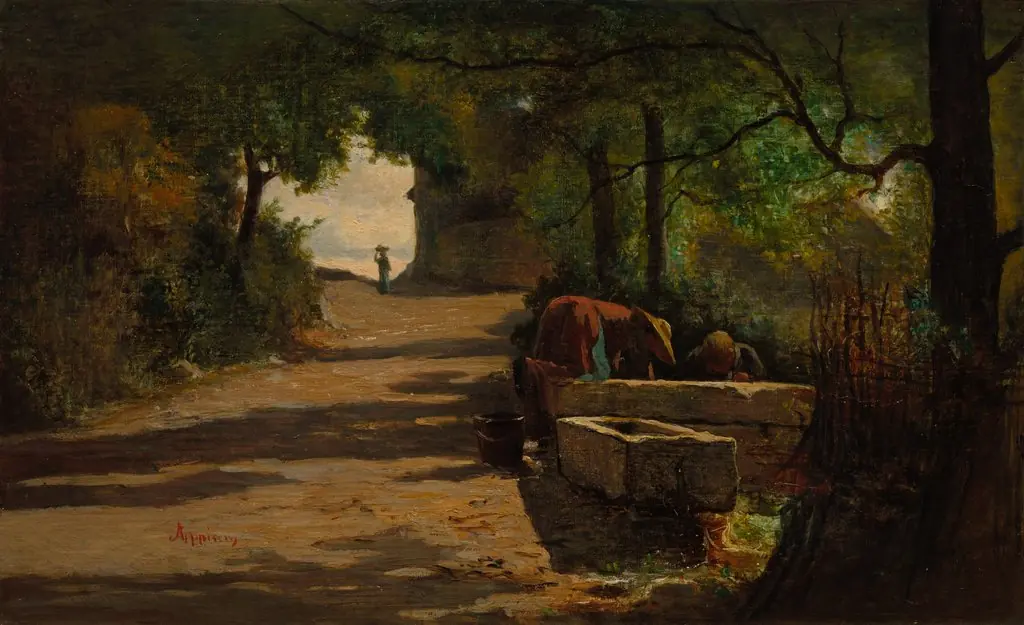 Well at the Side of a Road
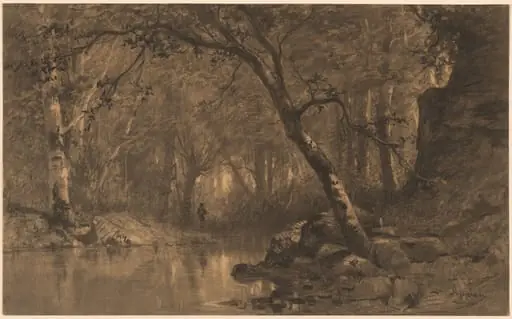 A Woodland River with a Fisherman
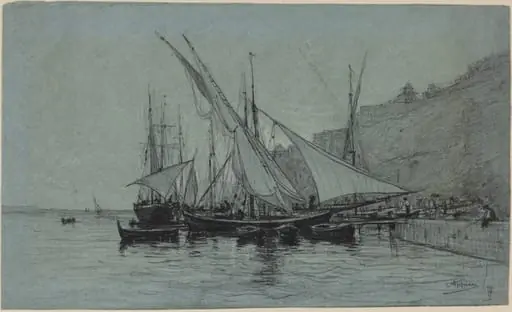 The Port of Monaco
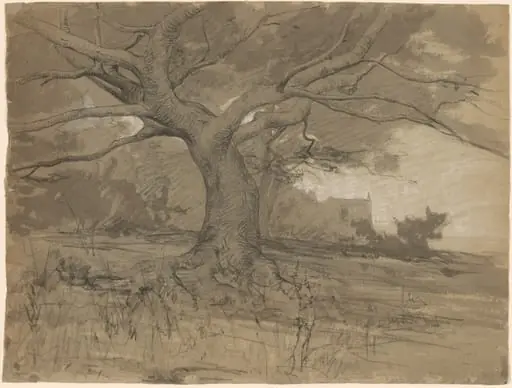 A Great Beech Tree at the Edge of a Wood
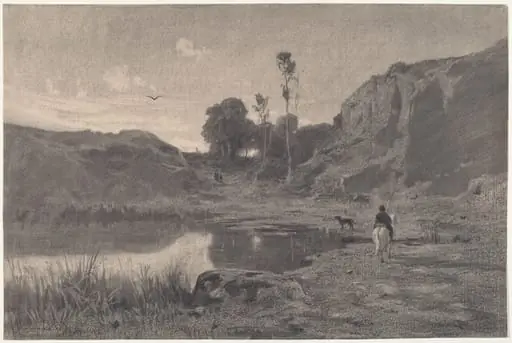 A Rider by a Mountain Pond at Sunset
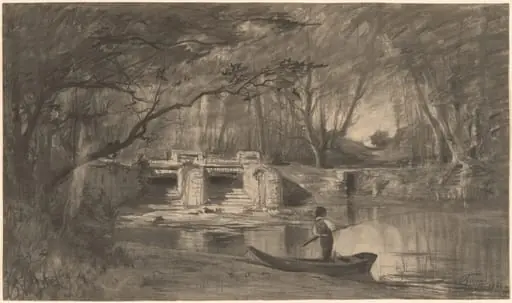 Wooded Pond by the Ancient Sluice of Levaux near Vienne
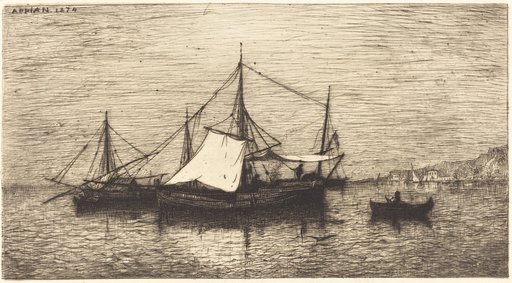
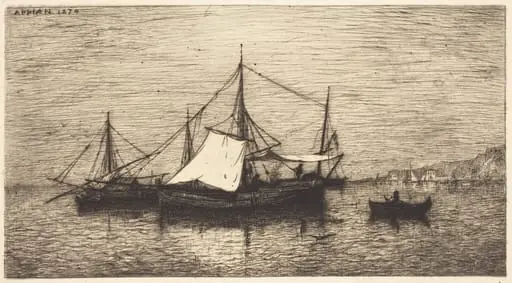 Coasting Trade Vessels, Italy
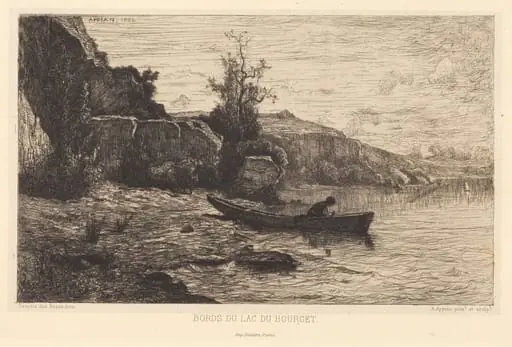 Bords du lac du Bourget
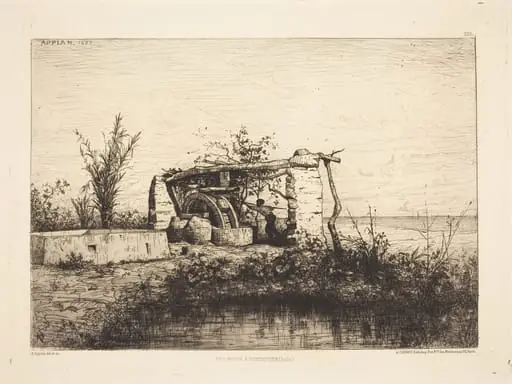 Une moria a Bordiquier (Italie)
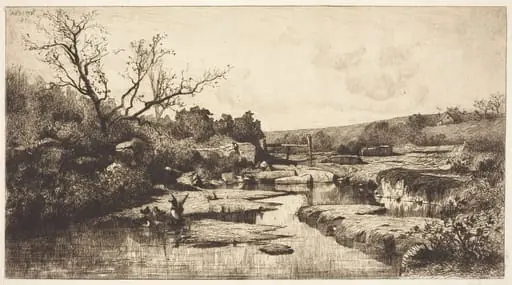 Landscape
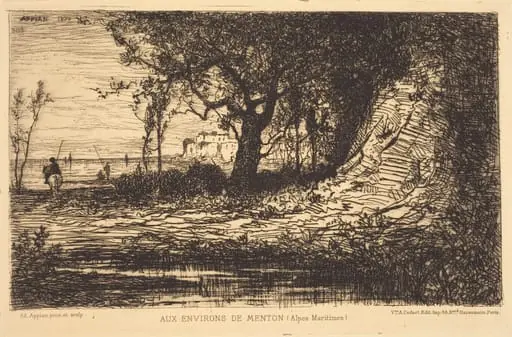 Aux Environs de Menton
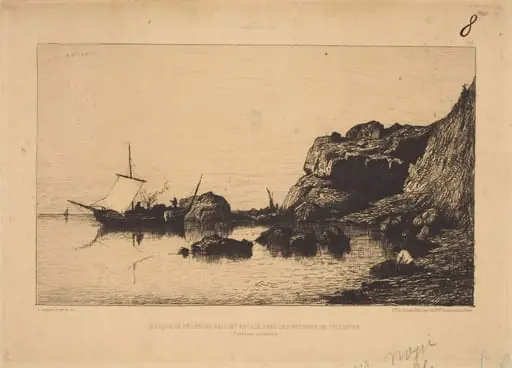 Barque de pecheurs faisant escale dans les rochers de Collioure
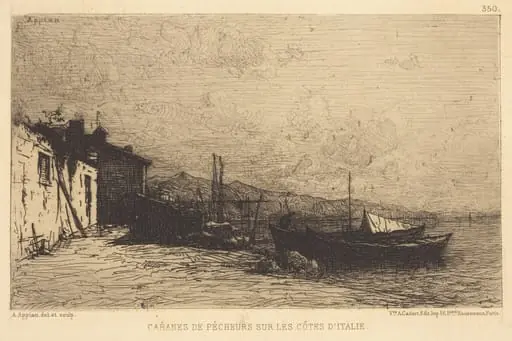 Cabanes de pecheurs sur les cotes d'Italie
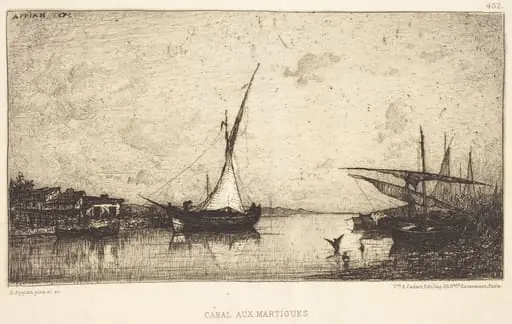 Canal aux Martiques
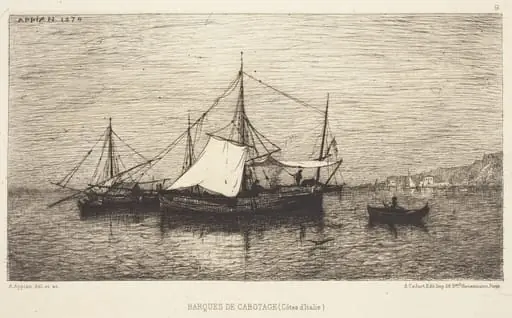 Barques de Cabotage
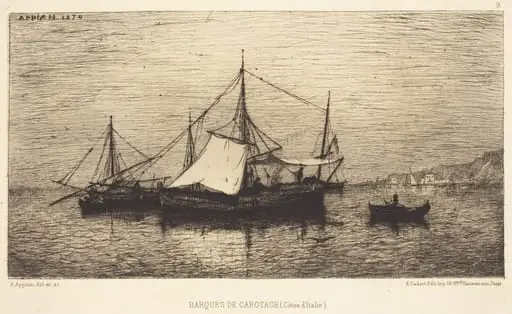 Barques de Cabotage
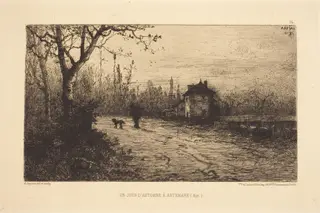 Un Jour d'automne a Artemare
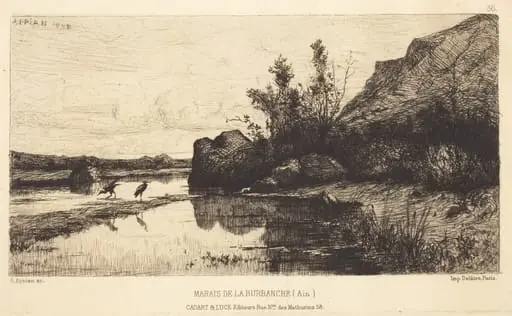 Marais de la Burbanche
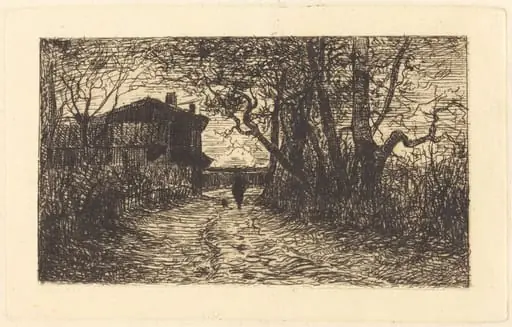 A Gorge de Loup
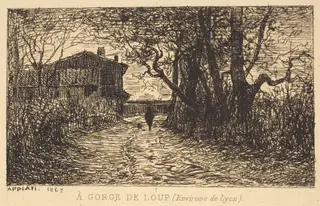 A Gorge de Loup
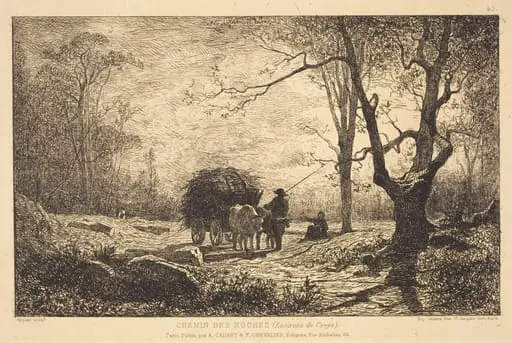 Chemin des Roches
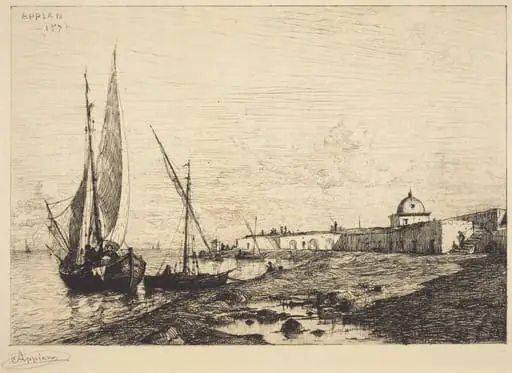 Port of San Remo
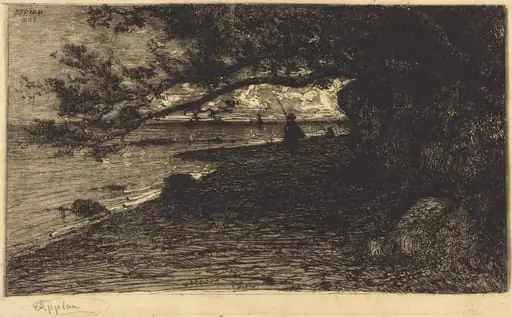 A Villefranche-sur-Mer
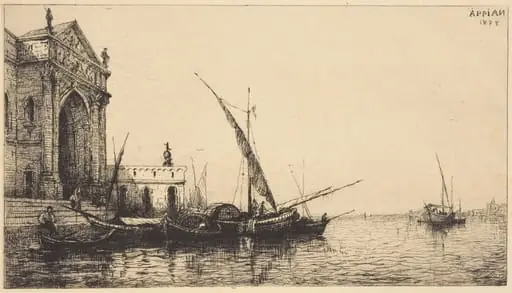 At Venice
48 works in the catalog · 24 shown
Collections represented


Artists in a similar vein