Artist
John Martin

United Kingdom of Great Britain and Ireland
John Martin is an United Kingdom of Great Britain and Ireland British Romanticism artist. 37 works are cataloged here, principally at Victoria and Albert Museum.
John Martin (19 July 1789 – 17 February 1854) was an English Romanticist painter, engraver, and illustrator. He was known for his typically vast and dramatic paintings of religious subjects and fantastic compositions, populated with minute figures placed in imposing landscapes. Martin's paintings, and the prints made from them, enjoyed great success with the general public, with Thomas Lawrence referring to him as "the most popular painter of his day". He was also criticised by John Ruskin and other critics.
Overview
John Martin (19 July 1789 to 17 February 1854) was an English Romantic painter, engraver, and illustrator. He is renowned for vast, dramatic canvases depicting religious subjects and fantastic apocalyptic compositions, characterized by imposing architectural landscapes populated by minute figures. His paintings and the prints made from them achieved enormous popular success, leading Thomas Lawrence to call him the most popular painter of his day, although critics such as John Ruskin harshly criticized his work. Martin also gained prominence as an engraver, notably illustrating John Milton's Paradise Lost, and later in life devoted himself to ambitious urban planning proposals for London.
Biography & dates
Born in a one-room cottage in Haydon Bridge, near Hexham, Northumberland, Martin was the fourth son of Fenwick Martin, a fencing master. He attended the free Haydon Bridge Grammar School, where he preferred drawing over his studies. In 1803, his father apprenticed him to a coachbuilder in Newcastle upon Tyne to learn heraldic painting, but a dispute over wages ended the placement. He then studied under the Italian artist Boniface Musso, moving with him to London in 1806. There, he married at age nineteen, supporting his family by giving drawing lessons and painting on watercolors, glass, and china. His career advanced after William Manning MP bought his first exhibited oil painting in 1812. By 1818, the sale of The Fall of Babylon for 420 pounds allowed him to clear his debts and buy a house in Marylebone, bringing him into contact with writers, scientists, and Whig nobility. He became the official historical painter to Prince Leopold of Saxe-Coburg, receiving the Order of Leopold. Martin suffered a stroke while working and died on the Isle of Man in 1854.
Style & movement
Working within the Romantic movement, Martin specialized in the sublime, a fashion during the Regency era. His landscapes echo the rugged crags of Northumberland, while his apocalyptic canvases reflect an intimate knowledge of the Old Testament and the forges and ironworks of the Tyne Valley. His grand biblical themes, heavily influenced by John Milton, often broke conventional rules of composition, utilizing vast, imposing architectural settings contrasted with tiny figures to emphasize the overwhelming scale of divine or natural forces. Beyond painting, he was a significant graphic artist, experimenting with mezzotint technology to produce highly detailed engravings that brought him greater financial success than his canvases.
Major works
Martin's first major success was Sadak in Search of the Waters of Oblivion (1812), now in the Saint Louis Art Museum. He achieved wide acclaim with Joshua Commanding the Sun to Stand Still upon Gibeon (1816), held at the Yale Center for British Art. His most famous painting, Belshazzar's Feast (1820), also at the Yale Center for British Art, drew five thousand paying viewers and won a 200 pound prize at the British Institution. Other significant works include The Destruction of Pompeii and Herculaneum (1822) and Fallen Angels in Hell (1841), both at Tate Britain. His final major project was a triptych of biblical subjects, The Last Judgment, The Great Day of His Wrath, and The Plains of Heaven, painted between 1851 and 1853 and bequeathed to Tate Britain in 1974. His most celebrated graphic works are the 24 mezzotint illustrations for Paradise Lost, commissioned in 1823, featuring notable plates such as Pandemonium and Satan Presiding at the Infernal Council.
Influences & students
Martin's artistic training and style were heavily shaped by his early master, the Italian painter Boniface Musso, and by his deep engagement with the poetry of John Milton, which directly inspired his most famous engravings. He moved in prominent intellectual circles, counting Charles Dickens, Michael Faraday, and J. M. W. Turner among his acquaintances. His apocalyptic visual language profoundly influenced the Bronte siblings, Charlotte and Branwell, who copied his prints and used his fantastic architecture as inspiration for their juvenile kingdoms of Glasstown and Angria, even featuring Martin as a character named Edward de Lisle of Verdopolis. Martin also took in Jane Webb, a young woman he and his wife sheltered.
Legacy
Despite his massive popular success, Martin's critical reputation suffered during his lifetime and after, largely due to attacks from John Ruskin and other critics who dismissed his theatrical, sublime canvases. Nevertheless, his prints remained highly sought after, with copies of his Paradise Lost fetching hundreds of pounds. Beyond art, Martin left a significant mark on urban planning. Beginning in 1834, he published pamphlets and plans for London's water supply, sewage, docks, and railways. His sewage proposals anticipated Joseph Bazalgette's 1859 plans by recommending intercepting sewers along both banks of the Thames. His cultural afterlife endures through his profound influence on the literary imaginations of the Brontes and his iconic visual definitions of the apocalyptic sublime.
Works by John Martin
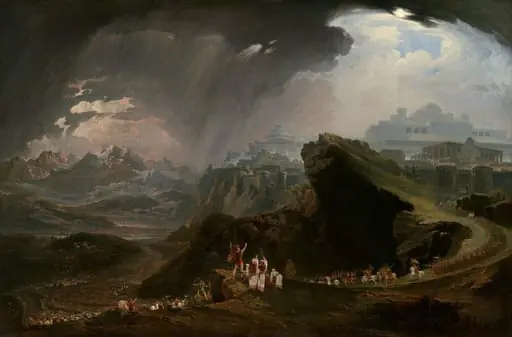 Joshua Commanding the Sun to Stand Still upon Gibeon
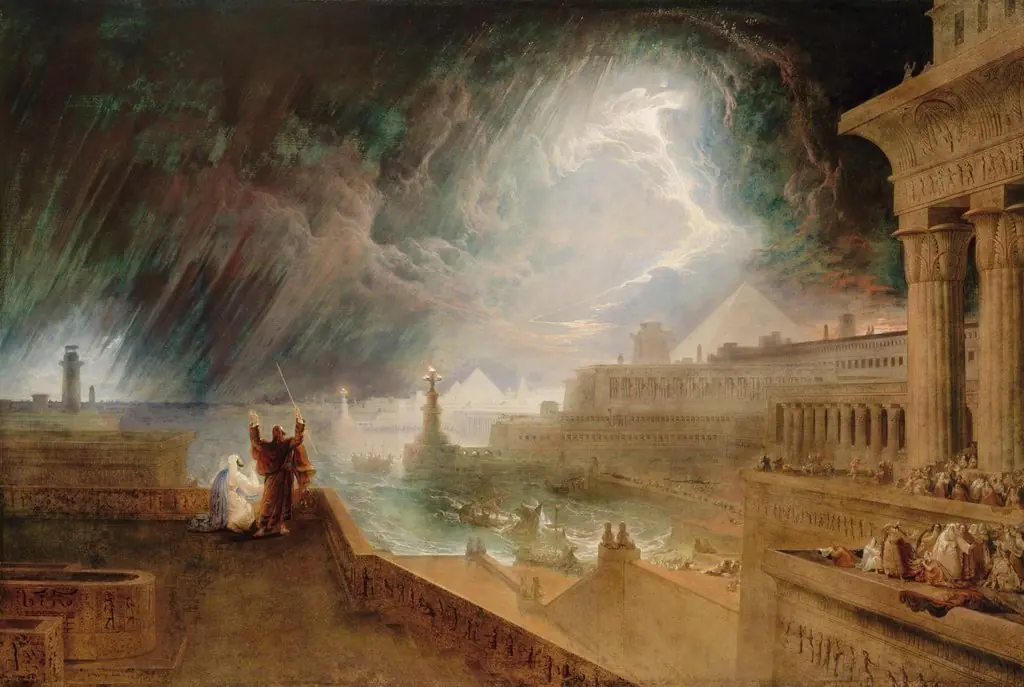 The Seventh Plague
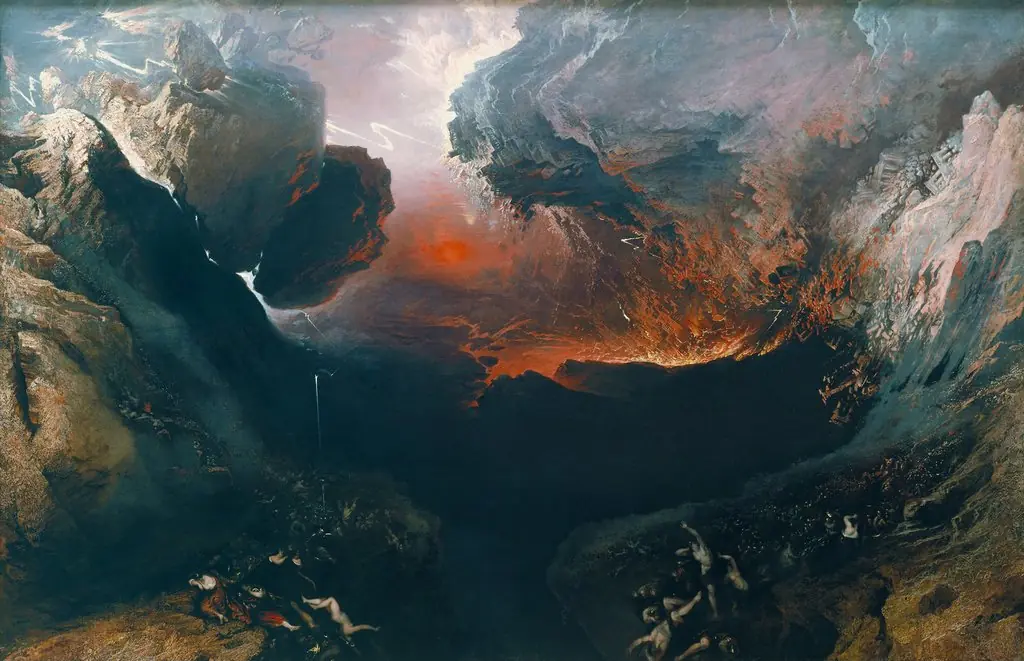 The end of the world
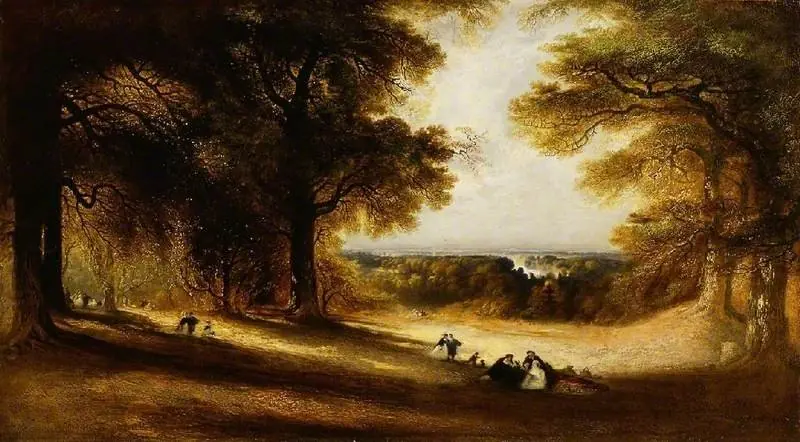 Landscape: View in Richmond Park
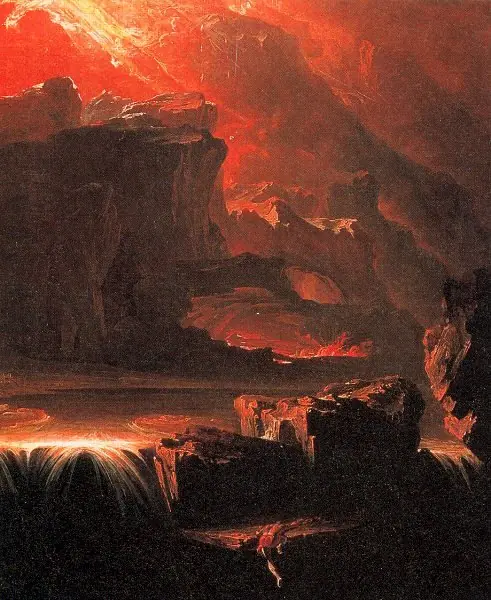 Sadak in Search of the Waters of Oblivion
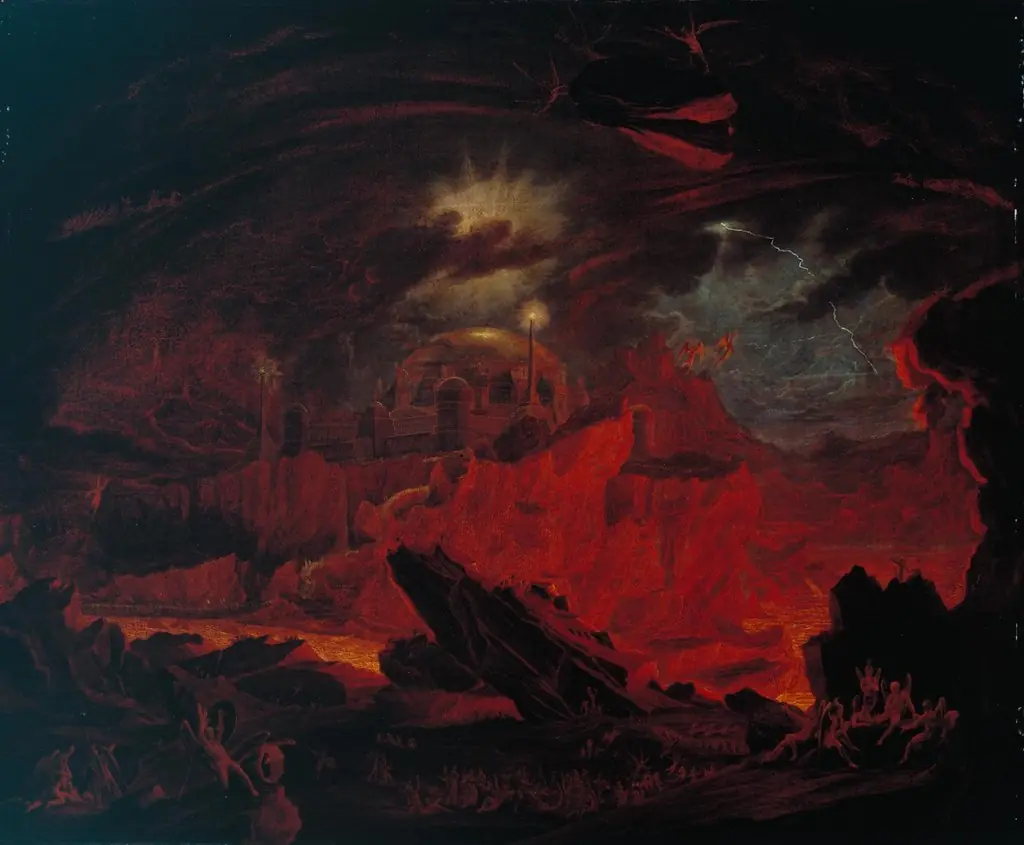 Fallen Angels in Hell
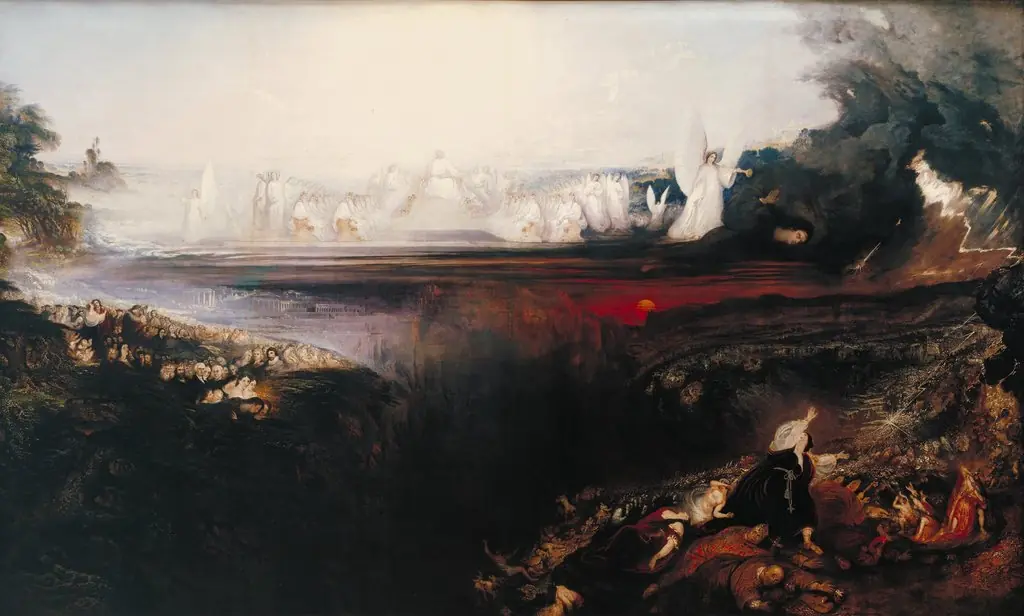 The Last Judgement
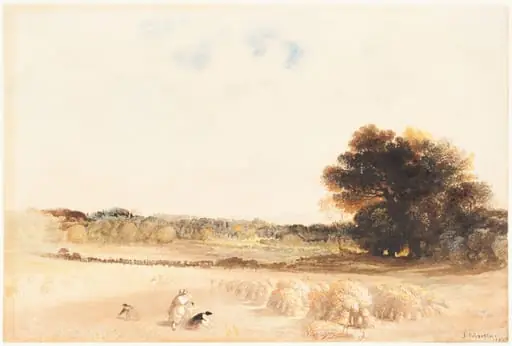 Gleaners in the Wheat Field
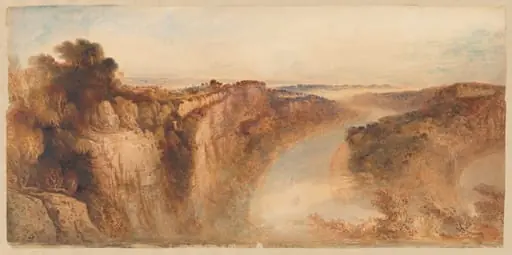 View on the River Wye, Looking towards Chepstow
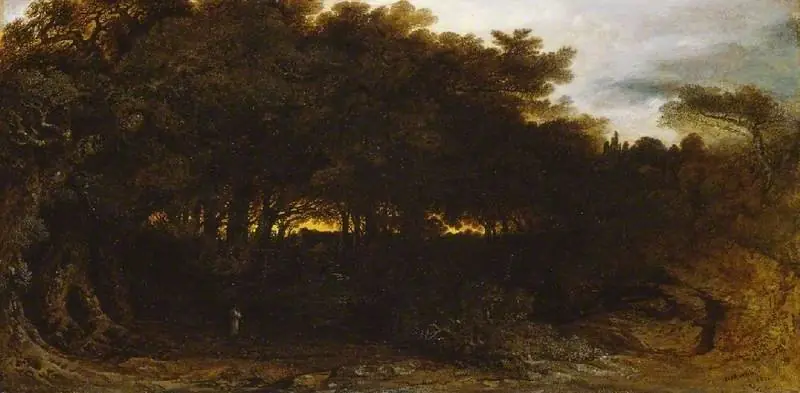 Twilight in the woodlands
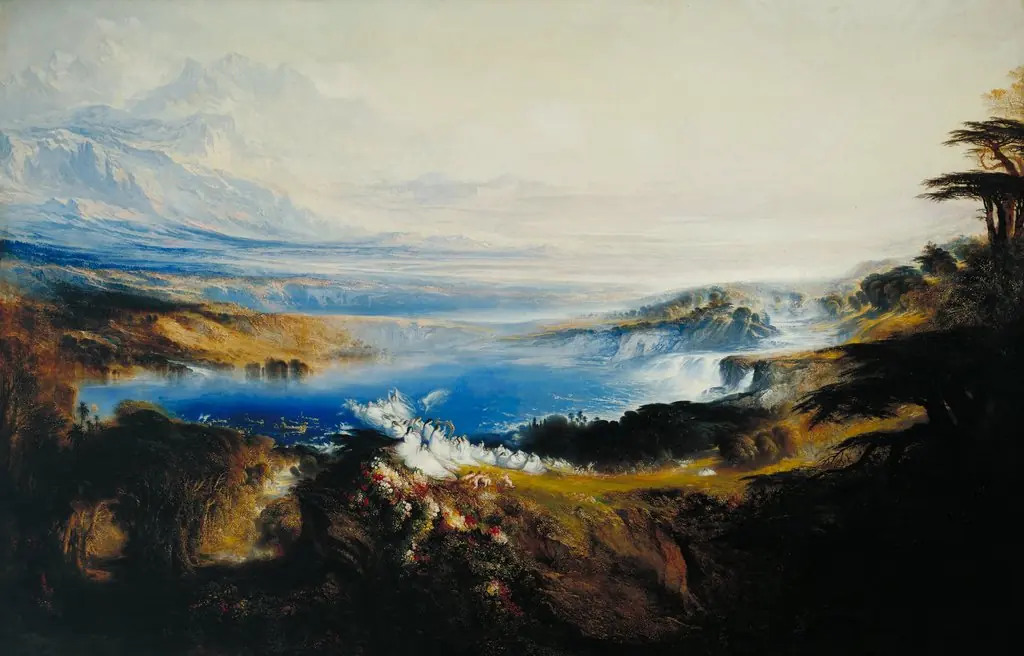 The Plains of Heaven
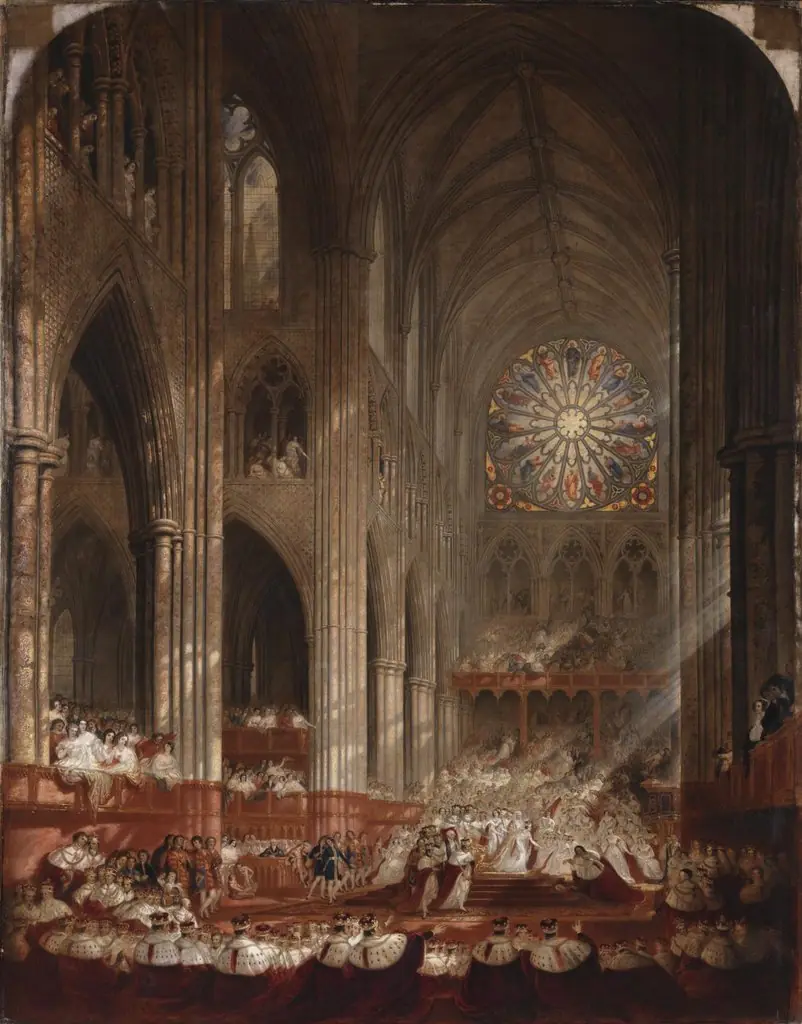 The Coronation of Queen Victoria
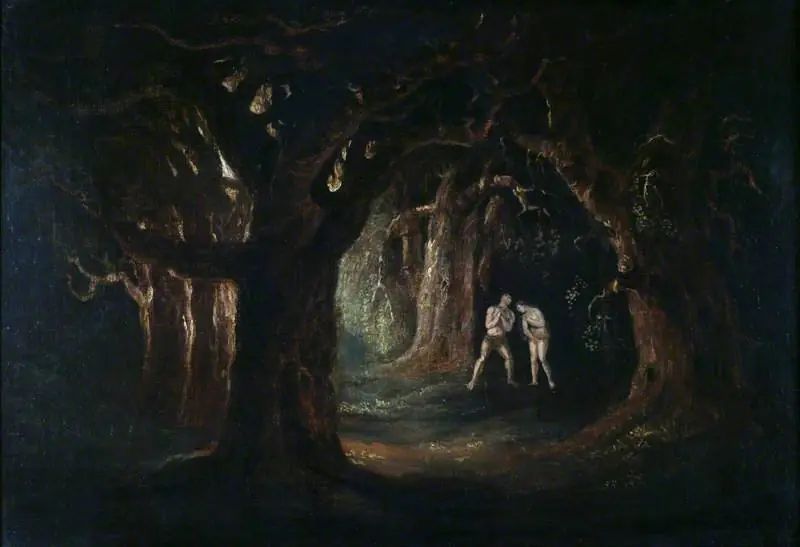 Adam Listening to the Voice of God the Almighty
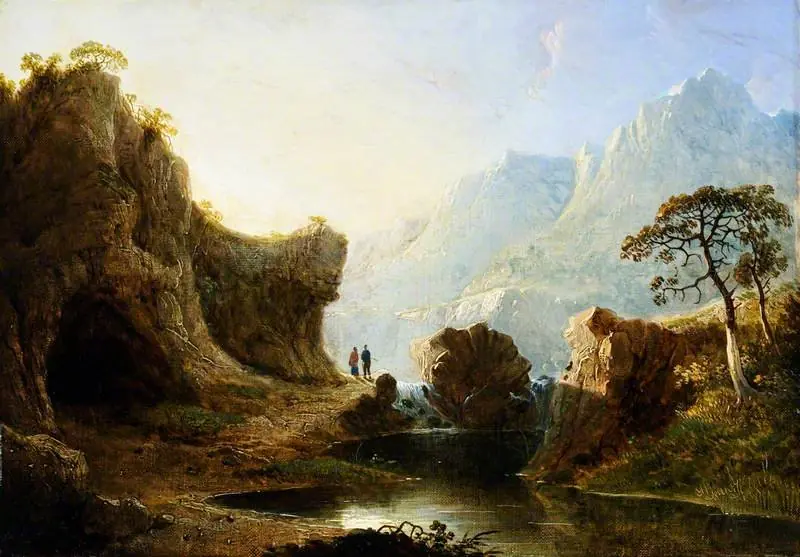 Mountain Landscape with Rocks
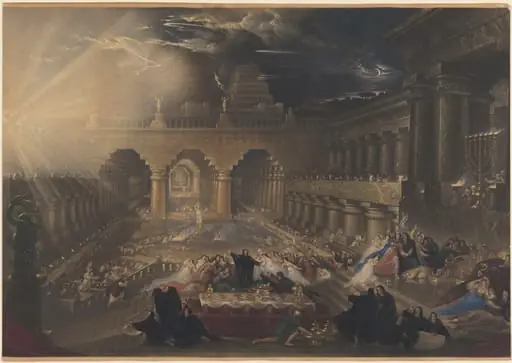 Belshazzar's Feast
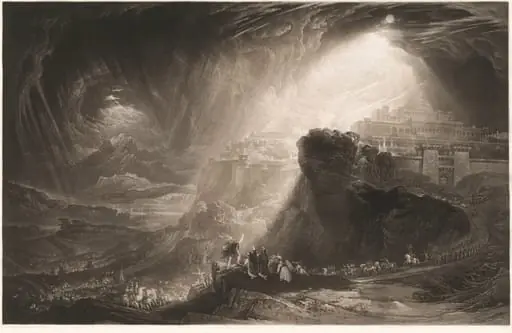 Joshua Commanding the Sun to Stand Still
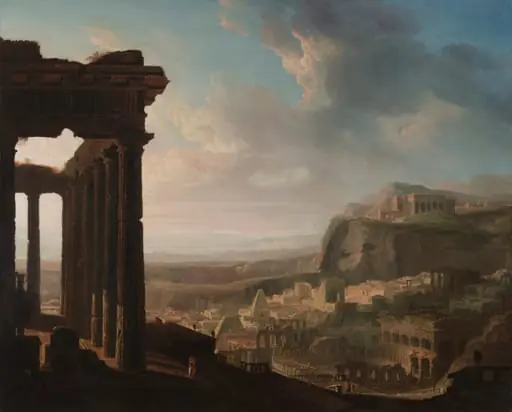 Ruins of an Ancient City
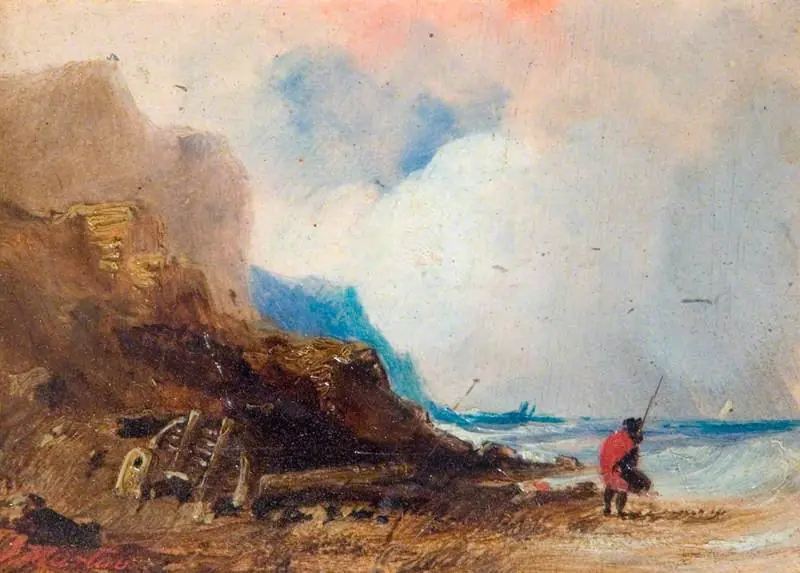 Shore Scene, Evening
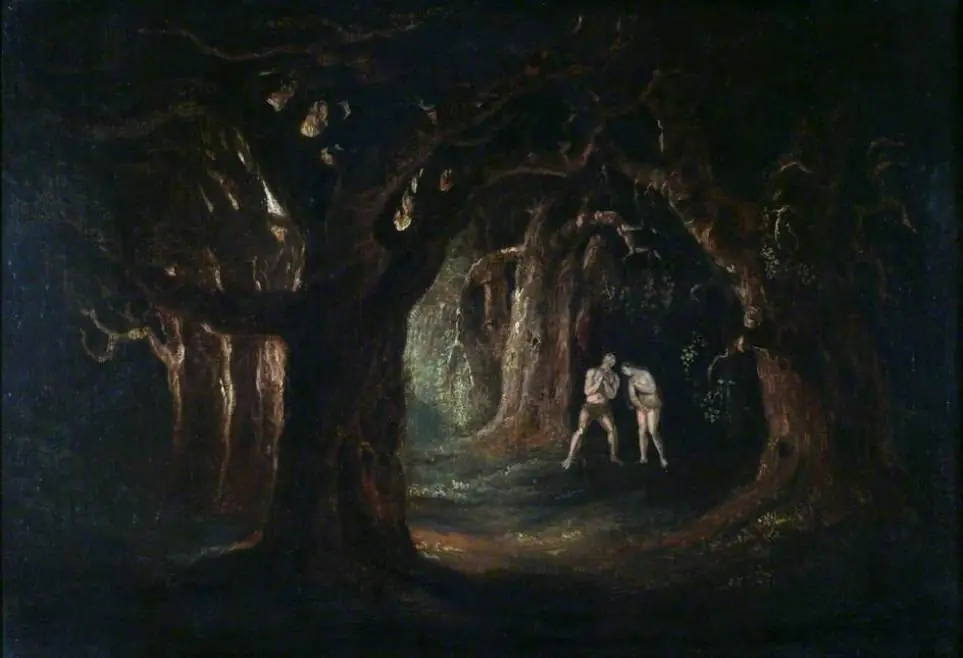 Adam Listening to the Voice of God the Almighty
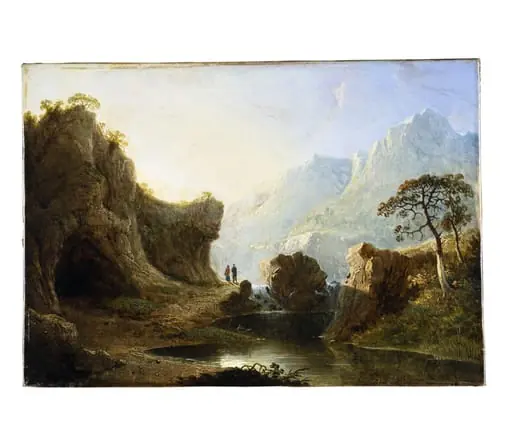 Mountain Landscape with Rocks
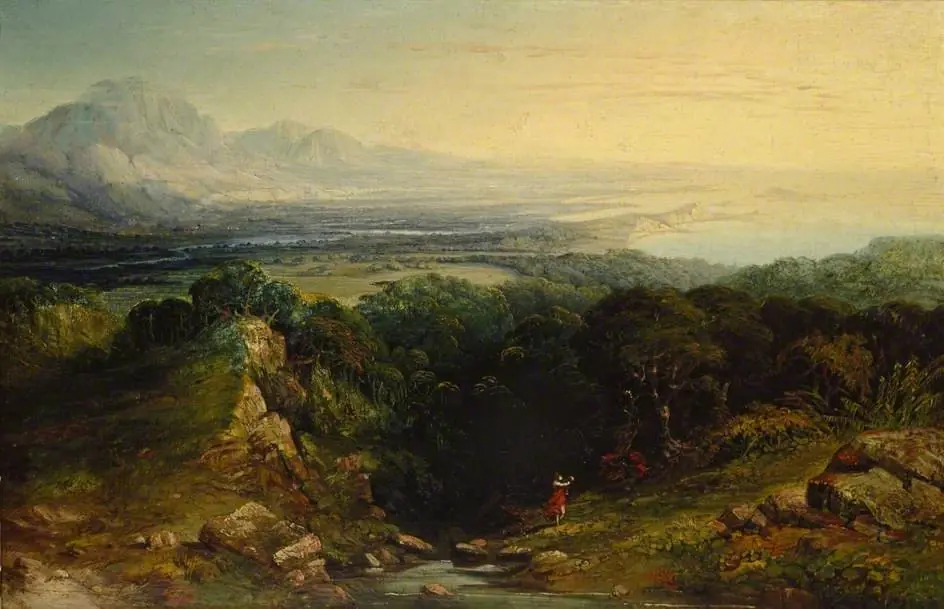 The Isle of Man
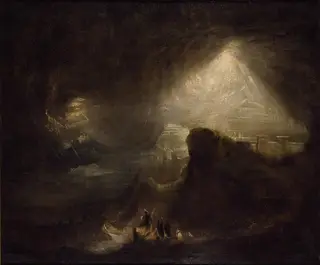 Joshua commanding the Sun to stand still
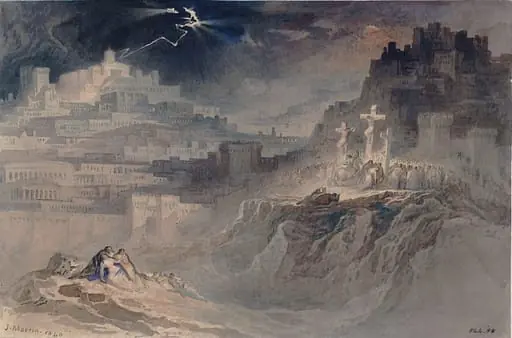 The Crucifixion
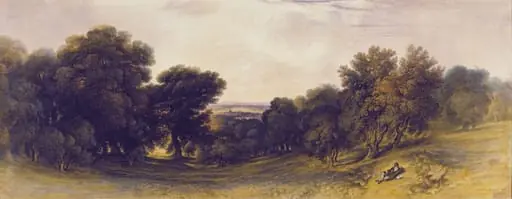 Richmond Park
37 works in the catalog · 24 shown
Collections represented


Artists in a similar vein