Artwork
Joshua Commanding the Sun to Stand Still upon Gibeon
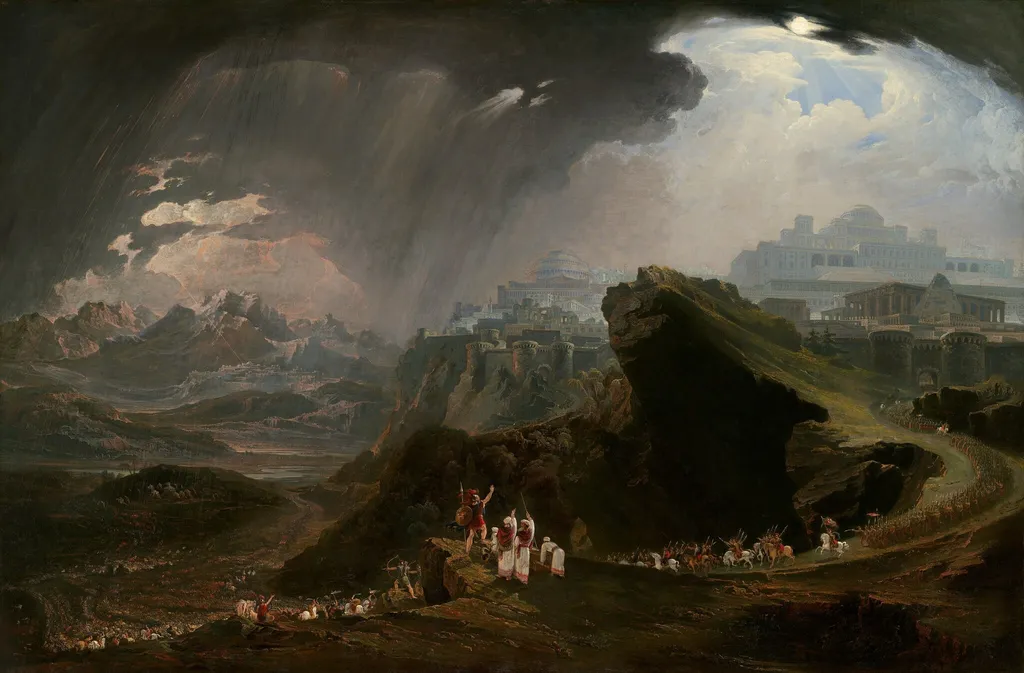
Joshua Commanding the Sun to Stand Still upon Gibeon is an oil painting by the British Romanticist artist John Martin. It dates from 1816 and is held in the collection of the National Gallery of Art.
- Inscription
- Inscribed:lower right: J. Martin
About this work
Subject & Meaning
The painting depicts the biblical episode in the Book of Joshua in which Joshua commands the sun to stand still during battle to prolong daylight and secure victory for the Israelites besieged at Gibeon (Joshua 10:12–14). Martin's composition dramatizes the moment through a vast, storm-lashed sky where the sun appears suspended above a chaotic field of combat, emphasizing divine intervention in human conflict. The Romantic treatment, with its sublime scale and atmospheric effects, transforms a theological miracle into a spectacle of cosmic power, aligning with contemporary fascination with the sublime in nature and the limits of human agency.
The work thus functions as both religious illustration and Romantic allegory, celebrating divine omnipotence while evoking the era's cultural engagement with biblical narrative as a vehicle for moral and existential reflection.
Technique & Style
The physical support remains a traditional stretched canvas, consistent with early nineteenth-century British practice for large-scale historical subjects.
Executed in 1816, this work is an oil painting on canvas measuring 150 by 231 centimeters. The piece exemplifies the Romantic style, characterized by its dramatic biblical landscape composition depicting a battle scene. As John Martin's breakthrough image, the painting utilizes a grand scale to convey theatrical intensity, an approach that garnered significant acclaim upon its debut at the Royal Academy Summer Exhibition and the subsequent showing at the British Institution.
The handling of the medium supports a narrative focus on divine intervention within a vast natural setting, aligning with the artist's reputation for apocalyptic imagery. The physical support remains a traditional stretched canvas, consistent with early nineteenth-century British practice for large-scale historical subjects.
History & Provenance
Joshua Commanding the Sun to Stand Still upon Gibeon was painted by John Martin in 1816 and first exhibited at the Royal Academy's Summer Exhibition at Somerset House that same year, followed by a showing at the British Institution in 1817. The painting was purchased in 1822 by William Collins. It subsequently passed to Thomas Wilson, who retained it until 1848, after which it entered the collection of John Naylor.
The work descended within the Naylor family until a sale at Leighton Hall, Welshpool, on 23 January 1923 (lot 41). An anonymous donor gifted the painting in 1924 to the United Grand Lodge of England, which held it until 28 May 2004, when it was purchased through Thomas Agnew & Sons, Ltd. by the National Gallery of Art in Washington, D.C.
John Martin's Joshua Commanding the Sun to Stand Still upon Gibeon is housed in the National Gallery of Art in Washington, D.C. The painting entered the museum's collection on 28 May 2004 after being purchased from Thomas Agnew & Sons, Ltd., and is recorded in the Gallery's accession records as a 2004 acquisition. Its earlier public showing included a debut at the Royal Academy's Summer Exhibition of 1816 at Somerset House, followed by a presentation at the British Institution in 1817, marking the work's first major exhibitions after its completion in 1816.
Context
John Martin's Joshua Commanding the Sun to Stand Still upon Gibeon (1816) marked the artist's breakthrough within British Romantic landscape painting. First exhibited at the Royal Academy's Summer Exhibition in 1816 and again at the British Institution the following year, the work garnered immediate critical acclaim for its dramatic fusion of biblical narrative and sublime natural spectacle. Martin's rendering of Joshua's plea amid swirling storm clouds and radiant celestial disruption aligned with the era's Romantic fascination with theodicy and the sublime, positioning the artist within a broader discourse on apocalyptic imagery that later culminated in his celebrated mezzotint series Illustrations of the Bible (1831–35).
The painting's reception underscored Martin's ability to translate scriptural episodes into emotionally charged visual drama, a strategy that secured his reputation as a leading exponent of Romantic grand manner landscape.
Legacy
Joshua Commanding the Sun to Stand Still upon Gibeon is widely regarded as John Martin's breakthrough picture, establishing his reputation within the Romantic movement. Upon its debut at the Royal Academy's Summer Exhibition in 1816, the work received significant critical praise, acclaim that continued when it was displayed at the British Institution the following year. This early reception solidified Martin's standing as a major artist capable of handling grand biblical narratives on a monumental scale.
The painting's enduring legacy is marked by its long-term presence in prominent collections, having passed through notable private owners before entering the public sphere. In 2004, the National Gallery of Art in Washington, D.C., acquired the canvas, ensuring its preservation as a key example of early 19th-century British landscape and religious art.
Overview
John Martin's 1816 oil on canvas, Joshua Commanding the Sun to Stand Still upon Gibeon, depicts a pivotal moment from the Hebrew Bible. This large-scale painting, created when the British artist was only nineteen, portrays the Israelite leader Joshua intervening in battle by appealing to God to prolong daylight. The work is recognized as a significant early achievement in Martin's career, establishing his distinctive approach to dramatic, sublime landscapes.
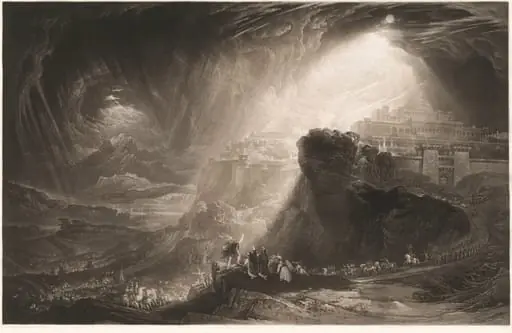
Own this work as a print
Artist & collection

Artist
John Martin (19 July 1789 – 17 February 1854) was an English Romanticist painter, engraver, and illustrator.

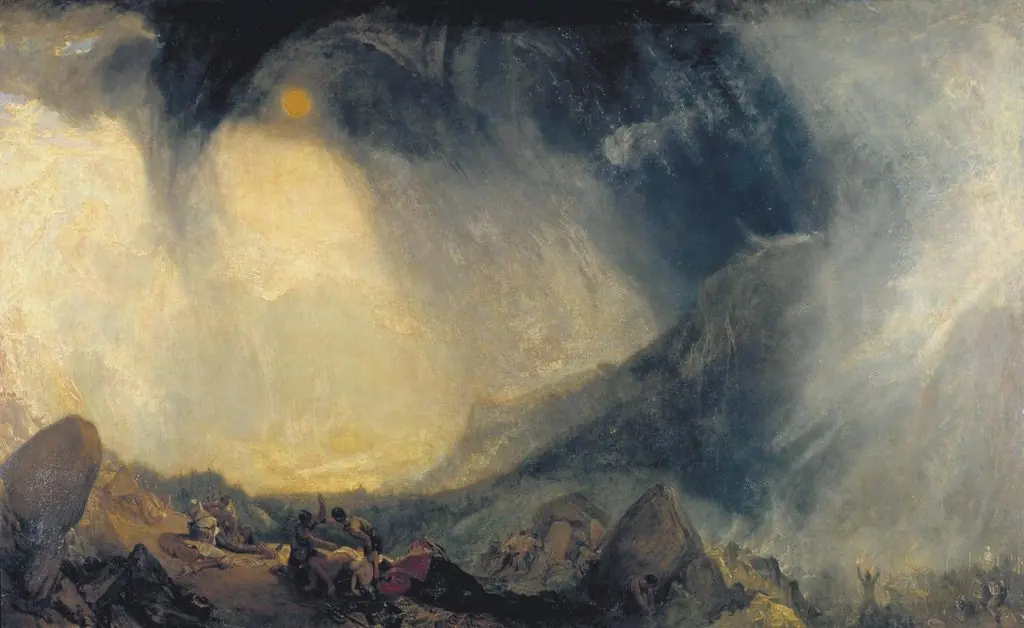 Snow Storm: Hannibal and his Army Crossing the Alps
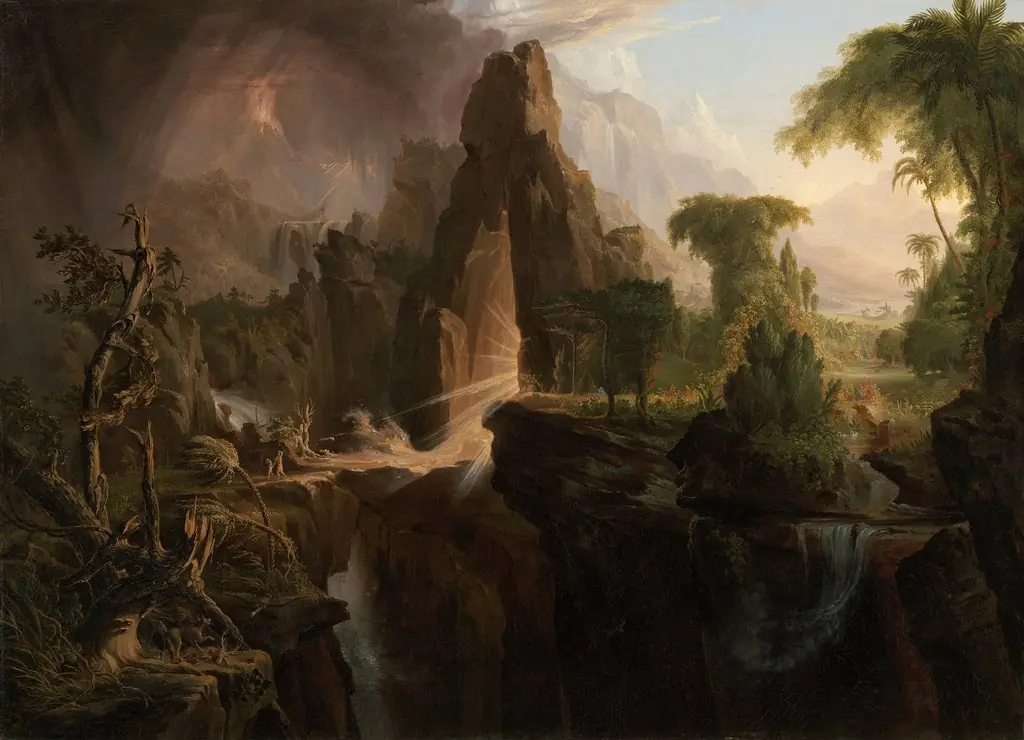 Expulsion from the Garden of Eden
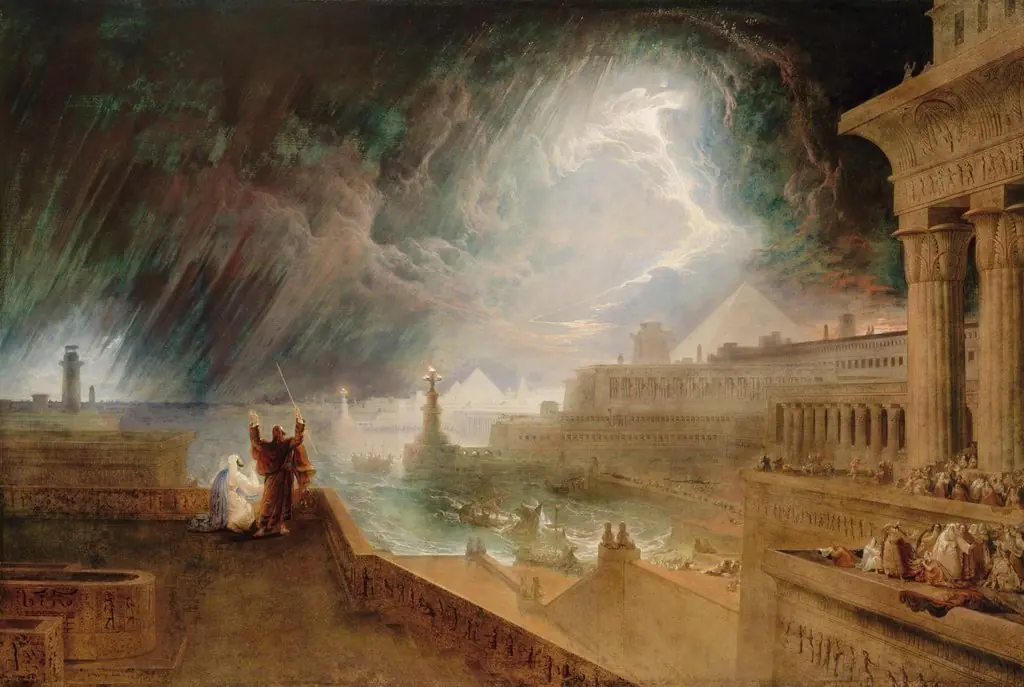 The Seventh Plague
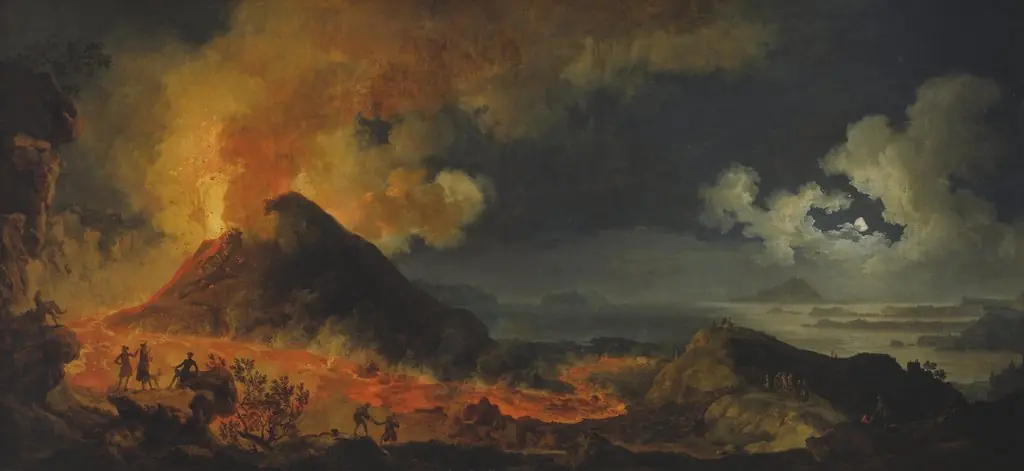 The Eruption of Vesuvius
 The Aegean Sea
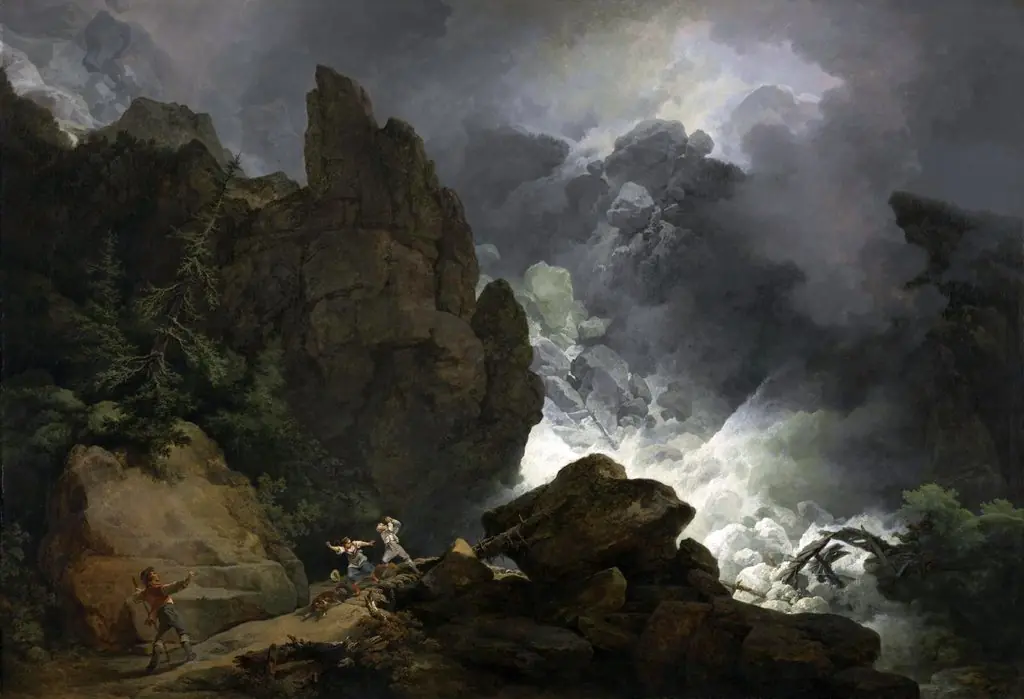 An Avalanche in the Alps
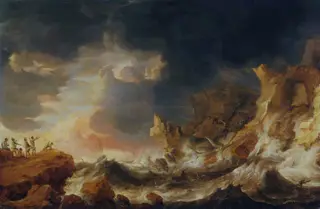 Shipwreck on a Rocky Coast
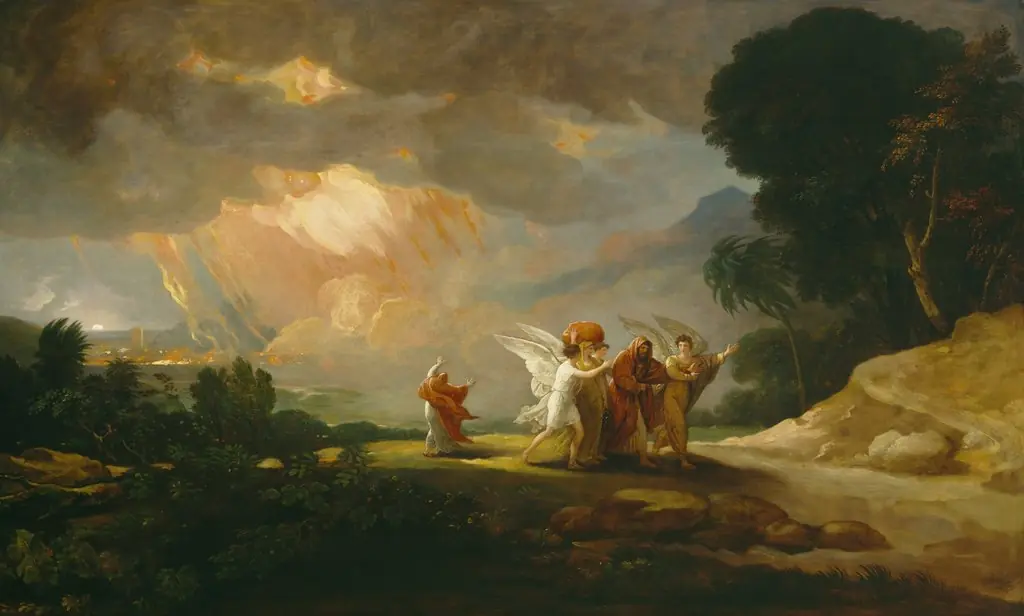 Lot Fleeing from Sodom
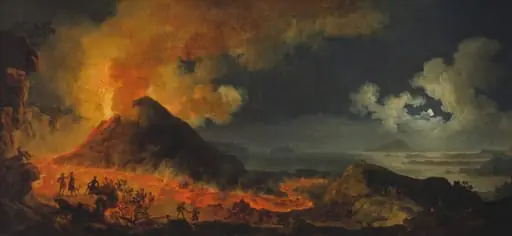 The Eruption of Vesuvius
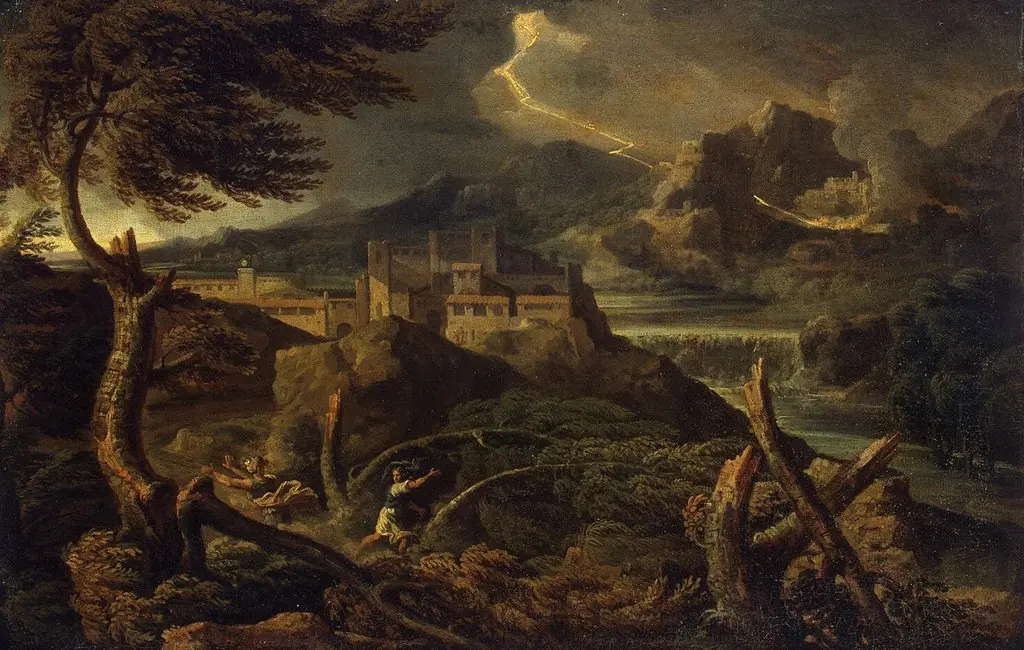 Landscape with Lightning
 Italian Landscape
- Joshua Commanding the Sun to Stand Still