Artist
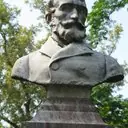
Charles Meryon
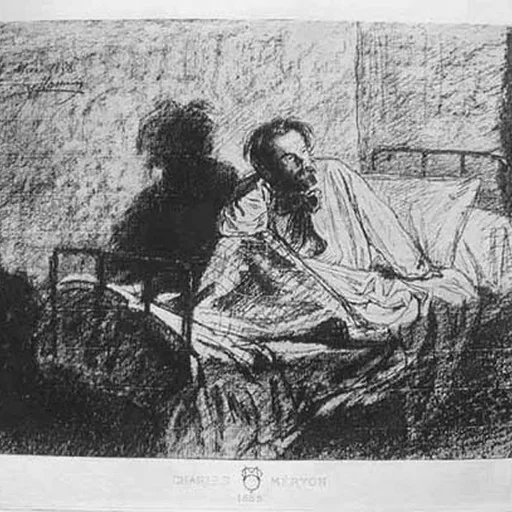
French, 1821–1868
Charles Meryon was a French Impressionism artist. 216 works are cataloged here, principally at National Gallery of Art. Charles Meryon was born in Paris.
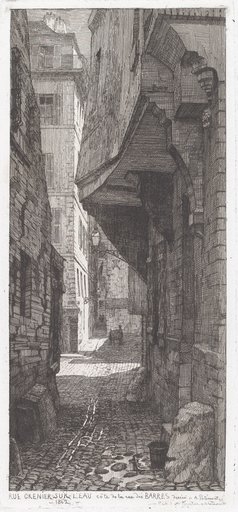
Charles Meryon (sometimes Méryon, 23 November 1821 – 14 February 1868) was a French artist who worked almost entirely in etching, as he had colour blindness. Although now little-known in the English-speaking world, he is generally recognised as the most significant etcher of 19th century France. His most famous works are a series of views powerfully conveying his distinctive Gothic vision of Paris.
He also had mental illness, dying in an asylum. Meryon's mother was a dancer at the Paris Opera, who moved to London around 1814 to dance there. In 1818 she had a daughter by Viscount Lowther, the future William Lowther, 2nd Earl of Lonsdale, a wealthy aristocrat and politician, and 1821 Charles Meryon by Dr Charles Lewis Meryon, an English doctor, returning to Paris for the birth, and remaining there for the rest of her life.
The household in Paris was supported financially by both fathers, but more so by Lowther, whose indirect funding remained important throughout Meryon's life; he made very little money from his art. Starting at the age of 16, Meryon spent ten years as a naval cadet and finally officer, which included tours of the Mediterranean, and a four year voyage around the world, for most of it based in New Zealand, where the French then maintained an imperial toe-hold. On his return he fought and was wounded in a pro-government militia during political disturbances in 1848.
He had become seriously interested in art during his naval career, starting to take lessons. He gradually and reluctantly realized that his colour-blindness ruled out painting, and by 1848 settled on etching, then out of favour as a medium for fine art, though about to undergo a considerable revival. His best period lasted between 1850 and about 1856, before his increasing mental illness reduced his output.
He spent fourteen months in an asylum in 1858 and 1859, then continued to work until 1866, when he re-entered the asylum for the final time.
Works by Charles Meryon
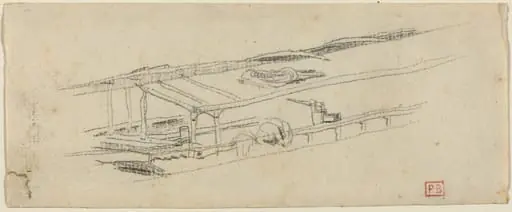 Study for "Le Petit Pont"
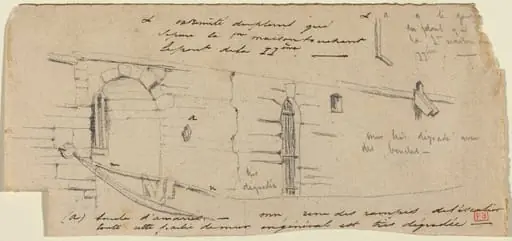 Study for "Le Petit Pont"
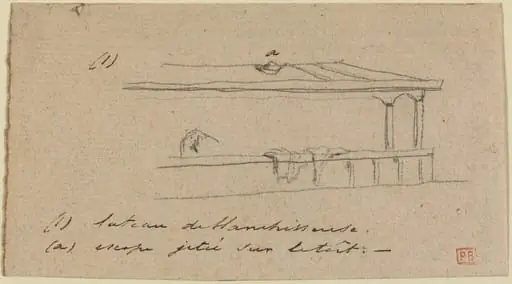 Study for "Le Petit Pont"
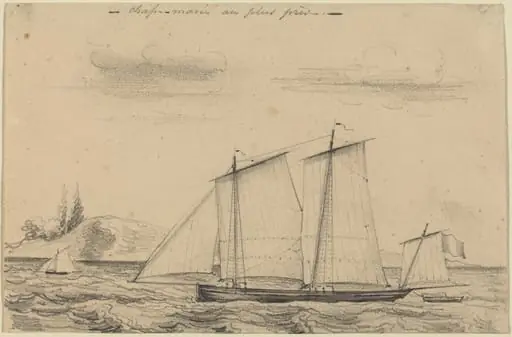 Chasse-maree au plus pres
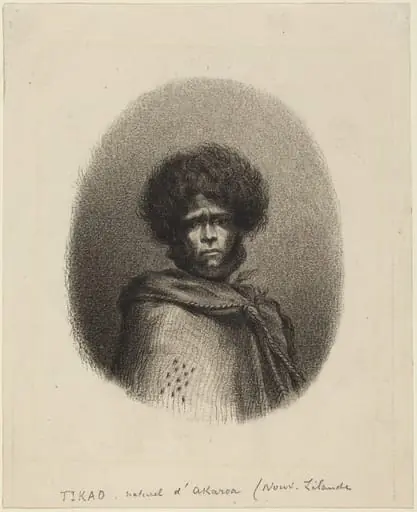 Tikao, naturel d'Akaroa
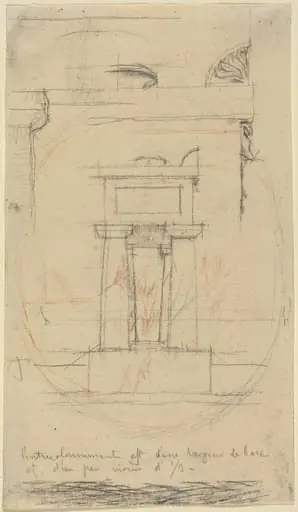 Moliere's Tomb
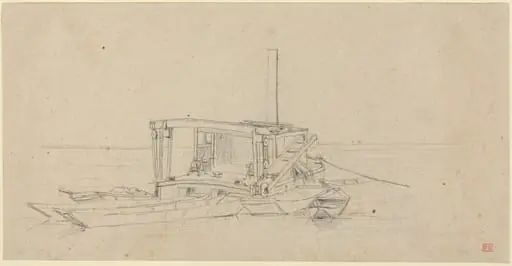 River Dredges and Lighters
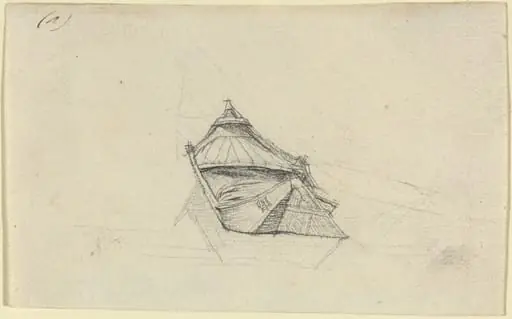 Seine Boat for "Le Pont-au-Change"
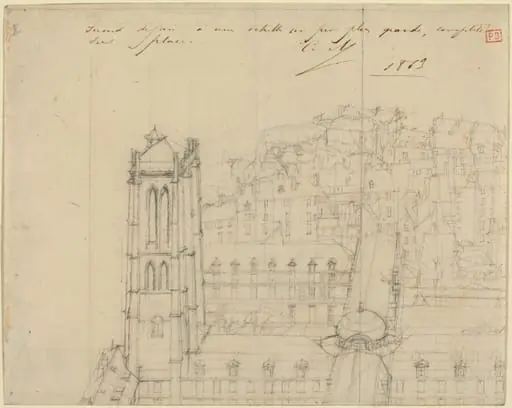 College Henri IV
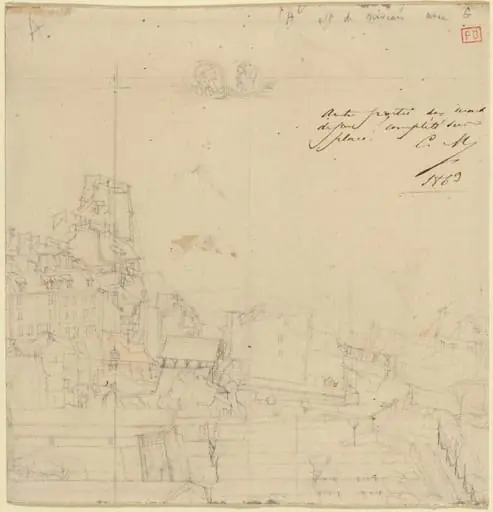 College Henri IV
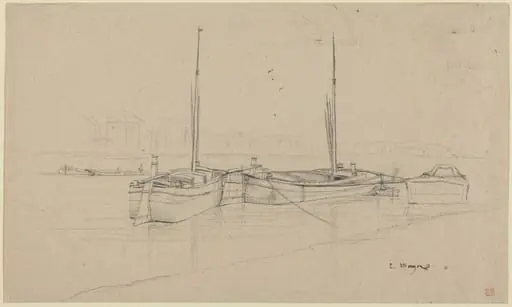 Boats on River with Masts
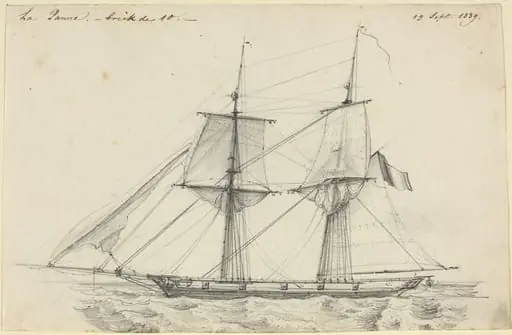 La Panne
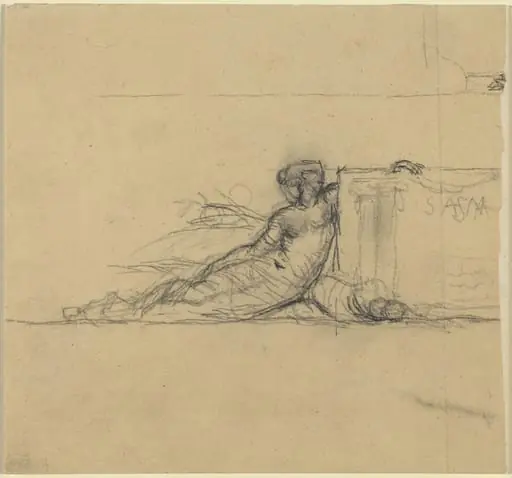 Seated Female Figure for "San Francisco"
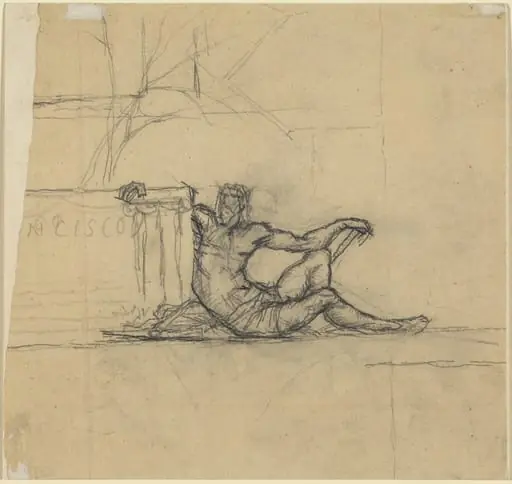 Seated Male Figure for "San Francisco"
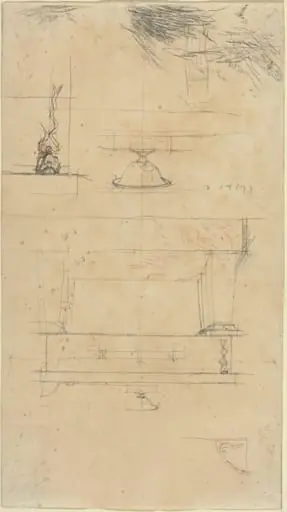 Moliere's Tomb
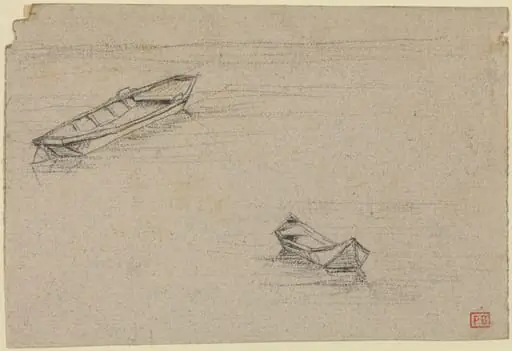 Two Boats for "L'Abside de Notre-Dame de Paris"
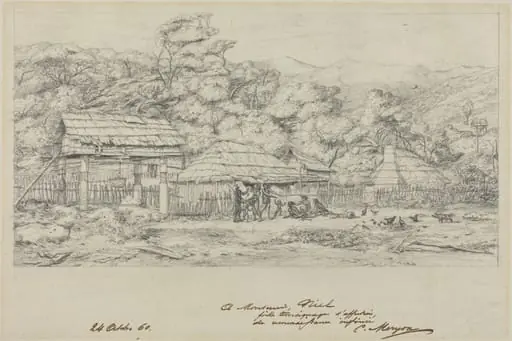 Greniers indigenes et habitations a Akaroa, presqu'Ile de Banks
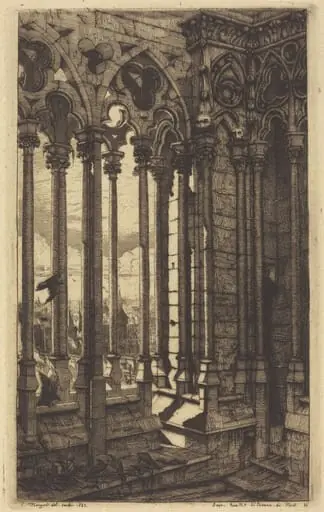 La galerie Notre-Dame, Paris (The Gallery of Notre Dame, Paris)
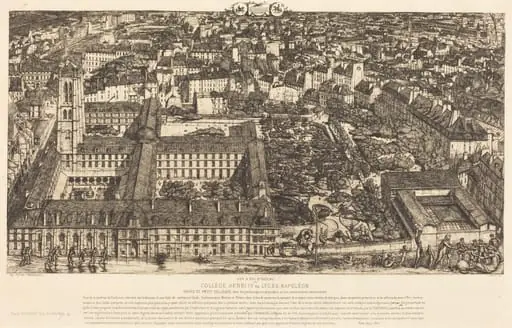 Collège Henri IV, Paris, ou Lycée Napoléon (Henry IV College or Napoleon School, Paris)
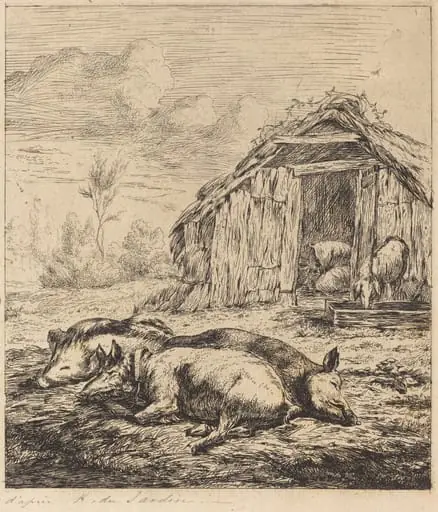 Les trois cochons couchés devant l'étable (Three Swine Lying In Front of a Sty)
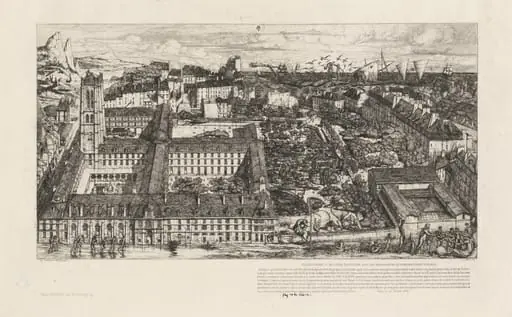 Collège Henri IV, Paris, ou Lycée Napoléon (Henry IV College or Napoleon School, Paris)
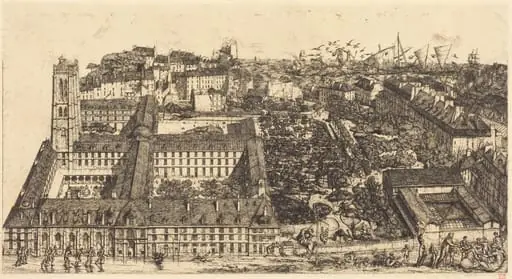 Collège Henri IV, Paris, ou Lycée Napoléon (Henry IV College or Napoleon School, Paris)
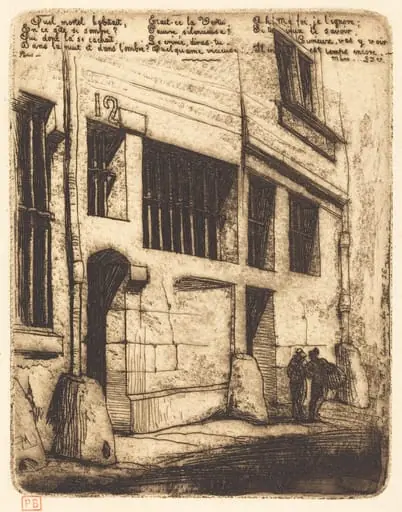 La Rue des Mauvais Garçons, Paris (The Street of the Bad Boys)
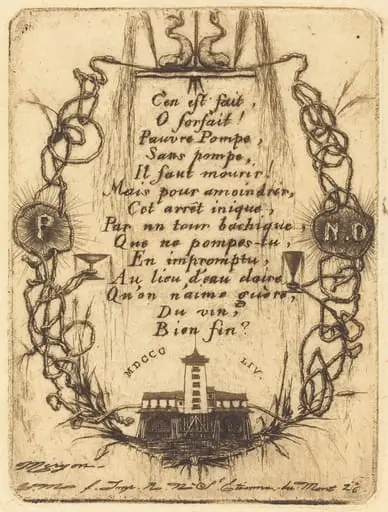 La petite pompe, Paris (The Notre Dame Pump, small plate)
216 works in the catalog · 24 shown
Collections represented


Artists in a similar vein