Artwork
Study for "Le Petit Pont"
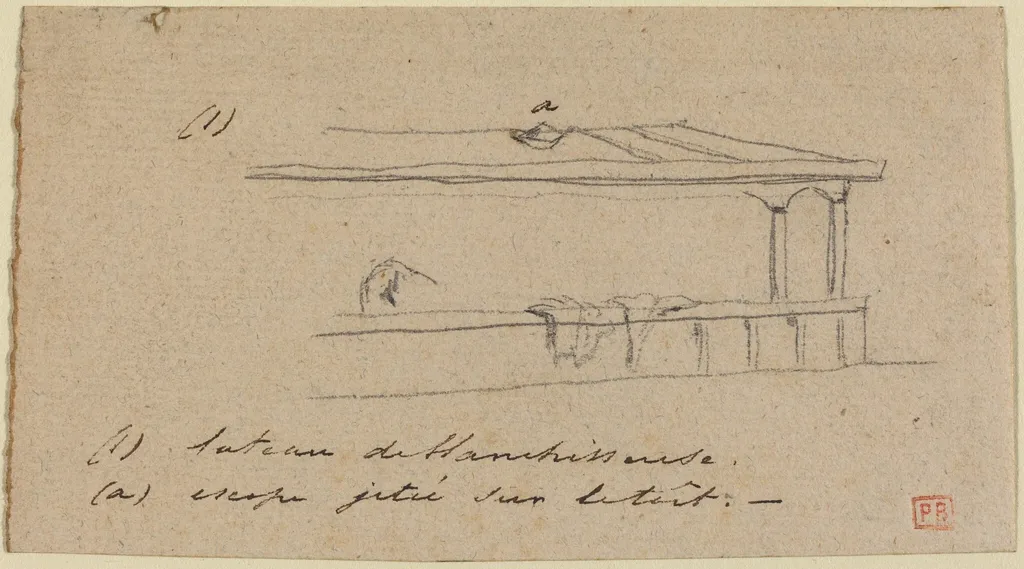
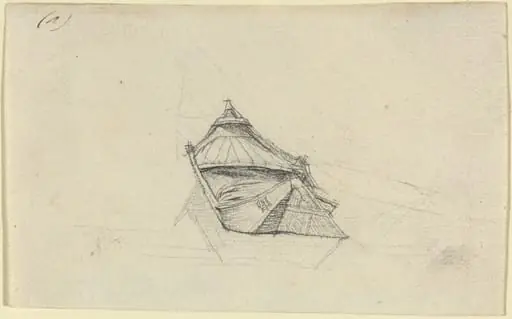
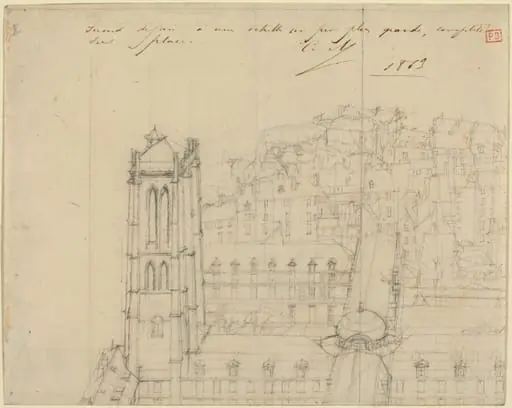
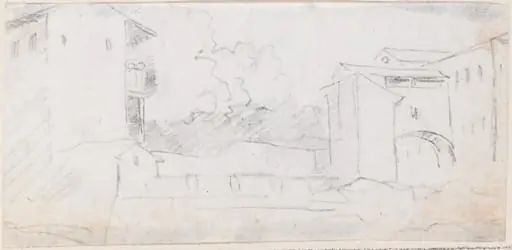
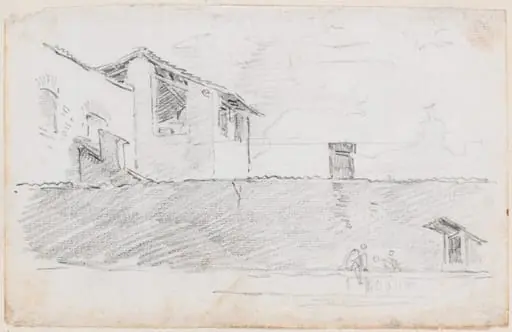
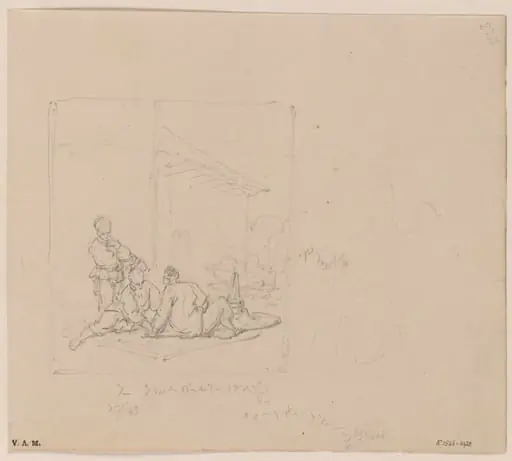
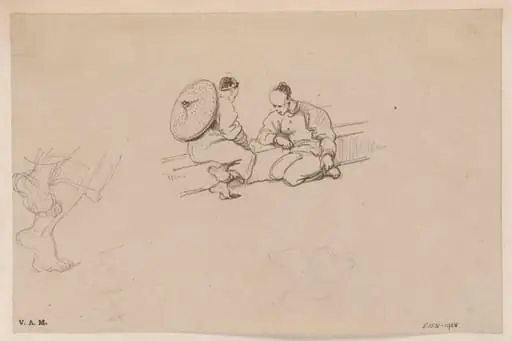
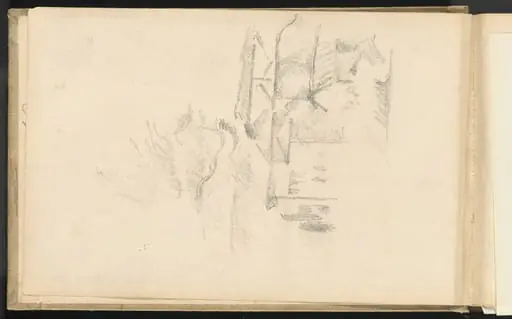
Study for "Le Petit Pont" is a graphite drawing by the Impressionist artist Charles Meryon. It dates from 1850 and is held in the collection of the National Gallery of Art.
- Inscription
- Inscribed:Not signed. Not dated. "(1) lateau de Hanchissante. / (a) escape jeteé sur [illeg.]-" lower center composition, brown ink, artist's hand. "(1)" upper left composition, brown ink, artist's hand. "a" upper center composition, brown ink, artist's hand. "Study by C. Meryon / of details of his etching / Le Petit Pont; LD 26 / (from the Burty coll)" verso, center sheet, graphite, unknown hand. "7" verso, upper right sheet, graphite, unknown hand.
- Markings
- Marked:"PB" (Philippe Burty collector's stamp), lower right margin, red stamped ink, (Lugt 2071). "LRJ" verso, black stamped ink, (Lugt 1760b). "National Gallery of Art" verso, black stamped ink, (Lugt 1932d).
About this work
Overview
Study for "Le Petit Pont" is a graphite drawing on laid paper created by Charles Meryon around 1850. It is a preparatory work for one of his notable etchings.
Subject & Meaning
The drawing depicts two bridges, one with a small central arch and the other longer with a railing, sketched in a few quick lines. The handwritten annotation "Le Petit Pont" indicates the subject is a Parisian bridge, a theme central to Meryon's work.
Technique & Style
Executed in graphite on light brown laid paper, the drawing is characterized by its rough, sketchy style. The faint lines suggest a rapid notation, capturing the essence of the scene rather than a detailed representation.
History & Provenance
Charles Meryon, a French etcher known for his Gothic vision of Paris, created this study. Despite being largely unrecognized in English-speaking contexts, he is regarded as France's most important etcher of the 19th century.
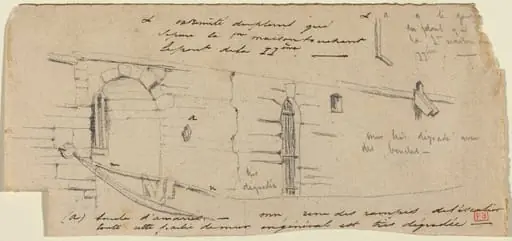
Artist & collection
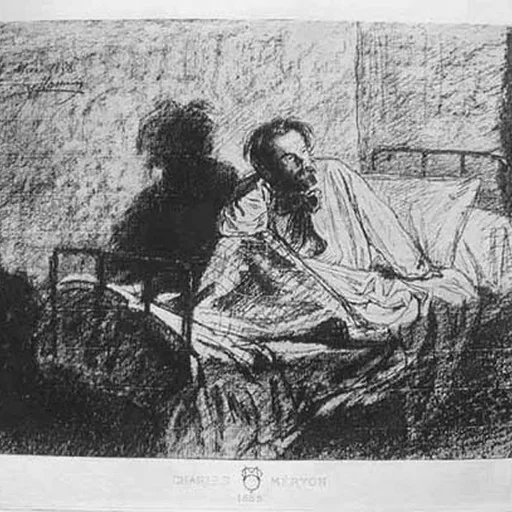
Artist
Charles Meryon (sometimes Méryon, 23 November 1821 – 14 February 1868) was a French artist who worked almost entirely in etching, as he had colour blindness.