Artist
Aurelio Lomi
Duchy of Florence
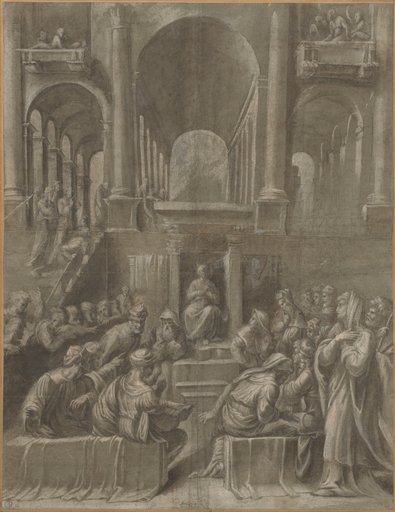
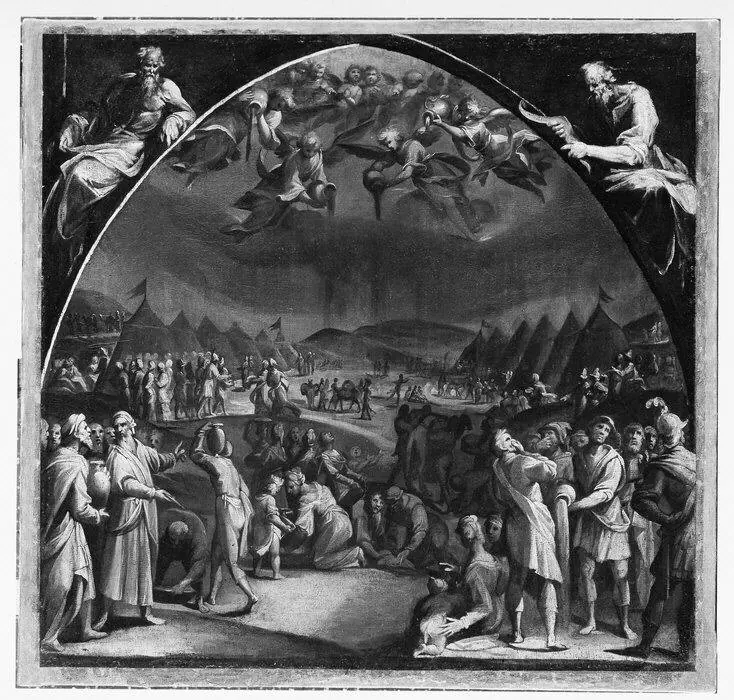
Aurelio Lomi is a Duchy of Florence Baroque artist. 4 works are cataloged here, principally at National Gallery of Art.
Aurelio Lomi (29 February 1556 – 1622) was an Italian painter of the late-Renaissance and early-Baroque periods, active mainly in his native town of Pisa, in the Grand Duchy of Tuscany.
Overview
Aurelio Lomi was an Italian painter of the late Renaissance and early Baroque periods, active mainly in his native Pisa but also in Florence, Rome, and Genoa. Born on 29 February 1556, his career bridged the transition from late Mannerism to the emerging Baroque style. Known for large-scale altarpieces and fresco cycles, Lomi held a dominant artistic role in the churches of Pisa and Genoa around the turn of the seventeenth century. He died between July 1623 and May 1624, leaving behind a significant body of work that chronicles the stylistic shifts of his time.
Biography & dates
Born in Pisa to the Florentine goldsmith Giovanni Battista Lomi, Aurelio was initially trained by his father. By 1578 he was enrolled in the Accademia del disegno in Florence, though he likely departed for Rome the following year. Between roughly 1579 and 1587, he lived in Rome, where he resided near Santa Maria in Vallicella with his brother Orazio. He returned to Pisa in 1588, becoming the painter for the Opera del Duomo and executing major canvases for the cathedral. In 1597 he moved to Genoa, living in palaces along the Strada Nuova and leading local artistic projects until about 1604. He then returned to Pisa, though legal disputes later threatened his standing. He spent his final years largely in Florence, serving as consul of the Accademia del disegno in 1613 and 1618, and died in Pisa on 23 May 1624.
Style & movement
Lomi's work evolved from late Mannerism toward the early Baroque. His Roman period exposed him to the legacy of mannerists like Francesco Salviati, Daniele da Volterra, and Taddeo Zuccari. In Tuscany, his style reflected the influence of his teachers Alessandro Allori and Lodovico Cigoli, evident in his 1595 painting for San Frediano in Lucca. During his Genoese period, his art increasingly announced the Baroque, particularly in the Martyrdom of Saint Stephen for Santa Maria della Pace, where critics note the influence of the Florentine painter Passignano, also known as Domenico Cresti.
Major works
Lomi's earliest known work is the fresco cycle in the Pinelli Chapel of Santa Maria in Vallicella in Rome, featuring scenes from the Life of the Virgin and the Birth of Christ on the arches, the Dormition, Coronation, and Funeral of the Madonna on the vault, and Rebecca and Eleazar and Yael and Sisera on the walls. In Pisa Cathedral, he painted a cycle of the childhood of Christ including the Adoration of the Shepherds and the Adoration of the Magi, plus a Saint Jerome for the Dal Pozzo Chapel in the Camposanto. Other Pisan works include a Madonna and Child with Saints Joseph and Stephen at Santo Stefano dei Cavalieri and a Madonna with Saints Ranieri, Torpe, and Leonardo at San Ranierino. In Genoa, major works include the Assumption and Martyrdom of Saint Biagio at Santa Maria di Castello, the Birth of the Baptist at San Siro, and the Resurrection of Christ and Last Judgement at Santa Maria Assunta in Carignano. A unique secular work is his portrait of the dog Roldano, belonging to Giovanni Andrea Doria, held in the Palazzo Doria Pamphili in Genoa.
Influences & students
Lomi received his earliest training from his father, the goldsmith Giovanni Battista Lomi, and later studied under Alessandro Allori and Lodovico Cigoli in Florence. Some sources also cite Bronzino as a teacher. His Roman exposure to the mannerist circles of Francesco Salviati and Daniele da Volterra further shaped his early style. He came from a family of painters, including his brother Baccio Lomi and his half-brother Orazio Gentileschi, who began as his pupil. Lomi's own pupils included Orazio Riminaldi, Simone Balli, Domenico Fiasella, Pietro Gnocchi, and Augustin Montanari. He also supported his niece, Artemisia Gentileschi, during her time in Florence.
Legacy
Lomi's posthumous reputation is largely tied to his role as a transitional figure between Mannerism and the Baroque in Tuscany and Genoa. While his frescoes in Rome are poorly preserved today, his altarpieces in Pisa and Genoa remain vital to understanding the artistic shifts of the period. His legacy also endures through his pupils, particularly Orazio Gentileschi, who far surpassed him in international fame. Lomi held significant institutional standing in his later years, serving twice as consul of the Florentine Accademia del disegno, and his documented career provides a detailed view of artistic patronage and workshop dynamics in early seventeenth century Italy.
Works by Aurelio Lomi
Collections represented


Artists in a similar vein