Artist
Edouard de Beaumont
France
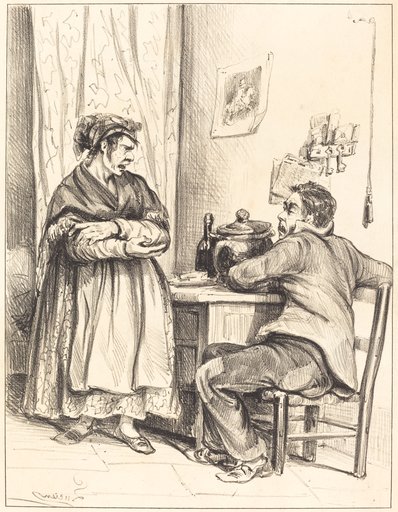
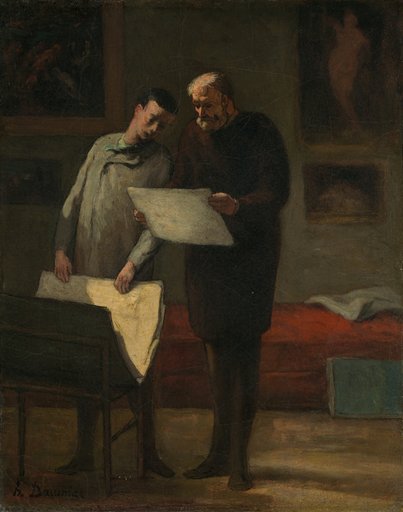
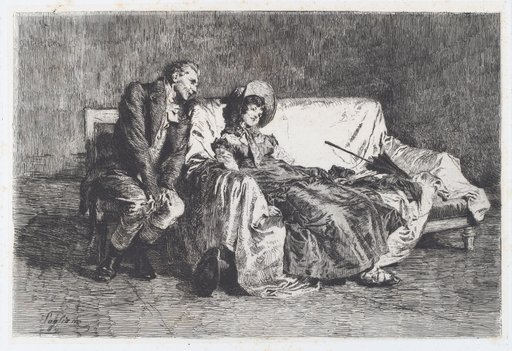
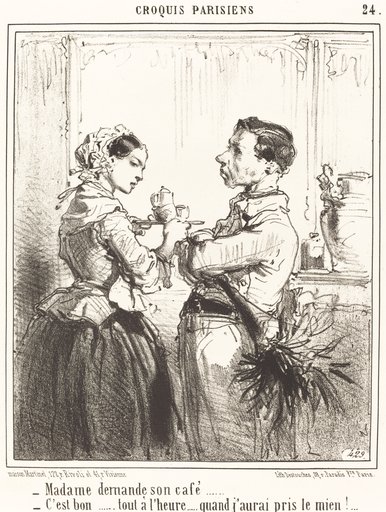
Edouard de Beaumont is a France Romanticism artist. 5 works are cataloged here, principally at National Gallery of Art.
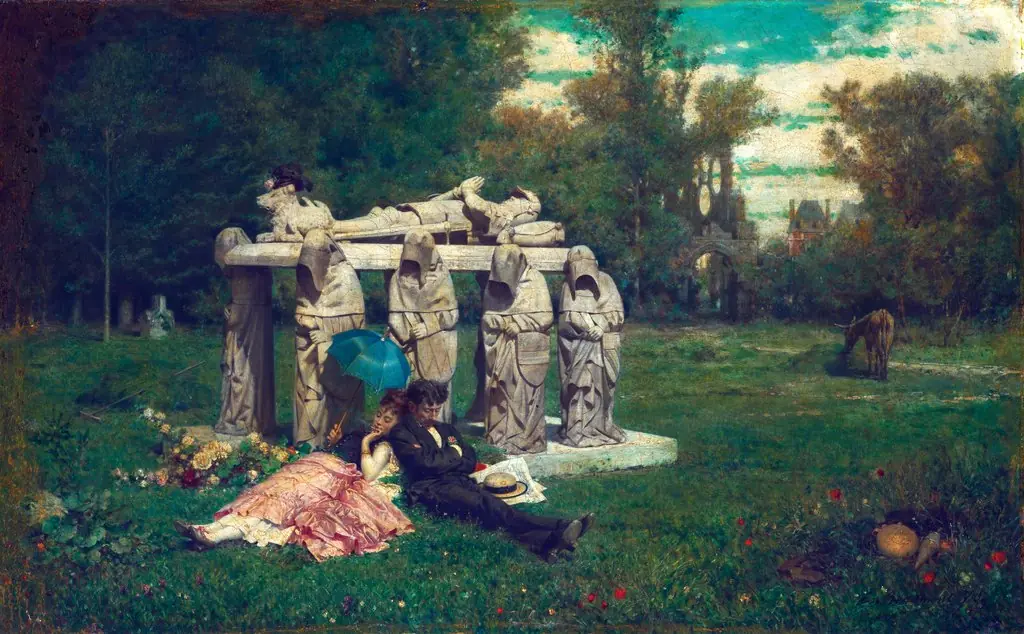
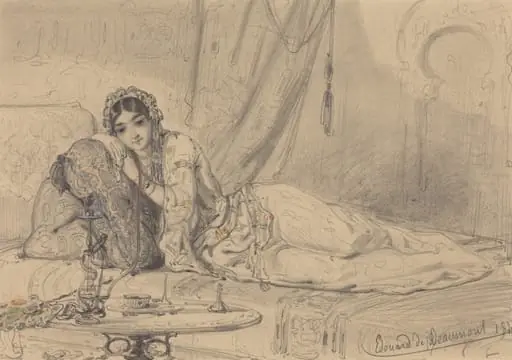
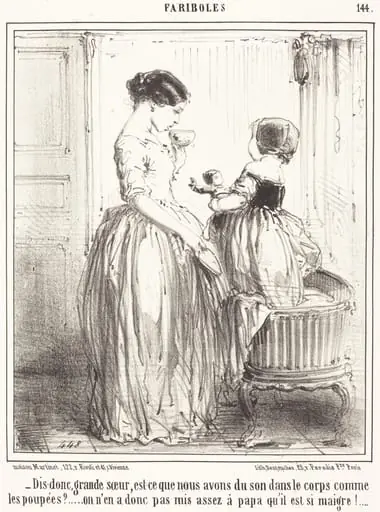
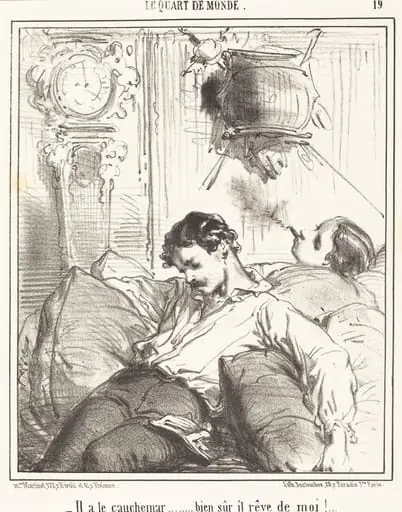
Charles-Édouard de Beaumont (1812/1821, in Lannion – 12 January 1888, in Paris), better known as Édouard de Beaumont, was a French painter, watercolourist, draughtsman, illustrator and lithographer. He is known for religious subjects, genre scenes and landscapes.
Overview
Charles-Édouard de Beaumont, known as Édouard de Beaumont (6 August 1819, Paris, 13 January 1888, Paris), was a French painter, watercolourist, draughtsman, illustrator, and lithographer. Working across multiple media, he built a career that moved from early landscape painting through genre scenes to a late reputation founded on watercolour and illustration. His work encompassed religious subjects, genre scenes, and landscapes, though he is perhaps best remembered for his prolific output as an illustrator and his role in institutionalizing watercolour practice in France.
Biography & dates
Born Jean François Édouard Baumont in Paris on 6 August 1819, de Beaumont was the son of sculptor Jean Marie Bonaventure Baumont Jeanne Louise Françoise Fromentin. His father placed him with the painter Antoine-Félix Boisselier, where he studied drawing and watercolour. He also attempted sculpture, producing several small statuettes, before abandoning the medium.
De Beaumont debuted as a landscape painter at the Salon of 1838, exhibiting views of Cernay and Senlis, and continued to show in 1839 and 1840. From 1840 until 1847 he travelled in Italy. Upon his return, he shifted to genre painting, exhibiting regularly at the Salons between 1853 and 1868, with a final appearance in 1872. In 1879, he co-founded the Société d'aquarellistes français with Jean-Georges Vibert, serving as its president. He died in Paris on 13 January 1888 and was buried in the 10th section of the Cimetière Ancien de Neuilly-sur-Seine.
Style & movement
De Beaumont's artistic trajectory reflects the broader evolution of French painting in the mid-nineteenth century. His early Salon submissions were topographical landscapes in the tradition of plein-air sketching. After his Italian sojourn, he turned to genre painting with a pronounced satirical and humorous vein, evident in the ironic titles he gave his works. His Italian experience informed a more narrative approach to composition.
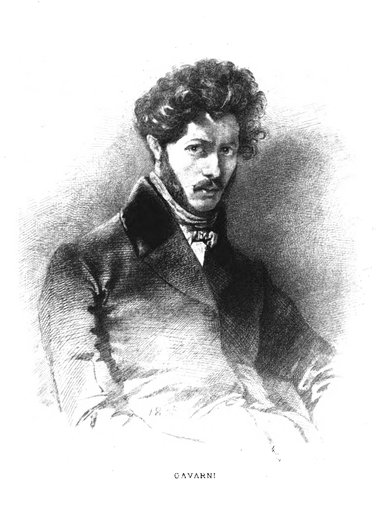
As a watercolourist, de Beaumont developed a more personal style than in his lithographic work, where critics noted frequent borrowings from Paul Gavarni. His genre paintings of the 1860s and 1870s often carried social commentary beneath their entertaining surfaces. The 1872 Salon painting Suite d'une Armée, depicting the sale of a group of female slaves, exemplifies this approach: its ironic title masked a serious subject that captured public attention and was widely copied and reproduced.
Major works
De Beaumont's Salon career spanned four decades. His early landscapes included Vue prise à Cernay and Vue prise aux environs de Senlis (1838), followed by views of the Chevreuse valley (1840). After his return from Italy, he exhibited genre subjects: Bohémiens (1853), Les Écueils de la vie and Un peu de beau temps (1855), Les Femmes chassant la Vérité (1864), Andromède (1866), and Circé (1867).
His most significant painting, La Part du capitaine (1868), entered the collection of the Musée des Beaux-Arts de Nancy. The 1872 Salon marked his final major success with Suite d'une Armée, which achieved considerable popularity and was reproduced in multiple versions and print editions. As an illustrator, he executed the complete image programmes for the Revue pittoresque, Le Diable amoureux, Les Nains célèbres, and the 1845 Parrotin edition of Victor Hugo's Notre-Dame de Paris.
Influences & students
De Beaumont's formative training came through Antoine-Félix Boisselier, who instructed him in drawing and watercolour. The French Wikipedia source notes that his lithographic work drew criticism for excessive reliance on Paul Gavarni, indicating the latter's influence on his graphic style. No pupils or direct followers are documented in the available sources, though the Italian Wikipedia observes that as a watercolourist he "traced the path for a good number of able artists," suggesting an indirect influence on subsequent practitioners of the medium through his institutional leadership.
Legacy
De Beaumont's posthumous reputation rests on two principal achievements: his prolific illustration work for major French literary publications, and his co-foundation of the Société d'aquarellistes français in 1879, which formalized watercolour as a serious artistic medium in France. His bequest of his substantial collection of antique arms to the Musée de Cluny (now the Musée national du Moyen Âge) in Paris represents a significant contribution to public collections. His works are held in institutions including the Musée des Beaux-Arts de Nancy, the Musée d'Orsay, and other French museums. The Bénézit Dictionary of Artists and the Allgemeines Künstlerlexikon both carry entries on his career, securing his place in standard reference works of nineteenth-century French art.
Works by Edouard de Beaumont
Collections represented


Artists in a similar vein