Artist
Alessandro Algardi
Papal States
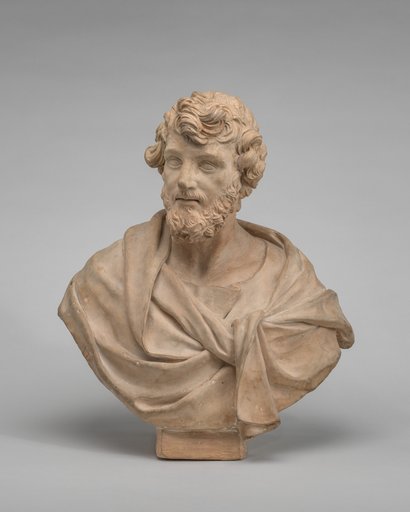
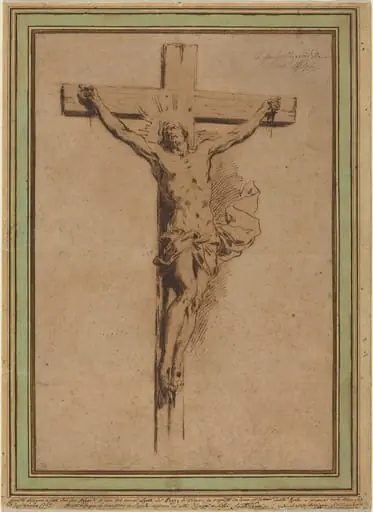
Alessandro Algardi is a Papal States Baroque artist. 1 work is cataloged here, principally at National Gallery of Art.
Italian, Bologna 1598–1654 Rome
Overview
Alessandro Algardi (July 31, 1598, June 10, 1654) was an Italian sculptor and architect who stands as one of the principal masters of Roman Baroque sculpture, alongside his great rival Gian Lorenzo Bernini. Active almost exclusively in Rome from 1625 until his death, Algardi developed a distinctive sculptural idiom marked by restrained dignity, precise detail, and sober elegance that offered a compelling alternative to Bernini's more theatrical dynamism. He is now most admired for his portrait busts, which combine great vivacity with formal severity, and for major works such as the Tomb of Pope Leo XI, the bronze statue of Pope Innocent X, and the celebrated marble relief Fuga d'Attila in St Peter's Basilica.
Biography & dates
Algardi was born in Bologna, the son of a silk merchant, Giuseppe Algardi. His initial artistic training came in the workshop of the painter Lodovico Carracci, though his aptitude for sculpture soon led him to the studio of Giulio Cesare Conventi (1577-1640), an artist of modest talents. During this period he produced his earliest known works: two chalk statues of saints for the Oratory of Santa Maria della Vita in Bologna. Through the architect Gabrielle Bertazzuoli, Algardi secured employment at the age of twenty-four at the court of Ferdinando I, Duke of Mantua, where he primarily made models for silverwork. He also worked for local jewelers on figurative designs. After a short stay in Venice around 1623, Algardi traveled to Rome in 1625, furnished with an introduction from the Duke of Mantua to Cardinal Ludovico Ludovisi, nephew of Pope Gregory XV. For Ludovisi he restored ancient statues, carved ivory, and executed small bronzes. Around 1630 he formed a close friendship with the painter Domenichino (Domenico Zampieri), with whom he collaborated frequently in subsequent years. For nearly a decade Algardi struggled to secure major commissions, as Bernini and his studio dominated the Roman sculptural market under Borghese and Barberini patronage. His early Roman work consisted of terracotta and marble portrait busts, crucifixes, and other small works. In 1634 he received his first major commission: the tomb of Pope Leo XI from Cardinal Ubaldini (Medici), which he began in 1640 and completed by 1644. The 1635-38 period saw him execute a colossal statue of Philip Neri with kneeling angels for Santa Maria in Vallicella (completed 1640), followed by the sculptural group of the beheading of Saint Paul for San Paolo in Bologna. The death of Urban VIII in 1644 and the accession of Innocent X marked a turning point. Algardi was appointed papal sculptor in 1644, succeeding Bernini, and in 1640 he had already been placed in charge of the Accademia di San Luca. Under Innocent X he was active primarily as an architect, overseeing extensive building works on the Capitoline and designing the Villa Doria Pamphili for the pope's nephew, Camillo Pamphili. In 1650 he met Diego Velázquez, who obtained Spanish commissions for him, including four chimney-pieces for the Royal Palace of Aranjuez and fountain figures for the gardens. The pinnacle of his artistic career came in 1650 with the unveiling of the Fuga d'Attila relief in St Peter's Basilica, a work he had labored on since 1646 mainly with his assistant Domenico Guidi. In his final years he delegated increasingly to his workshop and functioned more as advisor. He died in Rome on June 10, 1654, at age fifty-six, and was buried in the church of Santi Giovanni Evangelista e Petronio.
Style & movement
Algardi's work belongs to the high Baroque, yet it consistently demonstrates a restraining sobriety that distinguishes it from the more exuberant theatricality of Bernini's characteristic productions. Where Bernini pursued dynamic movement, emotional intensity, and complex spatial compositions, Algardi cultivated an impassive, ethereal dignity and a precise, detailed naturalism. This difference is evident in comparative analyses of their works: Algardi's allegorical figures, such as Magnanimity and Liberality on the Tomb of Leo XI, possess a calm, iconic stillness rather than active drama. The tomb itself is somberly monotone, lacking the polychromatic excitement of Bernini's Urban VIII monument, and some scholars have identified the helmeted Magnanimity with Athena and images of Wisdom.
Algardi's portraits, highly prized for their formal severity, contrast markedly with Bernini's more vivacious expression. His bronze of Innocent X, now in the Capitoline Museums, stands in the same Sala degli Orazi e Curiazi as Bernini's Urban VIII, inviting direct comparison. The critical reception has noted that while the surface may appear less finished, this very quality underscores the work's power.
A defining aspect of Algardi's method was his extensive work as a modeler. Having spent much of his career making models for silver and other precious objects, his sculpture exhibits exceptional detail and precision. He executed his own designs with fine pen work for decorative elements intended to be chased in gold or silver. This graphic production, though small in scale, was prized through the eighteenth century. However, some critics have noted that this modeler's precision may have come at the cost of the lively spontaneity that animates Bernini's best work.
Major works
The Tomb of Pope Leo XI (begun 1640, completed 1644) represents Algardi's first major commission and his response to Bernini's Tomb of Urban VIII. Located in St Peter's Basilica, it features the seated pope in full regalia offering a blessing, flanked by the allegorical figures of Magnanimity and Liberality. The monument's restrained dignity and monochrome sobriety offer a deliberate alternative to Bernini's more dynamic composition. For Santa Maria in Vallicella, Algardi executed the colossal statue of Philip Neri with kneeling angels (1635-38, completed 1640), commissioned by Pietro Boncompagni. Immediately following this, he produced the sculptural group of the Beheading of Saint Paul for San Paolo in Bologna, depicting a kneeling, resigned saint and an executioner poised to strike. Two reliefs, The Martyrdom of St Paul and The Rest on the Flight into Egypt, belong to this productive period; a contemporary replica of the latter is now in the Victoria and Albert Museum. The bronze statue of Pope Innocent X (commissioned 1646, completed 1650) stands in the Capitoline Museums, Palazzo dei Conservatori, in the Sala degli Orazi e Curiazi. This large hieratic portrait, placed in deliberate dialogue with Bernini's Urban VIII in the same room, exemplifies Algardi's formal severity and commanding presence. The Fuga d'Attila, or Flight of Attila (1646-1653), is Algardi's masterpiece and the work that reinvigorated the use of large marble reliefs in Rome. Created for St Peter's Basilica from multiple massive marble blocks, it depicts Pope Leo I confronting Attila the Hun. The relief was celebrated in Algardi's own lifetime and represented the culmination of his artistic achievement. A detailed silver model of the relief was presented by the Pope to Philip IV of Spain. For Spanish patrons, Algardi produced four chimney-pieces for the Royal Palace of Aranjuez and the figures on the Neptune fountain in the gardens. The Augustinian monastery at Salamanca houses the tomb of the Count and Countess de Monterey. In Rome, his architectural and decorative work at the Villa Doria Pamphili included sculpture-encrusted fountains and garden features, some of which remain. Other notable works include the Crucifix in ivory for Santissime Stimmate di San Francesco in Rome, and stucco statues for San Silvestro al Quirinale under Innocent X. The so-called Chenets de l'Algarde, two bronze groups of Jupiter and Juno originally designed as andirons for Philip IV of Spain, were reproduced in multiple castings for various royal courts throughout the seventeenth and eighteenth centuries.
Influences & students
Algardi's early training in Bologna placed him within the Carracci circle, first in the workshop of Lodovico Carracci and subsequently with the sculptor Giulio Cesare Conventi. The Carracci academy's emphasis on naturalism and classical study informed his precise, detailed approach. His friendship with Domenichino, formed around 1630, proved significant for his Roman career, as did the support of Pietro da Cortona, another of the major rivals of Bernini in the Roman artistic milieu. The sources indicate that Algardi stood in continuous professional rivalry with Francesco Mochi, though the precise nature of their relationship remains less documented. The French court attempted to recruit him: François de Sublet de Noyers sought to attract him to Paris, and in 1648 Cardinal Jules Mazarin made a further unsuccessful attempt. Algardi's workshop became an important training ground for the next generation of sculptors. His most significant pupils included Ercole Ferrata, Domenico Guidi, and Giuseppe Perroni, all of whom assisted him on major projects. Guidi worked closely with Algardi on the Fuga d'Attila relief. Other pupils and assistants included Girolamo Lucenti, Francesco Baratta, and Giovanni Maria Baratta. The French biographical tradition also records Camillo Mazza (1602-1672) among his students, noting his execution of the Pietà for the Capuchin church in Bologna and the bronze doors of the Basilica of Saint Anthony in Padua.
Legacy
Algardi's posthumous reputation rests on his status as Bernini's most significant rival and as the leading exponent of an alternative Baroque sculptural aesthetic. Contemporary and near-contemporary criticism recognized him as Bernini's equal, and modern scholarship has continued to assess his work in direct dialogue with his more famous competitor. The placement of his Innocent X bronze opposite Bernini's Urban VIII in the Capitoline Museums institutionalizes this comparative framework.
His portrait busts, praised for their vivacity and dignity, have remained the works most consistently admired. The Fuga d'Attila relief not only represented the apex of his own achievement but also reinvigorated the large marble relief as a viable form for major ecclesiastical commissions in Rome, demonstrating that sculpted marble altarpieces could achieve dramatic power despite their cost.
The market for his work extended beyond Italy through Spanish patronage, mediated by Velázquez, and his small-scale productions, particularly the finely detailed models and drawings for precious metalwork, maintained their value through the eighteenth century. The multiple castings of his andiron designs for various European courts attest to the international dissemination of his artistic vocabulary.
Algardi's methodological legacy, carried forward by pupils such as Ferrata and Guidi, emphasized the modeler's precision and the controlled, dignified presentation of form. While Bernini's more exuberant manner dominated subsequent Baroque sculpture more visibly, Algardi's restrained classicism offered an important counter-current that influenced the development of Roman sculptural practice in the later seventeenth century. He is buried in Santi Giovanni Evangelista e Petronio in Rome.
Works by Alessandro Algardi
Collections represented

Artists in a similar vein