Artist
Giovanni Domenico Ferretti
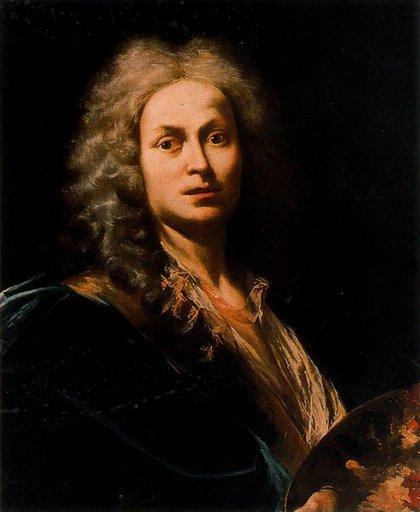
Italy
Giovanni Domenico Ferretti is an Italy Rococo painting artist. 5 works are cataloged here, principally at Kunsthistorisches Museum.
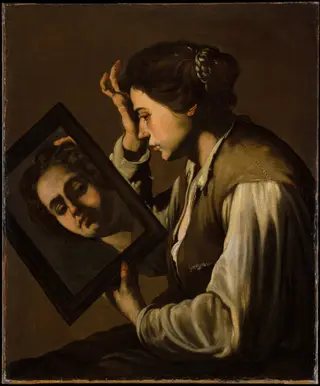
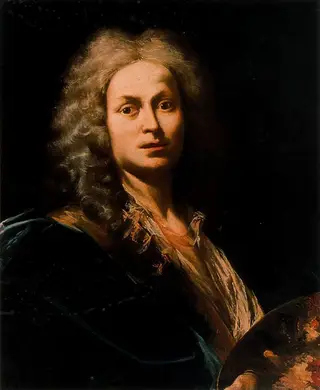
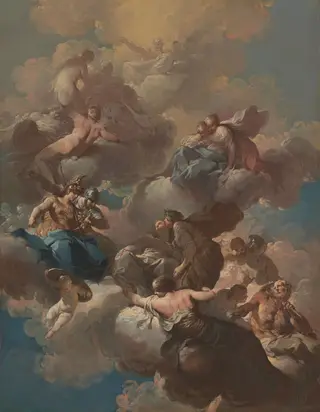
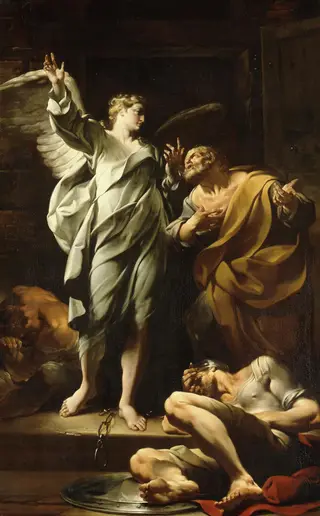
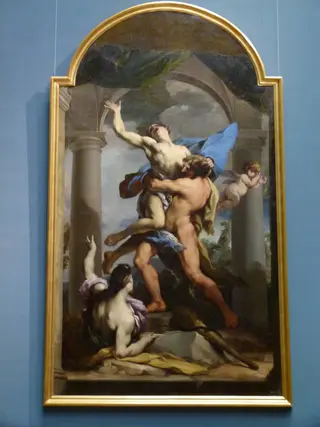
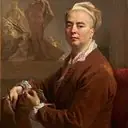
Giovanni Domenico Ferretti (Giandomenico), also called Giandomenico d'Imola, was an Italian Rococo style painter from Florence. His fresco style was influenced by Sebastiano Ricci's lively, colourful, and pastel-hued frescoes in the Palazzo Fenzi.
Overview
Giovanni Domenico Ferretti, also called Giandomenico d'Imola (15 June 1692-18 August 1768), was an Italian painter who stands as one of the most significant fresco and canvas painters of the Tuscan Rococo. Born in Florence to a family with Emilian roots, he synthesized the classical traditions of Florentine painting with the vibrant colorism of Venetian and Emilian influences to create a distinctive personal style. His career spanned the height of the Rococo period in Tuscany, producing major decorative cycles for churches, palaces, and villas across Florence, Pistoia, Bologna, and beyond. Though many of his works have been lost to suppression, modernization, or disaster, his surviving frescoes and oil sketches reveal an artist of remarkable technical facility and compositional elegance who helped revitalize Florentine painting during a period of perceived decline.
Biography & dates
Ferretti was born in Florence on 15 June 1692 to Antonio di Giovanni da Imola, a goldsmith, and Margherita di Domenico Gori. His mother came from a prominent Florentine family; his uncle was the celebrated antiquarian Anton Francesco Gori, renowned for his studies of Etruscan civilization. Despite his Florentine birth, Ferretti's paternal family originated from Imola in Emilia-Romagna, a connection that would profoundly shape his training and early career.
His initial studies began in 1708 in Imola under the painter Francesco Chiusuri. His first major commission came in this city: the decoration of the cathedral dome with images of patron saints, including John Cassian, Peter Chrysologus, Praejectus, and Maurelius, completed around 1720. During this period he also painted the Stories of the Life of Saint Dominic for the convent of San Domenico.
In 1714 Ferretti moved to Bologna, where he worked in the workshop of Felice Torelli and his wife Lucia Casalini, both painters. According to his contemporary Giovanni Camillo Sagrestani, he was fortunate to encounter the Bolognese master Giuseppe Maria Crespi, whose genre painting and dark interiors influenced the young artist. He remained in Bologna for approximately five years, though he made return trips to Tuscany during this period.
Ferretti returned definitively to Florence in 1719, armed with a letter of recommendation from Cardinal Ulisse Giuseppe Gozzadini to Grand Duke Cosimo III de' Medici. He joined the Florentine Accademia del Disegno in 1715, where he later taught painting and also designed tapestries for the Medici. In 1731 he became one of the Dodici Maestri di Pittura at the Accademia di Belle Arti di Firenze, and the following year he became Console of the same institution, a post he retained almost until his death.
His mature career was marked by an extraordinary volume of commissions. Between 1720 and 1725 he worked extensively in Pistoia. From the 1730s through the 1750s he concentrated primarily on fresco cycles for churches in Florence and Pistoia. His final major project, the frescoes for Santa Maria del Carmine in Florence, occupied him until his death; these were destroyed by fire in 1771, three years after his death. Ferretti died in Florence on 18 August 1768.
Major works
Ferretti's oeuvre encompasses fresco cycles, altarpieces, oil sketches, tapestry designs, and secular decorations across Tuscany and Emilia. Among his earliest significant works are the ceiling of a salone in the Palazzo Nonfinito in Florence (1715-1720) and the ceiling of the great staircase of the Palazzo Amati-Cellesi in Pistoia (1721), both showing strong Ricci influence. His early signed and dated work, the Ecstasy of Saint Teresa of Avila with Saint Catherine of Siena (1723), painted for the Badia of Castiglion Fiorentino, is the only signed and dated work surviving from the early part of his career. In 1725 he frescoed rooms in the Villa Puccini near Pistoia, by which time he had achieved a distinctive personal approach. From about 1728, he worked for the arazzeria or tapestry workshop of Gian Gastone de' Medici; his Rape of Europa (Florence, Uffizi, 147 × 205 cm, 1728-1737) was probably the modello for a cartoon intended for a series on the Four Elements, though the tapestry was never finished. He collaborated with Lorenzo del Moro on a tapestry representing Water. The 1730s brought major ecclesiastical commissions. In 1734 he completed the decoration of the choir and apse of the Badia Fiorentina, with the Martyrdom of St Stephen and the Assumption and Coronation of the Virgin. In 1736-1737 he completed two decorative cycles: one for the oratory of the Madonna della Quercia at Le Cure (now lost), and another for San Domenico al Maglio in Florence, painted in collaboration with Vincenzo Meucci and Mauro Soderini. In 1738 he painted the apse with the Adoration of the Shepherds and the cupola with God the Father Blessing for the Archbishop of Florence's private chapel, San Salvatore al Vescovado. The frescoes in the church of San Prospero e Filippo in Pistoia (1731-1746), executed with collaborators Lorenzo del Moro and Pietro Anderlini, are considered his masterpiece, representing the fullest expression of his mature style. In 1741 he painted the Death of Saint Joseph for the chapel of San Giuseppe in Florence Cathedral, and produced frescoes depicting scenes from the Life of Christ for the refectory of the convent of the Santissima Annunziata. His secular works include the frescoed allegorical scenes in the Sala delle Stagioni in the Palazzo Sansedoni at Siena, and the Harlequinades of 1742. His Self-Portrait of 1719 is held in the Uffizi, Florence. His final great project, the frescoes for Santa Maria del Carmine in Florence, begun in 1755, was destroyed by fire in 1771. Other works include: the Annunciation (Museo Civico, Prato); Sacred Conversation (Museo Civico, Volterra); The Transport of the Bones of St. Guido (1752, Museo dell'Opera del Duomo, Pisa); and the Enlèvement d'Europe (Chambre des Députés, Rome).
Legacy
Ferretti's legacy is marked by both substantial achievement and significant loss. During his lifetime, he enjoyed considerable reputation and institutional recognition, holding prestigious posts at the Florentine academy and receiving commissions from the Medici court, the Archbishop of Florence, and numerous religious houses. His fame extended beyond Florence to Pistoia, Siena, Bologna, and Imola. The posthumous destruction of many of his works has substantially diminished his visible legacy. The suppression of churches under Grand Duke Pietro Leopoldo of Lorraine in the later eighteenth century eliminated numerous fresco cycles. The fire of 1771 destroyed his final masterwork at Santa Maria del Carmine. The modernization of the oratory of the Madonna della Quercia at the end of the eighteenth century obliterated another major cycle. These losses have made comprehensive assessment of his achievement difficult. Art historical scholarship has been somewhat limited by these circumstances, though Edward A. Maser's foundational work, including his 1957 dissertation The life and work of Giovanni Domenico Ferretti of Florence (1692-1768) and subsequent publications on the Harlequinades, established the basis for modern study. More recent contributions by Francesca Baldassarri (2002) and others have continued to refine understanding of his oeuvre. Ferretti is not to be confused with the sculptor Domenico Ferretti (1702-1774), a distinction necessary for clear attribution. His work is held in major collections including the Uffizi in Florence, and his paintings appear in museums from Volterra to Rome. The Rape of Europa in the Uffizi and the Self-Portrait of 1719 remain among his most accessible works for modern viewers. His significance lies in his role as a bridge between the classical Tuscan tradition and the more colorful, dynamic approaches of the international Rococo, helping to revitalize Florentine painting during a period when the region had ceded artistic leadership to other Italian centers.
Works by Giovanni Domenico Ferretti
Collections represented


Artists in a similar vein