Artist
Henry Mosler

Kingdom of Prussia
Henry Mosler is a Kingdom of Prussia Impressionism artist. 4 works are cataloged here, principally at National Gallery of Art.
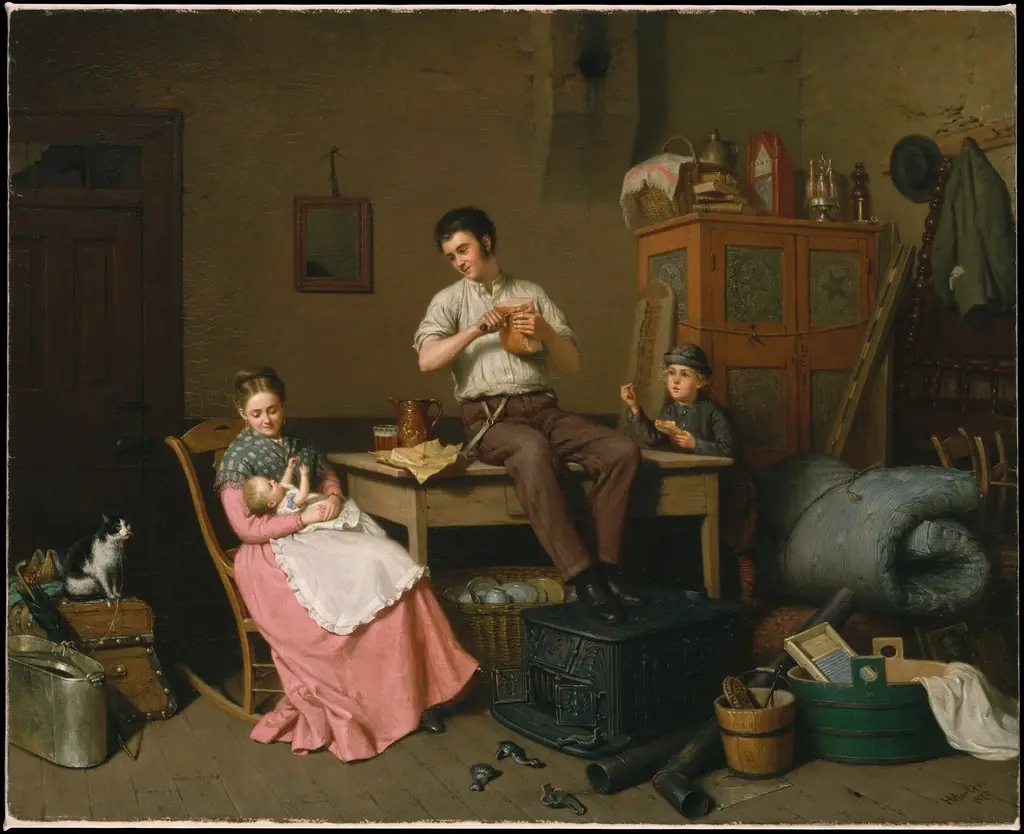
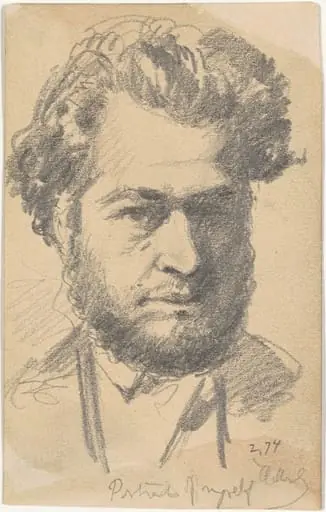
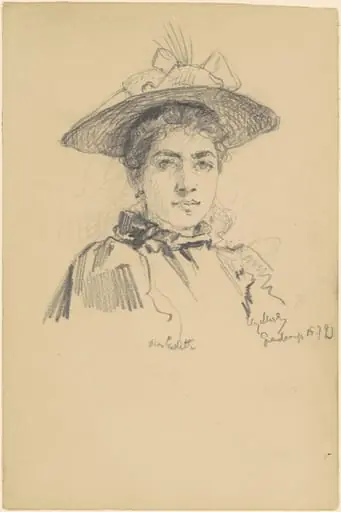
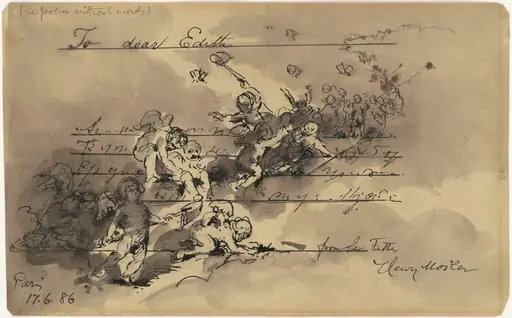
Henry Mosler (June 6, 1841 – April 21, 1920) was a German-born painter who documented American life, including colonial themes, Civil War illustrations, and portraits of men and women of society.
Overview
Henry Mosler (June 6, 1841, April 21, 1920) was a German-born American painter, wood engraver, and illustrator whose career spanned the second half of the nineteenth century and the early twentieth. He is best known for documenting American life through colonial genre scenes, Civil War illustrations, and portraits of prominent men and women of society. His significance lies in bridging European academic training with American subject matter, achieving international recognition when his painting Le Retour became the first work by an American artist purchased for the Luxembourg Palace in Paris.
Biography & dates
Mosler was born in Tropplowitz, Silesia, Prussia (present-day Opawica, Poland), and emigrated with his family to New York in 1849 at age eight. His father, Gustavus Mosler, had worked as a lithographer in Europe but found employment as a cigar maker and tobacconist in New York. In 1851, the family relocated to Cincinnati, Ohio, where a substantial German-Jewish community had formed. As a teenager, Mosler apprenticed to wood engraver Horace C. Grosvenor and received basic painting instruction from amateur landscape painter George Kerr.
Mosler became a draughtsman for the comic paper Omnibus in Cincinnati in 1855. From 1859 to 1861, he studied under genre painter James Henry Beard. During the American Civil War, from 1862 to 1863, he served as an art correspondent for Harper's Weekly, producing 34 drawings, including 18 depicting the Kentucky and Ohio Campaign of 1862, while also serving as aide-de-camp with the Army of the Ohio. He created portraits of several Union generals during this period.
In 1863, Mosler departed for Düsseldorf, where he studied for nearly three years at the Royal Academy under Heinrich Mücke and Albert Kindler. He then spent six months in Paris studying under Ernest Hébert. Returning to Cincinnati in 1866, he received numerous portrait commissions and helped found the Associated Artists of Cincinnati in 1867, also teaching at the McMicken School of Design. In 1869, he married Sara Cahn, who was born in Bavaria.
Mosler returned to Europe in 1874, studying for three years under Carl Theodor von Piloty at the Munich Academy, where he won a medal. From 1877, he resided in France, particularly in Brittany and Pont-Aven, painting rural scenes. He received numerous honors, including knighthood in the Legion of Honor and membership in the Académie des Beaux-Arts in Paris. In 1894, he moved his family to New York, opening a studio in Carnegie Hall. The National Academy of Design elected him an associate in 1895. He continued painting into the early twentieth century and died of heart failure in New York at age 78.
Style & movement
Mosler's artistic development reflects the transatlantic circulation of styles in the nineteenth century. His early training in Cincinnati and his work as an illustrator for Harper's Weekly gave him a foundation in narrative and documentary approaches. The Düsseldorf Academy instilled in him the detailed, storytelling composition characteristic of the Düsseldorf School of painting, evident in works such as Just Moved (1870) and Am Hochzeitsmorgen (The Bridal Decoration, 1883).
His subsequent study in Munich under Carl Theodor von Piloty exposed him to the Munich School's historical and genre painting traditions. During his residence in Brittany and Pont-Aven from 1877 to 1884, Mosler painted rural scenes with what scholars have described as sometimes heightened realism, celebrating rural life and its values against the backdrop of rising urbanism and industrialization. This period associates him with the Pont-Aven School movement, though his work maintained stronger ties to academic naturalism than to the synthetist experiments of Gauguin and his circle. His genre paintings and portraits combined meticulous technique with accessible narrative content, appealing to both European and American audiences.
Major works
Mosler's first significant recognition came with The Lost Cause, exhibited at the National Academy of Design in 1868, followed by the group composition Betsy Ross Making the First American Flag. The Lost Cause, originally published as an illustration in Harper's Weekly on November 1, 1862, became an emblematic image in Southern culture, widely distributed as a chromolithograph in subsequent years; it was reportedly commissioned by Albert Berry, a Confederate veteran from Kentucky.
His painting Le Retour (The Return of the Prodigal Son), shown at the Paris Salon of 1879, achieved the distinction of becoming the first painting by an American artist purchased for the Luxembourg Palace. During his Breton period, he painted The Quadroon Girl and Early Cares, both accepted by the Salon of 1878. He received a silver medal at the Paris Salon of 1889, and gold medals at Paris in 1888 and Vienna in 1893.
Two drawings by Mosler, Priest Standing, Pulling Aside a Curtain with His Right Hand and Priest Standing Near a Fireplace, are held in the collection of the Louvre Museum, Department of Graphic Arts.
His works are now in numerous public collections, including the Allentown Art Museum, Wichita Art Museum, Smithsonian American Art Museum, Huntington Library, Museum of Fine Arts, Boston, Morris Museum of Art in Augusta, Sydney Art Museum in New South Wales, Cincinnati Art Museum, Richmond Art Museum, and art museums in Springfield, Massachusetts, and various New York museums.
Influences & students
Mosler's artistic formation was shaped by several teachers across Europe and America. In Cincinnati, James Henry Beard provided his initial formal training in genre painting. In Düsseldorf, Heinrich Mücke and Albert Kindler transmitted the narrative conventions of the Düsseldorf School. Ernest Hébert in Paris offered exposure to French academic traditions, while Carl Theodor von Piloty in Munich influenced his approach to historical and genre subjects. Alexander Wagner also taught him at the Munich Academy.
Mosler in turn influenced younger artists through his teaching. His documented students include Isabelle Davis Seymour, a listed miniature portrait artist based in Evanston, Illinois, and Wilder M. Darling, an artist and teacher working in Toledo.
Legacy
Mosler's legacy extends through his family and his institutional afterlife. His son Gustave Henry Mosler (1875-1906), born in Munich, also became a painter. His other son, Arthur Rembrandt Mosler, married the famous soprano and voice teacher Estelle Liebling. His granddaughter Audrey Skirball-Kenis (née Marx) became a prominent Los Angeles philanthropist and founder of the Skirball Cultural Center. His great-grandson John F. McCrindle was an art collector and patron who established the Joseph F. McCrindle Foundation to award grants to arts, music, and social justice organizations. Mosler's papers are preserved in the Archives of American Art at the Smithsonian Institution, and his Civil war diary has been the subject of a digital exhibition. The Jewish Encyclopedia published an early assessment of his career in 1906. His work continues to be studied for its documentation of American historical memory, its transatlantic artistic exchanges, and the complex cultural politics of an immigrant Jewish Unionist creating images that resonated across regional and political divides in post-Civil War America.
Works by Henry Mosler
Collections represented


Artists in a similar vein