Movement
Düsseldorf school of painting
Düsseldorf school of painting is an art movement of the 1810–1860 period. The gallery holds 2 works in this movement, including works by Andreas Achenbach, Oswald Achenbach and Bengt Nordenberg. Browse Düsseldorf school of painting paintings, portraits, pictures and artworks from the world's public-domain museum collections.
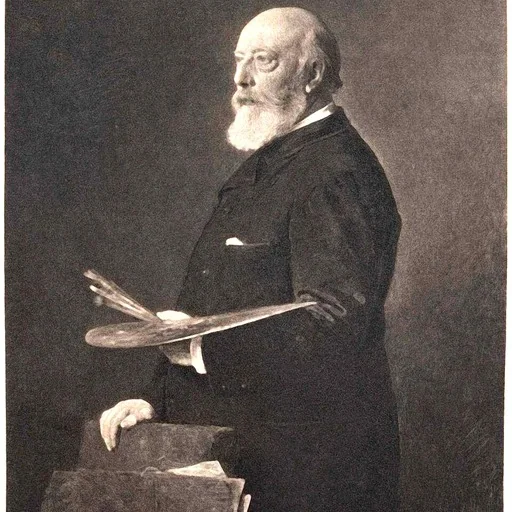
The Düsseldorf school of painting refers to the artists who taught and trained at the Düsseldorf Academy (today the Kunstakademie Düsseldorf) across the long nineteenth century, roughly from 1819 to 1918. Its identity crystallised under the directorship of Wilhelm von Schadow (1789–1862), who led the academy from 1826 to 1859 and turned a provincial Rhineland school into the foremost training ground for painters in the German lands. A member of the Nazarene movement, Schadow steered the institution toward religious and history painting—his pupils famously frescoed the chapel of St. Apollinaris at Remagen—while building a rigorous pedagogy that drew students from across Europe and North America.
Stylistically the school fused the disciplined line and draughtsmanship of Neoclassicism with the moods and motifs of Romanticism. Its hallmarks were meticulous drawing, truthful rendering of natural form, and tightly organised composition: paintings typically place their strongest accent in the middle ground, frame the edges with dark masses of rock or foliage, lead the eye inward along a road or trail, and dissolve into atmospheric, filmy distances beneath stormy, dramatically lit skies. These conventions served sentimental genre scenes, anecdotal history pictures, and—increasingly—landscape painted for its own sake.
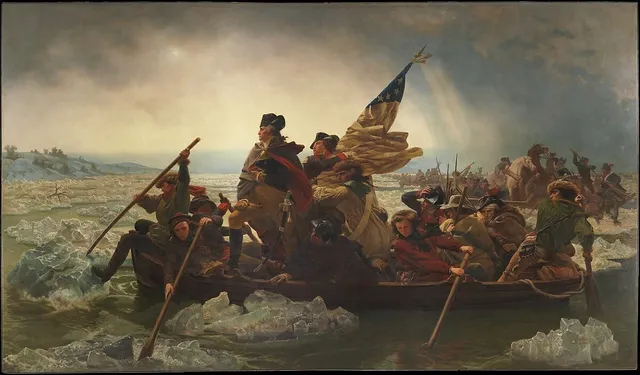
The school's leading figures span its genres. Johann Wilhelm Schirmer shaped a generation of landscapists, while Carl Friedrich Lessing (1808–1880) produced both brooding history pictures and melancholic landscapes. Andreas Achenbach (1815–1910), often called the father of German landscape painting, won fame for tempestuous North Sea marines, Dutch canals, and Rhineland villages; his younger brother Oswald Achenbach (1827–1905) specialised instead in sun-warmed Italian scenes. Emanuel Leutze (1816–1868), German-American, painted his iconic Washington Crossing the Delaware in Düsseldorf, using fellow students as models.
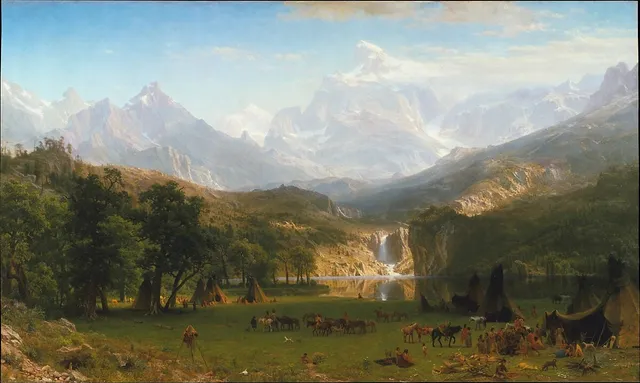
The academy's reach was extraordinary, especially in the United States. American painters including George Caleb Bingham, Eastman Johnson, Worthington Whittredge, William Stanley Haseltine, and Albert Bierstadt—whose vast The Rocky Mountains, Lander's Peak channels Düsseldorf's panoramic grandeur—studied or absorbed its methods, carrying them home to inflect the Hudson River School. So central was the experience that Düsseldorf was regarded as a near-obligatory stop for the ambitious American art student. The school's polished realism dominated mid-century taste before later being eclipsed by Impressionism and the modernist currents that the same academy would, decades on, help foster.
Key artists
Works
Groups & collectives
Frequently asked questions
What is Düsseldorf school of painting?
Düsseldorf school of painting is an art movement. A 19th-century German art movement centered on the Düsseldorf Academy, which trained students from across Europe and the Americas.
Who are the key Düsseldorf school of painting artists?
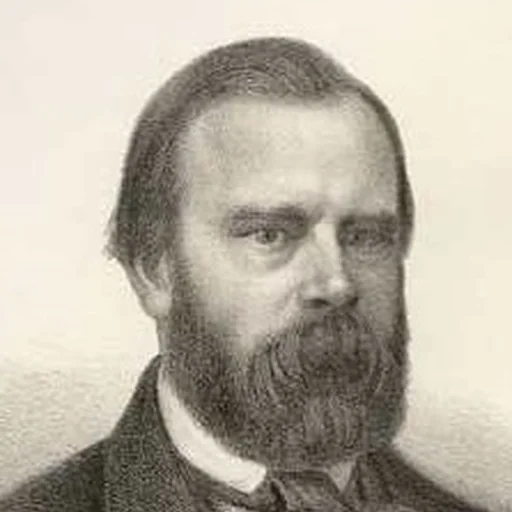
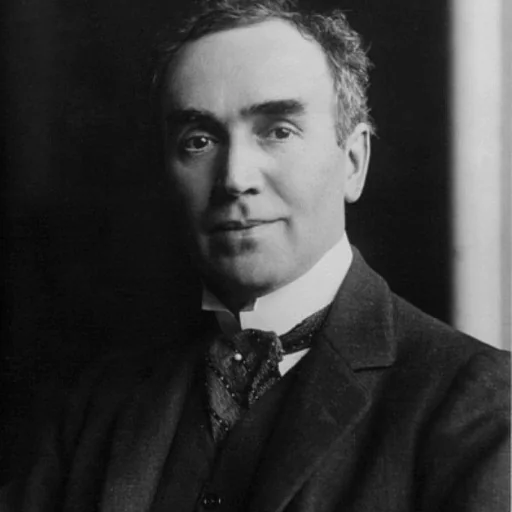
Key Düsseldorf school of painting artists in the collection include Andreas Achenbach, Oswald Achenbach and Bengt Nordenberg.
When did Düsseldorf school of painting take place?
Düsseldorf school of painting dates from 1810–1860.
Where can I see Düsseldorf school of painting works?
Düsseldorf school of painting works in the collection are held by Metropolitan Museum of Art.