Artwork
Onrust Island near Batavia
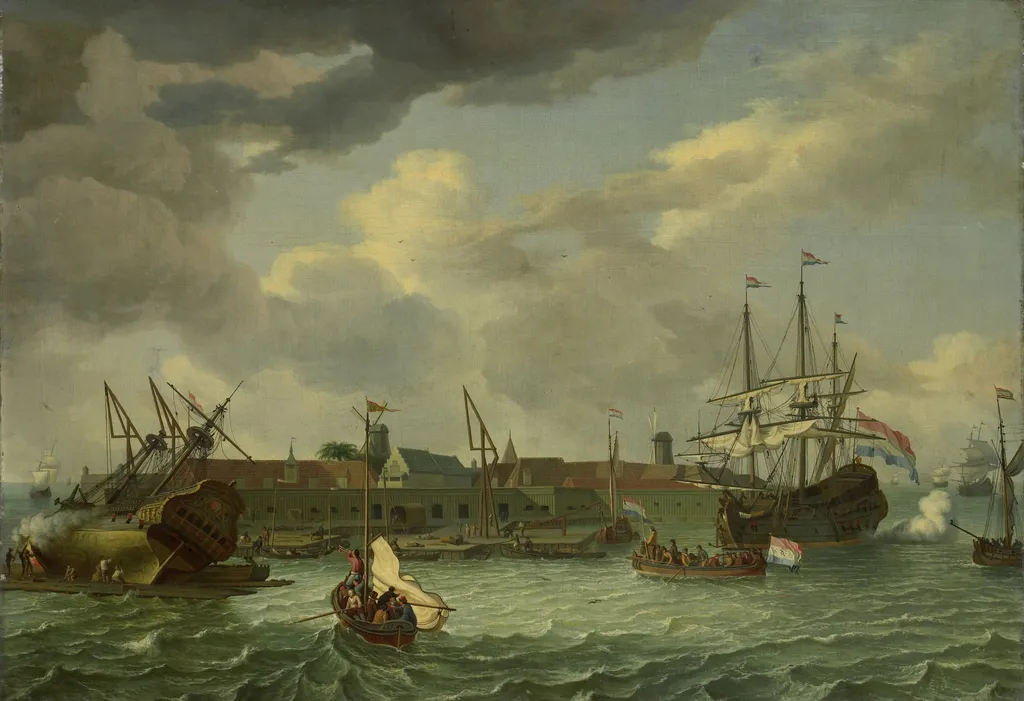
Onrust Island near Batavia is an oil painting by the Dutch Golden Age artist Abraham Storck. It dates from 1700 and is held in the collection of the Rijksmuseum.
About this work
Subject & Meaning
Abraham Storck's 1700 marine painting depicts Onrust Island near Batavia, presenting a detailed view of the harbour's maritime infrastructure.
Abraham Storck's 1700 marine painting depicts Onrust Island near Batavia, presenting a detailed view of the harbour's maritime infrastructure. The composition features sailing ships and smaller boats navigating the waters, emphasizing the island's role as a busy naval hub. Prominent within the scene are buildings and figures engaged in caulking, illustrating the shipbuilding and repair activities that defined the location within the Dutch East Indies trade network.
By focusing on these processes and vessels, the work serves as a documentary record of the logistics supporting colonial maritime power.
Technique & Style
Created in 1700, Abraham Storck's Onrust Island near Batavia is executed in oil on canvas and measures 77 cm high by 110 cm wide, the traditional scale of seventeenth-century marine painting. Classified within the marine genre, it depicts a detailed harbour scene with sailing ships, buildings, and figures engaged in caulking near the island, capturing the maritime atmosphere of the Dutch East Indies setting.
History & Provenance
Abraham Storck executed the marine painting Onrust Island near Batavia in 1700 in oil on canvas, measuring 77 cm high by 110 cm wide. Historical records indicate the piece was once owned by Cornelia Elisabeth Anna de Lange. It is now in the Rijksmuseum, Amsterdam, on loan from the Amsterdam Museum.
Overview
Abraham Storck, a Dutch artist known for his depictions of seascapes and landscapes, created this oil painting in 1700. Titled Onrust Island near Batavia, the work captures a bustling maritime scene, characteristic of Storck's focus on detailed topographical views and naval activity. It provides a historical glimpse into a significant Dutch colonial outpost.
Context
This painting belongs to the Dutch Golden Age, a period when the Netherlands experienced significant economic prosperity and cultural flourishing, largely driven by its global maritime trade. Onrust Island, near Batavia (modern-day Jakarta), served as a crucial naval base and shipyard for the Dutch East India Company. Storck's depiction thus reflects the era's commercial ambitions and the extensive reach of Dutch colonial power.
Own this work as a print
Artist & collection
Artist
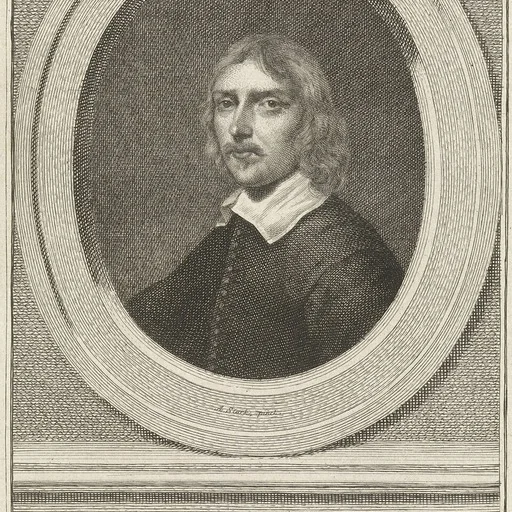
Abraham Storck (or Sturckenburch; bapt. 17 April 1644 in Amsterdam – buried 8 April 1708) was a Dutch painter and draughtsman, who was known for his marine paintings, topographical views, Italianate harbour scenes and…

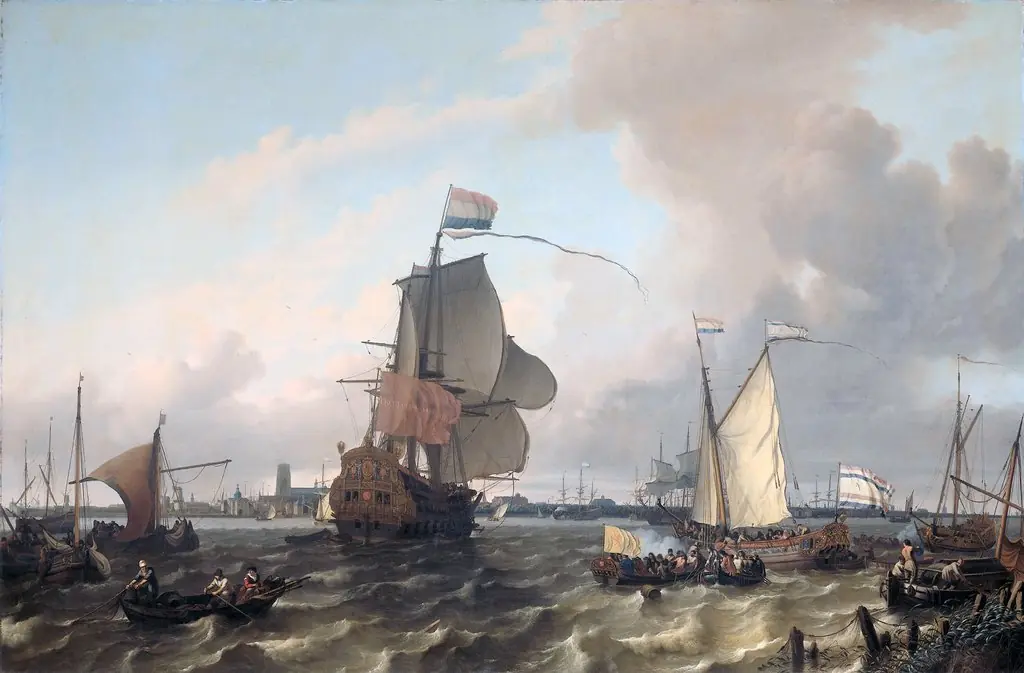 The Man-of-War Brielle on the River Maas off Rotterdam
 Untitled
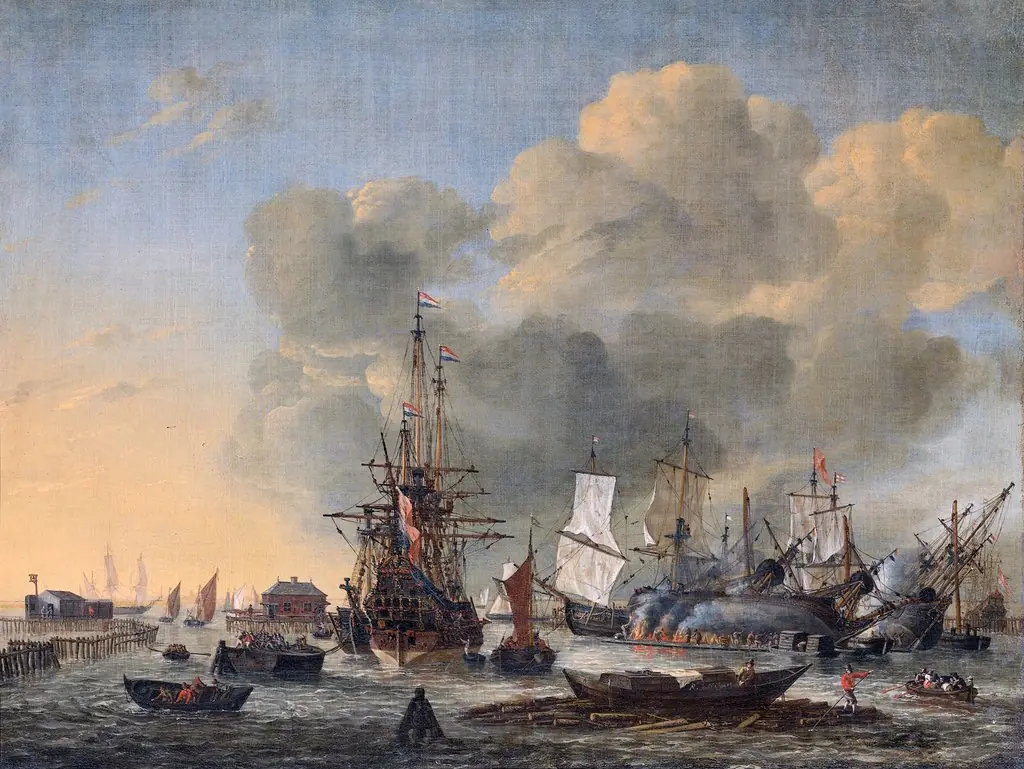 Caulking ships at the Bothuisje (flounder shed) on the Y at Amsterdam
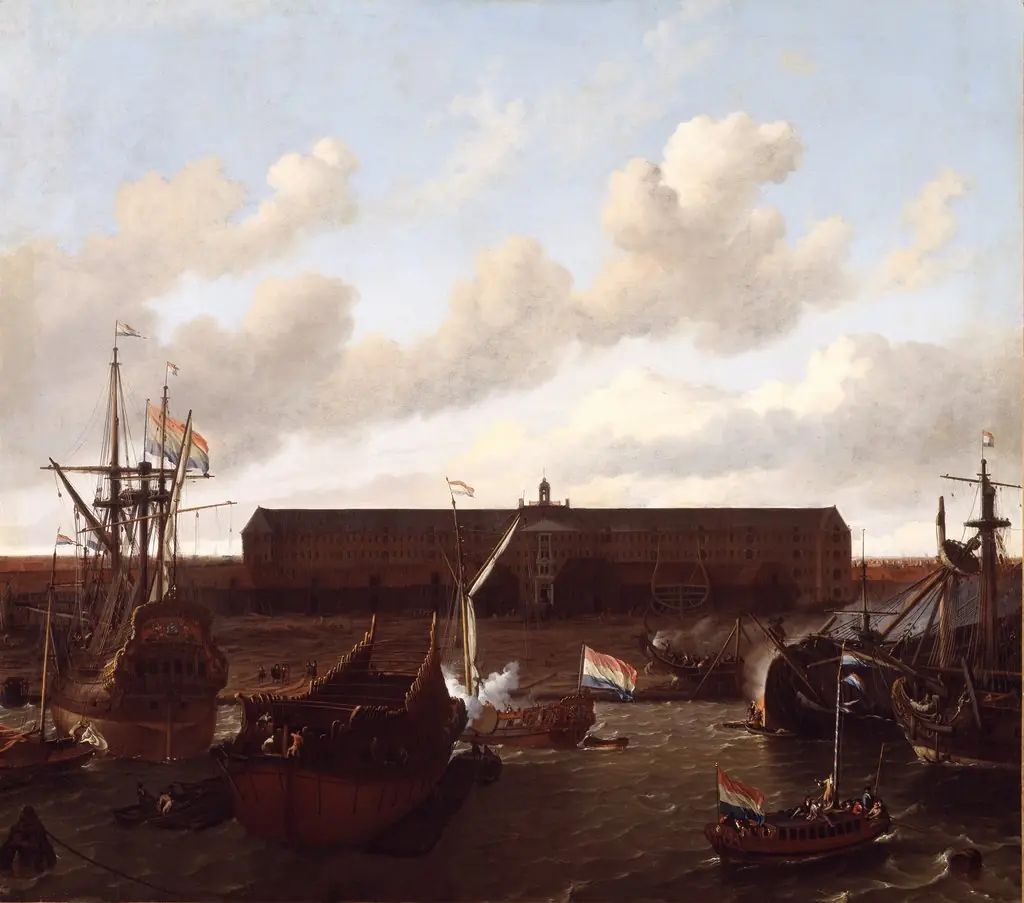 The dock of the Dutch East India Company at Amsterdam
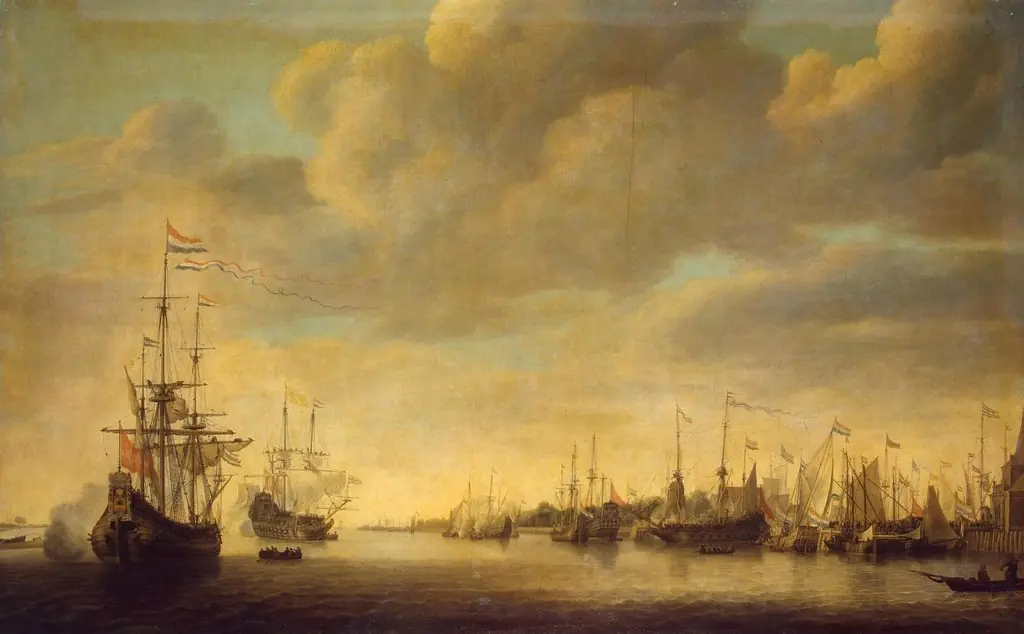 Arrival of William of Orange in Rotterdam
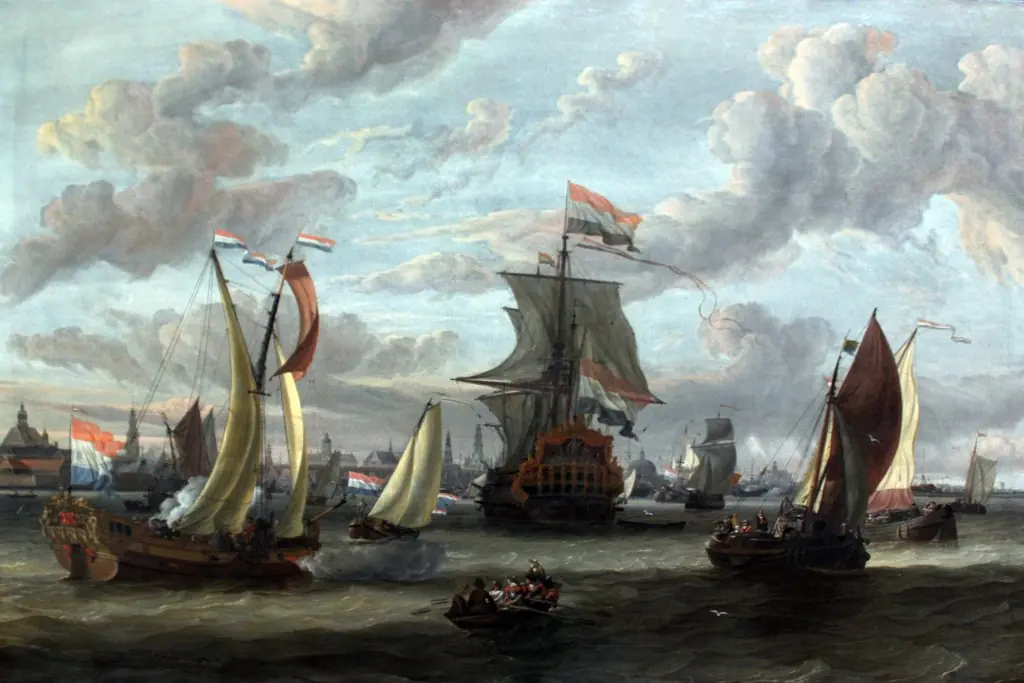 View of Amsterdam with the IJ
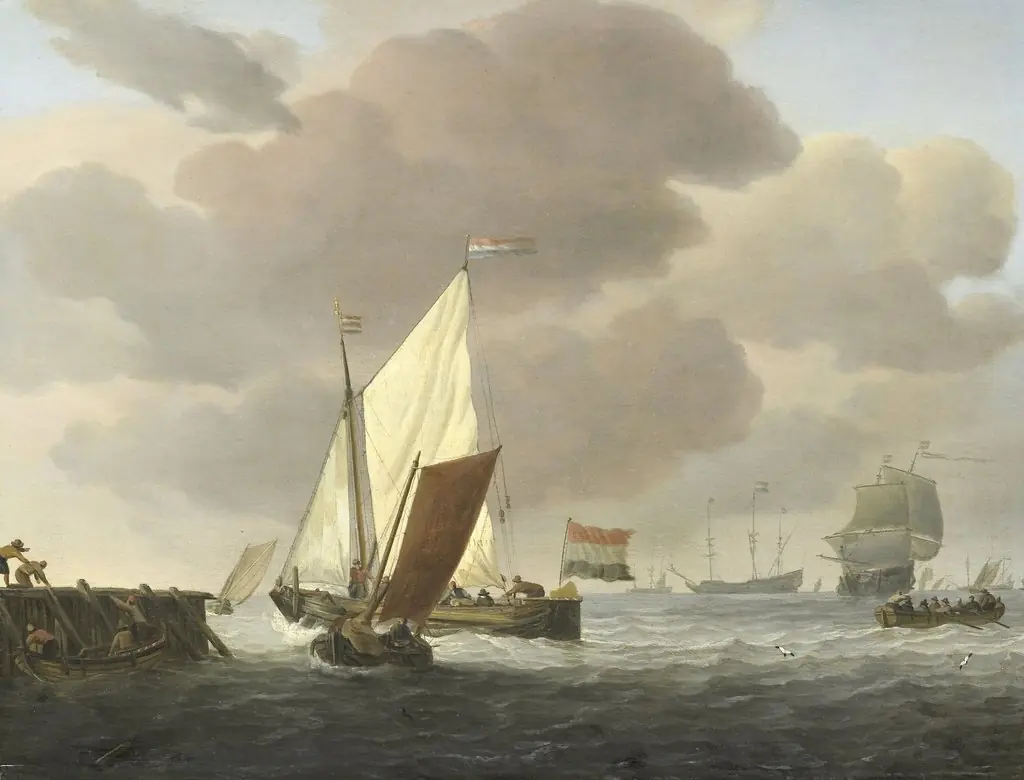 Ships near the shore in a stiff breeze
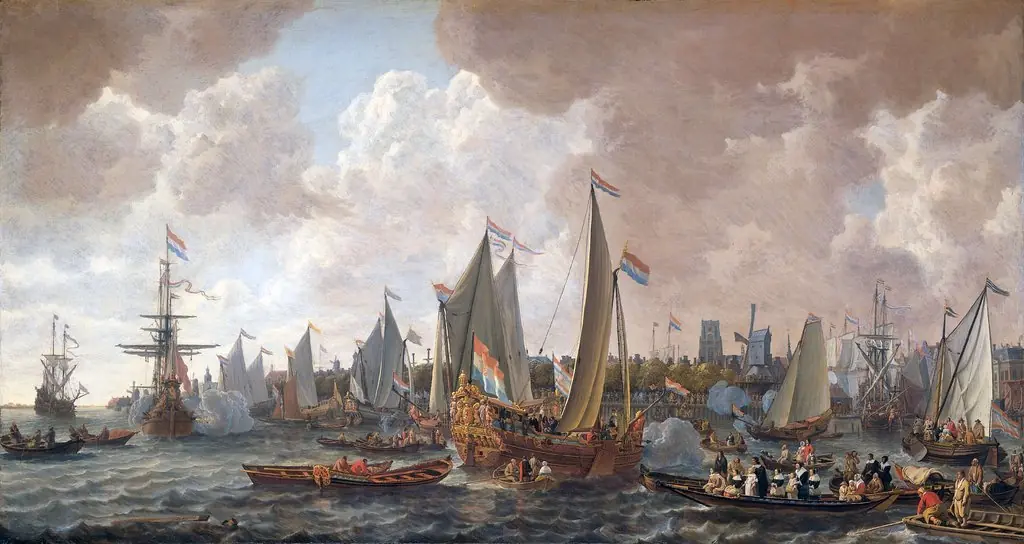 The arrival of King Charles II of England in Rotterdam, 24 May 1660
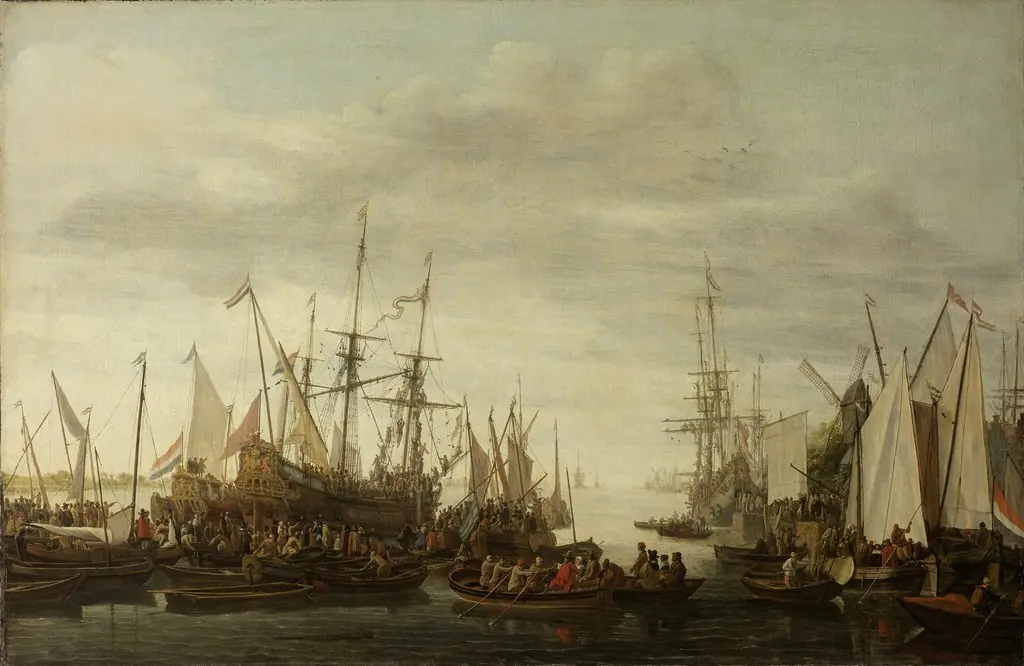 The Keelhauling of the Ship’s Surgeon of Admiral Jan van Nes