Artwork
Amsterdam Harbor Scene
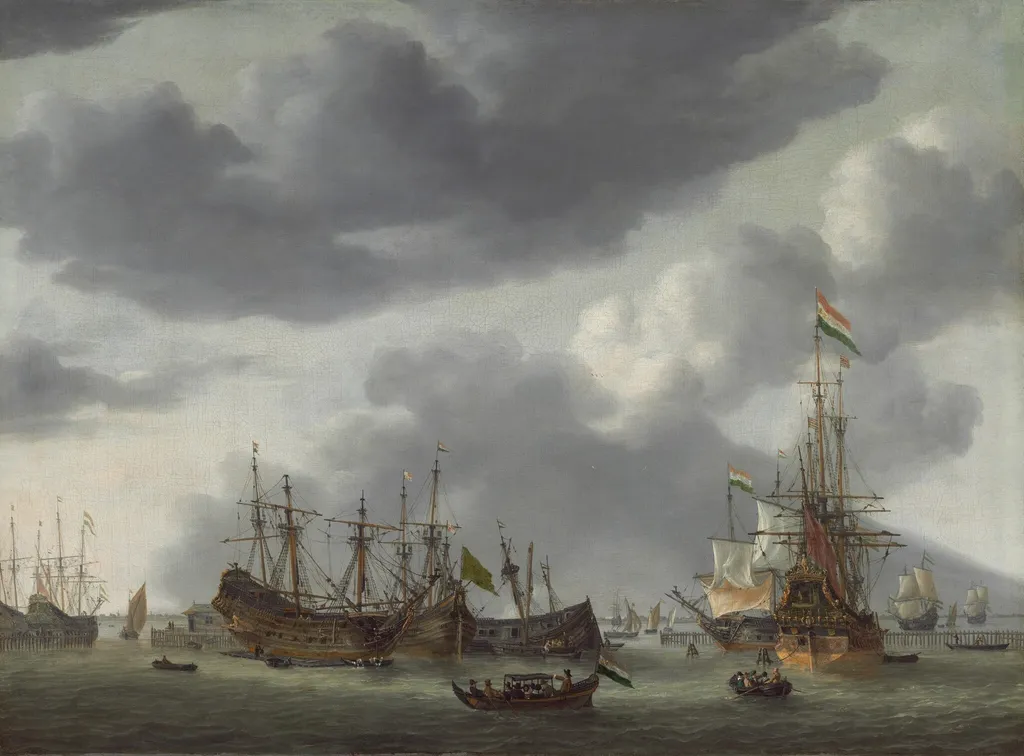
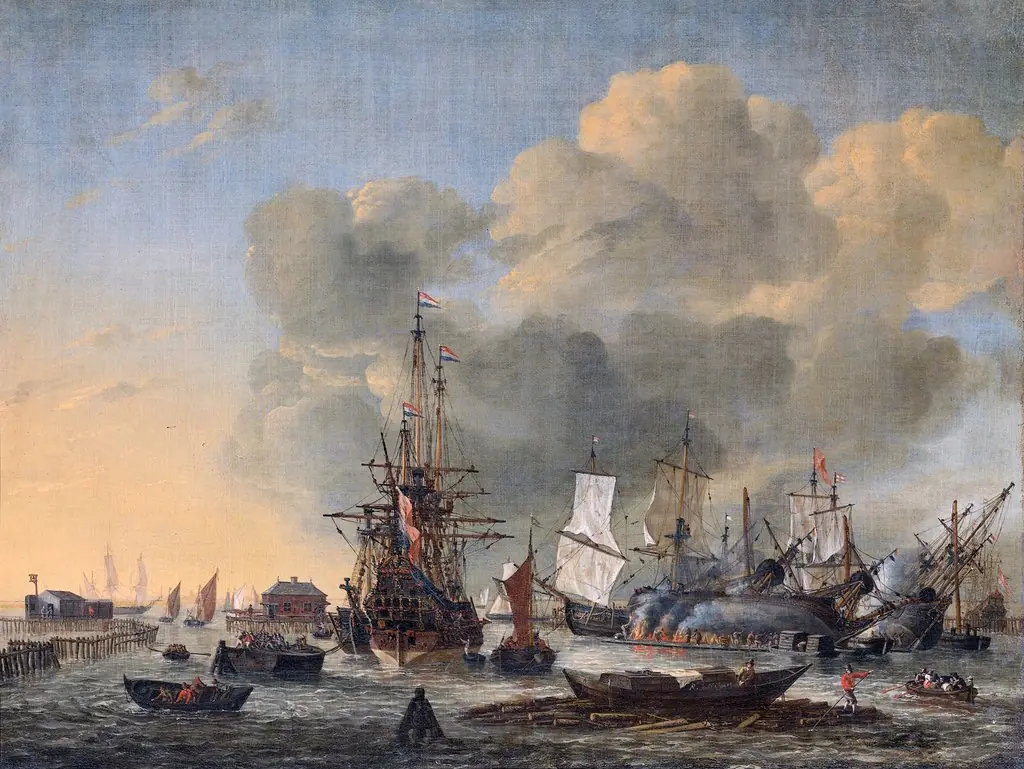
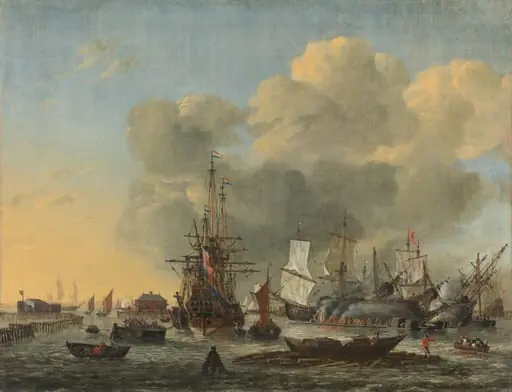
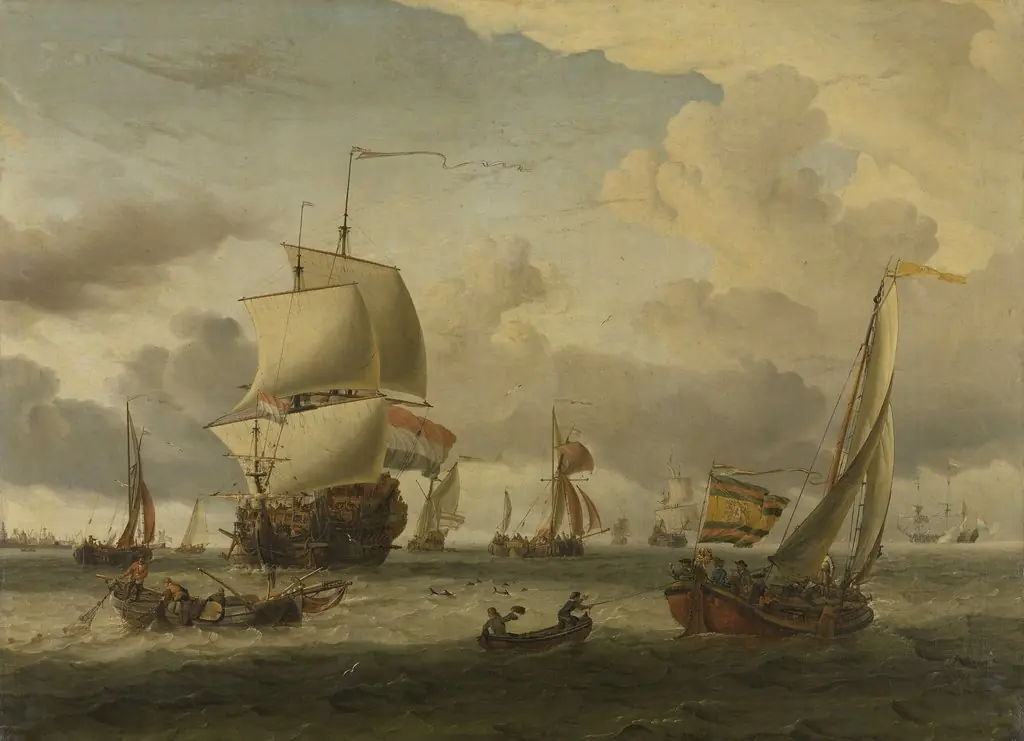
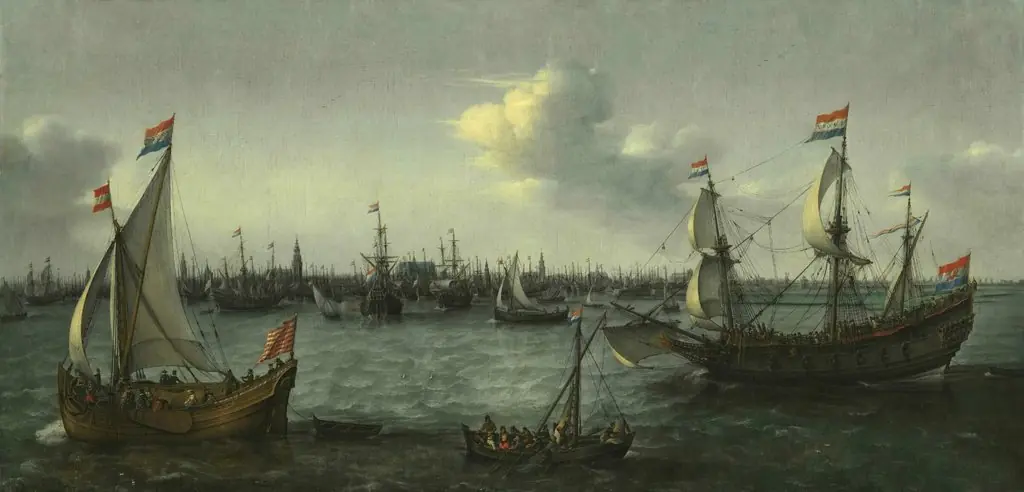
Amsterdam Harbor Scene is an oil painting by the Baroque artist Nooms, called Zeeman, Reinier. It dates from 1654 and is held in the collection of the National Gallery of Art.
- Inscription
- Inscribed:center right on the flag: R.Zeeman
About this work
Subject & Meaning
The inclusion of this specific warship transforms the marine scene from a generic harbor view into a personalized statement of family prestige and civic status.
The painting depicts a specific moment in Amsterdam's harbor, centered on the warship Huis te Swieten, a vessel belonging to the Amsterdam Admiralty. The ship is identified by a painted panel on its stern featuring a castle, a direct reference to Castle Swieten (or Zwieten), the country home of Cornelis Bicker. The work likely functions as a commissioned celebration of the Bicker family's influence and their connection to the city's naval power, as the artist Reinier Nooms also produced other views of Bicker properties.
The inclusion of this specific warship transforms the marine scene from a generic harbor view into a personalized statement of family prestige and civic status.
Technique & Style
The work is executed in oil on canvas, measuring 61 × 81.8 cm. As a marine painting by Reinier Nooms (called Zeeman), it depicts a bustling Amsterdam harbor with meticulous attention to naval architecture and atmospheric effects. The artist's handling demonstrates the precision characteristic of Dutch Golden Age marine painting, with detailed rendering of ships' rigging and waterborne activity. The composition centers on the warship Huis te Swieten, identifiable by the castle emblem on its stern.
History & Provenance
Dated to 1654, this marine painting by Reinier Nooms (called Zeeman) was likely commissioned by the Bicker family, one of Amsterdam's most influential dynasties. The identification of the warship as the Huis te Swieten, named after the country estate of Cornelis Bicker, supports the theory that one of the Bicker brothers ordered the work.
The earliest documented owner was Pieter Locquet, whose estate sold the piece in Amsterdam in September 1783 (lot 448). The painting subsequently entered a private collection in England before appearing at a Bonhams auction in London in September 2009. After passing through the dealer Johnny Van Haeften, Ltd., the National Gallery of Art, Washington, D.C., acquired the canvas in January 2011 (accession no. 2011.1.2).
Context
Reinier Nooms (called Zeeman) created the 1654 marine painting Amsterdam Harbor Scene during a period when he produced numerous engravings and paintings documenting the city's maritime power. The work is historically significant for its precise identification of the warship Huis te Swieten, named after the estate of Cornelis Bicker, a leading figure in Amsterdam's government. Art-historical analysis suggests the painting was likely commissioned by the Bicker family to celebrate their influence and the strength of the Amsterdam Admiralty fleet.
Legacy
Amsterdam Harbor Scene (1654) by Reinier Nooms is recognized as a significant example of Dutch marine painting. Originally likely commissioned by the influential Bicker family, the work remained in private hands until its acquisition by the National Gallery of Art, Washington, D.C., in 2011. Its detailed depiction of a warship associated with the Bicker estate has contributed to the understanding of 17th-century Dutch naval iconography and reflects the family's maritime prominence.
Overview
Reinier Nooms, known as Zeeman, painted Amsterdam Harbor Scene around 1654. This oil on canvas work exemplifies his specialization in maritime subjects, drawing on his personal experience at sea. The painting captures a bustling port, reflecting the significant role of shipping in 17th-century Dutch society.
It offers a detailed glimpse into the daily operations of a thriving harbor during the Dutch Golden Age.
Own this work as a print
Artist & collection

Artist
Reinier Nooms (c. 1623 – 1664), also known as Zeeman or Seeman (Dutch for "sailor"), was a Dutch maritime painter known for his highly detailed paintings and etchings of ships. From the 1650s, Nooms started producing…