Artwork
Lamentation of Christ
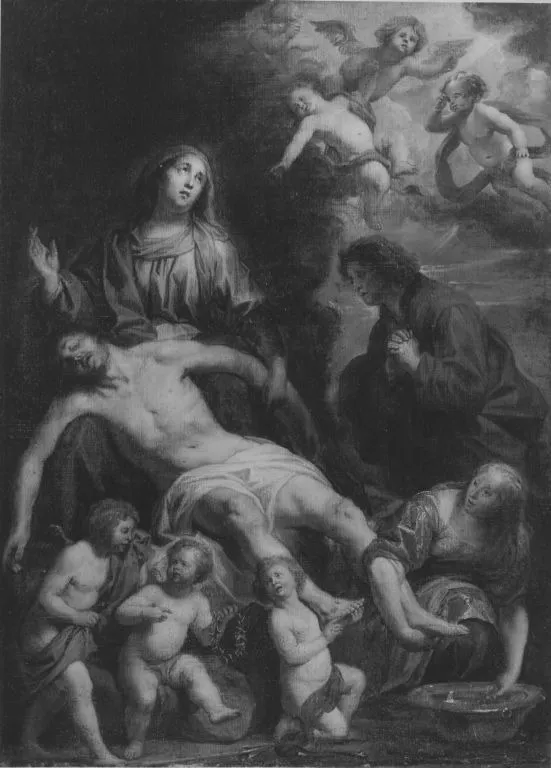
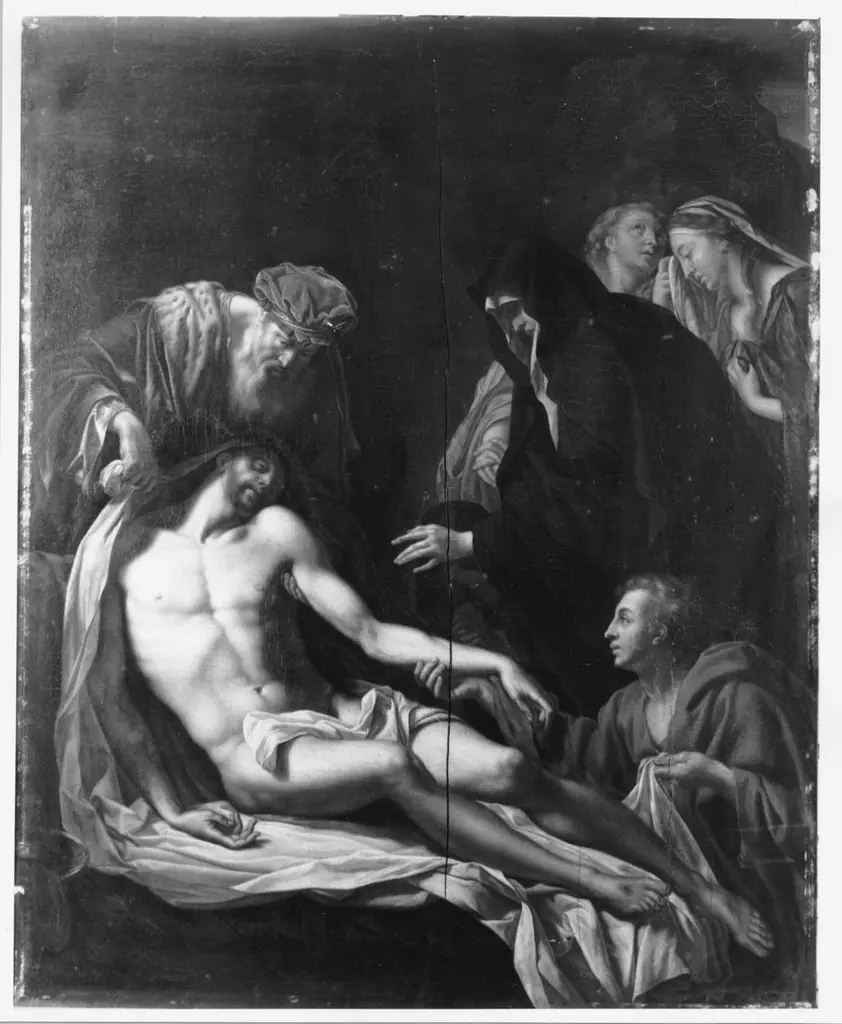
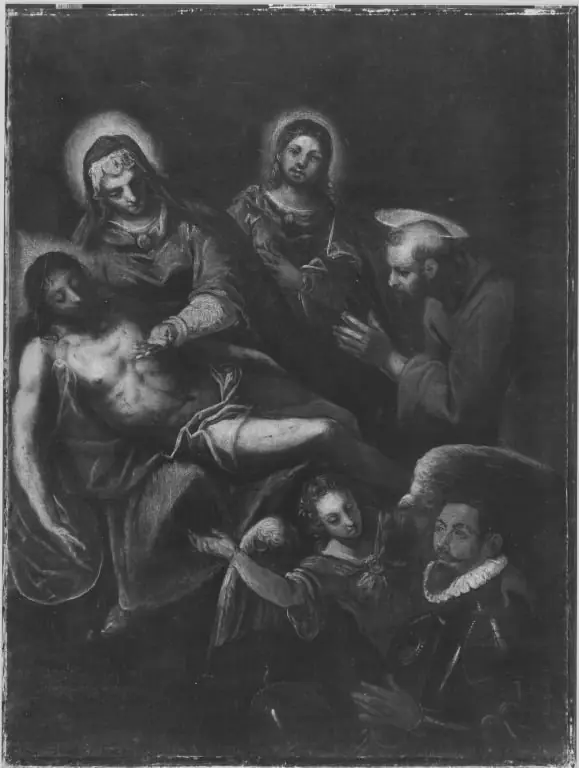
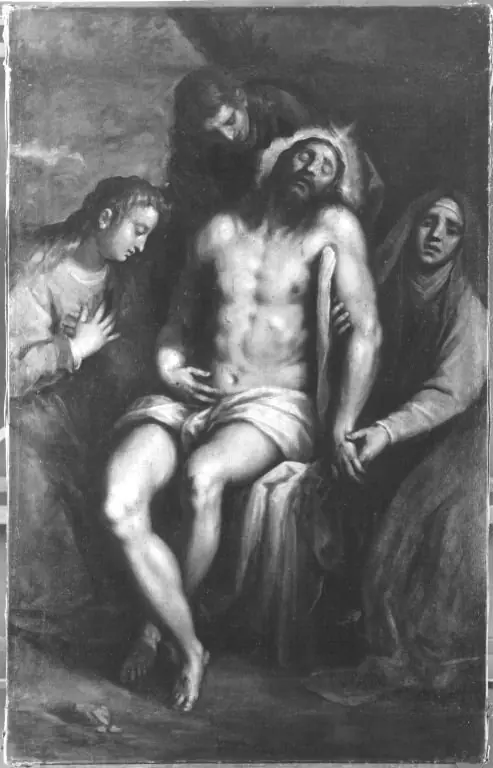
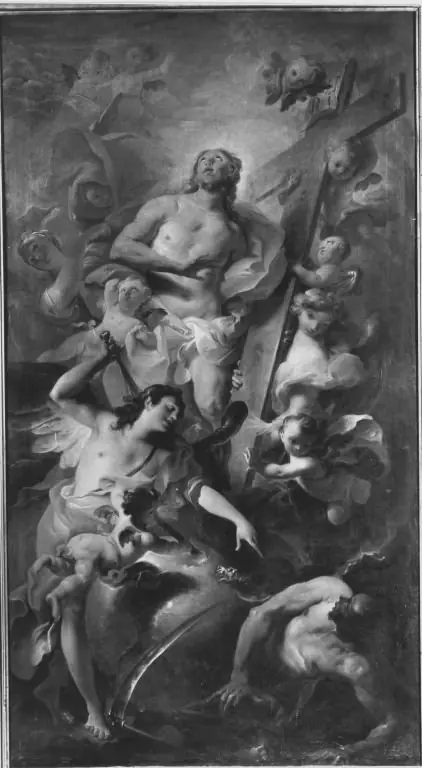
Lamentation of Christ is an unspecified painting by the Flemish Baroque painting artist Abraham van Diepenbeeck. It dates from 1642 and is held in the collection of the Alte Pinakothek.
About this work
History & Provenance
The Lamentation of Christ by Abraham van Diepenbeeck is dated to 1642, as recorded in both the painting’s internal documentation and the institution’s records.
The Lamentation of Christ by Abraham van Diepenbeeck is dated to 1642, as recorded in both the painting’s internal documentation and the institution’s records.
By the early modern period, the work entered the holdings of the Bavarian State Painting Collections and has remained in Munich at the Alte Pinakothek since at least the establishment of that museum’s collection structure.
The painting is part of the Bavarian State Painting Collections and is housed in the Alte Pinakothek.
It was accessioned with the inventory number 1827 and is cataloged under the collection identifier of the Bavarian State Painting Collections.
The work has been exhibited in the Alte Pinakothek's permanent display of religious paintings and was included in the 1950 exhibition "Masterpieces of the Alte Pinakothek" which toured several German cities.
The dimensions of the painting are 78.7 cm in height and 57.2 cm in width.
Overview
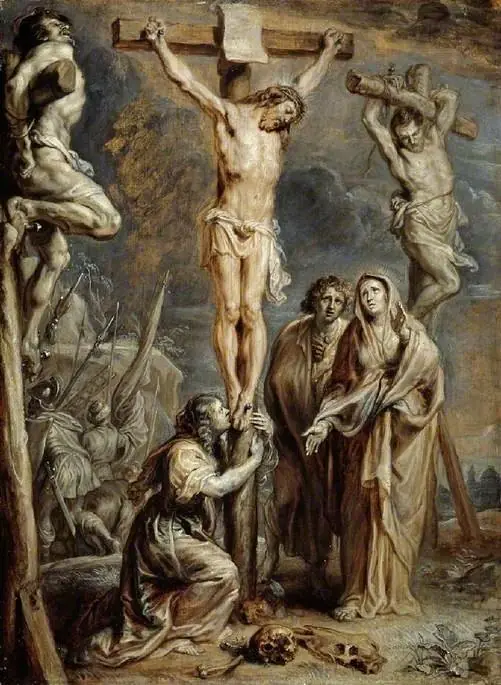
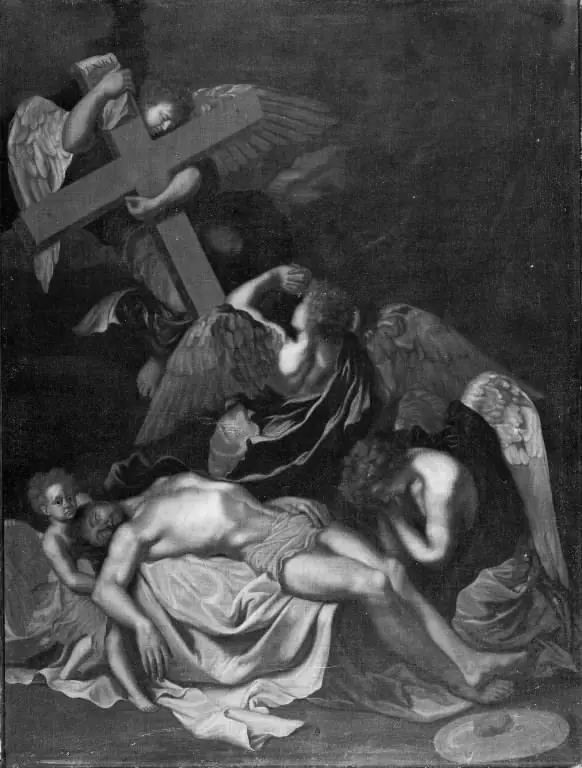
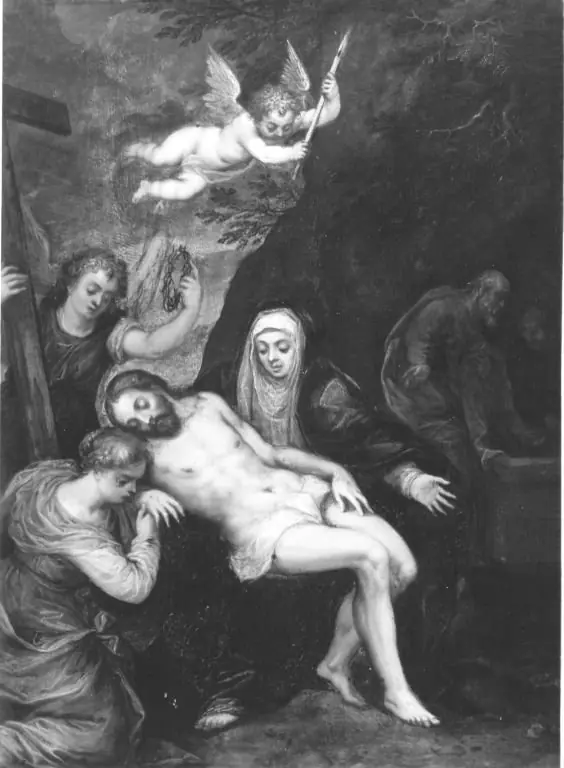
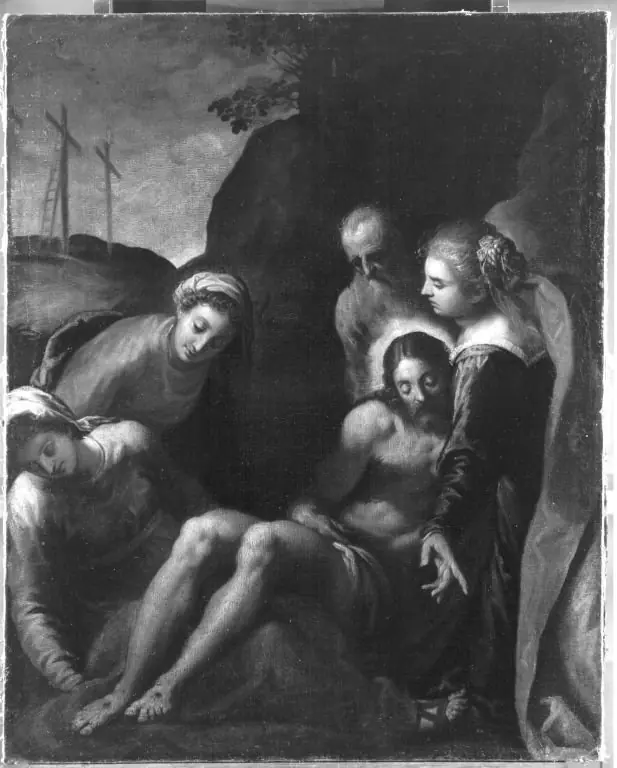
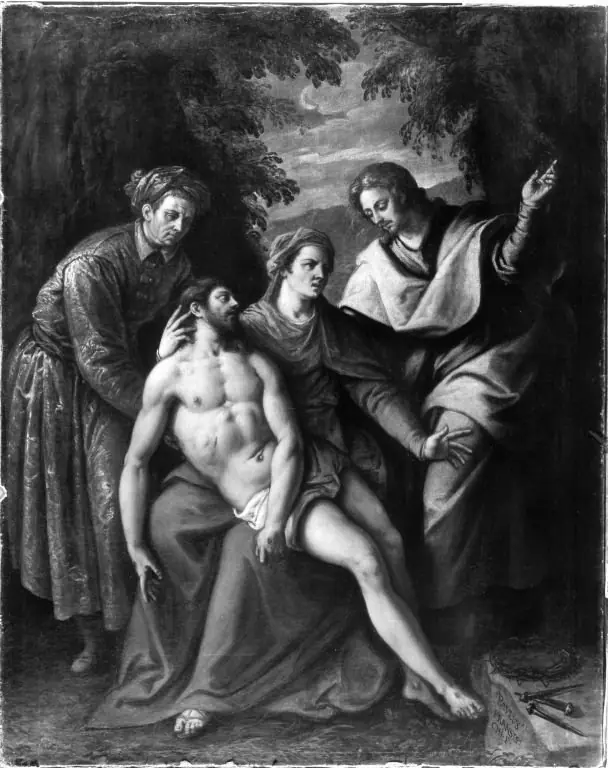
Abraham van Diepenbeeck’s Lamentation of Christ (1642) is a Flemish Baroque oil painting that portrays the mournful gathering around the dead Christ. Executed in Antwerp, the work is now part of the Alte Pinakothek’s collection. Its composition centers on the lifeless figure, surrounded by grieving figures and two ethereal winged beings against a storm‑clouded sky.
Subject & Meaning
The scene captures the traditional biblical moment after the Crucifixion, when followers lament Christ’s body. A woman in a long dress raises her hands in a gesture of supplication, while others kneel or weep, emphasizing collective sorrow. The inclusion of angelic figures suggests a spiritual dimension, linking earthly grief with divine consolation.
Technique & Style
Van Diepenbeeck employs a pronounced chiaroscuro, with stark light isolating the body and certain faces, while surrounding areas recede into deep shadow. This contrast heightens the drama typical of Baroque art. The painter’s handling of drapery and flesh demonstrates his skill in rendering texture and volume within a compact, emotionally charged tableau.
Context
Van Diepenbeeck, primarily known for designs in stained glass, prints, and tapestries, applied his decorative sensibility to this religious work. The Lamentation aligns with the Counter‑Reformation’s emphasis on emotive, didactic imagery, and its dramatic lighting and expressive figures echo the broader Flemish Baroque trends championed by Rubens and his circle.
Artist & collection
Artist
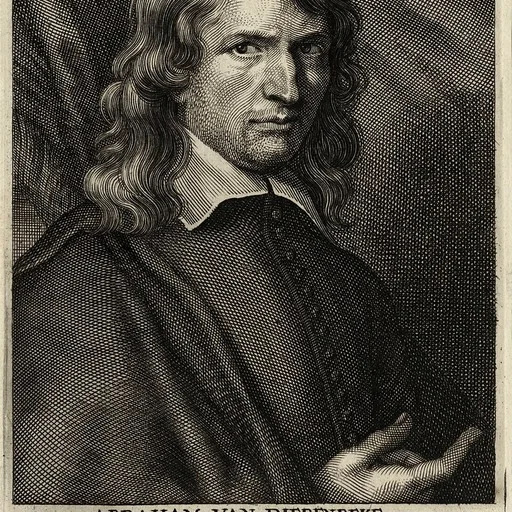
Abraham van Diepenbeeck (9 May 1596 (baptised) – between May and September 1675) was a Dutch painter, draftsman, glass painter, print maker and tapestry designer who worked most of his active career in Antwerp.