Artwork
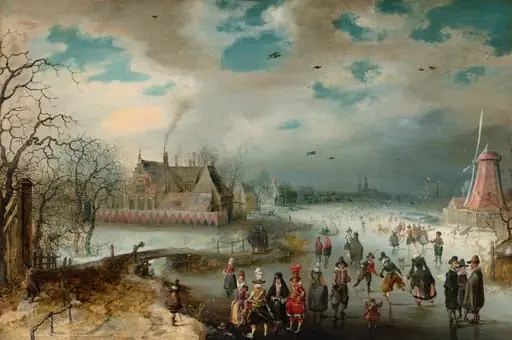
Winter landscape with skaters
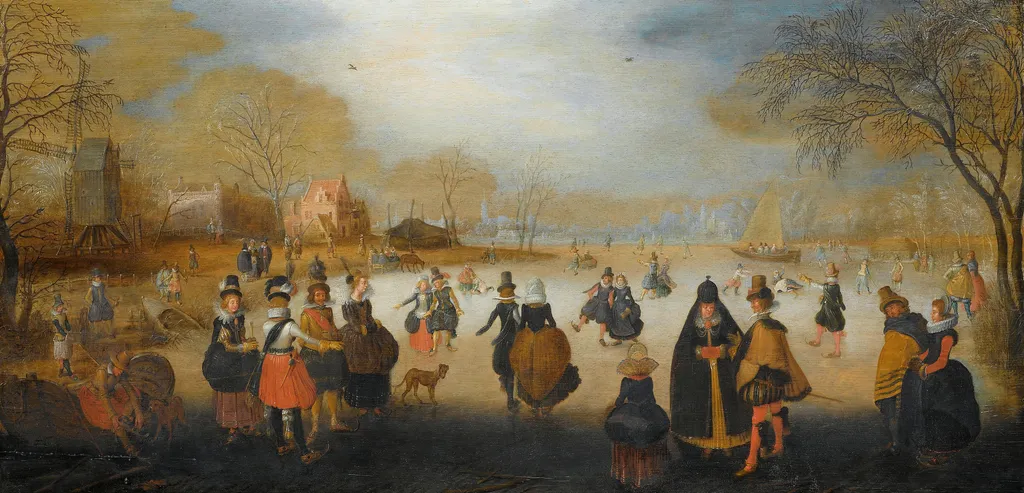
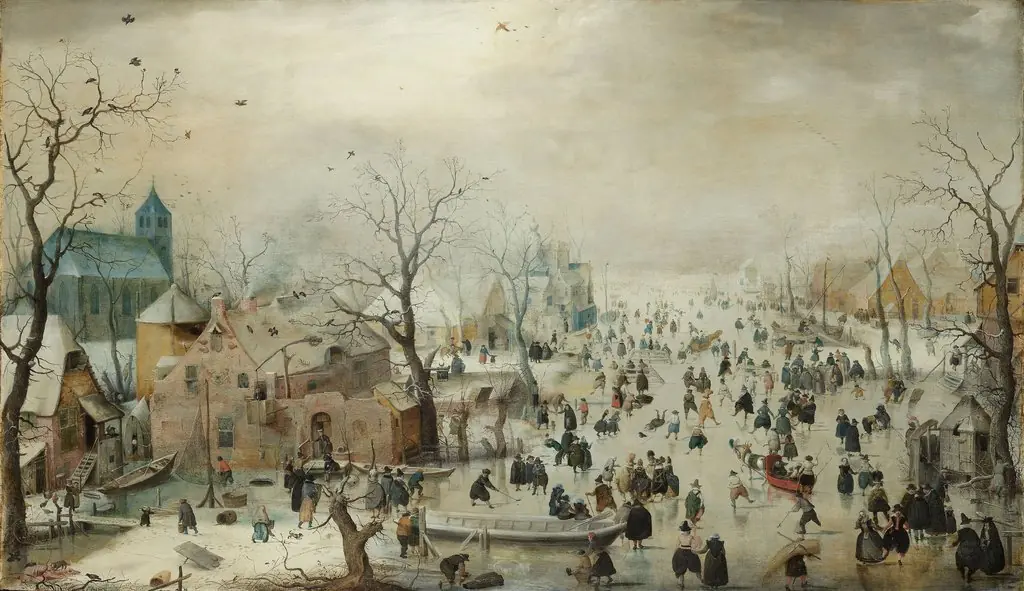
Winter landscape with skaters is an oil painting by the Dutch Golden Age artist Adam van Breen. It dates from 1617 and is held in the collection of the Rijksmuseum.
About this work
Technique & Style
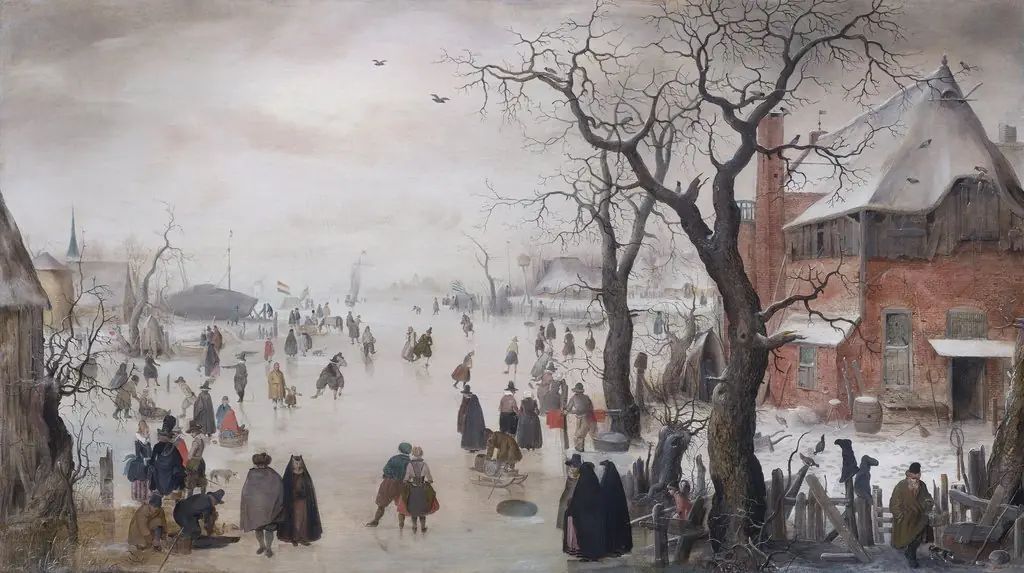
Stylistically, the painting belongs to the Dutch winter landscape tradition, noted for its topographically credible setting and animated yet orderly populace.
Executed in oil on panel in 1617, the work measures 55.1 cm in height by 111.7 cm in width. The handling combines fine, crisp detailing in the foreground figures and ice textures with broader, atmospheric recession into a hazy horizon. Thin, layered glazes articulate the chill of the scene, while opaque impastos pick out highlights on garments and skates.
The composition arranges diagonals and repoussoir trees to guide the eye toward the distant church spire, balancing anecdotal incident with overall spatial unity.
Stylistically, the painting belongs to the Dutch winter landscape tradition, noted for its topographically credible setting and animated yet orderly populace. The palette relies on silvery greens and blues modulated by warm browns and ochres, conveying a crisp winter atmosphere without stridency.
History & Provenance
The painting Winter landscape with skaters was created by Adam van Breen in 1617. Executed in oil paint on a panel support, the work measures 55.1 cm in height and 111.7 cm in width. It is currently held in the collection of the Rijksmuseum.
Winter landscape with skaters is held in the collection of the Rijksmuseum, where it is catalogued under inventory number SK-A-2424. The work was created in 1617 by Adam van Breen as an oil paint painting on panel, measuring 55.1 cm in height and 111.7 cm in width. It has been exhibited at the Rijksmuseum in Amsterdam as part of displays focusing on Dutch Golden Age landscapes.
Overview
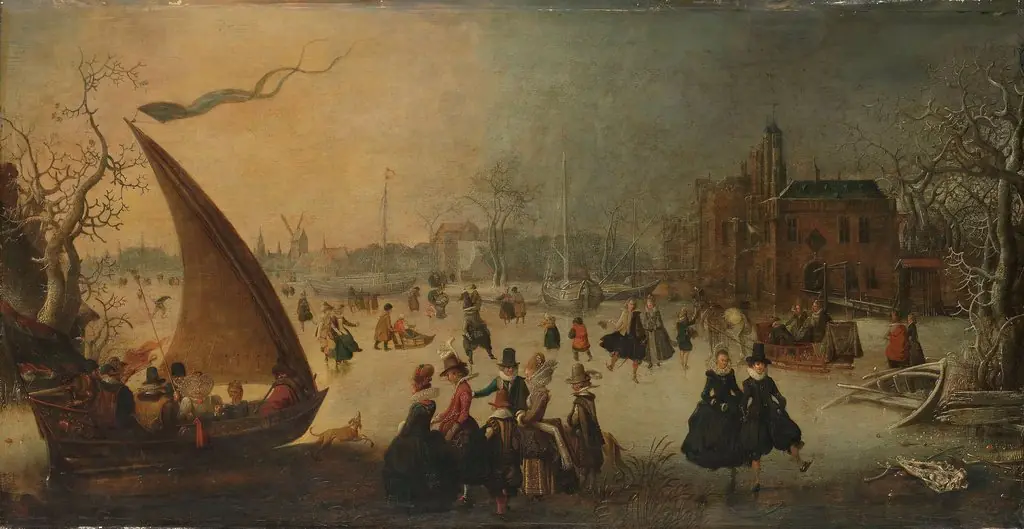
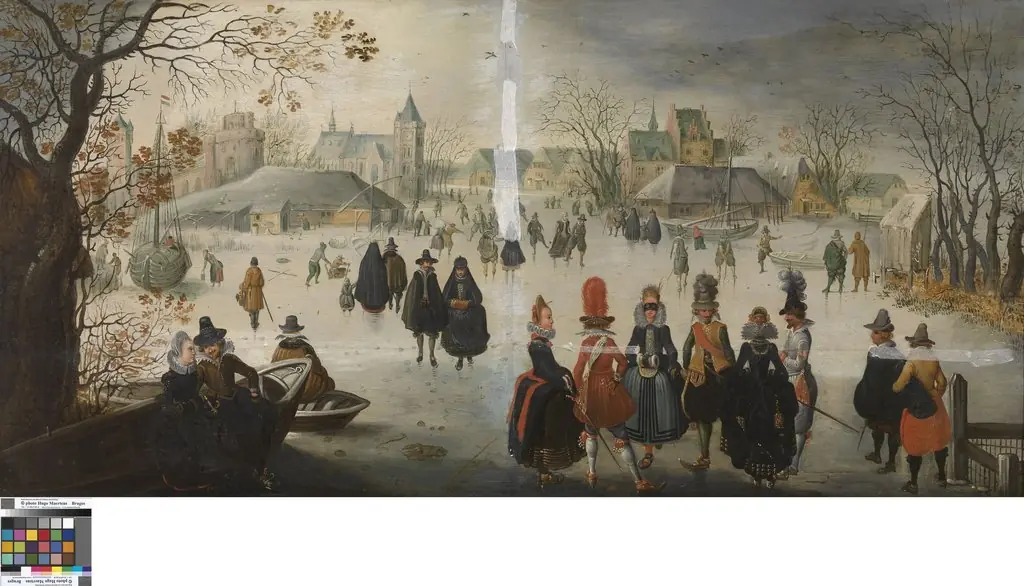
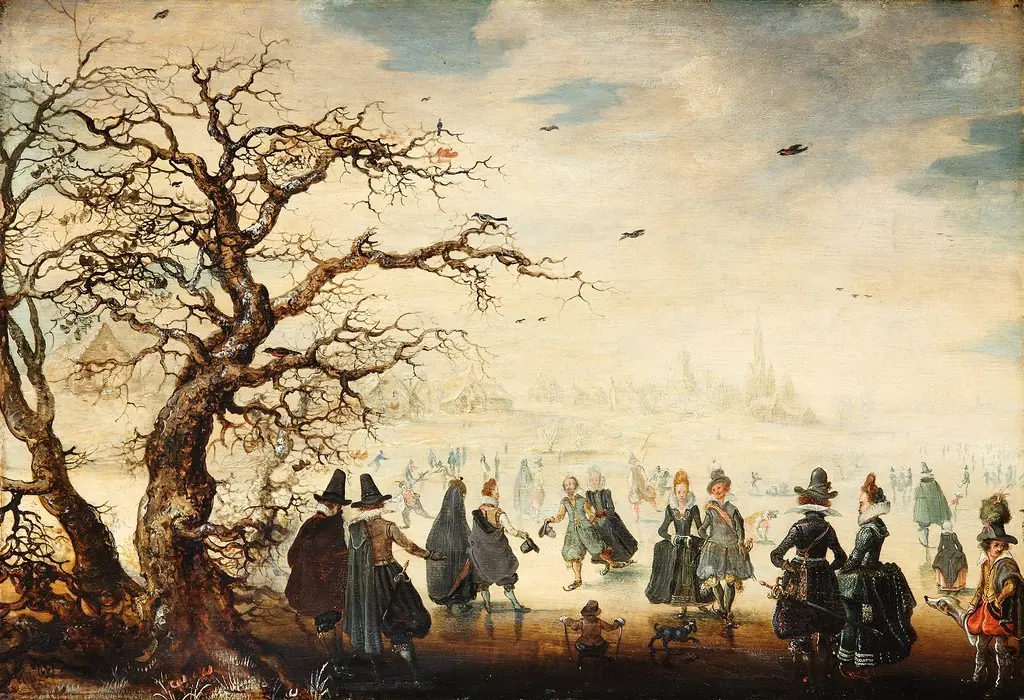
Adam van Breen's Winter Landscape with Skaters, executed in 1617, is a definitive example of early Dutch winter genre painting. The composition centers on a broad, frozen waterway populated by numerous figures engaged in ice skating and social interaction. Van Breen organizes the scene with a low horizon line, emphasizing the expansive, overcast sky typical of the period's atmospheric realism.
The skaters are depicted in period-specific attire, including voluminous coats and wide-brimmed hats, with selective use of red and yellow pigments to create focal points against the muted, cool tonalities of the ice and snow. In the middle distance, a church tower and scattered farmhouses anchor the landscape, while bare trees frame the edges, reinforcing the seasonal setting. A dog rests near the foreground edge, adding a touch of domestic life to the public spectacle.
This work reflects van Breen's transition from his earlier Italianate influences toward a more localized Dutch realism, capturing the specific cultural practice of winter skating that would become a staple of the Dutch Golden Age. The painting documents both the leisure activities of the era and the artist's skill in rendering light on ice and the textures of winter clothing.
Subject & Meaning
The work captures a communal winter pastime, highlighting social interaction across class lines: active participants in colorful attire contrast with passive spectators in muted clothing. The inclusion of everyday figures, a domestic animal, and the distant church suggests a narrative of communal leisure framed within a familiar, rural setting.
Artist & collection