Artwork
The Sculpture Gallery of the Felix Meritis Society
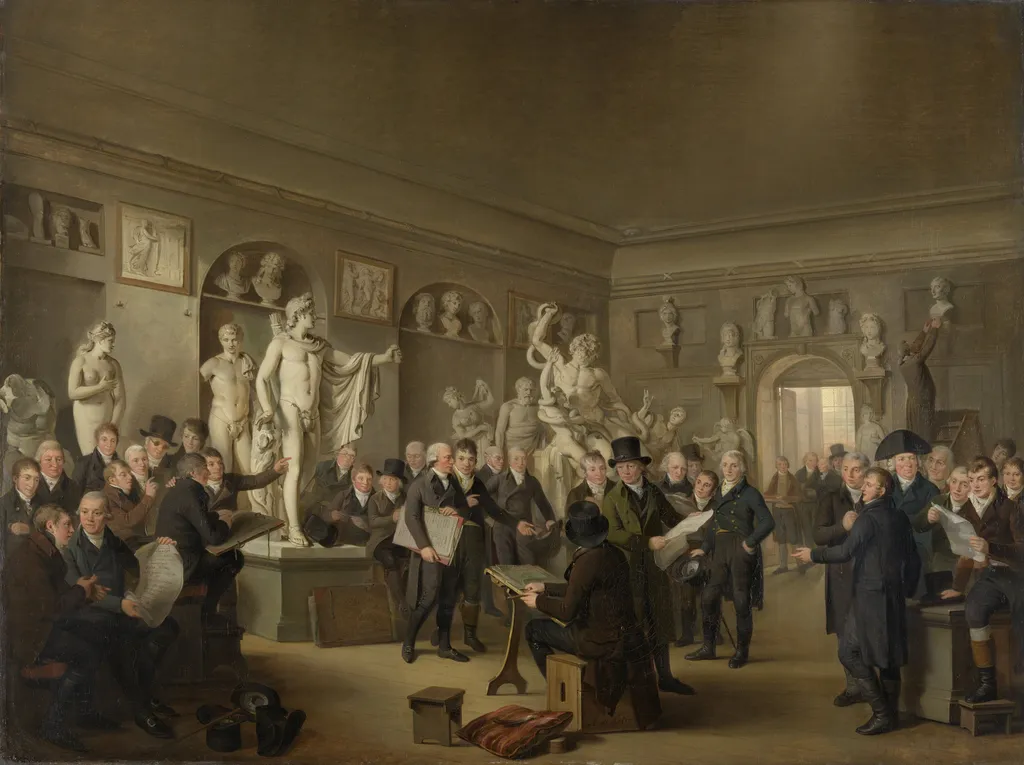
The Sculpture Gallery of the Felix Meritis Society is an oil painting by the Biedermeier artist Adriaan de Lelie. It dates from 1807 and is held in the collection of the Rijksmuseum.
About this work
History & Provenance
According to Wikidata, the piece is also associated with the Felix Meritis collection, reflecting its historical origins within that society's holdings.
The work, an oil painting on canvas titled The Sculpture Gallery of the Felix Meritis Society, was created by Adriaan de Lelie in 1807. It measures 100 cm in height and 133 cm in width. The piece is classified as a group portrait depicting the interior of the Felix Meritis Society's gallery.
Ownership of the painting is attributed to the city of Amsterdam, with the work currently held in the collections of the Rijksmuseum, the Amsterdam Museum, and the Felix Meritis Society.
The painting is held jointly by the Rijksmuseum and the Amsterdam Museum, both located in Amsterdam, the city that owns the work. According to Wikidata, the piece is also associated with the Felix Meritis collection, reflecting its historical origins within that society's holdings. The canvas measures 100 cm in height by 133 cm in width and was produced in 1807.
No specific inventory or accession number is recorded in the available sources, and no exhibition history beyond its current dual-institutional custody is documented.
Overview
Adriaan de Lelie’s 1807 oil on canvas presents an interior scene that resembles a nineteenth‑century exhibition space. The composition centers on a tall, draped marble figure, flanked by smaller statues on shelves and pedestals, while a crowd of gentlemen in contemporary dress observes the works. Dim natural light filters through high windows, casting deep shadows that define the room’s architectural depth.
Subject & Meaning
The painting records a moment within the Felix Meritis society’s sculpture gallery, a venue for the display of classical and contemporary reliefs. By gathering scholars and artists around the statues, de Lelie underscores the period’s belief in art as a communal, educational pursuit, suggesting that the appreciation of form and antiquity was a shared intellectual activity.
Technique & Style
Executed in a Biedermeirian idiom, the work relies on chiaroscuro to separate the sculptural forms from the darkened walls, allowing the marble surfaces to appear luminous. De Lelie’s brushwork balances fine detail in the figures’ drapery with broader, atmospheric strokes that convey the room’s ambient light, creating a subtle interplay of texture and volume.
Own this work as a print
Artist & collection
Artist
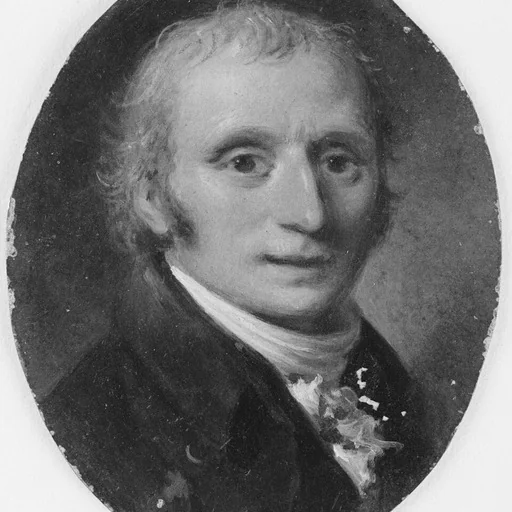
Adriaan de Lelie (19 May 1755 – 30 November 1820) was a Dutch painter. He was born in Tilburg. De Lelie was a pupil of A. Peeters, a painter of tapestries and ornaments, and afterwards of Andreas Bernardus de…

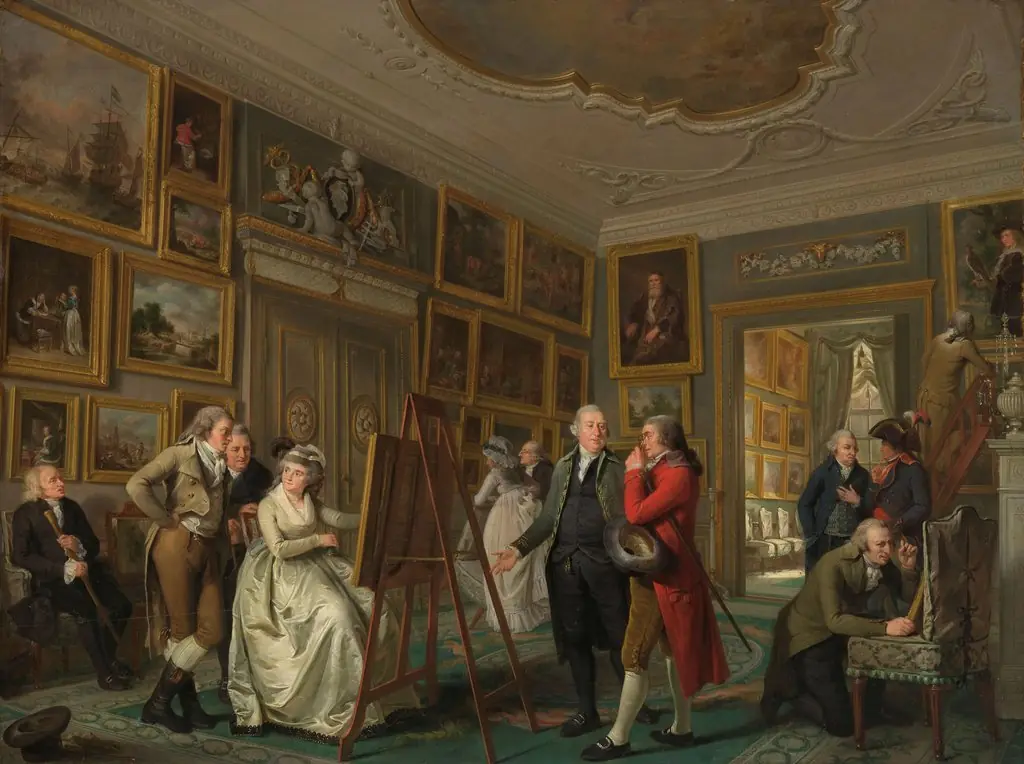 The Art Gallery of Jan Gildemeester Jansz
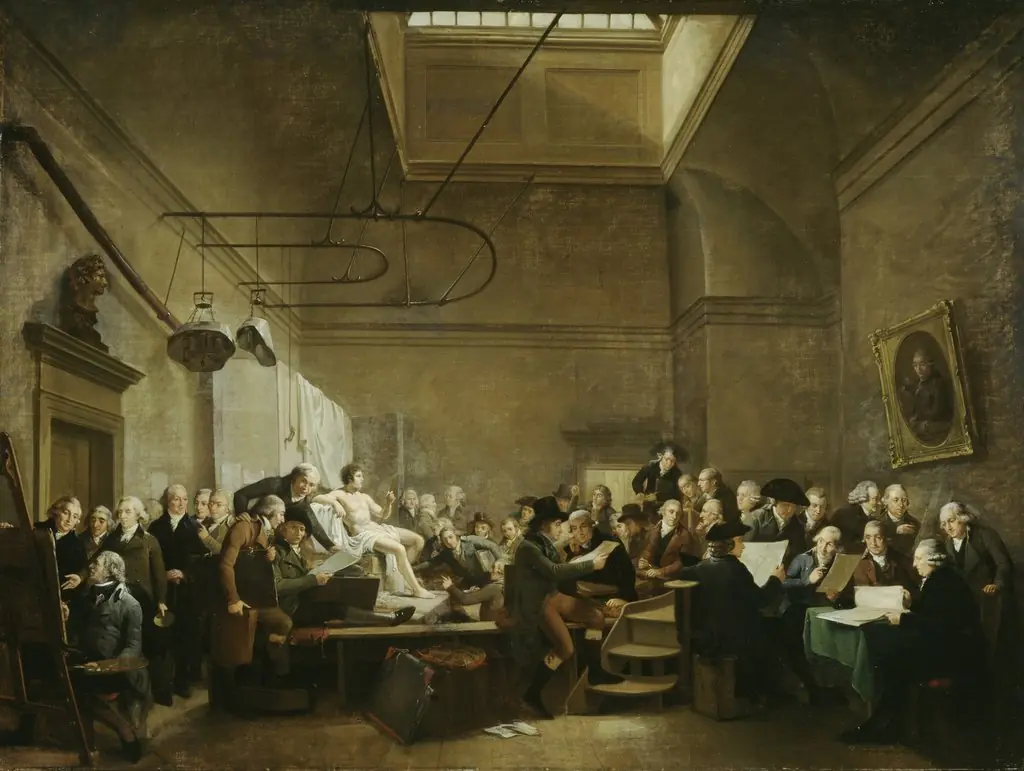
- The Drawing Gallery of the Felix Meritis Society
 Family Portrait of Jonkheer Gysbert Carel Rutger Reinier van Brienen van Ramerus, his Wife and four of their Children at his Estate of Crailo
 The Art Gallery of Josephus Augustinus Brentano
 Portrait of Cornelis Sebille Roos, Art Dealer in Amsterdam and Inspector of the National Konst-Gallery and the Huis ten Bosch in The Hague
 Portrait of the Poet Barend Klijn Barendsz
 Portrait of Pieter Gerardus van Overstraten, Governor-General of the Dutch East Indies
 Portrait of Albertus Henricus Wiese, Governor-General of the Dutch East Indies
 Pave Leo Xll aflægger besøg i Thorvaldsens værksteder ved Piazza Barberini, 18. oktober 1826
 Pope Leo XII Visiting Thorvaldsen's Studios in the Piazza Barberini, 18 October 1826
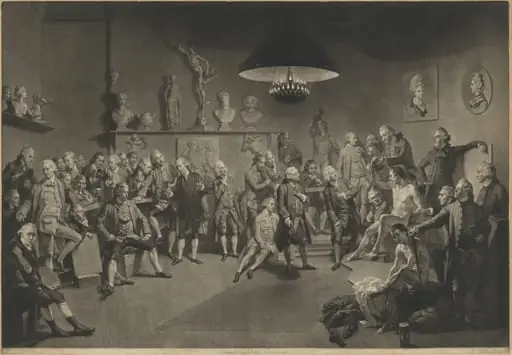 The Royal Academy of Arts
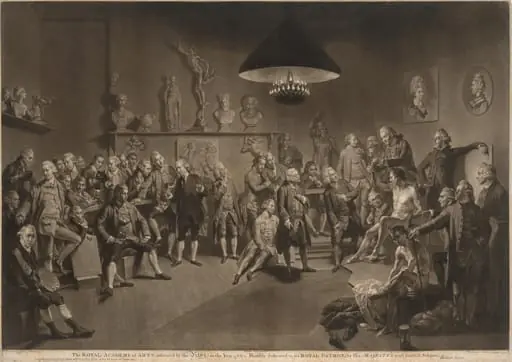 The Royal Academy of Arts
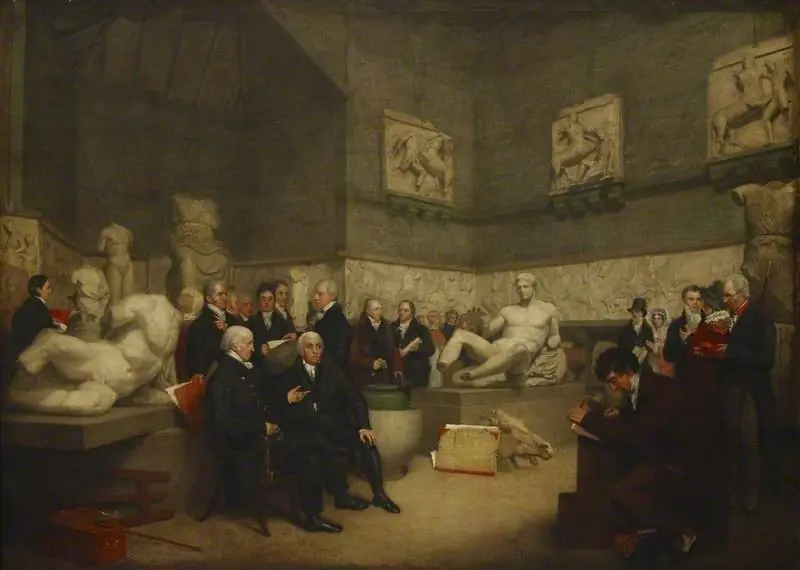 The Trustees in the Temporary Elgin Room, 1819
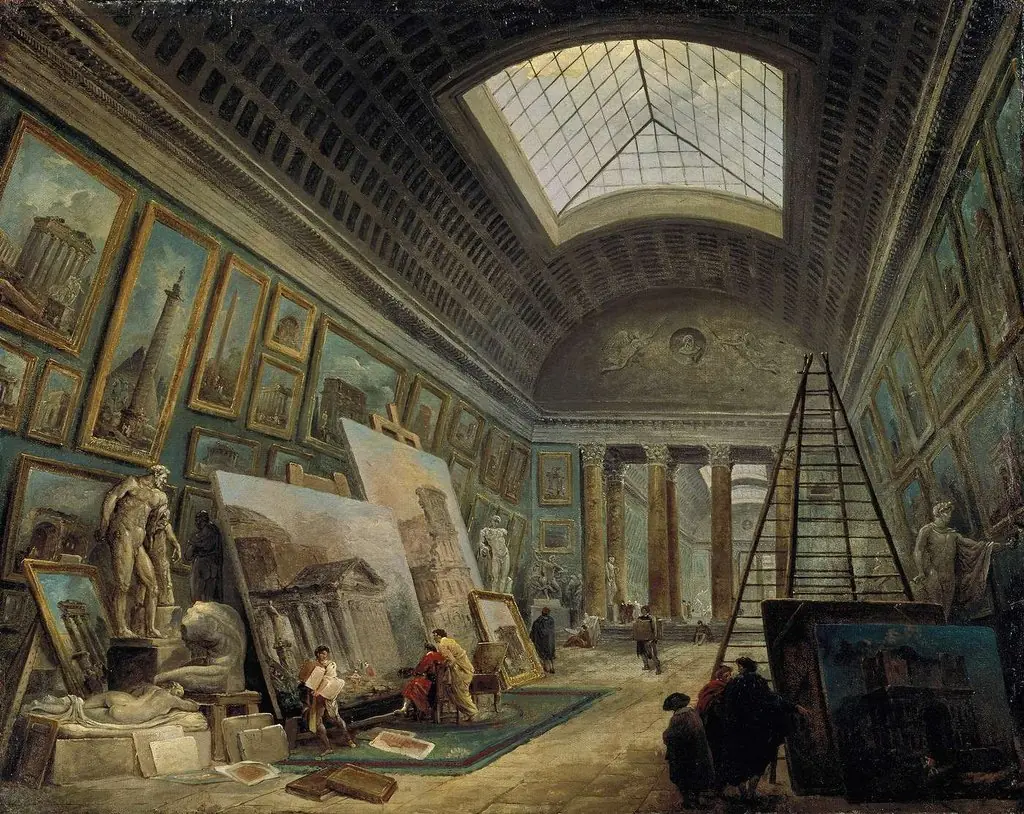 Imaginary View of the Grande Galerie in the Louvre
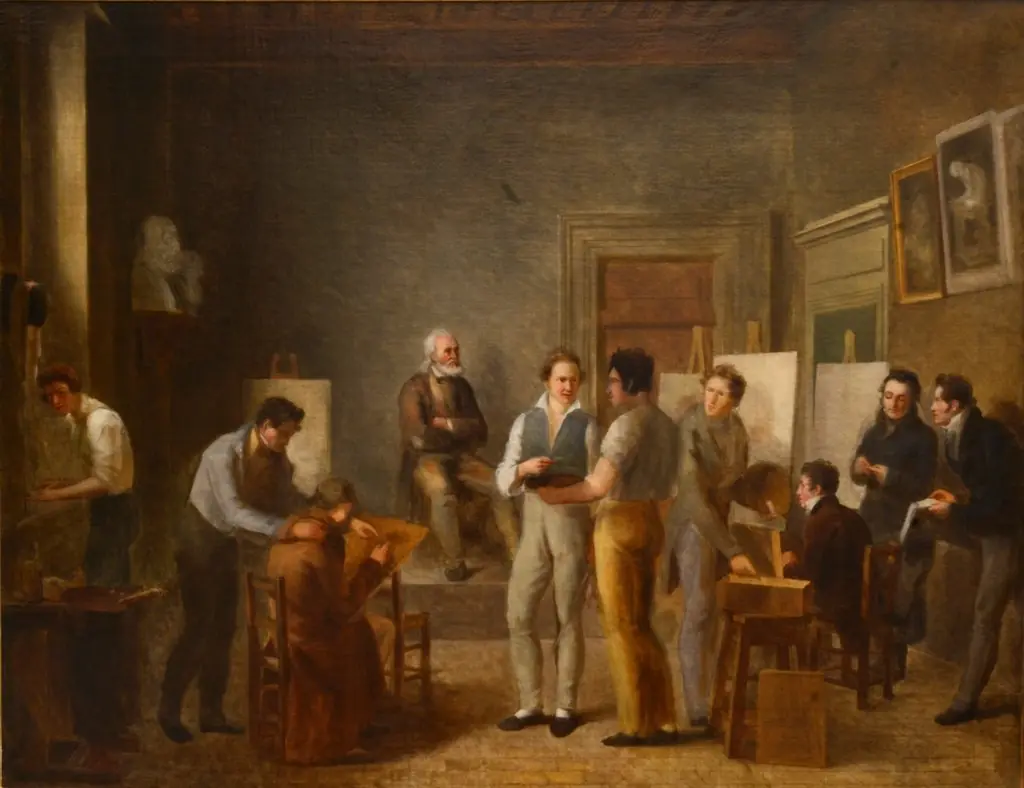 La Classe de peinture à l’école de dessin de Lyon by Jean-Marie Jacomin
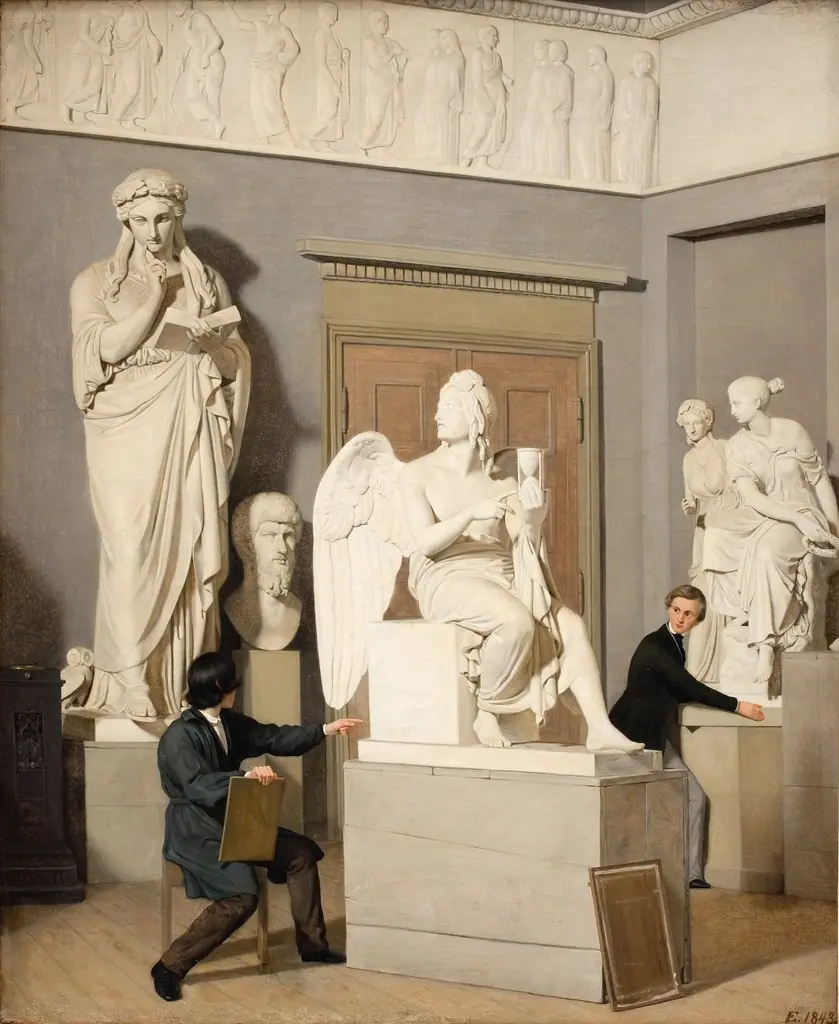 The Plaster Cast Collection in the Royal Academy of Fine Arts