Artwork
Imaginary View of the Grande Galerie in the Louvre
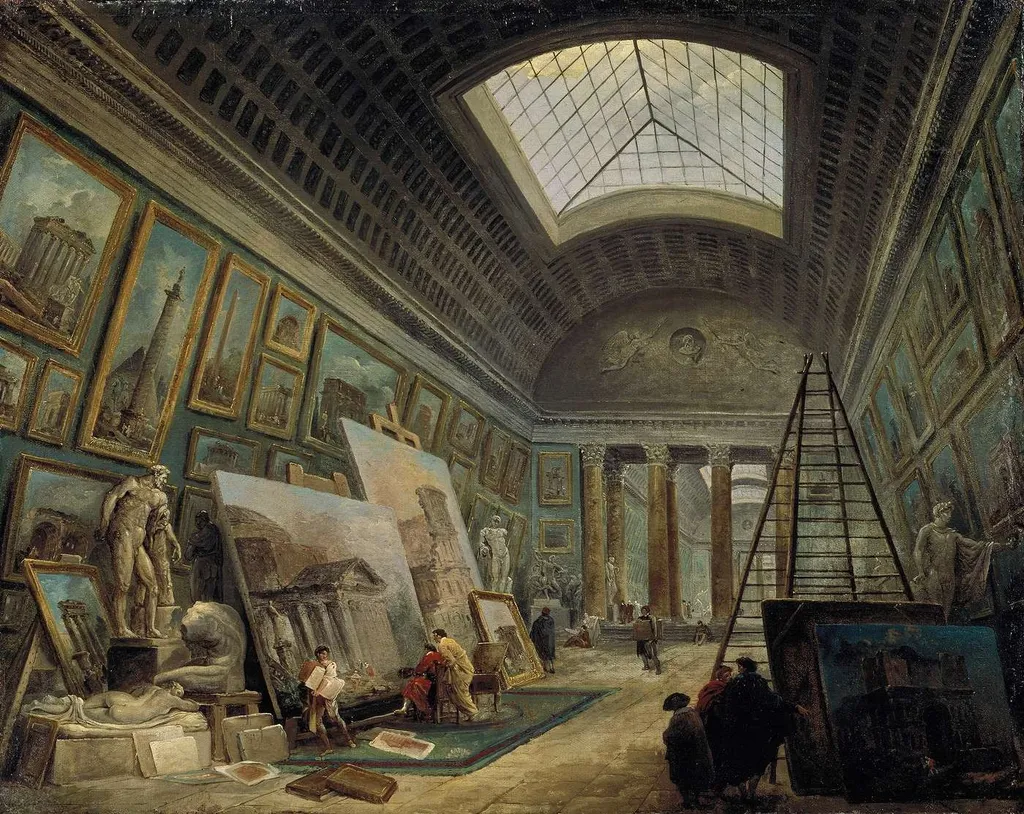
Imaginary View of the Grande Galerie in the Louvre is an oil painting by the Rococo painting artist Hubert Robert. It dates from 1795 and is held in the collection of the Department of Paintings of the Louvre.
About this work
Overview
Painted in 1795 by Hubert Robert, this oil on canvas depicts a reimagined version of the Louvre’s Grande Galerie.
Painted in 1795 by Hubert Robert, this oil on canvas depicts a reimagined version of the Louvre’s Grande Galerie. Rather than a literal record, the scene synthesizes architectural grandeur with elements of decay and human activity, reflecting Robert’s interest in capricci, fantastical compositions blending real and invented spaces. The painting captures a moment of quiet engagement with art, framed by vaulted ceilings and dim, ambient light.
Subject & Meaning
The Grande Galerie is shown as a living archive, its walls lined with artworks from varied eras and cultures. Figures, some seated, others standing, interact with the collection in subdued, contemplative ways. The scene suggests a cultural shift: the Louvre, recently transformed into a public museum after the Revolution, becomes a space for collective reflection rather than royal display. Ruins and rearranged sculptures hint at the passage of time and the enduring value of artistic heritage.
Technique & Style
Robert employed soft chiaroscuro to model the vast interior, using light from a central skylight to guide the viewer’s eye through the space. Brushwork is precise yet atmospheric, with muted tones dominating the palette to evoke a hushed, timeless mood. Architectural details are rendered with topographical care, while figures are loosely painted, emphasizing their role as observers rather than subjects. The composition balances order and entropy, characteristic of Robert’s romanticized ruins.
History & Provenance
Created during the early years of the French Republic, the painting emerged as the Louvre transitioned from royal palace to public institution. Robert, then in his late fifties, had long documented French architecture and was familiar with the Louvre’s spaces. The work remained in France until its acquisition by Louvre Abu Dhabi, where it now resides as part of a global collection focused on cross-cultural artistic dialogue.
Context
The painting reflects broader 18th-century European shifts: the rise of public museums, the reevaluation of classical heritage, and the romantic fascination with decay. Robert’s depiction aligns with Enlightenment ideals of accessibility to culture, while his inclusion of worn statues and scattered viewers subtly critiques the fragility of institutional memory. It stands as a visual document of how art was being redefined in post-revolutionary France.
Legacy
Robert’s imaginative reconstruction of the Grande Galerie influenced later depictions of museum interiors as spaces of intellectual and emotional engagement. Though not widely exhibited in his lifetime, the painting now serves as a key reference for understanding how 18th-century audiences experienced art in public collections. Its presence in Louvre Abu Dhabi underscores its role as a bridge between European traditions and global cultural institutions.
Artist & collection
Artist
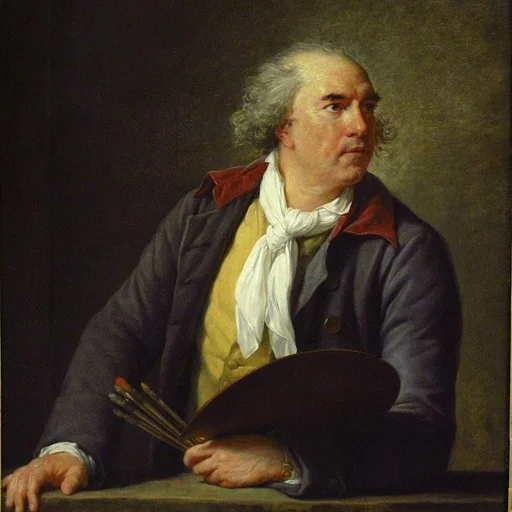
Hubert Robert (French pronunciation:; 22 May 1733 – 15 April 1808) was a French painter in the school of Romanticism, noted especially for his landscape paintings and capricci, or semi-fictitious picturesque depictions of ruins in Italy…

Museum
Department of Paintings of the Louvre
Continue through works from the same source collection.
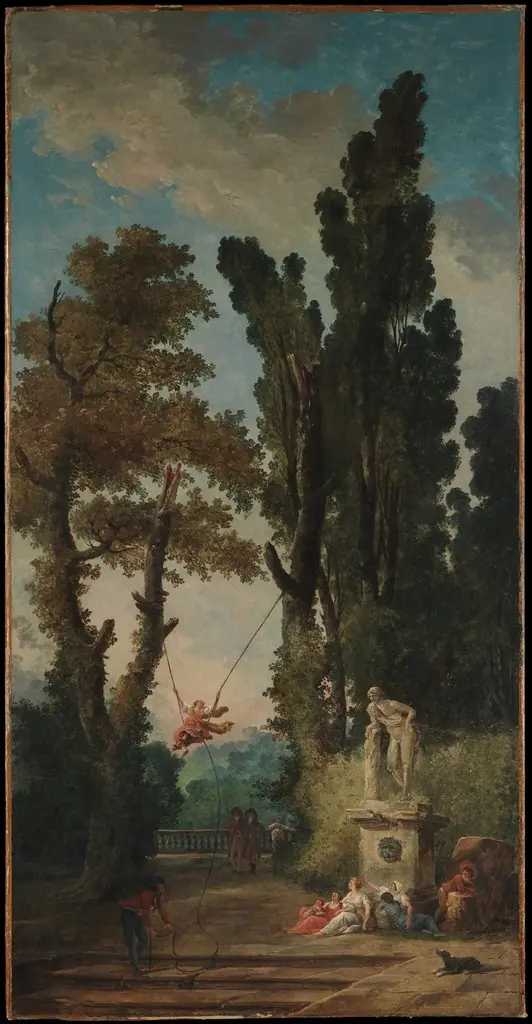
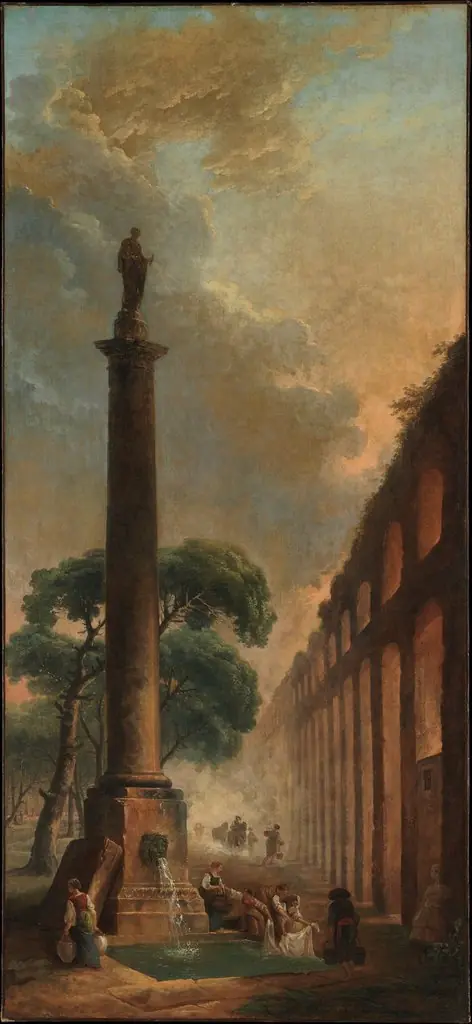
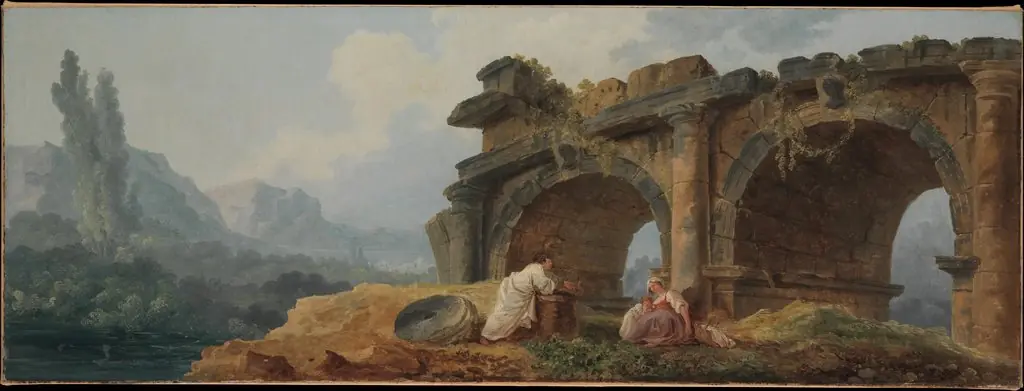
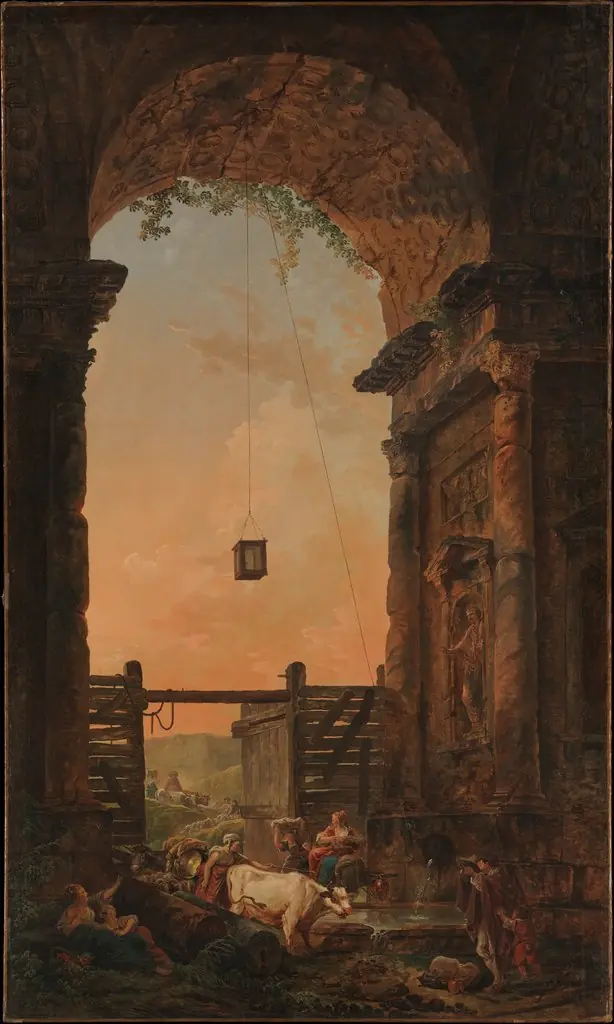
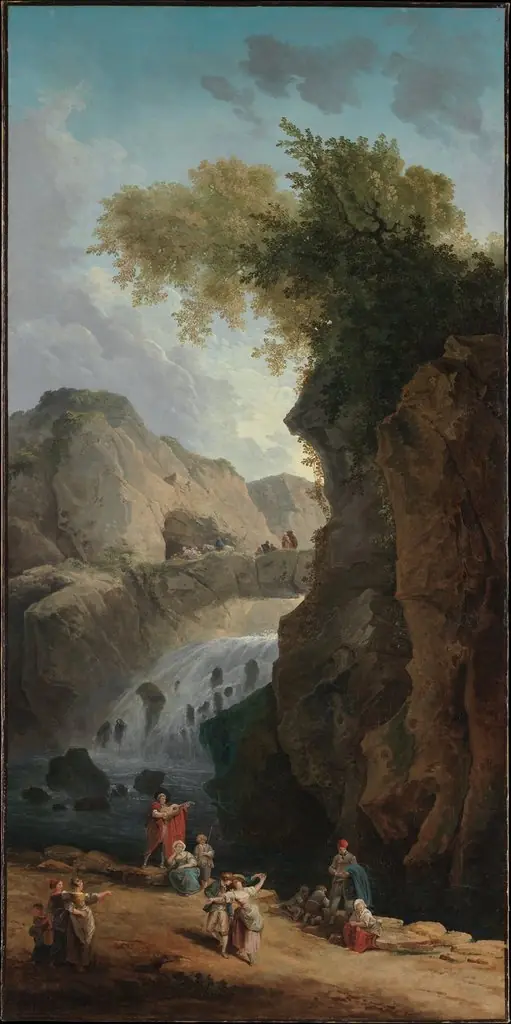
- Picture Gallery with Views of Modern Rome
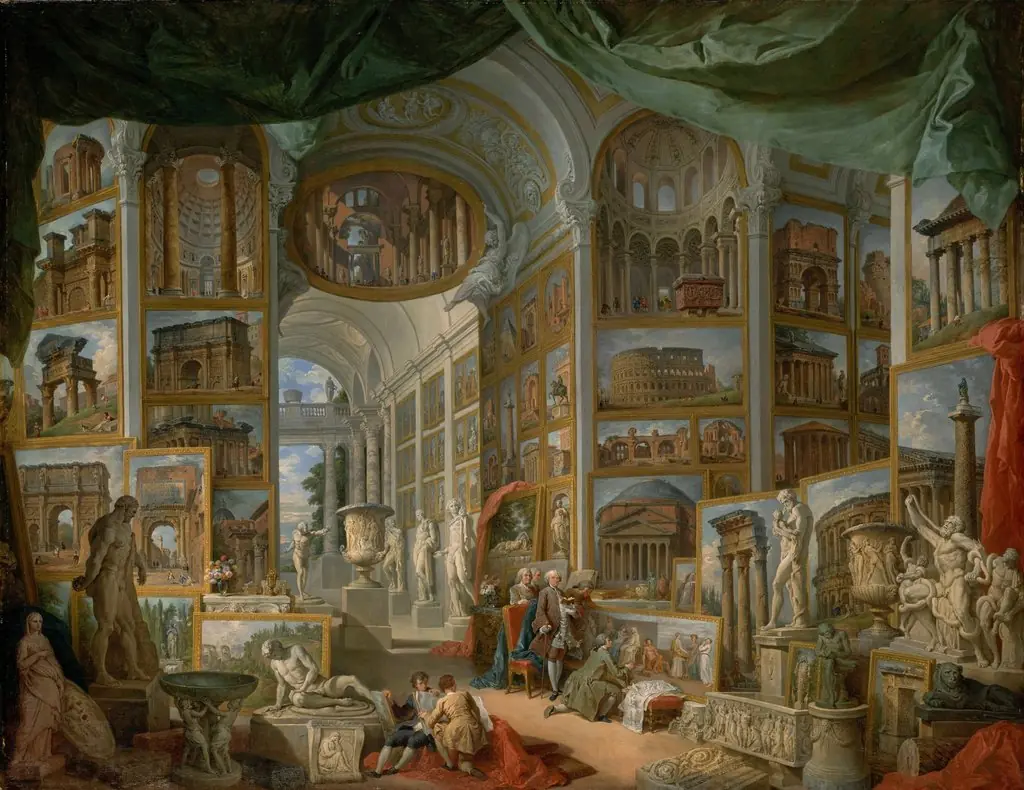 Ancient Rome
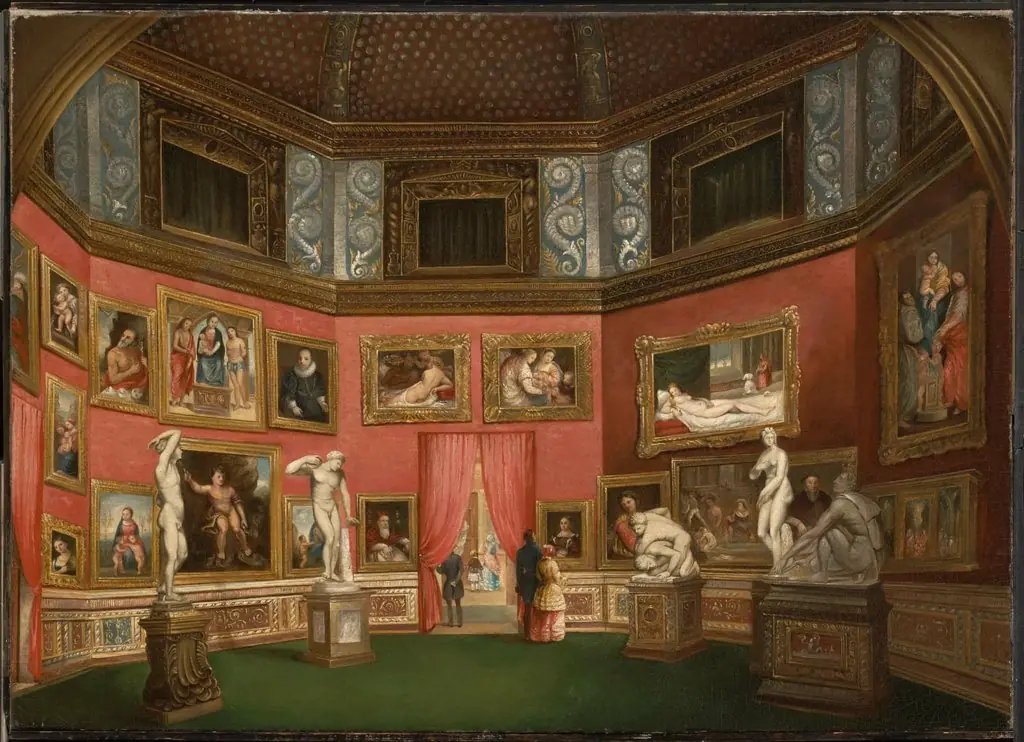 The Tribuna of the Uffizi
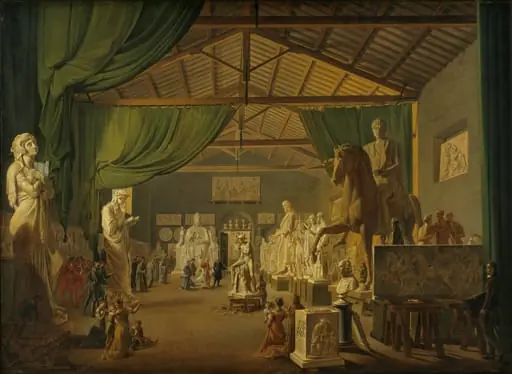 Pope Leo XII Visiting Thorvaldsen's Studios in the Piazza Barberini, 18 October 1826
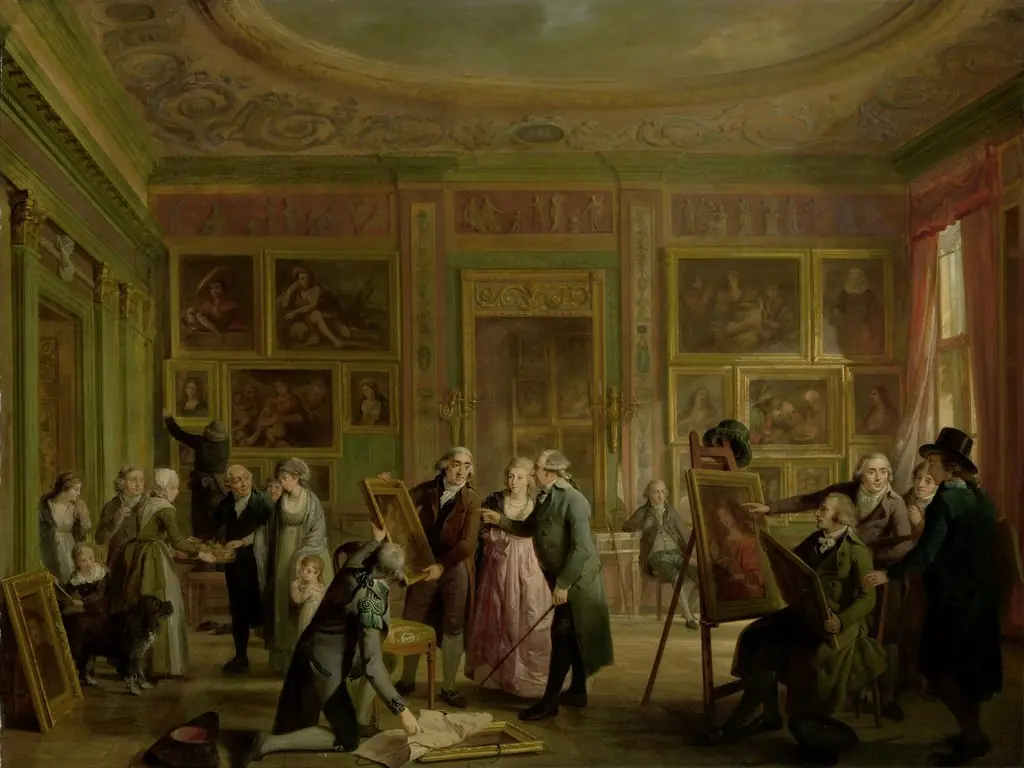 The Art Gallery of Josephus Augustinus Brentano
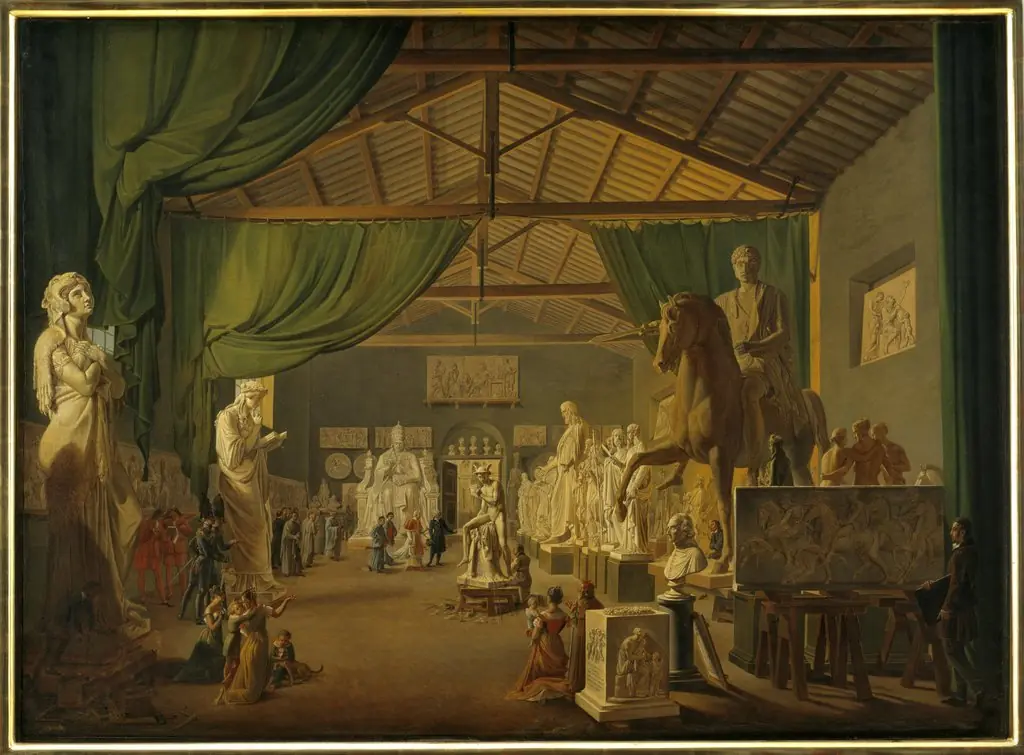 Pave Leo Xll aflægger besøg i Thorvaldsens værksteder ved Piazza Barberini, 18. oktober 1826
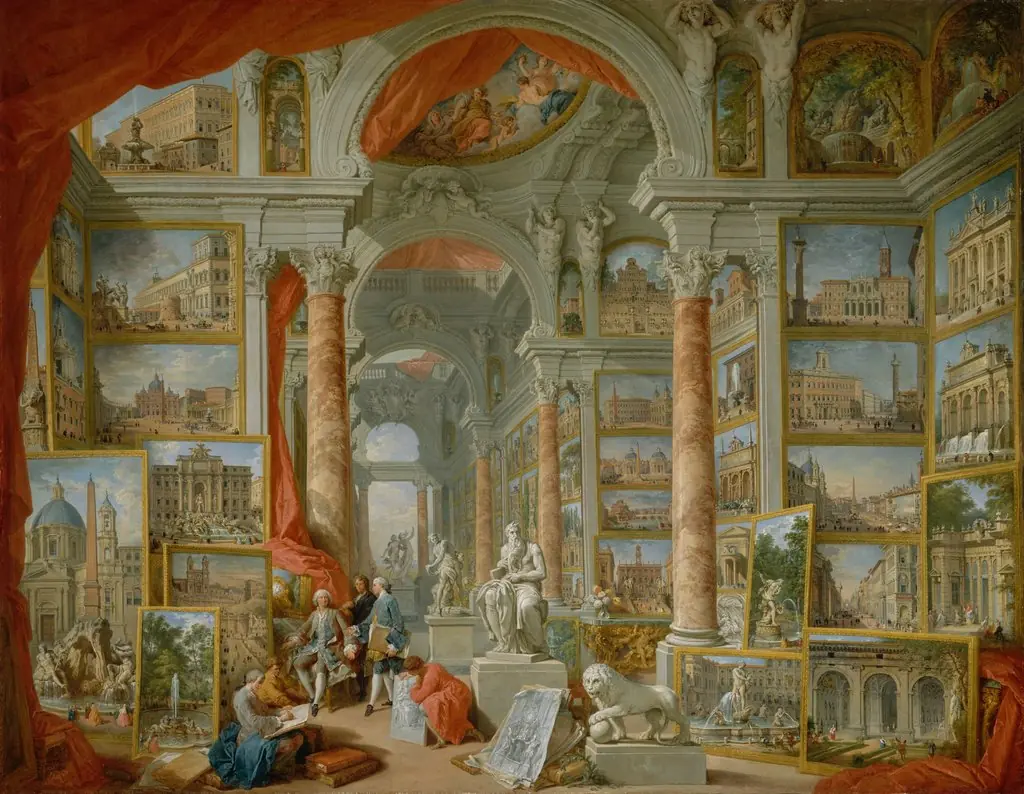 Modern Rome
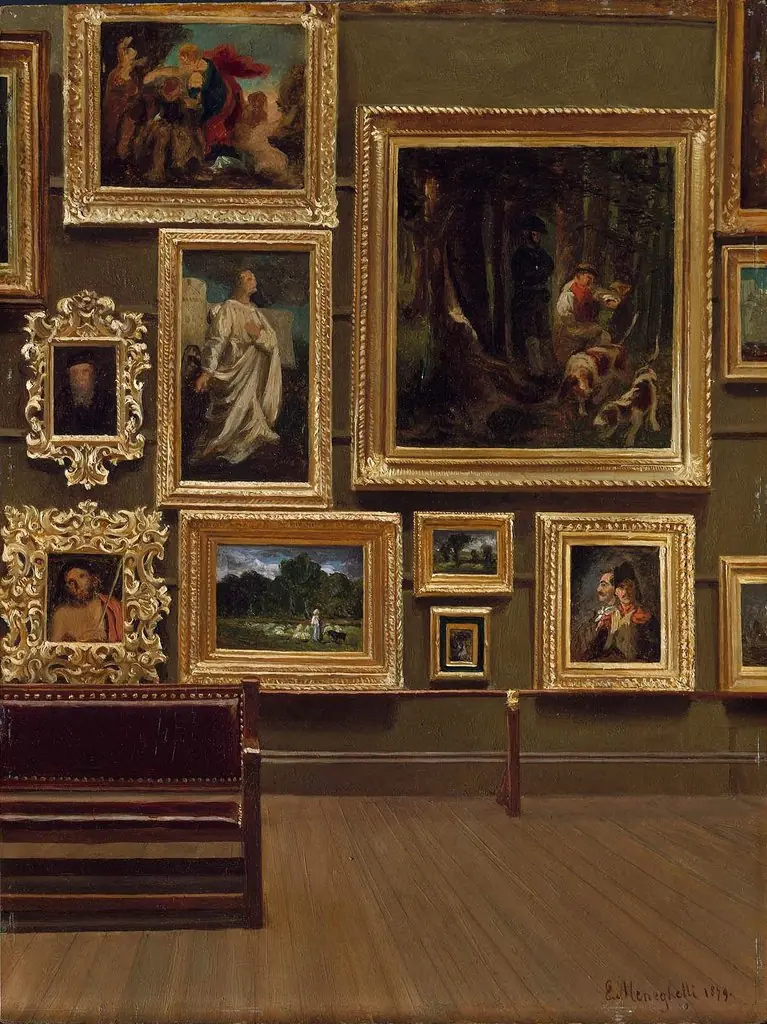 The Picture Gallery in the Old Museum
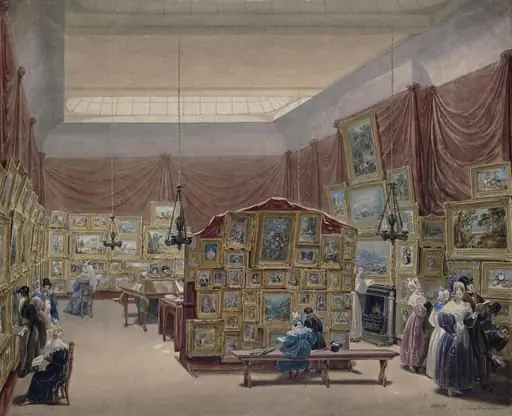 Interior of the Gallery of the New Society of Painters in Watercolours, Old Bond Street
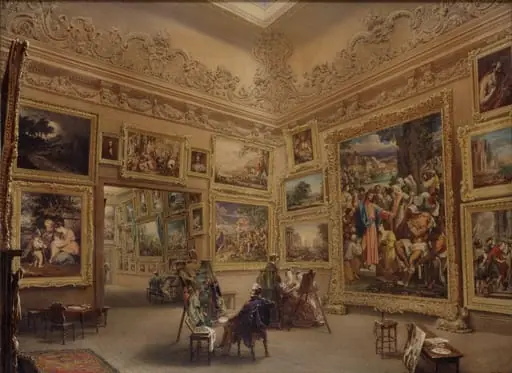 The National Gallery when at Mr J. J. Angerstein's House, Pall Mall
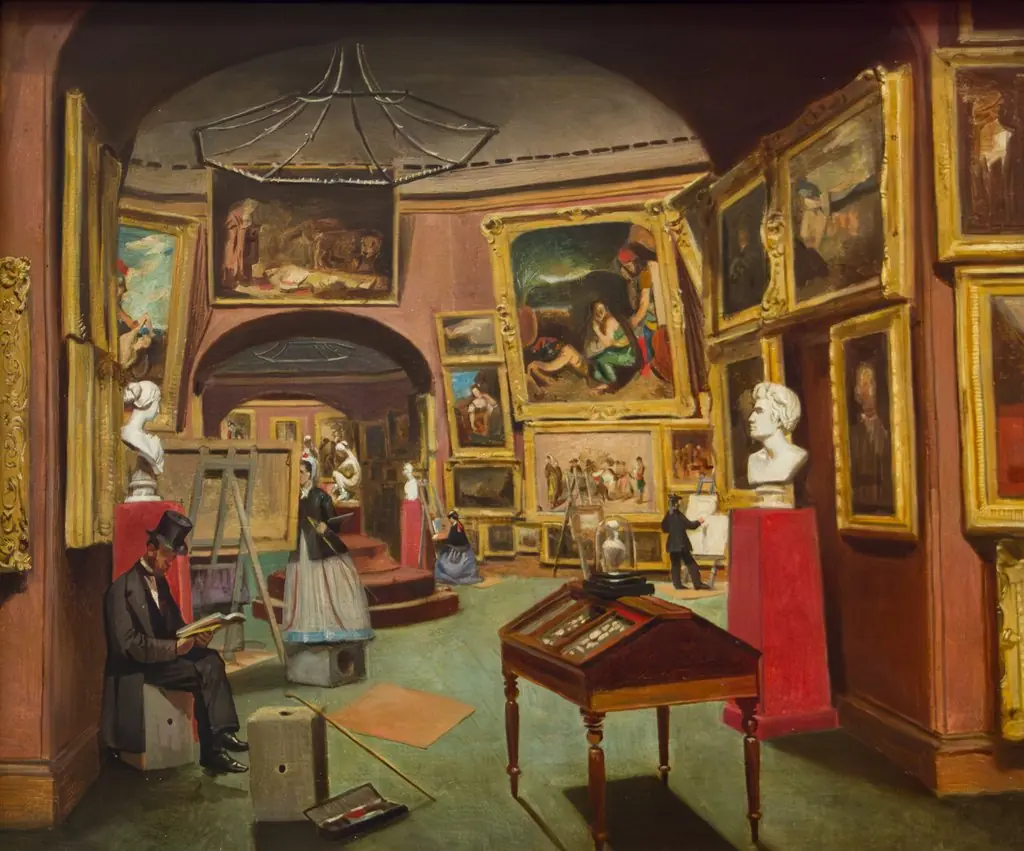 The Interior of the National Gallery of Scotland, c 1867 - 1877
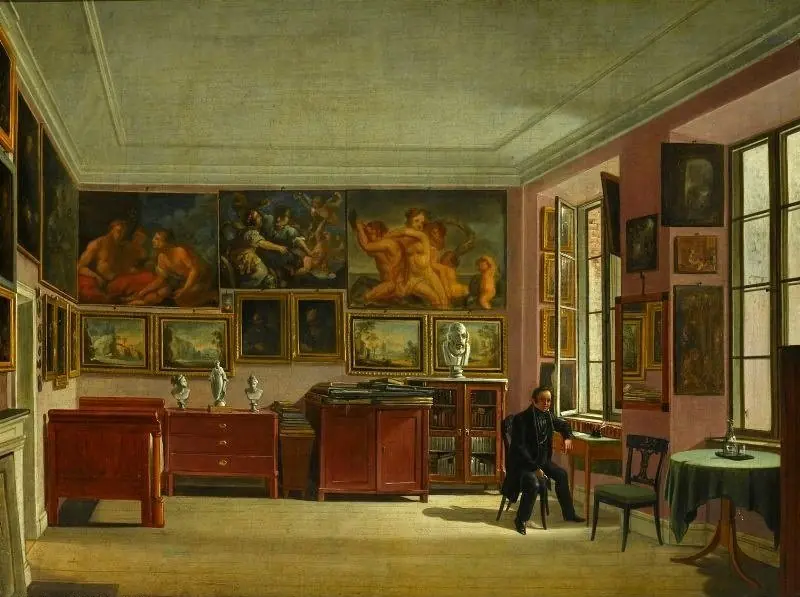 Self-portrait in a room