Artwork
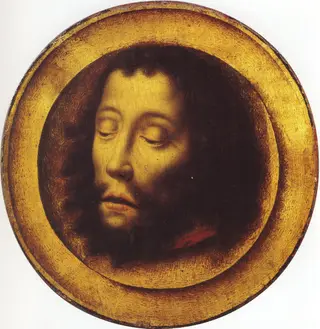
Head of Saint John the Baptist on a Charger
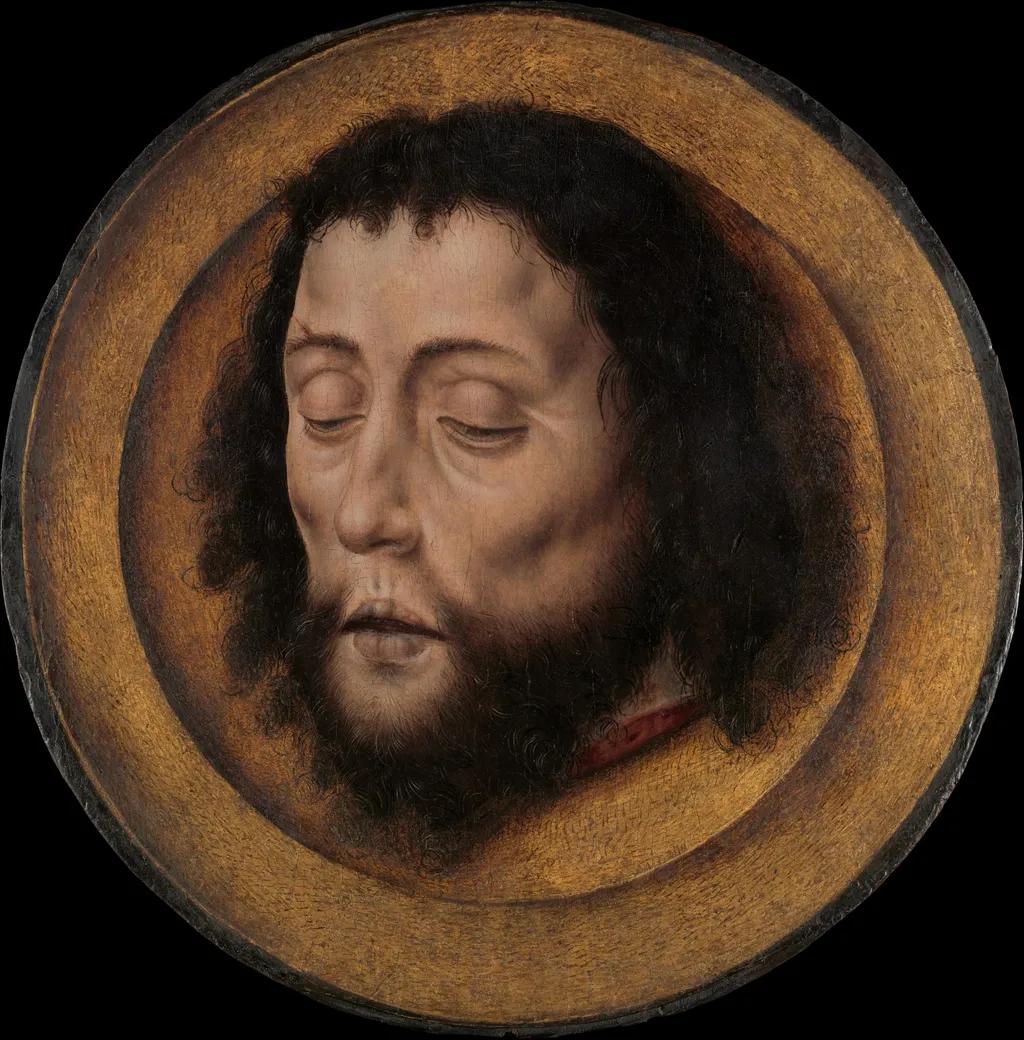
Head of Saint John the Baptist on a Charger is an oil painting by the Northern Renaissance artist Aelbrecht Bouts. It dates from 1500 and is held in the collection of the Metropolitan Museum of Art.
About this work
Subject & Meaning
Thus the work conveys themes of sacrifice, spiritual preparation, and the foretelling of Christ’s suffering.
The painting shows only the severed head of Saint John the Baptist presented on a silver charger, a motif that emphasizes his role as the herald who prepared the way for Christ. In Early Netherlandish religious art the head functions as a symbol of prophetic testimony and martyrdom, recalling the saint’s beheading and the sacrifice inherent in his message. Aelbrecht Bouts rendered the flesh with delicate modeling on a poplar panel, highlighting the stark contrast between the pale skin and the dark background, which underscores the solemnity of the scene. Thus the work conveys themes of sacrifice, spiritual preparation, and the foretelling of Christ’s suffering.
Technique & Style
Executed around 1500, Aelbrecht Bouts' Head of Saint John the Baptist on a Charger is an Early Netherlandish religious painting created using oil paint on a poplar panel support. The work is a square composition measuring 28.3 centimeters in both height and width. As a panel painting from this period, the artist applied oil pigments to the rigid wooden ground, a standard technique for achieving the detailed realism characteristic of the movement.
The subject depicts the severed head of John the Baptist, rendered with the devotional focus typical of the genre. The piece remains in the collection of the Metropolitan Museum of Art, having been part of the Rupert L. Joseph collection prior to its acquisition.
History & Provenance
The work titled Head of Saint John the Baptist on a Charger was executed circa 1500 by Aelbrecht Bouts as an oil painting on a poplar panel, depicting the severed head of Saint John the Baptist in a religious composition. It belongs to the Early Netherlandish painting movement and was originally owned by Rupert L. Joseph before entering the collection of the Metropolitan Museum of Art, where it remains on public display. The painting’s creation reflects the artistic practices of the late 15th–early 16th centuries in the Low Countries, combining devotional subject matter with the refined realism characteristic of the period.
The painting is held by the Metropolitan Museum of Art, which is listed as both its collection and its location. According to the available records, it was formerly owned by Rupert L. Joseph before entering the museum. No accession number is provided in the sources, and no exhibition history is documented.
Overview
Aelbrecht Bouts, an Early Netherlandish painter, created Head of Saint John the Baptist on a Charger around 1500. This oil painting from the Northern Renaissance portrays the severed head of Saint John the Baptist resting on a golden platter. The work is now part of the collection at The Metropolitan Museum of Art, offering insight into the devotional art prevalent in late medieval and early modern Europe.
Own this work as a print
Artist & collection
Artist
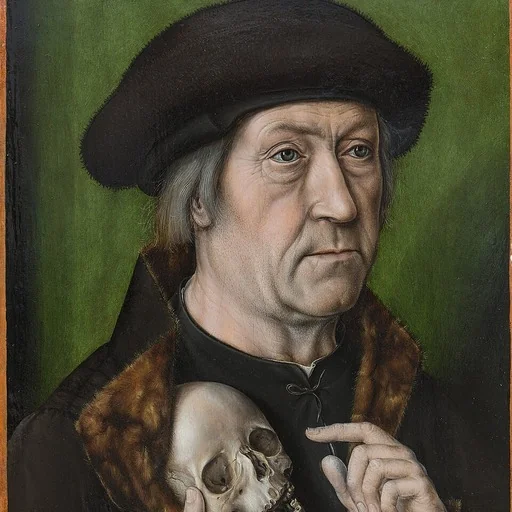
Aelbrecht Bouts (c.1452 - March 1549) was a Flemish painter of the Early Netherlandish era.