Artwork
Man's Head from the Back
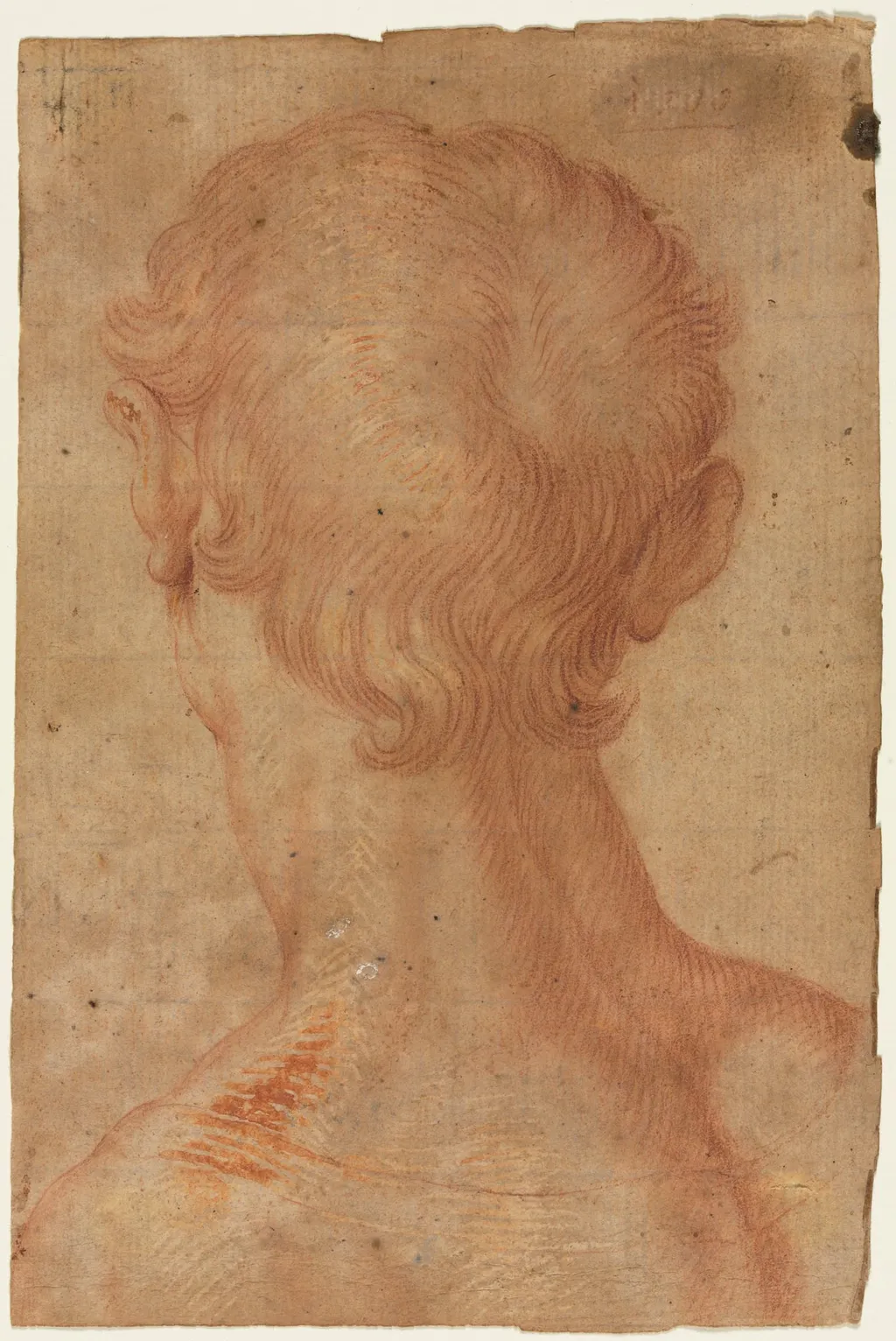
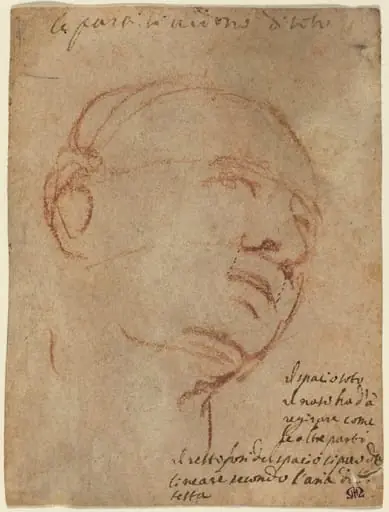
Man's Head from the Back is a drawing by the Renaissance artist Bronzino. It dates from 1550 and is held in the collection of the Cleveland Museum of Art.
- Accession no.
- 1939.659
- Credit line
- Gift of Robert Hays Gries
About this work
Overview
Executed in a medium that emphasizes fine line and subtle tonal gradation, the work is part of the Cleveland Museum of Art’s collection.
Created around 1550, this drawing by Agnolo Bronzino depicts the back of a man’s head, rendered with meticulous precision. Executed in a medium that emphasizes fine line and subtle tonal gradation, the work is part of the Cleveland Museum of Art’s collection. Its quiet composition and restrained palette reflect the refined aesthetic of mid-16th-century Florentine art, where observation and control took precedence over dramatic expression.
Subject & Meaning
The subject is an anonymous man, his identity unrecorded, viewed from behind in a moment of stillness. The absence of facial features shifts focus to posture, hair, and the contour of the neck, elements that convey dignity and composure. This vantage may suggest introspection or the artist’s interest in the human form as a study of structure rather than personality, aligning with contemporary scholarly interests in anatomy and silent observation.
Technique & Style
Bronzino employs a smooth, controlled hand, with fine strokes defining the texture of closely combed hair and the subtle curve of the neck. Light falls delicately along the skin, creating a soft contrast against the deep, unmodulated background. The absence of atmospheric detail and the emphasis on clean contours reflect Mannerist ideals, prioritizing elegance and technical mastery over emotional narrative or environmental context.
History & Provenance
The drawing entered the Cleveland Museum of Art’s collection in the 20th century, though its earlier ownership remains undocumented. Likely produced as a preparatory study or independent exercise, it was preserved due to its technical refinement. No evidence suggests it was intended for public display, but its survival indicates its value to collectors or artists within Bronzino’s circle who appreciated his disciplined approach to form.
Context
In mid-16th-century Florence, artists like Bronzino were deeply engaged in the study of the human figure, often isolating parts of the body to explore anatomy and surface. This work aligns with a broader trend of drawing as a means of intellectual inquiry rather than mere preparation for painting. The plain background and focused subject reflect the influence of classical ideals and the growing emphasis on disciplined observation in academic art circles.
Legacy
Though not widely exhibited, this drawing exemplifies Bronzino’s commitment to precision and restraint. It contributes to the understanding of how Renaissance artists used study drawings to refine their perception of the body. Its presence in a major museum underscores its role as a quiet but significant artifact of artistic practice, offering insight into the methods behind the polished portraits for which Bronzino is better known.
Own this work as a print
Artist & collection
Artist
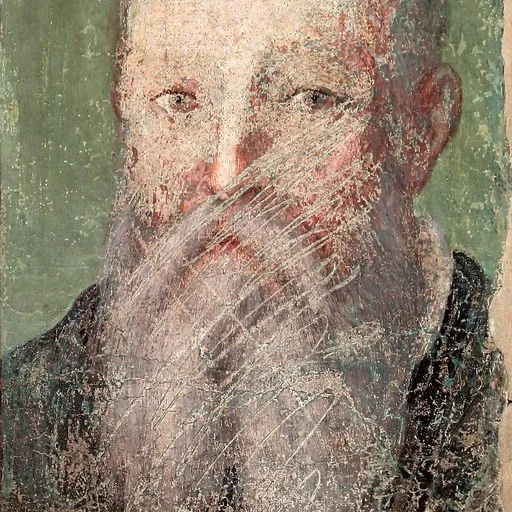
Agnolo di Cosimo (Italian:; 17 November 1503 – 23 November 1572), usually known as Bronzino (Italian: Il Bronzino ) or Agnolo Bronzino, was an Italian Mannerist painter from Florence.

![Head of a Man [recto], by Théodore Géricault](https://artifactworldgallery.com/img/theodore-gericault--head-of-a-man-recto--d6e68ba78da40efa-w320.webp)
![Nude Male Figure [recto], by Italian 17th Century](https://artifactworldgallery.com/img/italian-17th-century--nude-male-figure-recto--f1cc965df272e72c-w320.webp)