Artwork
The Holy Family
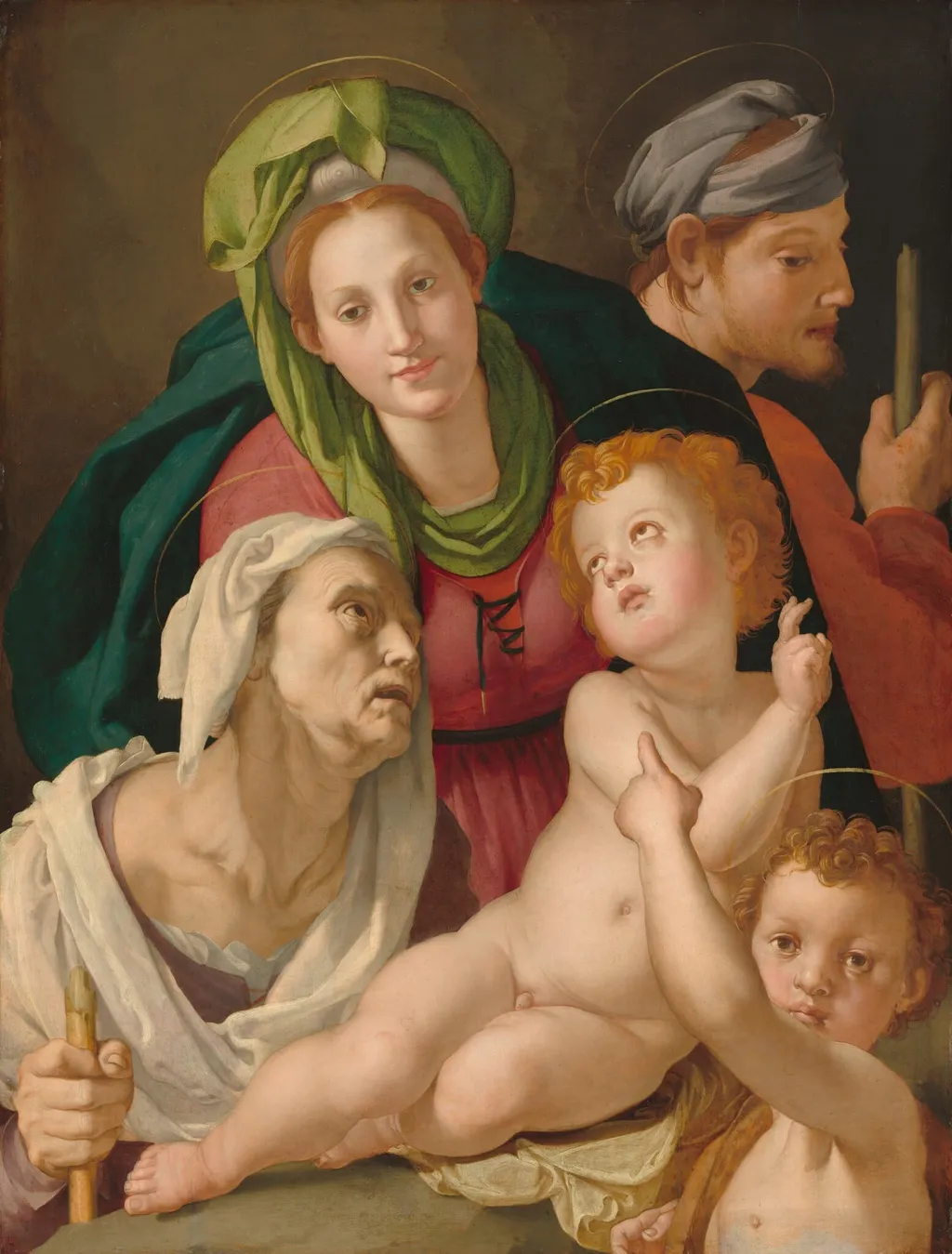
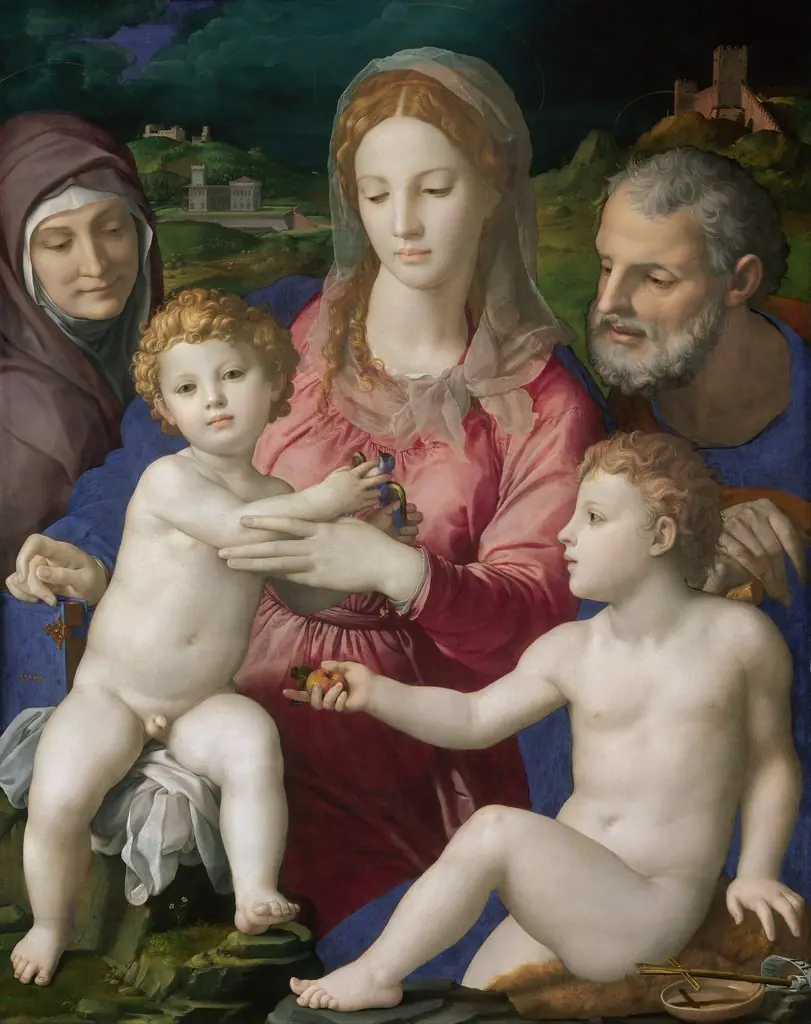
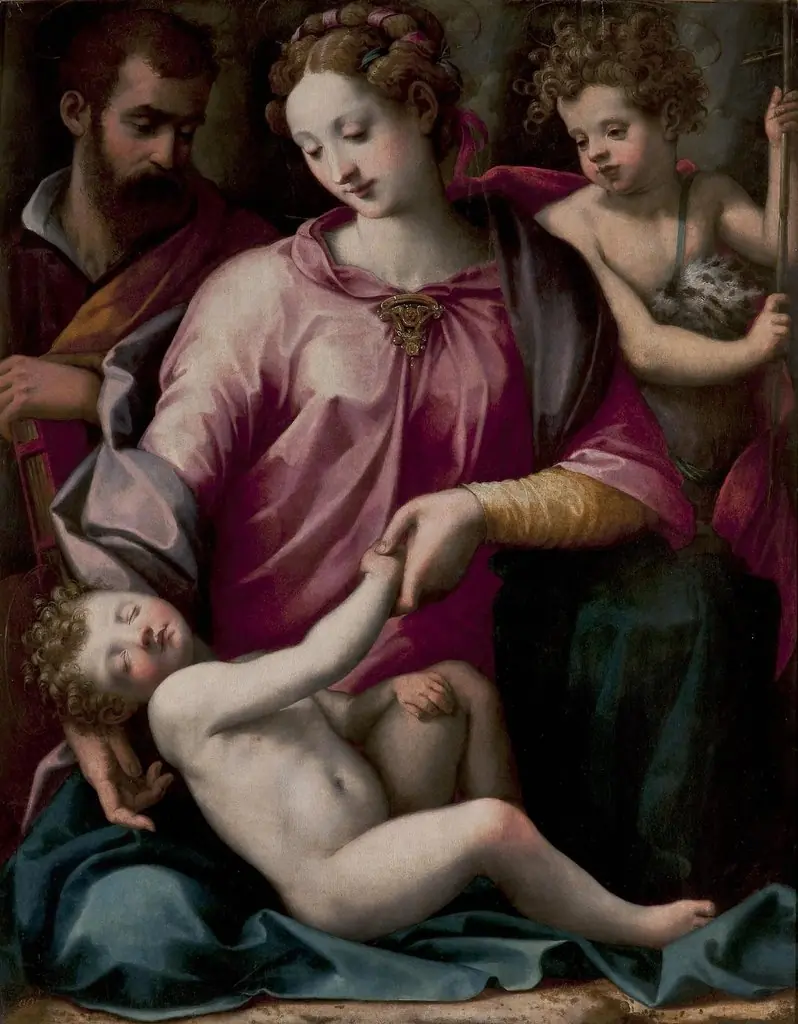
The Holy Family is an oil painting by the Mannerist artist Bronzino. It dates from 1528 and is held in the collection of the National Gallery of Art.
About this work
Subject & Meaning
The Holy Family by Agnolo Bronzino presents the traditional devotional grouping of the Christ Child, the Virgin Mary, and Saint Joseph.
The Holy Family by Agnolo Bronzino presents the traditional devotional grouping of the Christ Child, the Virgin Mary, and Saint Joseph. As a religious work, its subject centers on this sacred trio, which became a central motif in Renaissance Christian imagery representing the nuclear family of the Nativity narrative. The painting's main subject is identified as the Holy Family itself, with the figures of Mary, the Christ Child, and Joseph explicitly named in the depicted elements.
This iconographic configuration typically conveyed themes of divine incarnation, familial sanctity, and the legitimacy of Christ's earthly parentage, serving both as a meditative image for private devotion and as a statement of orthodox Catholic belief. The work belongs to the religious genre, situating it within the broader tradition of Marian and Christological imagery that flourished in sixteenth-century Italy.
Technique & Style
Created in 1525, The Holy Family is executed in oil paint on a panel support. The work measures 101.3 centimeters in height and 78.7 centimeters in width. Classified as a religious painting, the piece depicts the Virgin Mary, the Christ Child, and Joseph.
The medium of oil on panel was a standard choice for Florentine painters of the period, allowing for the detailed rendering characteristic of Agnolo Bronzino's early style. The artwork remains in the collection of the National Gallery of Art in Washington, D.C., as part of the Samuel H. Kress Collection.
History & Provenance
Attributed to Agnolo Bronzino and dated to 1525, this oil-on-panel painting depicts the Holy Family. Its early ownership history suggests a possible association with the Capponi collection in Florence. By the twentieth century, the work was held by Count Alessandro Contini Bonacossi in Florence.
In 1937, Count Contini Bonacossi sold the panel to the Samuel H. Kress Foundation based in New York. Two years later, in 1939, the foundation gifted the artwork to the National Gallery of Art in Washington, D.C., where it remains part of the Samuel H. Kress Collection. Curatorial files at the National Gallery of Art reference Kress records to support the details of this acquisition chain.
The Holy Family by Agnolo Bronzino is held by the National Gallery of Art in Washington, D.C., as part of the Samuel H. Kress Collection. Its provenance traces possibly to the Capponi collection in Florence, from which it passed to Count Alessandro Contini Bonacossi in Florence. In 1937 the work was sold to the Samuel H. Kress Foundation in New York, and in 1939 it was given to the National Gallery of Art.
The painting is documented in the Kress Collection Digital Archive and in the NGA curatorial files, which record the Kress acquisition and subsequent gift. No prior exhibition history beyond this institutional transfer is recorded in the available sources.
Context
Bronzino’s The Holy Family (1525) occupies a pivotal position within Mannerist devotional painting, reflecting the artist’s engagement with both Florentine High Renaissance models and emergent anti-naturalistic tendencies. Scholarship situates the work within Bronzino’s early career, where his crisp linearity and cool chromatic palette, hallmarks of the Pontormo circle, begin to coalesce. Contemporaries noted the panel’s technical precision, though later critics debated its emotional detachment, a trait emblematic of Mannerism’s intellectualized approach to sacred subjects.
The painting’s provenance ties it to elite Florentine collections, underscoring its role as a private commission for aristocratic patrons. Within Bronzino’s oeuvre, it bridges his apprenticeship under Pontormo and his mature courtly style, while its inclusion in the Samuel H. Kress Collection highlights its significance in shaping twentieth-century American connoisseurship of Italian Renaissance art.
Overview
This oil on panel painting, titled The Holy Family, depicts Mary, Joseph, and the infant Jesus in a close arrangement. The figures are rendered with strong, clear colors, set against a dark background that emphasizes their presence. The composition focuses on the intimate grouping of the sacred figures, presenting a serene and contemplative scene.
Own this work as a print
Artist & collection
Artist
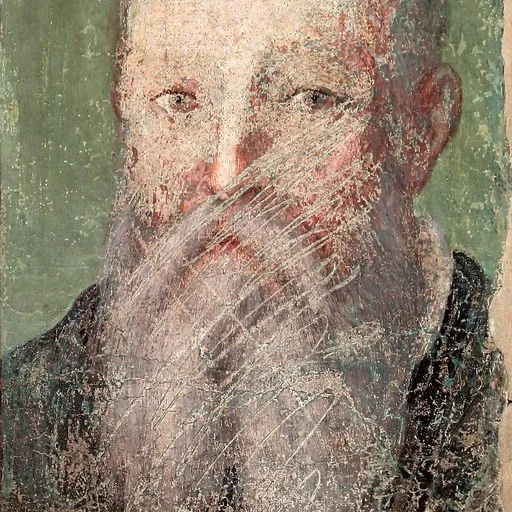
Agnolo di Cosimo (Italian:; 17 November 1503 – 23 November 1572), usually known as Bronzino (Italian: Il Bronzino ) or Agnolo Bronzino, was an Italian Mannerist painter from Florence.

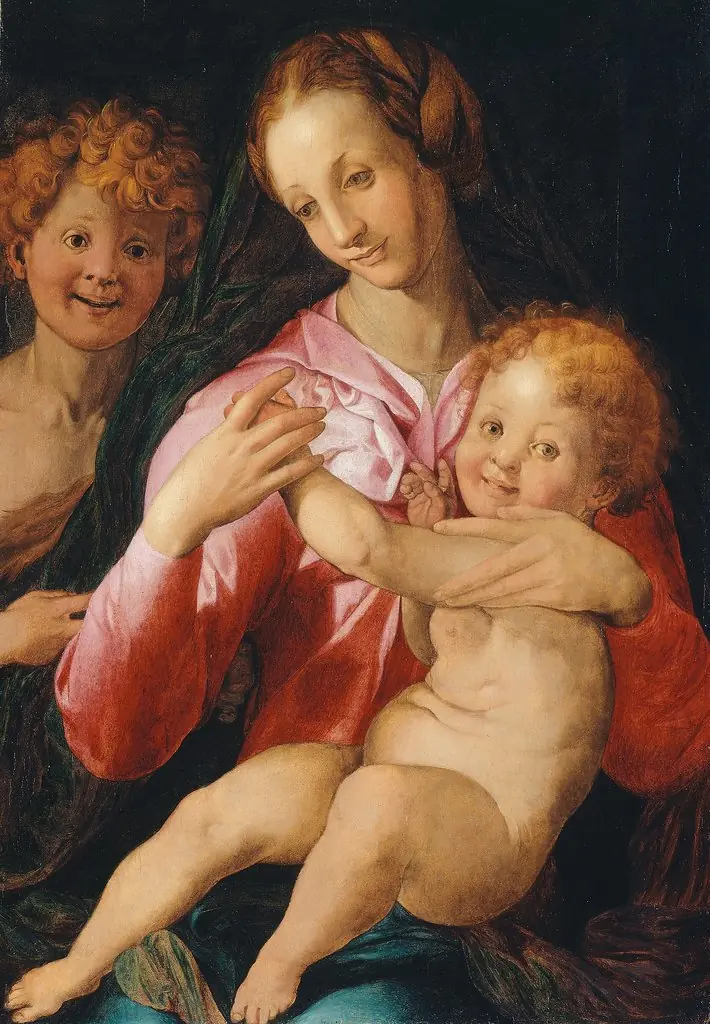
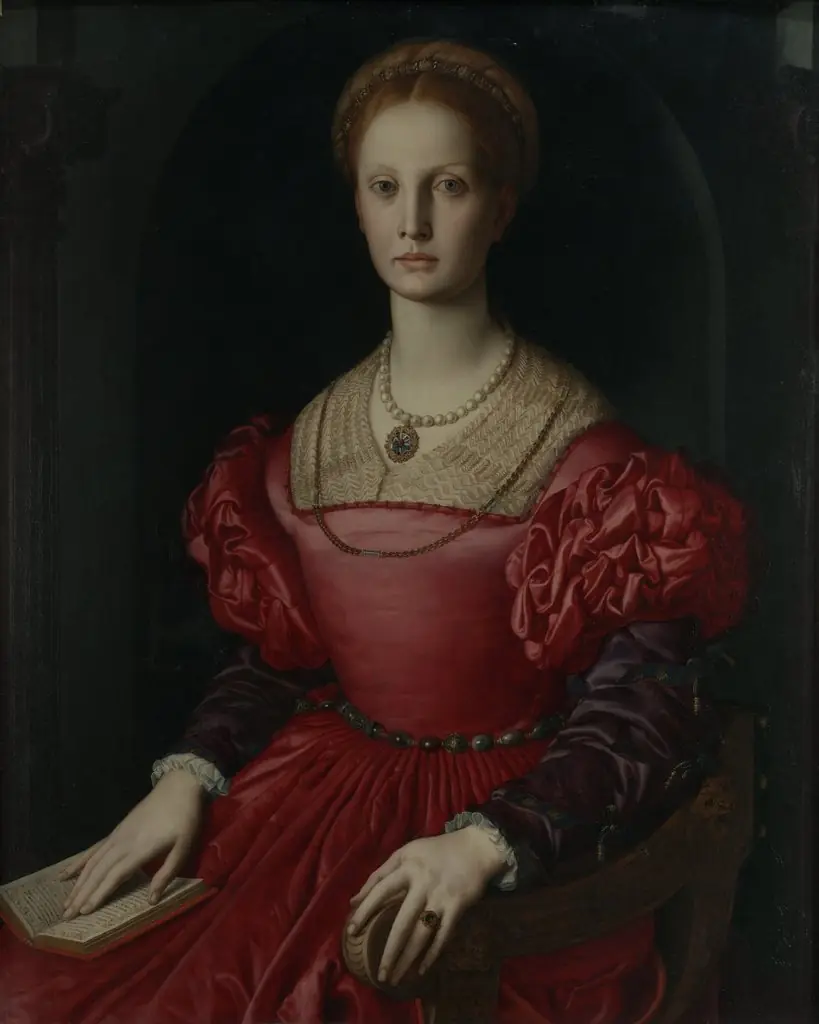
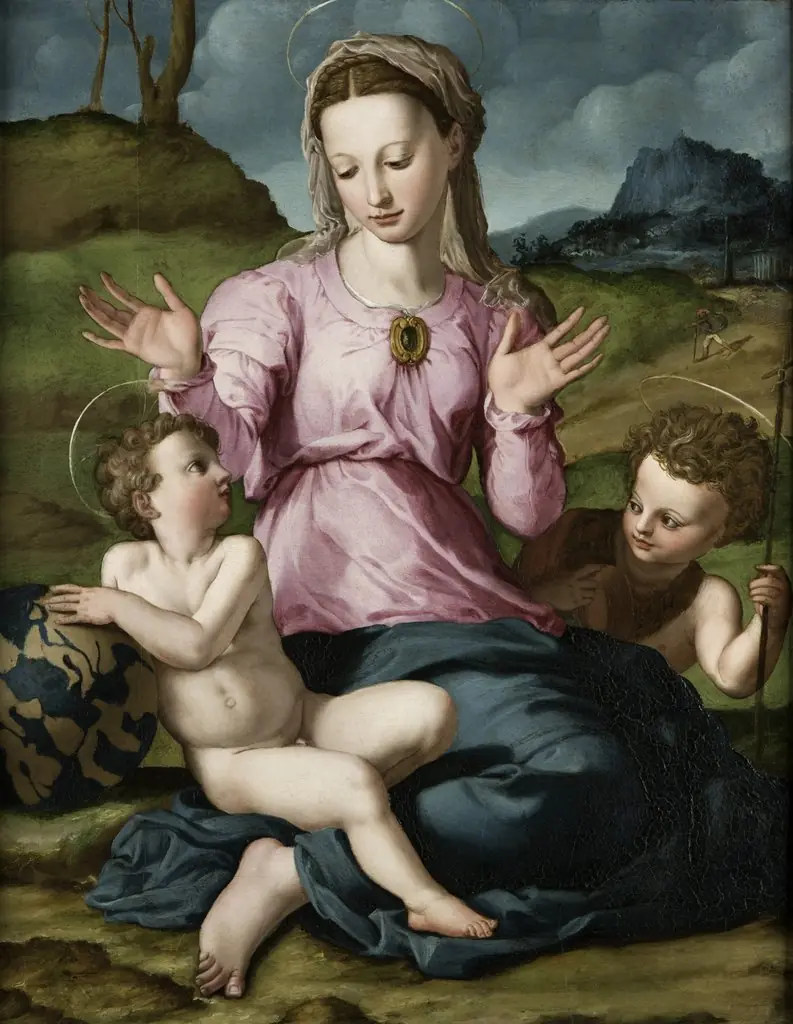
- The Holy Family
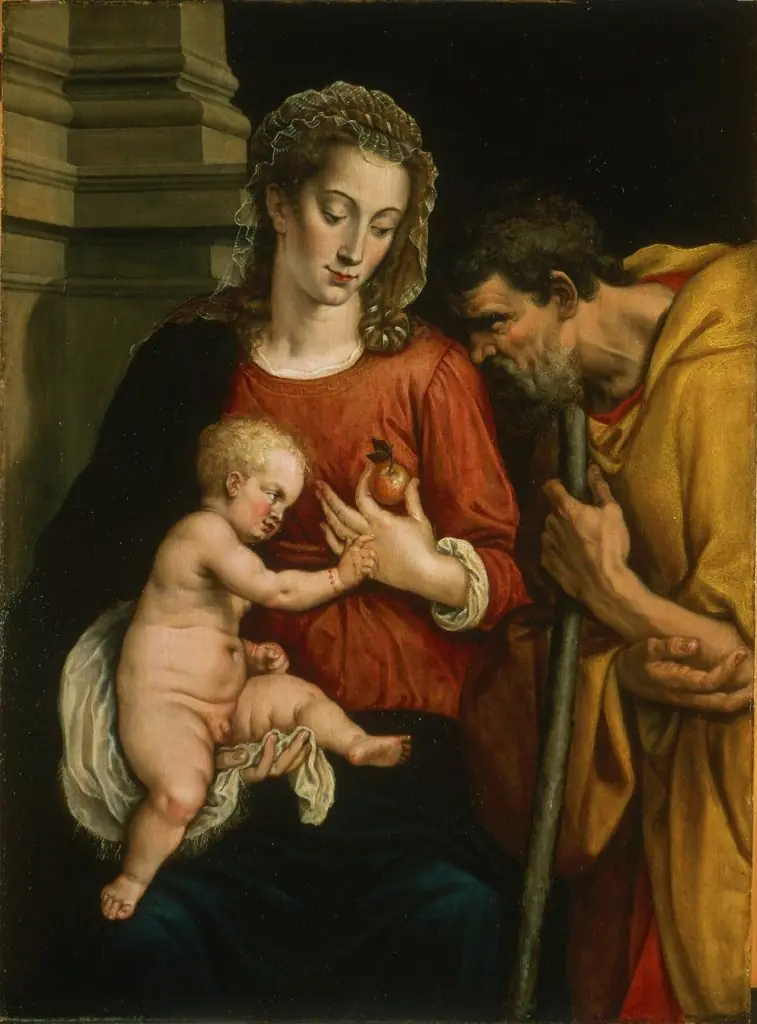 The Holy Family
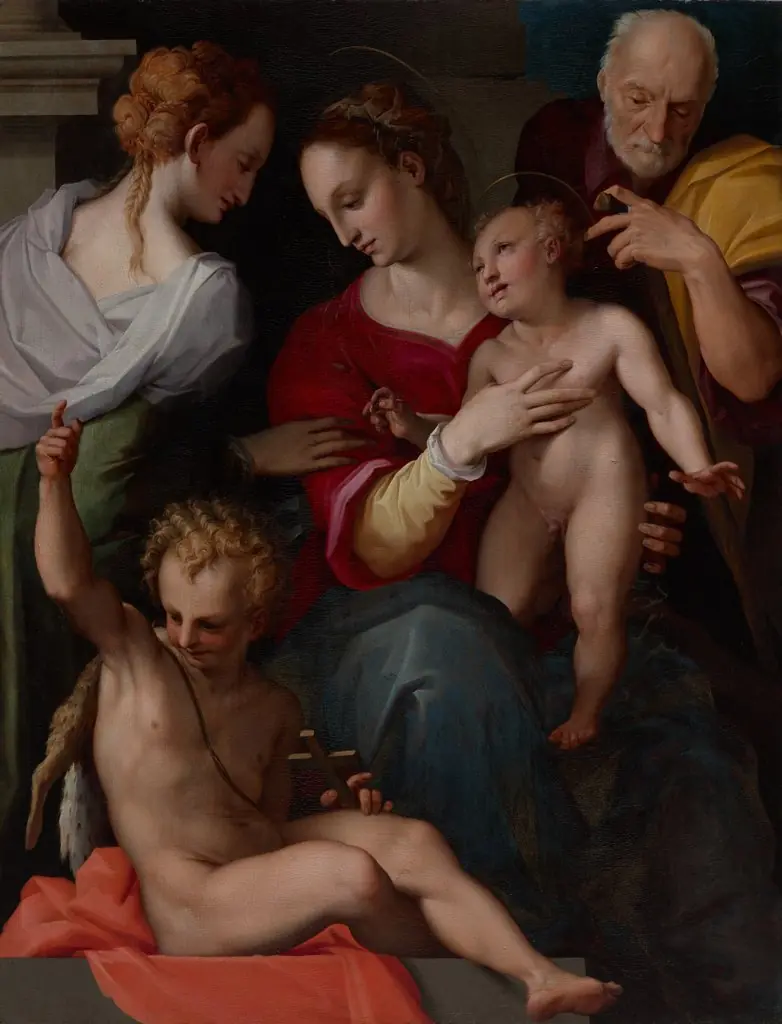 Holy Family with the Mystic Marriage of Saint Catherine
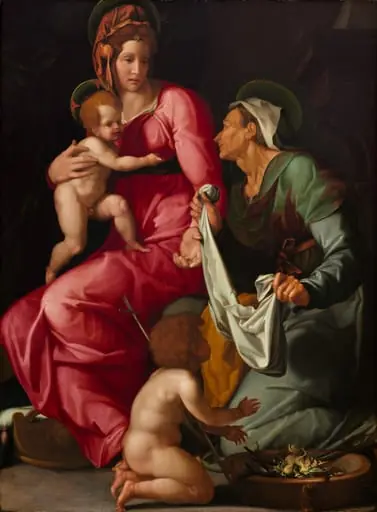 Madonna and Child with Saint Elizabeth and Saint John the Baptist
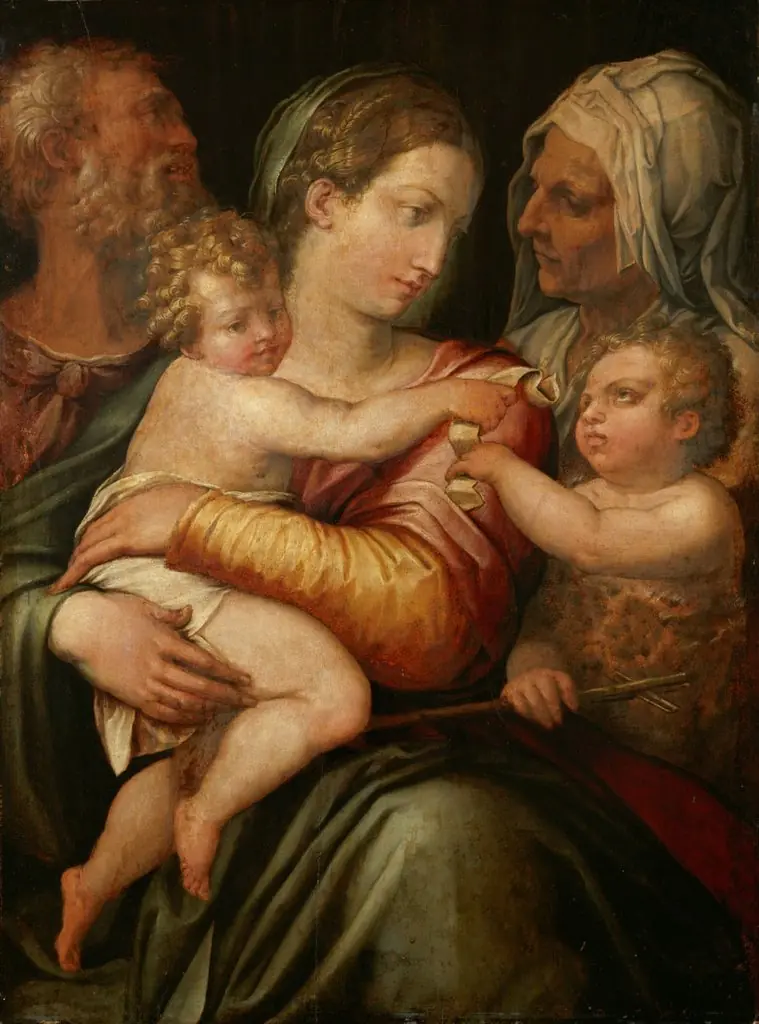 Heilige Familie
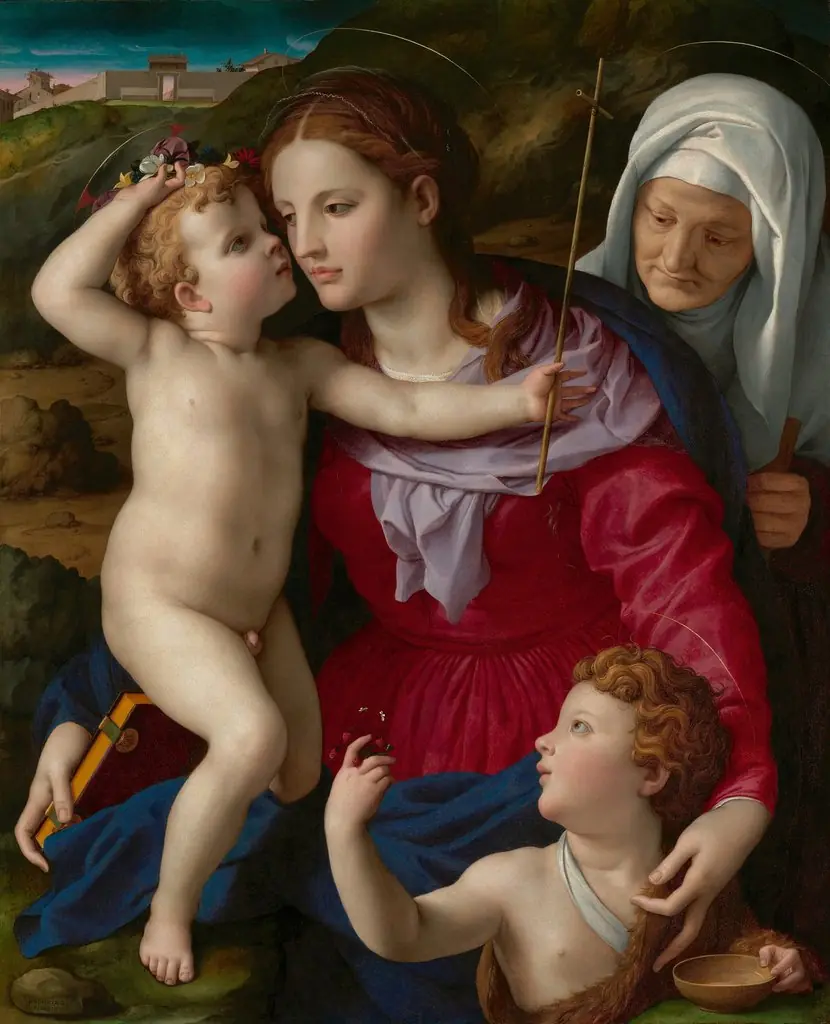 Virgin and Child with Saint Elizabeth and Saint John the Baptist
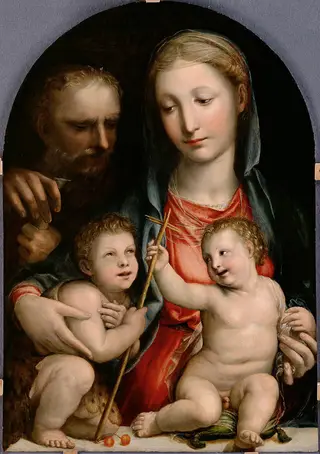 Holy Family with St. John the Baptist as child
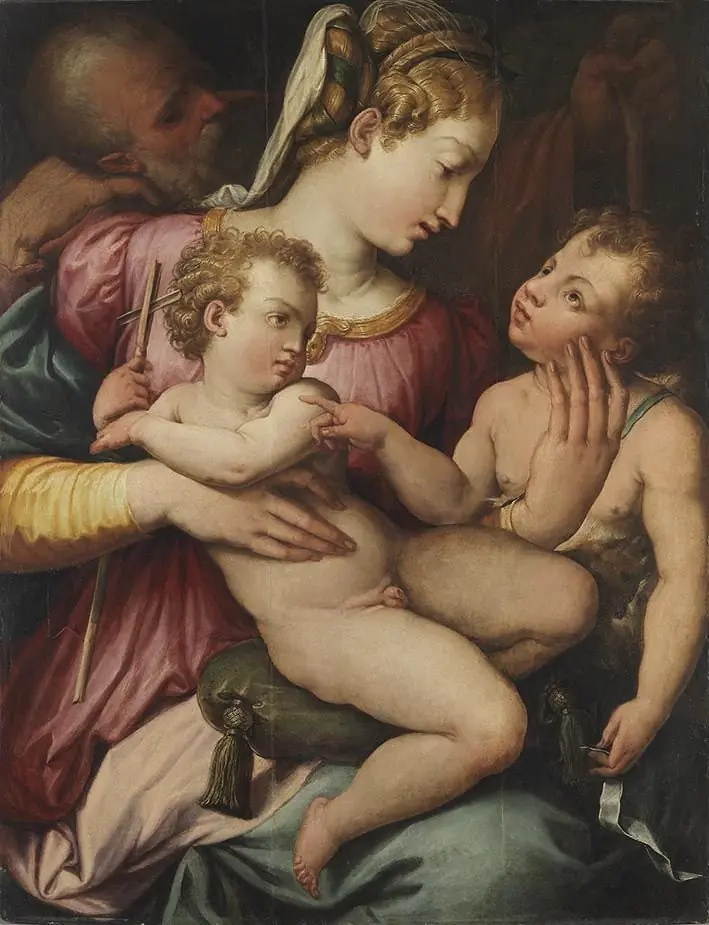 Holy family with little John the Baptist
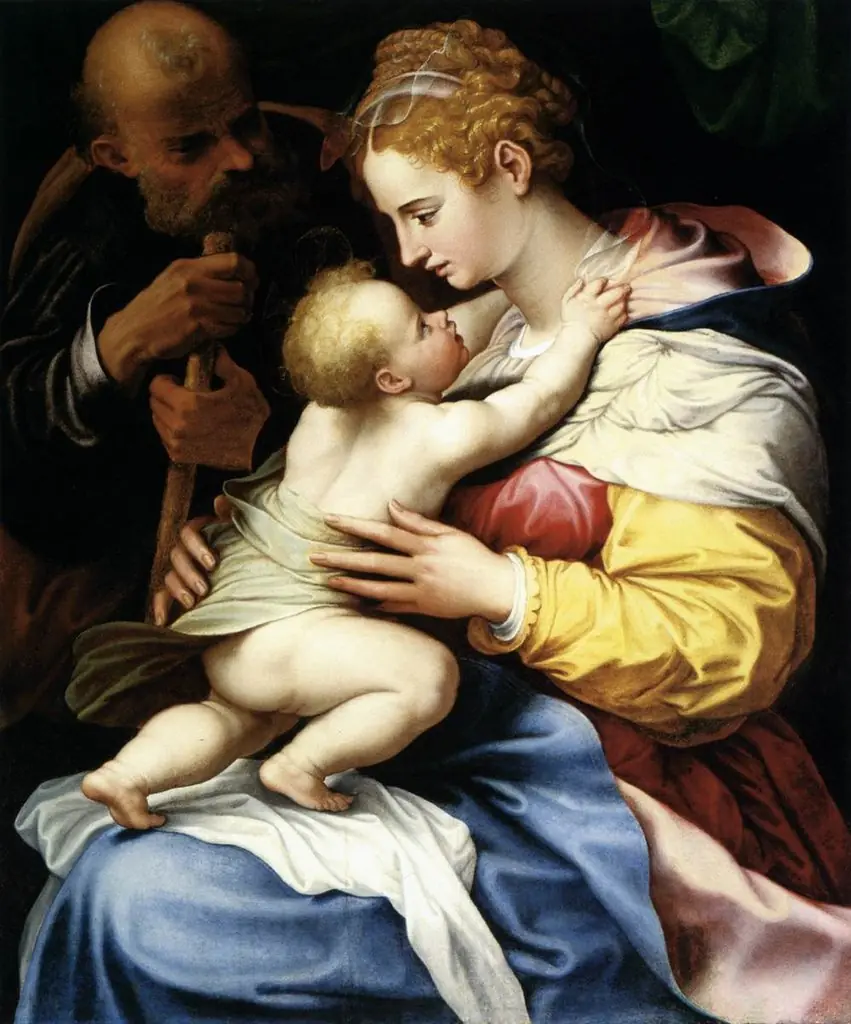 The Holy Family
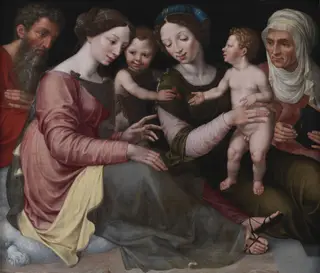 The Holy Family with the Infant St John, St Elizabeth and St Anna
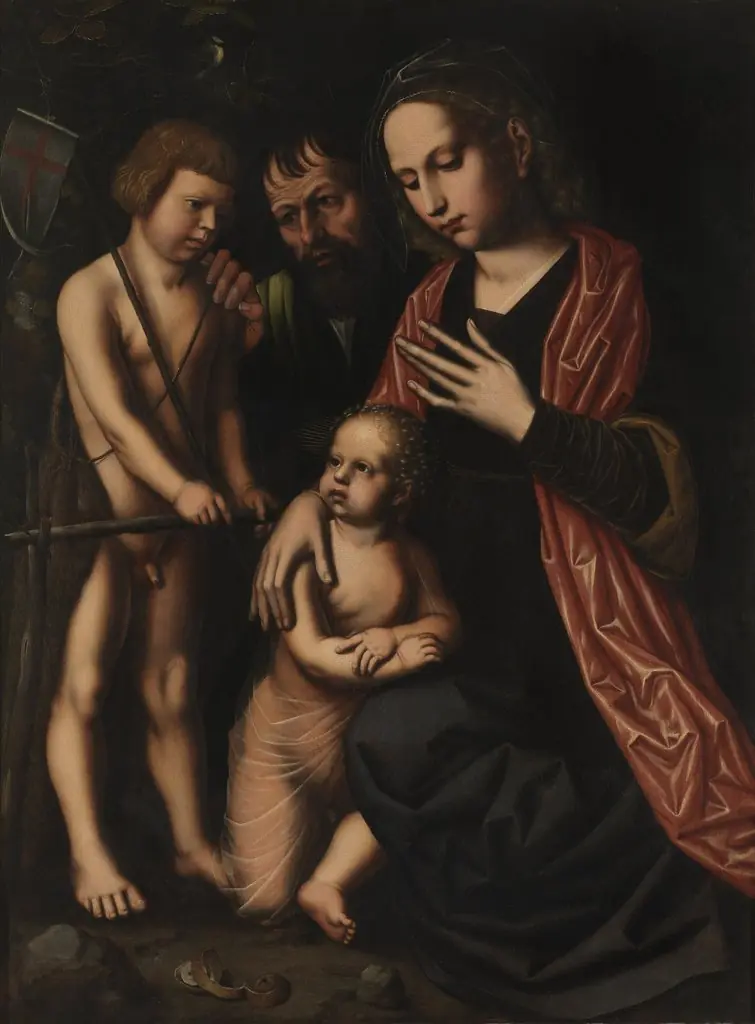 The Holy Family with St. John the Baptist
 Holy Family with St John the Baptist